<h1>Bihar Youth Protest Unravelled: The Story Behind the Government's U‑Turn, Its Social Impact, and What It Means for Future Movements</h1>
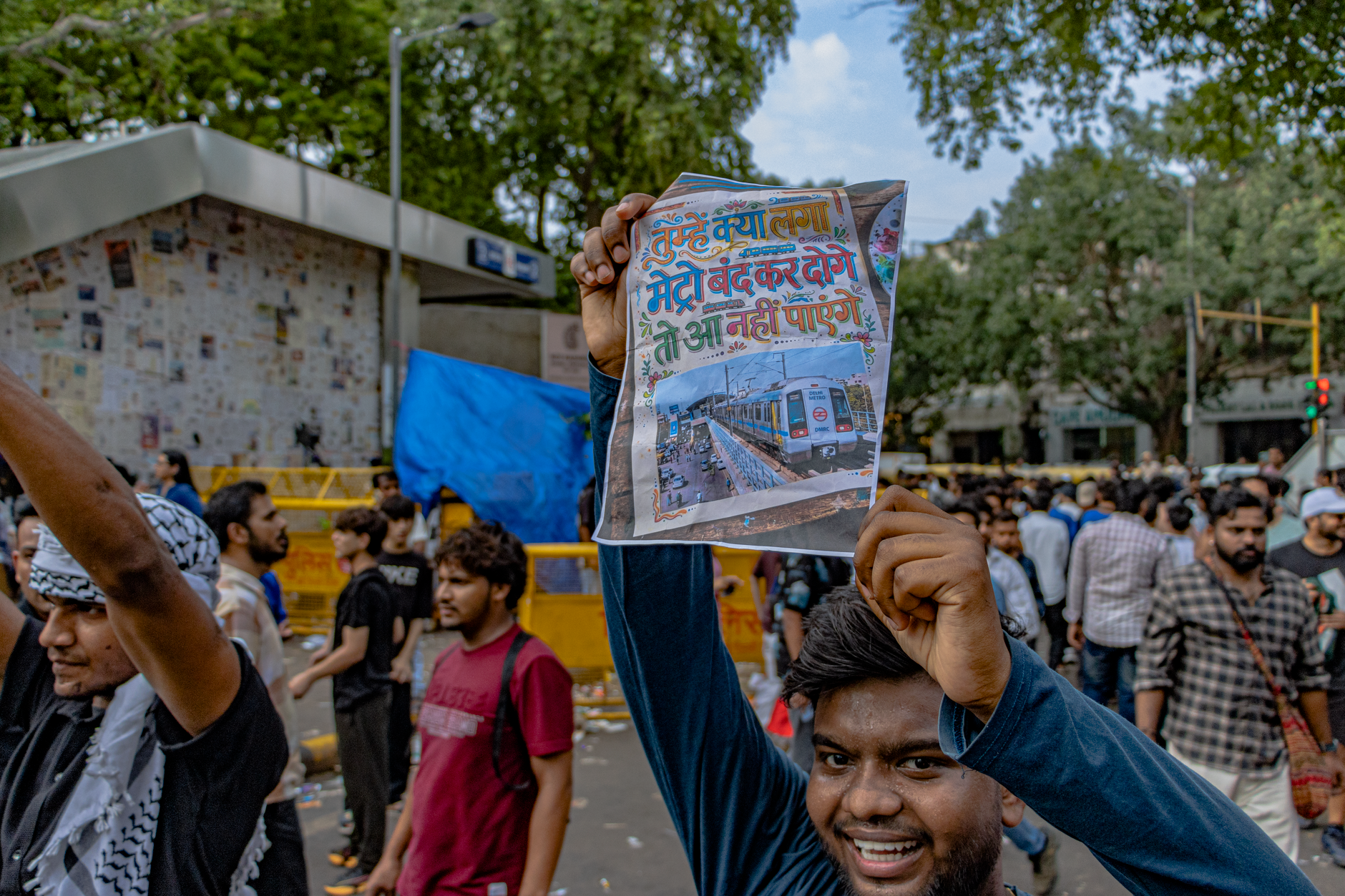
<p>The streets of Patna erupted in a sea of saffron scarves and determined chants as thousands of young Biharis gathered to demand accountability. The recent Bihar youth protest forced the state government into an unprecedented concession: withdrawing cases against arrested activists and ordering their release. This dramatic reversal, triggered by a forceful intervention from the Chief Justice of Patna (CJP) and a looming threat from opposition parties, has reshaped the political calculus and ignited a nationwide conversation about youth activism <a href="/article/social-norms-and-behavioral-change-how-culture-shapes-our-daily-choices-in-india" title="Social Norms and Behavioral Change: How Culture Shapes Our Daily Choices in India" class="internal-link">in India</a>.</p>
<h2>2. The Genesis – What Sparked the Youth Uprising?</h2>
<p>At its core, the Bihar youth protest was not a spontaneous outburst but the culmination of deep‑seated grievances. Unemployment among graduates hovered above 28 % in 2025, while the state’s education reforms sparked fears of a “degree‑inflation” trap. Agrarian distress in the countryside added a rural dimension, uniting students from Patna, Muzaffarpur, and Bhagalpur under a common banner: “Justice for the Future.”</p>
<p>The immediate catalyst came when the state education department announced a controversial restructuring of scholarship schemes, cutting funding for thousands of merit‑based awards. This decision ignited outrage, culminating in a massive rally on 12 August 2026, where protestors brandished banners demanding “Equitable Education, Not Empty Promises.”</p>
<p><a href="/article/how-the-blanket-telegram-ban-is-reshaping-social-media-legal-battles-user-impact-and-the-future-of-m" title="How the Blanket Telegram Ban is Reshaping Social Media: Legal Battles, User Impact, and the Future of Messaging Apps" class="internal-link">Social media</a> amplified the discontent, with hashtags like #BiharYouthRise trending for days. The protest’s peaceful nature turned volatile only when police used water cannons, a move that backfired by galvanizing more participants.</p>
<h3>Key Triggers Summarised</h3>
<ul>
<li><b>Policy backlash:</b> Sudden cut in scholarship funds.</li>
<li><b>Economic anxiety:</b> Youth unemployment at a record high.</li>
<li><b>Political neglect:</b> Perceived indifference of the ruling coalition.</li>
</ul>
Advertisement
Loading partner content...
<h2>3. Key Players and Stakeholders</h2>
<h3>3.1 The Youth Activists</h3>
<p>Prominent faces emerged from the crowd, each representing a distinct strand of Bihar’s youth fabric. <b>Ananya Singh</b>, a 24‑year‑old engineering graduate from Patna, became the unofficial spokesperson, articulating the movement’s demands in viral videos. <b>Rohit Kumar</b>, a law student from Muzaffarpur, organised legal aid camps for arrested protestors. Their grassroots networks were bolstered by organisations such as the <i>Bihar Student Union</i> and <i>Youth for Change India</i>, which provided logistical support and strategic messaging.</p>
<h3>3.2 The CJP (Chief Justice of Patna)</h3>
<p>The judiciary entered the fray when the Chief Justice of Patna, <b>Justice Madan Mohan</b>, took suo‑motu cognizance of the arrests. In a landmark oral observation, he warned that “theState cannot muzzle the voice of its future.” His intervention prompted the government to reconsider the legal posture, leading to a swift court‑ordered stay on the prosecutions.</p>
Advertisement
Loading partner content...
<h3>3.3 Opposition Parties</h3>
<p>Political rivals seized the moment, with the Janata Dal (United)‑led opposition coalition threatening a “new stir” if the government failed to withdraw the cases. Leaders like <b>Tejashwi Yadav</b> and <b>Sharad Yadav</b> framed the protest as a symptom of broader misgovernance, promising to champion the youth agenda in the upcoming elections.</p>
<h3>3.4 The Bihar Government</h3>
<p>The ruling coalition, headed by Chief Minister <b>Nitish Kumar</b>, found itself under intense pressure from both the streets and the legislative assembly. The administration, initially defensive, eventually opted for a strategic u‑turn to preserve coalition stability and avert a larger electoral backlash.</p>
<h2>4. Chronology of Events – From Protest to Withdrawal</h2>
<p><b>12 August 2026:</b> Thousands march to the State Assembly, demanding policy reversal. <br>
<b>15 August 2026:</b> Police arrest 112 activists; charges of sedition and unlawful assembly filed. <br>
<b>20 August 2026:</b> Justice Madan Mohan issues a stay order, citing constitutional rights. <br>
<b>25 August 2026:</b> Opposition parties convene a press conference, threatening statewide protests.</p>
<p><br>
<b>30 August 2026:</b> State Home Minister announces the withdrawal of all pending cases and orders immediate release of detainees.</p>
<p>Throughout the timeline, <blockquote>“The state must listen to its youth,”</blockquote> Justice Mohan remarked during a hearing, a statement that reverberated across media platforms.</p>
Advertisement
Loading partner content...
<h2>5. Legal Dimensions – Cases Withdrawn and Their Significance</h2>
<p>The legal battle centered on charges of sedition, unlawful assembly, and assault on public servants. Initially, the prosecution argued that the protest threatened public order, a narrative the courts found tenuous. By withdrawing the cases, the government signalled a willingness to respect judicial oversight, setting a precedent that may deter future over‑reach in protest‑related litigation.</p>
<p>Legal scholars note that this withdrawal could embolden activists nationwide, establishing a benchmark where judicial pressure can compel governmental concessions. However, they caution that the precedent is fragile, dependent on political will and the evolving interpretation of “public order” in Indian jurisprudence.</p>
<h2>6. Social and Cultural Impact</h2>
<p>The protest resonated deeply within Bihar’s cultural milieu. Young artists released rap anthems glorifying the movement, while street artists painted murals depicting the iconic “Hand of Justice” symbol. Digital activism surged, with TikTok and Instagram reels amassing millions of views, turning the protest into a meme‑culture phenomenon.</p>
<p>Civil society organisations reported a 42 % increase in youth enrollment for community service programmes in the months following the rally, indicating a newfound civic engagement. The event also sparked debates in academic circles about <a href="/article/why-jharkhand-students-are-protesting-a-deep-dive-into-education-rights-government-response-and-the-" title="Why Jharkhand Students Are Protesting: A Deep Dive into Education Rights, Government Response, and the Role of Public Figures like Rahul Gandhi" class="internal-link">the role of</a> digital platforms in shaping political discourse.</p>
<h2>7. Government’s Rationale – <a href="/article/why-the-whistle-is-trending-across-tamil-nadu-in-2026" title="Why the “Whistle” Is Trending Across Tamil Nadu in 2026" class="internal-link">Why the</a> U‑Turn?</h2>
<p>In a televised address, Chief Minister Nitish Kumar explained that “the government must align with the aspirations of the youth to maintain social harmony.” Internal party surveys indicated a 68 % disapproval rating among voters aged 18‑30, prompting a strategic retreat. Political analysts argue that the u‑turn was a calculated move to preserve coalition cohesion ahead of the 2026 state elections, where the youth vote could prove decisive.</p>
<p>Experts from the Indian Institute <a href="/article/unlocking-the-power-of-social-media-marketing-tactics" title="Unlocking the Power of Social Media Marketing Tactics" class="internal-link">of Social</a> Sciences highlighted that “the cost of continued confrontation outweighed the political gains,” underscoring the pragmatic calculus behind the decision.</p>
Advertisement
Loading partner content...
<h2>8. Opposition’s Threat – A New Stir?</h2>
<p>The opposition coalition, emboldened by the government’s concession, announced plans for a statewide “Jan Andolan” slated for September 2026. Their strategy includes mobilising farmer groups, student unions, and labor federations under a unified banner demanding broader governance reforms. Historical precedents, such as the 2015 “Lalu Raj” protests, suggest that such coordinated actions can force policy reversals, making this threat a serious tactical challenge for the ruling alliance.</p>
<h2>9. Future Outlook – Lessons for Social Movements</h2>
<p>Activists can draw three key lessons from the Bihar youth protest:</p>
<ul>
<li><b>Leverage Judicial Recourse:</b> Courts can act as powerful allies when constitutional rights are at stake.</li>
<li><b>Build Broad Coalitions:</b> Uniting students, farmers, and workers amplifies collective bargaining power.</li>
<li><b>Harness Digital Narratives:</b> Social media shapes public perception and sustains momentum.</li>
</ul>
<p>Policymakers, meanwhile, must recognise that ignoring youth grievances risks destabilising electoral fortunes. The incident underscores the need for proactive policy dialogue rather than reactive concessions.</p>
<h2>10. Conclusion – A Turning Point for Bihar’s Youth Politics</h2>
<p>The Bihar youth protest and the subsequent government u‑turn mark a pivotal moment in the state’s political evolution. It revealed the potency of organized youth dissent, the influence of judicial intervention, and the strategic pressures faced by political coalitions.</p>
<p>As the dust settles, a critical question emerges: <b>Will this breakthrough empower future generations to claim their rightful place in governance, or will it be a fleeting concession in a long‑standing struggle?</b></p>
Advertisement
Loading partner content...
<figure class="my-8 overflow-hidden rounded-3xl shadow-xl">
<img src="https://images.pexels.com/photos/13874850/pexels-photo-13874850.jpeg?auto=compress&cs=tinysrgb&dpr=2&h=650&w=940" alt="Bihar protest crowd" class="w-full h-[400px] object-cover" />
</figure>
<figure class="my-8 overflow-hidden rounded-3xl shadow-xl">
<img src="https://www.aljazeera.com/wp-content/uploads/2026/07/2026-07-25T101830Z_840978342_RC2XKMA139WW_RTRMADP_3_INDIA-POLITICS-1784975506.jpg?resize=1920%2C1440" alt="Chief Justice of Patna" class="w-full h-[400px] object-cover" />
</figure>
<figure class="my-8 overflow-hidden rounded-3xl shadow-xl">
<img src="https://static.toiimg.com/photo/msid-47529300/47529300.jpg" alt="Tejashwi Yadav" class="w-full h-[400px] object-cover" />
</figure>
<figure class="my-8 overflow-hidden rounded-3xl shadow-xl">
<img src="https://images.pexels.com/photos/34355527/pexels-photo-34355527.jpeg?auto=compress&cs=tinysrgb&dpr=2&h=650&w=940" alt="political meeting illustration" class="w-full h-[400px] object-cover" />
</figure></b></b></b></b></b></i></i></i></i>