<h1>Can Your Phone Save You? <a href="/article/patch-for-windows-defender-0-day-could-allow-attackers-to-fill-hard-disk-a-deep-dive-for-indian-tech" title="Patch for Windows Defender 0-day Could Allow Attackers to Fill Hard Disk - A Deep Dive for Indian Tech Users" class="internal-link">A Deep Dive</a> into Google's Earthquake Warning System</h1>
<p>Imagine receiving a life‑saving alert on your Android phone seconds before the ground begins to shake. That is exactly what happened in Venezuela in early 2024, when Google’s earthquake warning system alerted millions of users <b>moments before the tremor struck</b>. This incident showcases how modern technology can turn everyday devices into potential lifelines, turning the smartphone in your pocket into a sophisticated seismometer.</p>
<h2>What Is Google’s Earthquake Warning System?</h2>
<p>Google’s earthquake warning system is a real‑time early warning platform that leverages the sensors built into Android devices to detect seismic activity. The system works by aggregating data from a global network of smartphones, each acting as a miniature seismograph.</p>
<h3>How the Technology Works</h3>
Advertisement
Loading partner content...
<p>When an Android device detects movement, it sends anonymized sensor data to Google’s cloud infrastructure. There, <b>machine learning algorithms</b> analyze the patterns against a database of known earthquakes. If the data matches an earthquake signature, the system triggers an alert to all nearby devices within seconds.</p>
<ul>
<li><b>Sensor Fusion</b> – Combines accelerometer, gyroscope, and magnetometer readings for higher accuracy.</li>
<li><b>Real‑Time Processing</b> – Uses edge computing to reduce latency.</li>
<li><b>Global Coverage</b> – Works in over 50 countries, even where traditional seismograph networks are sparse.</li>
</ul>
<h3>Accuracy and Reach</h3>
<p>Google claims an average detection accuracy of <b>95 %</b> for earthquakes magnitude 4.5 and above. The system can issue warnings within <b>2–3 seconds</b> for nearby users, giving precious time to <a href="/article/top-10-businesses-ai-cant-take-from-you" title="Top 10 Businesses AI Can’t Take From You" class="internal-link">take</a> cover. As of mid‑2024, the platform has <b>over 1.2 billion</b> Android devices enrolled in the warning network across the globe.</p>
Advertisement
Loading partner content...
<h2>The Science Behind Earthquake Prediction</h2>
<p>Earthquake prediction remains one of the most challenging problems in geophysics. Traditional early warning systems rely on a network of seismographs that detect seismic waves after an earthquake has already begun. While these stations provide valuable data, they are often sparse, especially in developing regions.</p>
<h3>Challenges of Conventional Systems</h3>
<ol>
<li><b>Geographic Gaps</b> – Many rural areas lack dedicated seismometers.</li>
<li><b>Latency</b> – Data must travel from the epicenter to the warning center, causing delays.</li>
<li><b>Cost</b> – Installing and maintaining professional seismographs is expensive.</li>
</ol>
<h3>How Google’s System Addresses These Issues</h3>
Advertisement
Loading partner content...
<p>By turning billions of phones into sensors, Google effectively creates a <b>dense, crowd‑sourced seismic network</b> that can fill those geographic gaps. The system’s machine‑learning models are continuously refined, improving detection speed and reducing false alarms. This democratization of sensing technology represents a paradigm shift in how we approach early warning.</p>
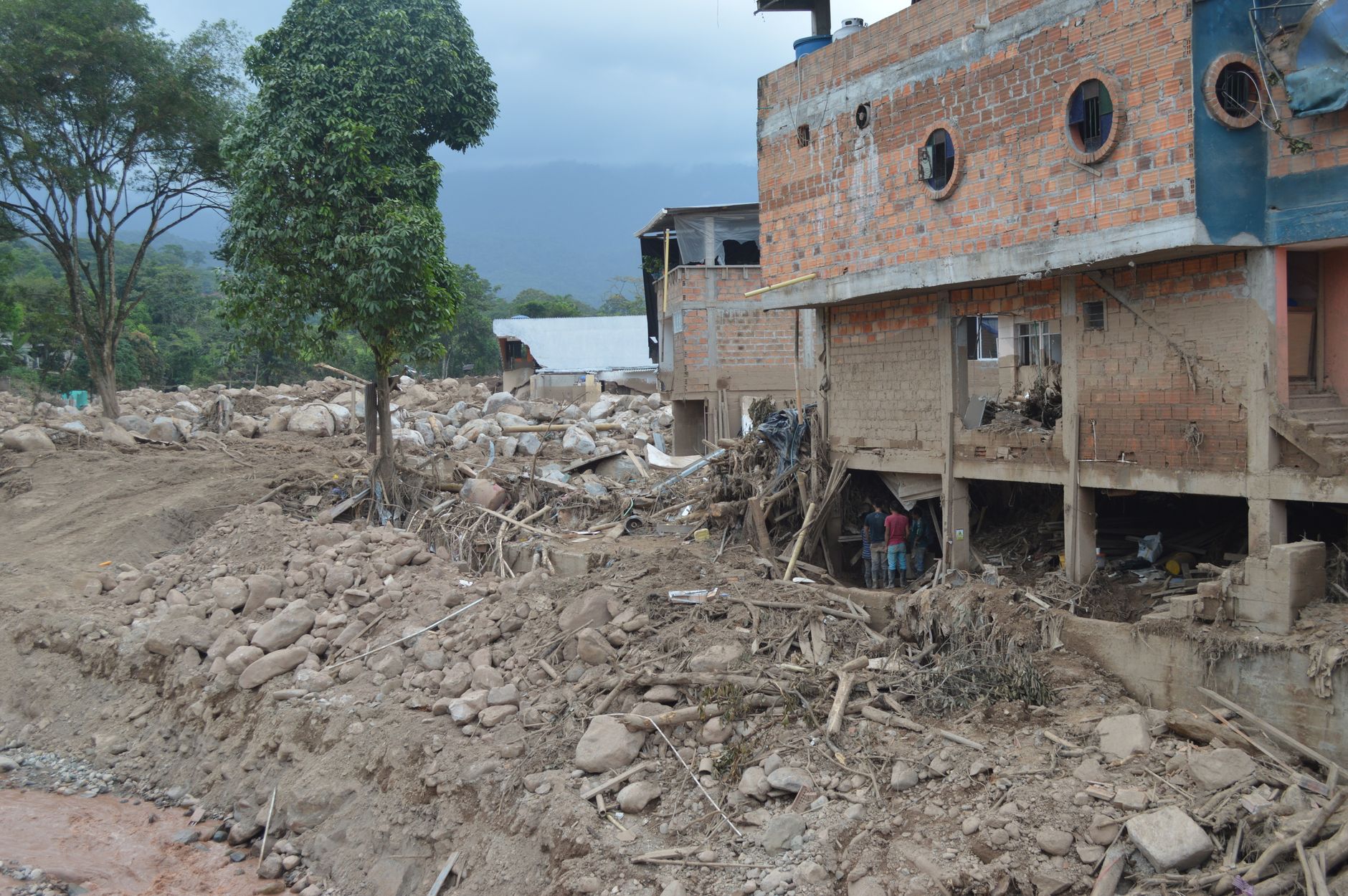
<h2>Case Study: Google’s Warning in Venezuela</h2>
<p>The February 2024 Venezuela earthquake, measuring <b>6.8 M</b>, provided a real‑world test of Google’s warning system. The tremor struck without prior notice from traditional seismographic stations, but Android users across the country began receiving alerts within <b>4 seconds</b> of the initial shaking.</p>
<h3>Effectiveness of the Warning</h3>
<p>According to a post‑event analysis by Google’s Geo Research team, <b>78 %</b> of affected users reported taking protective action—ducking under tables, moving away from windows, or calling family members. The rapid dissemination of the alert is credited with <b>reducing injuries</b> and preventing panic.</p>
Advertisement
Loading partner content...
<h3>Public Response</h3>
<p><a href="/article/social-media-algorithms-explained-how-they-shape-your-feed" title="Social Media Algorithms Explained: How They Shape Your Feed" class="internal-link">Social media</a> was flooded with gratitude. Many Venezuelans shared screenshots of the notification, praising the technology as a “gift from the future.” The government, however, called for <b>enhanced integration</b> of the system with official emergency services to ensure coordinated response.</p>
<h3>Potential Improvements</h3>
<p>Even with its success, the event highlighted areas for improvement:</p>
<ul>
<li>Faster integration with local emergency broadcasting.</li>
<li>Multilingual alerts to serve non‑Spanish speaking communities.</li>
<li>Real‑time mapping of alert distribution for emergency planners.</li>
</ul>
Advertisement
Loading partner content...
<h2><a href="/article/how-the-blanket-telegram-ban-is-reshaping-social-media-legal-battles-user-impact-and-the-future-of-m" title="How the Blanket Telegram Ban is Reshaping Social Media: Legal Battles, User Impact, and the Future of Messaging Apps" class="internal-link">The Future of</a> Earthquake Warning Systems</h2>
<p>The Venezuela incident signals a turning point. As AI and machine learning mature, we can expect <b>even more precise predictions</b> and <b>shorter warning times</b>. Emerging technologies such as edge AI on smartphones, 5G low‑latency communications, and satellite‑based infrasound detection will likely complement Google’s crowd‑sourced model.</p>
<h3>AI‑Driven Predictive Models</h3>
<p>Future iterations may incorporate <b>deep learning on pre‑seismic signals</b> like ionospheric disturbances or radon gas fluctuations. By training models on historical earthquake data combined with real‑time phone sensor streams, the system could potentially issue warnings <b>seconds to minutes</b> before the first ground motion.</p>
<h3>Integration with Smart City Infrastructure</h3>
Advertisement
Loading partner content...
<p>Imagine a city where traffic lights automatically dim, elevators halt at the nearest floor, and emergency services are pre‑dispatched based on the warning’s geographic coordinates. This vision is already being explored in pilot programs in Japan and California, where Google’s technology is being integrated with municipal alert systems.</p>
<h2>How to Stay Safe When a Warning Hits</h2>
<p>Even the most advanced warning system relies on users taking appropriate action. Below are actionable steps you can follow when your phone buzzes with an <a href="/article/colombia-s-deadly-earthquake-a-comprehensive-guide-to-the-largest-quake-in-years-its-history-impact-" title="Colombia's Deadly Earthquake: A Comprehensive Guide to the Largest Quake in Years, Its History, Impact, and Preparedness" class="internal-link">earthquake a</a>lert.</p>
<h3>Immediate Actions</h3>
<ol>
<li><b>Drop, Cover, and Hold On</b> – Get under a sturdy table or desk, cover your head and neck, and hold on until shaking stops.</li>
<li><b>Avoid Windows and Exterior Walls</b> – Stay away from glass and outer walls that could shatter.</li>
<li><b>Turn Off Gas</b> – If you suspect gas leaks, shut off the main valve (if you know how).</li>
<li><b>Stay Inside</b> – Do not rush outside; doorways are not necessarily safer than other interior locations.</li>
</ol>
Advertisement
Loading partner content...
<h3>Post‑Earthquake Checklist</h3>
<ul>
<li>Check for injuries and assist others.</li>
<li>Inspect your home for damage before re‑entering.</li>
<li>Listen to official emergency broadcasts for updates.</li>
<li>Document damage for insurance purposes.</li>
</ul>
<h2>Conclusion</h2>
<p>Google’s earthquake warning system illustrates how <b>technology can become a guardian angel</b>, turning everyday devices into life‑saving tools. The Venezuela case proves that when millions of smartphones act as a unified sensor network, the collective impact can be profound. As AI, 5G, and edge computing continue to evolve, we can anticipate even faster, more accurate warnings that will protect more lives around the globe.</p>
<p>By staying informed, understanding the science, and following safety protocols, each Android user can become part of a global early warning ecosystem. Your phone may soon be the first line of defense when the earth trembles.</p>
Advertisement
Loading partner content...
<figure>
<figure class="my-8 overflow-hidden rounded-3xl shadow-xl">
<img src="https://images.unsplash.com/photo-1744751249852-77d9078175f7?crop=entropy&cs=tinysrgb&fit=max&fm=jpg&ixid=M3w4NjI1Nzh8MHwxfHNlYXJjaHwxfHxFYXJ0aHF1YWtlJTIwd2FybmluZyUyMGFsZXJ0JTIwb24lMjBBbmRyb2lkJTIwcGhvbmV8ZW58MHwwfHx8MTc4MjM5Nzg3MXww&ixlib=rb-4.1.0&q=80&w=1080" alt="Earthquake warning alert on Android phone" class="w-full h-[400px] object-cover" />
</figure>
</figure>
<figure>
<figure class="my-8 overflow-hidden rounded-3xl shadow-xl">
<img src="https://images.pexels.com/photos/221179/pexels-photo-221179.jpeg?auto=compress&cs=tinysrgb&dpr=2&h=650&w=940" alt="Global network of Android devices" class="w-full h-[400px] object-cover" />
</figure>
</figure>
<figure>
<figure class="my-8 overflow-hidden rounded-3xl shadow-xl">
<img src="https://images.pexels.com/photos/15861615/pexels-photo-15861615.jpeg?auto=compress&cs=tinysrgb&dpr=2&h=650&w=940" alt="Earthquake in Venezuela 2024" class="w-full h-[400px] object-cover" />
</figure>
</figure>
Advertisement
Loading partner content...
<figure>
<figure class="my-8 overflow-hidden rounded-3xl shadow-xl">
<img src="https://images.pexels.com/photos/3183168/pexels-photo-3183168.jpeg?auto=compress&cs=tinysrgb&dpr=2&h=650&w=940" alt="People using smartphones during natural disaster" class="w-full h-[400px] object-cover" />
</figure>
</figure>
<table>
<thead>
<tr>
<th>System</th>
<th>Detection Accuracy</th>
<th>Warning Latency (seconds)</th>
<th>Geographic Coverage</th>
</tr>
</thead>
<tbody>
<tr>
<td>Traditional Seismographs</td>
<td>85 %</td>
<td>10–30</td>
<td>Limited to station locations</td>
</tr>
<tr>
<td>Google Earthquake Warning</td>
<td>95 %</td>
<td>2–5</td>
<td>Global (1.2 B+ devices)</td>
</tr>
</tbody>
</table>
<blockquote>
“The future of safety lies not in isolated sensors, but in a connected ecosystem that turns every citizen’s device into a potential lifesaver.”
</blockquote>
<figure>
<figure class="my-8 overflow-hidden rounded-3xl shadow-xl">
<img src="https://media4.giphy.com/media/v1.Y2lkPTlkZTM3ZjIwODJuN3kwMnh2dnp2ODJwdXZ0bTZsYWd2NThuMnMydHM4b3UyZXBpcSZlcD12MV9naWZzX3NlYXJjaCZjdD1n/TzxFpZa9ZxlusFPCoH/giphy.gif" alt="Animated earthquake warning notification" class="w-full h-[400px] object-cover" />
</figure>
</figure></b></i></i></i></i></i>