<h1>Ceuta Border Crisis Explained: History, Causes, Human Impact, and What Lies Ahead for Spain-Morocco Migration</h1>
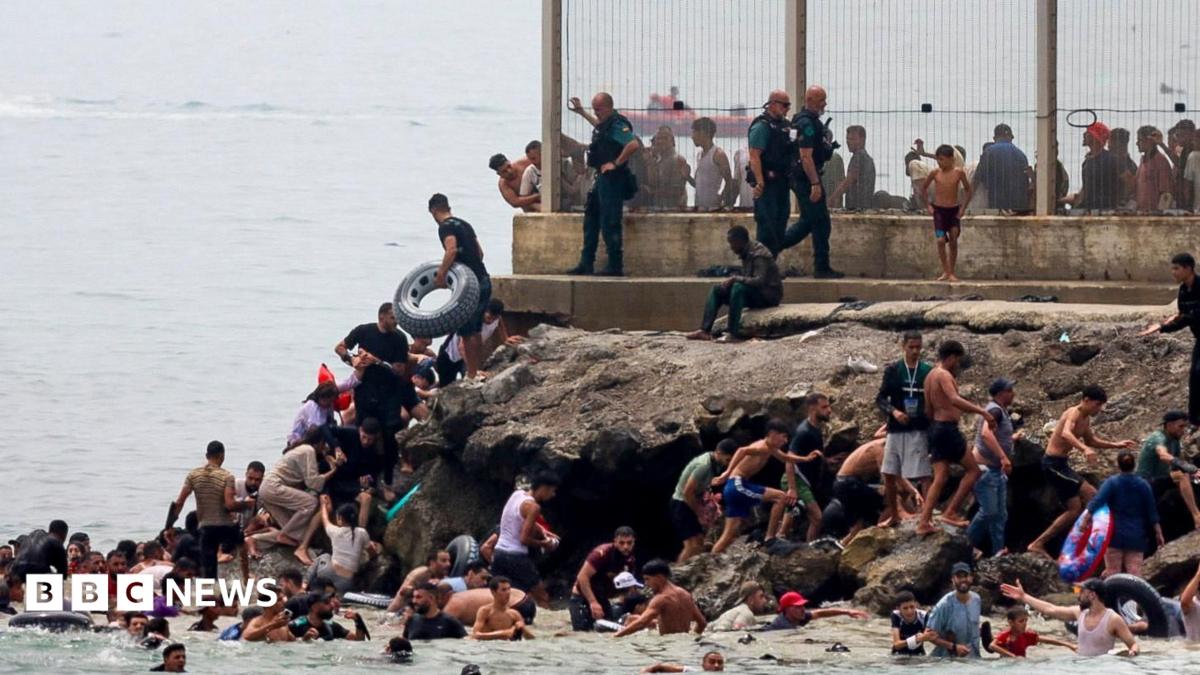
<p>As we navigate through <b>mid-2026</b>, the <a href="/article/navigating-geopolitical-tensions-a-strategic-response-to-israeli-criticism" title="Navigating Geopolitical Tensions: A Strategic Response to Israeli Criticism" class="internal-link">geopolitical</a> landscape of the Mediterranean has never been more volatile. The tiny Spanish enclave of Ceuta remains at the epicenter of a <b>complex humanitarian crisis</b> that challenges the very definition of European borders. What was once a localized issue of movement has evolved into a <b><a href="/article/how-india-s-5-point-maritime-trade-blueprint-is-redefining-global-shipping-a-complete-guide" title="How India’s 5‑Point Maritime Trade Blueprint Is Redefining Global Shipping – A Complete Guide" class="internal-link">global</a> symbol of the tension</b> between national sovereignty and human rights.</p>
<p>The <b>Ceuta migration</b> phenomenon is not a sudden outburst but the result of decades of shifting political alliances and economic disparities. As the <b>Spain-Morocco border</b> experiences unprecedented surges, the world is forced to confront a difficult question: <b>How does a modern democracy balance security with compassion?</b> This article explores the intricate layers of this crisis.</p>
<figure class="my-8 overflow-hidden rounded-3xl shadow-xl">
<img src="https://images.pexels.com/photos/24778028/pexels-photo-24778028.jpeg?auto=compress&cs=tinysrgb&dpr=2&h=650&w=940" alt="Mediterranean Sea Coastline" class="w-full h-[400px] object-cover" />
</figure>
Advertisement
Loading partner content...
<h2>The Historical Context: A Border Shaped by Centuries</h2>
<p>To understand why Ceuta is so critical today, we must look back at its unique status. Unlike most Spanish territories, Ceuta is an <b>autonomous city</b> located on the North African coast. Its history is a tapestry of Phoenician, Roman, and Islamic influences, eventually becoming a <b>Spanish stronghold</b>. This historical anomaly creates a unique legal and political dynamic that differs from mainland Spain.</p>
<p>For centuries, the border was a point of trade and cultural exchange. However, the <b>modern era has transformed this gateway</b> into a high-security perimeter. The distinction between a "legal" entry and an "irregular" attempt is where much of the <b>political friction</b> arises. As 2026 progresses, the <b>geopolitical leverage</b> held by Morocco over Spain has become a central theme in Mediterranean diplomacy.</p>
<h3>The Evolution of Migration Patterns</h3>
Advertisement
Loading partner content...
<p>Migration through Ceuta has moved through several distinct phases:</p>
<ul>
<li><b>The Era of Economic Migration (Pre-2010s):</b> Primarily driven by the search for labor opportunities in Europe.</li>
<li><b>The Refugee Surge (2015-2020):</b> A shift toward individuals fleeing conflict in Sub-Saharan Africa <a href="/article/dipke-and-the-cockroach-janta-party-the-unconventional-force-reshaping-indian-politics" title="Dipke and the Cockroach Janta Party: The Unconventional Force Reshaping Indian Politics" class="internal-link">and the</a> Middle East.</li>
<li><b>The Digitalized Border Era (2021-2026):</b> Characterized by <b>highly organized smuggling networks</b> using sophisticated technology to evade surveillance.</li>
</ul>
<p>In the current <b>2026 climate</b>, the movement is no longer just about people walking through gates. It involves <b>complex maritime routes</b> and high-stakes negotiations between Madrid and Rabat. This has turned the border into a <b>geopolitical bargaining chip</b> used to secure cooperation on counter-terrorism and trade.</p>
<figure class="my-8 overflow-hidden rounded-3xl shadow-xl">
<img src="https://images.pexels.com/photos/8828587/pexels-photo-8828587.jpeg?auto=compress&cs=tinysrgb&dpr=2&h=650&w=940" alt="Map of Mediterranean" class="w-full h-[400px] object-cover" />
</figure>
Advertisement
Loading partner content...
<h2>The Root Causes: Why the Surges Continue</h2>
<p>It is a mistake to view the <b>Ceuta migration</b> crisis as a purely security-related issue. The drivers are deeply rooted in systemic global inequalities. To solve the crisis, one must look at the <b>push factors</b> in Africa and the <b>pull factors</b> in Europe.</p>
<p><b>The Economic Disparity:</b> The gap between the North African economies and the European Union remains vast. Even <a href="/article/microsoft-s-xbox-to-shift-obsidian-studio-to-new-fallout-video-game-a-new-era-for-gaming-in-2026" title="Microsoft’s Xbox to Shift Obsidian Studio to New ‘Fallout’ Video Game: A New Era for Gaming in 2026" class="internal-link">in 2026</a>, despite various development initiatives, the <b>aspiration for upward mobility</b> drives thousands to risk everything for a chance at a European life. The dream of stability is a powerful motivator that <b>no border wall can fully suppress</b>.</p>
<p><b>Climate Change and Resource Scarcity:</b> We cannot ignore the environmental factor. The Sahara and Sahel regions are facing <b>unprecedented droughts and desertification</b>. For many, migration is not a choice but a <b>survival mechanism</b> as traditional agriculture becomes impossible. The <b>humanitarian crisis Ceuta</b> is directly linked to the global climate emergency.</p>
Advertisement
Loading partner content...
<p><b>Political Instability:</b> While the Mediterranean region has seen periods of stability, the <b>shifting political winds</b> in North and West Africa continue to create pockets of uncertainty. This instability creates a constant flow of people seeking <b>asylum and legal protection</b> under international law.</p>
<h2>The Human Cost: Beyond the Headlines</h2>
<p>While politicians debate statistics and border security, the <b>human reality is devastating.</b> The term "irregular migration" often masks the <b>harrowing experiences</b> of individuals. Every news cycle that reports on a surge at the fence ignores the <b>personal tragedies</b> occurring in the shadows.</p>
<p>One of the most pressing concerns in 2026 is the rising number of <b>migrant deaths Ceuta</b>. Whether it is through exhaustion during attempts to cross the Strait of Gibraltar or the dangers of the fence itself, the <b>loss of life is a stain on the collective conscience</b> of the international community.</p>
<blockquote>
"The border is not just a line on a map; for many, it is a threshold between hope and certain death. We must prioritize human dignity over political posturing."
<br>— <i>Human Rights Observer, 2026 Report</i>
</blockquote>
Advertisement
Loading partner content...
<p>The <b>psychological impact</b> on those who survive the journey is equally profound. Many arrive in Ceuta or mainland Spain suffering from <b>severe PTSD</b>. The trauma of the journey, combined with the <b>uncertainty of their legal status</b>, creates a cycle of vulnerability that is difficult to break.</p>
<figure class="my-8 overflow-hidden rounded-3xl shadow-xl">
<img src="https://images.pexels.com/photos/10180651/pexels-photo-10180651.jpeg?auto=compress&cs=tinysrgb&dpr=2&h=650&w=940" alt="Silhouette of person walking" class="w-full h-[400px] object-cover" />
</figure>
<h2>Comparing Migration Realities: Ceuta vs. Melilla</h2>
<p>While Ceuta is a major focal point, it is essential to compare it with its sister enclave, Melilla, to understand the regional scope. The dynamics are similar, but the <b>strategic pressures</b> differ.</p>
Advertisement
Loading partner content...
<table border="1">
<thead>
<tr>
<th>Feature</th>
<th>Ceuta Context (2026)</th>
<th>Melilla Context (2026)</th>
</tr>
</thead>
<tbody>
<tr>
<td><b>Primary Route</b></td>
<td>Land/Maritime mix</td>
<td>Predominantly Land (Fence)</td>
</tr>
<tr>
<td><b>Political Dynamic</b></td>
<td>High-stakes diplomacy</td>
<td>Localized security focus</td>
</tr>
<tr>
<td><b>Risk Factor</b></td>
<td>High (Maritime/Land)</td>
<td>Extreme (Fence crossings)</td>
</tr>
<tr>
<td><b>EU Oversight</b></h3>
<td>Frontex involvement</td>
<td>Spanish/Frontex hybrid</td>
</tr>
</tbody>
</table>
<h2>The Evolving EU Migration Policy</h2>
<p>The <b>EU migration policy</b> has undergone a massive transformation heading into 2026. The focus has shifted from "crisis management" to "integrated border management." This involves a <b>high-tech approach</b> involving drones, AI-driven surveillance, and increased cooperation with third-party nations.</p>
<p>The <b>New Pact on Migration and Asylum</b>, which has been a point of contention for years, has finally reached a stage of implementation. This policy seeks to:
<ol>
<li><b>Streamline asylum processes</b> to reduce the backlog of claims.</li>
<li><b>Establish solidarity mechanisms</b> to distribute the responsibility of hosting migrants across EU member states.</li>
<li><b>Enhance external border controls</b> through technological advancement and intelligence sharing.</li>
</ol>
</p>
<p>However, these policies are <b>highly controversial</b>. Critics argue that the emphasis on "externalization"—paying countries like Morocco to act as border guards—effectively <b>outsources human rights responsibilities</b>. This creates a moral dilemma: <b>Can Europe claim to uphold human rights while relying on third-party nations to manage its borders?</b></p>
Advertisement
Loading partner content...
<figure class="my-8 overflow-hidden rounded-3xl shadow-xl">
<img src="https://s.yimg.com/lo/mysterio/api/474a556f35236d09bc3b6dcfb07debc80671e9dd7887b27c1607c14f4ac0c6a7/lightyear_networkapi/resizefill_w451_h800;quality_80;format_webp/https:%2F%2Fmedia.zenfs.com%2Fen%2Freuters.com%2F08135131ceddfb10f936737d189f487b" alt="EU Flag" class="w-full h-[400px] object-cover" />
</figure>
<h2>Geopolitics: The Spain-Morocco Relationship</h2>
<p>The <b>Spain-Morocco border</b> is more than a physical line; it is a <b>geopolitical barometer</b>. Spain relies on Morocco for several critical needs: <b>counter-terrorism, migration management, and energy security</b>. This creates a relationship of "asymmetric interdependence."</p>
<p>When tensions rise, migration often becomes a <b>tool of political pressure</b>. We have seen instances where sudden increases in border crossings coincide with diplomatic disputes over territory or fishing rights. This <b>weaponization of migration</b> is a major concern for international observers, as it places vulnerable people in the middle of a <b>high-stakes political game</b>.</p>
Advertisement
Loading partner content...
<p>As we move through 2026, the <b>stability of the Mediterranean</b> depends on a stable relationship between Madrid and Rabat. A <b>collaborative approach</b> that focuses on development in Africa, rather than just containment at the border, is widely seen as the only sustainable path forward.</p>
<h2>What Lies Ahead? Future Trends and Predictions</h2>
<p>Looking toward the <b>latter half of 2026 and beyond</b>, several trends are likely to define the Ceuta situation:</p>
<p><b>1. The Rise of AI-Driven Borders:</b> We expect to see <b>autonomous surveillance systems</b> becoming the standard at the Ceuta border. While this may increase "efficiency," it raises significant questions about <b>algorithmic bias</b> and the loss of human judgment in humanitarian situations.</p>
<p><b>2. Climate-Induced Migration Surges:</b> As environmental degradation accelerates in the Sahel, we predict that <b>migration surges will become more frequent and unpredictable.</b> This will require a shift from "reactive" to "proactive" migration management.</p>
Advertisement
Loading partner content...
<p><b>3. Increased Legal Scrutiny:</b> The <b>European Court of Human Rights</b> is expected to issue more landmark rulings regarding the treatment of migrants at EU borders. This will force a <b>re-evaluation of border enforcement tactics</b> to ensure they align with international law.</p>
<h2>Actionable Insights: How the Global Community Can Respond</h2>
<p>The <b>Ceuta migration crisis</b> cannot be solved by one nation alone. It requires a <b>multi-dimensional approach</b> that addresses the root causes while maintaining human dignity. Here is what is needed:</p>
<ul>
<li><b>Invest in African Development:</b> Long-term stability requires <b>economic empowerment</b> in the countries of origin to reduce the necessity of migration.</li>
<li><b>Humanize the Policy:</b> Migration policies must move away from purely security-based metrics and incorporate <b>humanitarian impact assessments</b>.</li>
<li><b>Strengthen International Law:</b> Ensuring that <b>asylum seekers' rights</b> are protected, even in high-security environments, is vital for global stability.</li>
<li><b>Climate Justice:</b> Global leaders must address the <b>climate-migration nexus</b> by supporting adaptation strategies in vulnerable African nations.</li>
</ul>
Advertisement
Loading partner content...
<p>In conclusion, the <b>Ceuta migration</b> crisis is a microcosm of the challenges facing the 21st century. It is a collision of <b>history, geography, climate, and politics.</b> As we look to the future, the ability of the <b>Spain-Morocco border</b> to function as a gateway rather than a battleground will define the moral and political character of the <b>European Union</b>.</p>
<p>The world is watching, and the <b>human cost</b> remains the most urgent metric of our success or failure in managing this <b>complex humanitarian crisis</b>.</p></b></b></i></i></i></i>