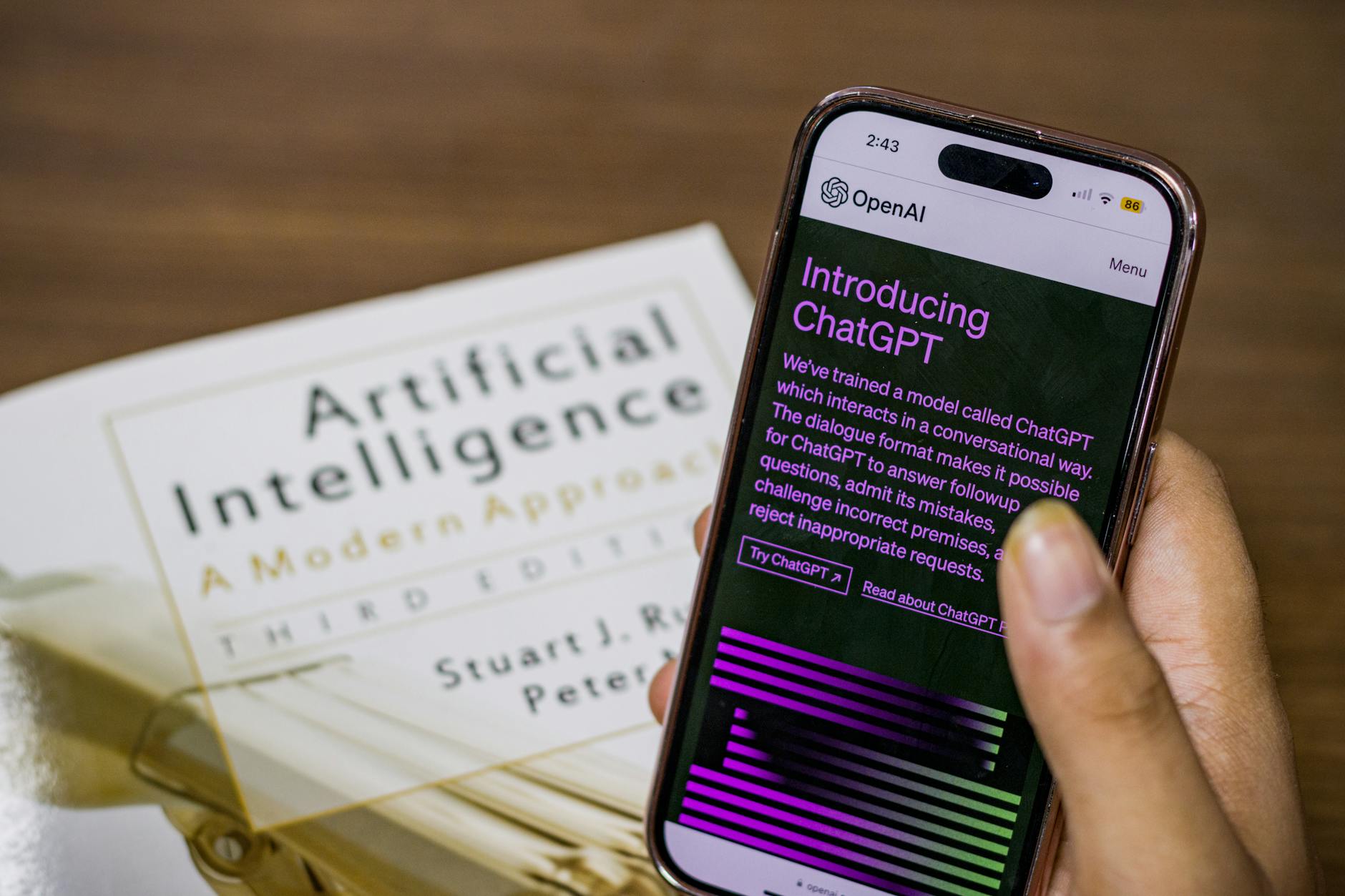
<h1>ChatGPT Now Lets You Share Medical Records — Is This a Game-Changer or a Privacy Minefield?</h1>
<p>The landscape of artificial intelligence took a significant turn in 2026 when OpenAI expanded ChatGPT's capabilities to include a dedicated space for sharing medical records. Originally reported by <b>CBS News</b> and covered extensively by <b>Technology</b> outlets worldwide, this development has sparked intense debate among healthcare professionals, privacy advocates, and everyday users. But what does this actually mean for someone sitting in a clinic in Mumbai or a hospital in Hyderabad?</p>
<p>The short answer is: it depends. While the promise of AI-powered health management is thrilling, the implications for data privacy — especially within the Indian context — demand a closer look. This guide breaks down everything you need to know, from the technical mechanics to the real-world risks you should be weighing before uploading a single document.</p>
<h2>What Exactly Is ChatGPT's Medical Records Feature?</h2>
<p>OpenAI introduced a new workspace within ChatGPT that allows users to upload, store, and interact with their medical documents. This includes lab reports, prescription scans, discharge summaries, imaging records, and even vaccination histories. The AI can then analyze these documents, highlight abnormalities, summarize diagnoses, and help users prepare questions for their doctors.</p>
Advertisement
Loading partner content...
<p>Here is what the feature offers at a glance:</p>
<ul>
<li><b>Document Upload:</b> Support for PDFs, images of prescriptions, and scanned reports in multiple formats.</li>
<li><b>AI Summarization:</b> ChatGPT can condense lengthy medical documents into plain-language summaries.</li>
<li><b>Trend Analysis:</b> Track changes in blood work, vitals, or symptoms over time across multiple uploads.</li>
<li><b>Question Preparation:</b> Generate a list of relevant questions to ask your doctor based on your records.</li>
<li><b>Medication Reminders:</b> Extract dosage and timing information from prescriptions for personalized alerts.</li>
</ul>
<figure class="my-8 overflow-hidden rounded-3xl shadow-xl">
<img src="https://images.pexels.com/photos/8376171/pexels-photo-8376171.jpeg?auto=compress&cs=tinysrgb&dpr=2&h=650&w=940" alt="Medical Technology Digital Health" class="w-full h-[400px] object-cover" />
</figure>
Advertisement
Loading partner content...
<p>On paper, this sounds like a dream for anyone juggling multiple specialists or managing a chronic condition. But the moment you place your medical data on an AI platform, the calculus changes dramatically.</p>
<h2>Why This Matters More Than Ever in 2026</h2>
<p>The year 2026 has seen an explosion in AI adoption across India's healthcare sector. According to recent <b>Technology</b> sector reports, over 60% of urban Indian hospitals now use some form of AI for diagnostic support or patient management. Telemedicine platforms have matured, and consumers are more comfortable than ever with digital health tools. Against this backdrop, ChatGPT's entry into personal health record management feels almost inevitable — yet it raises questions that deserve urgent attention.</p>
<p>Consider this: India produces over 2 million doctors' reports daily, and the average Indian patient interacts with 3 to 4 different healthcare providers in a year. Fragmented records lead to duplicated tests, conflicting prescriptions, and — in worst-case scenarios — medical errors. A centralized AI tool that can pull these records together seems like the perfect solution.</p>
Advertisement
Loading partner content...
<blockquote>
"AI has the potential to democratize health literacy in India. But democratization without data protection is just a different kind of vulnerability."
<br>— Dr. Ananya Sharma, Digital Health Policy Researcher, AIIMS New Delhi
</blockquote>
<h2>The Privacy Question: Where Does Your Data Go?</h2>
<p>This is the elephant in the room, and it refuses to leave. When you upload medical records to ChatGPT, you are entrusting deeply personal information to a third-party server. The <b>CBS News</b> report that brought this feature to public attention also highlighted the terms of service — which state that user data may be used to improve OpenAI's models unless you opt out.</p>
<p><a href="/article/mastering-time-management-a-self-help-guide-for-indian-professionals" title="Mastering Time Management: A Self-Help Guide for Indian Professionals" class="internal-link">For Indian</a> users, this intersects with a complex regulatory framework:</p>
<table border="1" cellpadding="8" cellspacing="0">
<tr><th>Regulation / Framework</th><th>What It Covers</th><th>Relevance to ChatGPT</th></tr>
<tr><td>Digital Information Security in Healthcare Act (DISHA)</td><td>Protection of digital health data in India</td><td>ChatGPT is not a designated "health data custodian" under DISHA</td></tr>
<tr><td>Information Technology Act, 2000 (amended 2023)</td><td>General data protection and cyber security</td><td>Applies to all digital platforms including AI tools</td></tr>
<tr><td>Supreme Court Right to Privacy Verdict (2017)</td><td>Privacy as a fundamental right</td><td>Medical data falls under sensitive personal information</td></tr>
<tr><td>EU GDPR (extraterritorial)</td><td>Data of EU citizens</td><td>Relevant only for Indian users with EU ties</td></tr>
</table>
Advertisement
Loading partner content...
<p>The gap is clear: <b>DISHA</b> was designed for healthcare providers and insurers, not for AI chatbot platforms. This means your medical records uploaded to ChatGPT exist in a regulatory grey zone. There is no Indian law that specifically governs how an American AI company handles your radiology scans.</p>
<h2>5 <a href="/article/how-to-develop-self-awareness-a-practical-guide-for-indians" title="How to Develop Self-Awareness: A Practical Guide for Indians" class="internal-link">Practical</a> Tips Before You Upload Anything</h2>
<p>If you are still considering using ChatGPT to manage your medical records, here are actionable steps to protect yourself. These are not theoretical — they are based on current <a href="/article/email-marketing-best-practices-a-complete-guide-for-indian-businesses-in-2024" title="Email Marketing Best Practices: A Complete Guide for Indian Businesses in 2024" class="internal-link">best practices</a> recommended by cybersecurity experts and privacy lawyers in India.</p>
<h3>1. Read the Fine Print — Particularly the Data Usage Clause</h3>
<p>OpenAI's terms allow model training on user data unless you explicitly opt out. Navigate to your account settings and disable data sharing for model improvement. This is not intuitive, and many users miss it entirely.</p>
Advertisement
Loading partner content...
<h3>2. Redact Personally Identifiable Information</h3>
<p>Before uploading any document, use a PDF editor or image tool to black out your Aadhaar number, full address, phone number, and any photographs. ChatGPT does not need your face on a prescription to analyze your lab results.</p>
<h3>3. Use a Dedicated, Separate Account</h3>
<p>Do not use your primary ChatGPT account for medical data. Create a separate account with a unique email and a strong, distinct password. This limits the blast radius if that account is ever compromised.</p>
<h3>4. Understand What ChatGPT Cannot Do</h3>
<p>ChatGPT is not a diagnostic tool, and OpenAI makes this clear in its disclaimers. It cannot replace a radiologist's interpretation of a CT scan or a cardiologist's assessment of an ECG. Treat its summaries as preparatory aids, not medical conclusions.</p>
Advertisement
Loading partner content...
<h3>5. Delete Records After Use</h3>
<p>Once you have extracted the insights you need, delete the uploaded documents from your ChatGPT workspace. Do not let sensitive health data sit indefinitely on a server you do not control.</p>
<figure class="my-8 overflow-hidden rounded-3xl shadow-xl">
<img src="https://images.pexels.com/photos/30885763/pexels-photo-30885763.jpeg?auto=compress&cs=tinysrgb&dpr=2&h=650&w=940" alt="Data Privacy Cybersecurity Digital" class="w-full h-[400px] object-cover" />
</figure>
<h2>What Experts Say About AI and Health Data</h2>
<p>The <b>Technology</b> community is divided on this issue. Some see it as a natural evolution of personal health management. Others view it as a dangerous normalization of uploading sensitive data to platforms not built for healthcare.</p>
Advertisement
Loading partner content...
<p>Dr. Rajiv Mehta, a health informatics professor at IIT Bombay, offers a nuanced perspective:</p>
<blockquote>
"We are at a crossroads. The convenience of AI health tools is real, but the infrastructure to protect that data in India is still catching up. Users must understand that convenience should never come at the cost of their medical privacy."
</blockquote>
<p>On the other hand, Dr. Priya Narayanan, who works with AI startups focused on rural healthcare delivery in <a href="/article/why-the-whistle-is-trending-across-tamil-nadu-in-2026" title="Why the “Whistle” Is Trending Across Tamil Nadu in 2026" class="internal-link">Tamil Nadu</a>, argues that the benefits outweigh the risks for many patients:</p>
<blockquote>
"In villages where patients travel hours to see a specialist, having an AI tool that can summarize a lab report in Tamil or Hindi and highlight critical values could be genuinely life-saving. The privacy conversation matters, but we cannot let perfect be the enemy of good."
</blockquote>
<p>Both perspectives hold merit. The key is informed consent — understanding exactly what you are agreeing to when you click "upload."</p>
Advertisement
Loading partner content...
<h2>The Bigger Picture: How India Is Handling Digital Health</h2>
<p>India's push toward digital health infrastructure has been accelerating. The Ayushman Bharat Digital Mission (ABDM), now rebranded and expanded in 2026, aims to give every Indian citizen a unique Health ID linked to their medical records across facilities. The government's <b>Technology</b> push in healthcare is ambitious, but it operates within a sovereign framework designed to protect Indian citizens' data.</p>
<p>ChatGPT's medical records feature, by contrast, operates under U.S. corporate governance. This creates an asymmetry: your data, generated in India, stored on servers potentially outside India, governed by terms written in California, and analyzed by models trained on global data. For a country that is still formulating comprehensive data protection legislation — the Digital Personal Data Protection Act (DPDPA) 2023 is still being operationalized — this is a significant concern.</p>
<p>Here is a quick comparison of local versus global options for managing health records digitally:</p>
Advertisement
Loading partner content...
<table border="1" cellpadding="8" cellspacing="0">
<tr><th>Feature</th><th>ABDM / Indian Health Platforms</th><th>ChatGPT / Global AI Tools</th></tr>
<tr><td>Data Residency</td><td>Data stored within India</td><td>Data may be stored on global servers</td></tr>
<tr><td>Regulatory Oversight</td><td> governed by DISHA and DPDPA</td><td>Not classified as a health data platform in India</td></tr>
<tr><td>Language Support</td><td>Designed for Indian languages</td><td>Multilingual but not tailored for Indian regional dialects in medical context</td></tr>
<tr><td>Interoperability</td><td>Built for Indian hospital systems</td><td>Works with any uploaded document, regardless of origin</td></tr>
<tr><td>User Control</td><td>Citizen owns and controls their Health ID data</td><td>Terms of service favor the platform provider</td></tr>
</table>
<p>The table makes one thing clear: for Indian users, domestic health platforms offer stronger legal protections. ChatGPT's feature should be viewed as a supplementary tool, not a replacement for India's growing digital health ecosystem.</p>
<h2>Who Should Use This Feature — and Who Should Avoid It</h2>
<p>Not every user faces the same risk profile. Here is a straightforward breakdown based on current expert consensus:</p>
<ul>
<li><b>Consider using it if:</b> You are managing a complex, multi-condition health profile, you are tech-savvy enough to redact personal identifiers, and you understand that ChatGPT is an aid, not a doctor.</li>
<li><b>Avoid it if:</b> You have not read OpenAI's data policies in detail, you are uploading records that contain information about others (such as family members), or you are uncomfortable with the idea of your health data being used for AI training.</li>
<li><b>Proceed with extreme caution if:</b> You are dealing with sensitive conditions such as <a href="/article/thinking-of-doing-something-different-up-medical-student-dies-of-suicide-a-call-for-mental-health-re" title="“Thinking Of Doing Something Different”: UP Medical Student Dies Of Suicide – A Call for Mental Health Reform in India" class="internal-link">mental health</a>, reproductive health, or HIV status. The stigma attached to these conditions in parts of Indian society makes unauthorized exposure especially damaging.</li>
</ul>
Advertisement
Loading partner content...
<h2>What the Future Holds</h2>
<p>OpenAI has signaled that this medical records feature is just the beginning. Future updates may include integration with Indian health ID systems, real-time translation of medical documents into regional languages, and AI-generated health summaries that can be shared directly with physicians. The <b>Technology</b> world is watching closely.</p>
<p>However, the regulatory environment is also evolving. India's DPDPA enforcement rules are expected to tighten in 2026 and 2027, and there are growing calls for a dedicated framework governing AI handling of health data. Platforms like ChatGPT may soon be required to comply with Indian data localization rules — meaning Indian user data would need to be stored on servers within the country.</p>
<p>Until those frameworks are fully operational, the responsibility falls on the user. <b>You</b> are the gatekeeper of your own medical data, and no AI tool should change that fundamental truth.</p>
<figure class="my-8 overflow-hidden rounded-3xl shadow-xl">
<img src="https://images.pexels.com/photos/8439072/pexels-photo-8439072.jpeg?auto=compress&cs=tinysrgb&dpr=2&h=650&w=940" alt="Future Technology Healthcare AI" class="w-full h-[400px] object-cover" />
</figure>
Advertisement
Loading partner content...
<h2>Final Thoughts: Empowerment Requires Awareness</h2>
<p>The fact that ChatGPT now has a space for sharing medical records is neither entirely good nor entirely bad. It is a tool — a powerful one — and like all powerful tools, its value depends entirely on how it is used. The CBS News coverage brought this feature to millions of eyes, and that attention is valuable precisely because it forces a conversation about digital health privacy that India has been overdue to have.</p>
<p>If you choose to use this feature, do so with your eyes wide open. Redact, opt out, delete, and never treat AI-generated insights as a substitute for professional medical advice. The future of health technology in India is bright, but it must be built on a foundation of trust, transparency, and informed consent.</p>
<p><b>Technology</b> should serve people — not the other way around. Make sure you are on the right side of that equation.</p></b></b></b></b></i></i></i>