<h1>Decoding India's '<a href="/article/protest-will-continue-until-education-minister-pradhan-resigns-cockroach-janta-party-founder-dipke" title="Protest will continue until Education Minister Pradhan resigns: Cockroach Janta Party founder Dipke" class="internal-link">Cockroach</a>' Youth Protests: Origins, Symbolism, and What They Reveal About Modern Indian Society</h1>
<p>In early 2024 a striking phrase began appearing on banners, <a href="/article/unlocking-the-power-of-social-media-marketing-tactics" title="Unlocking the Power of Social Media Marketing Tactics" class="internal-link">social media</a> posts and news headlines across India: the <b>‘cockroach’ youth protest</b>. Initially used by some commentators as a derisive label, the term was swiftly reclaimed by student groups who saw <a href="/article/the-art-of-absurdity-how-satire-and-surrealism-are-redefining-youth-political-protest-in-the-21st-ce" title="The Art of Absurdity: How Satire and Surrealism are Redefining Youth Political Protest in the 21st Century" class="internal-link">in the</a> insect a metaphor for resilience, adaptability and survival against overwhelming odds. This article unpacks the origins of the label, traces the protests that gave it life, examines its cultural resonance and explores what the phenomenon reveals about the aspirations and anxieties of India’s young generation today.</p>
<h2>The Birth of the 'Cockroach' Label</h2>
<p>The term first surfaced in March 2024 during a series of demonstrations in Delhi and Bengaluru protesting the delayed release of university examination results and a sudden hike in tuition fees. A television anchor, attempting to belittle the protesters, referred to them as “cockroaches scurrying after crumbs.” Within hours, the phrase went viral on Twitter and Instagram, accompanied by memes of cockroaches wearing graduation caps. Student unions turned the insult into a badge of honour, printing the word on T‑shirts and chanting “We are the cockroaches that will outlast the system.”</p>
<p>By reappropriating the label, protesters tapped into a long tradition of marginalized groups transforming pejoratives into symbols of pride. The cockroach, often reviled for its association with filth, is also celebrated in many cultures for its ability to endure extreme conditions—nuclear radiation, starvation and crushing pressure. <a href="/article/effective-leadership-strategies-for-modern-workplaces-in-india" title="Effective Leadership Strategies for Modern Workplaces in India" class="internal-link">In India</a>n internet folklore, the insect appears in jokes about “surviving the exam season” and in regional memes that liken relentless hustle to a cockroach’s relentless scuttle.</p>
Advertisement
Loading partner content...
<h2>Historical Context of Youth Protests in India</h2>
<p>India’s youth have a rich history of mobilising for change, from the anti‑colonial student marches of the 1940s to the anti‑mandate protests of the 2010s. However, the scale and speed of the 2024 cockroach protests were unprecedented. According to the Centre for Monitoring Indian Economy (CMIE), youth unemployment among those aged 15‑29 hovered around <b>23.4 %</b> in early 2024, the highest level since the pandemic‑induced job crisis of 2020.</p>
<p>Simultaneously, the National Education Policy (NEP) 2020’s implementation faced criticism for creating a two‑tier system where elite private institutions received generous funding while government colleges struggled with infrastructural deficits. These pressures converged in early 2024 when several state universities announced abrupt fee hikes and delayed result declarations, igniting a wave of demonstrations that quickly spread to over 30 campuses nationwide.</p>
<h2>Symbolism and Cultural Resonance</h2>
<p>The cockroach carries layered meanings in Indian popular culture. In Bengali folklore, the insect is portrayed as a clever survivor that outwits larger predators. In Tamil cinema, a recurring comic character uses the cockroach’s tenacity as a metaphor for the underdog’s fight against corrupt officials. By aligning themselves with this imagery, protesters highlighted two core narratives:</p>
<ul>
<li><b>Resilience:</b> The ability to persist despite systemic neglect and economic hardship.</li>
<li><b>Adaptability:</b> The capacity to thrive in hostile environments, much like young Indians navigating precarious gig‑economy jobs and uncertain academic futures.</li>
</p>
<p>Memes played a crucial role in cementing this symbolism. A widely shared graphic showed a cockroach wearing a graduation cap with the caption “Degree? No problem. We’ll still survive.” Such visual humour helped diffuse tension while reinforcing a collective identity rooted in endurance.</p>
<h2>Key Events and Demands</h2>
<p>The protests unfolded in a series of coordinated actions:</p>
<ol>
<li><b>March 10‑15, 2024:</b> Initial rallies in Delhi University and Jawaharlal Nehru University against delayed semester results.</li>
<li><b>March 20‑25, 2024:</b> Bengaluru’s Christ University and Pune’s Fergusson College joined, demanding a rollback of tuition hikes.</li>
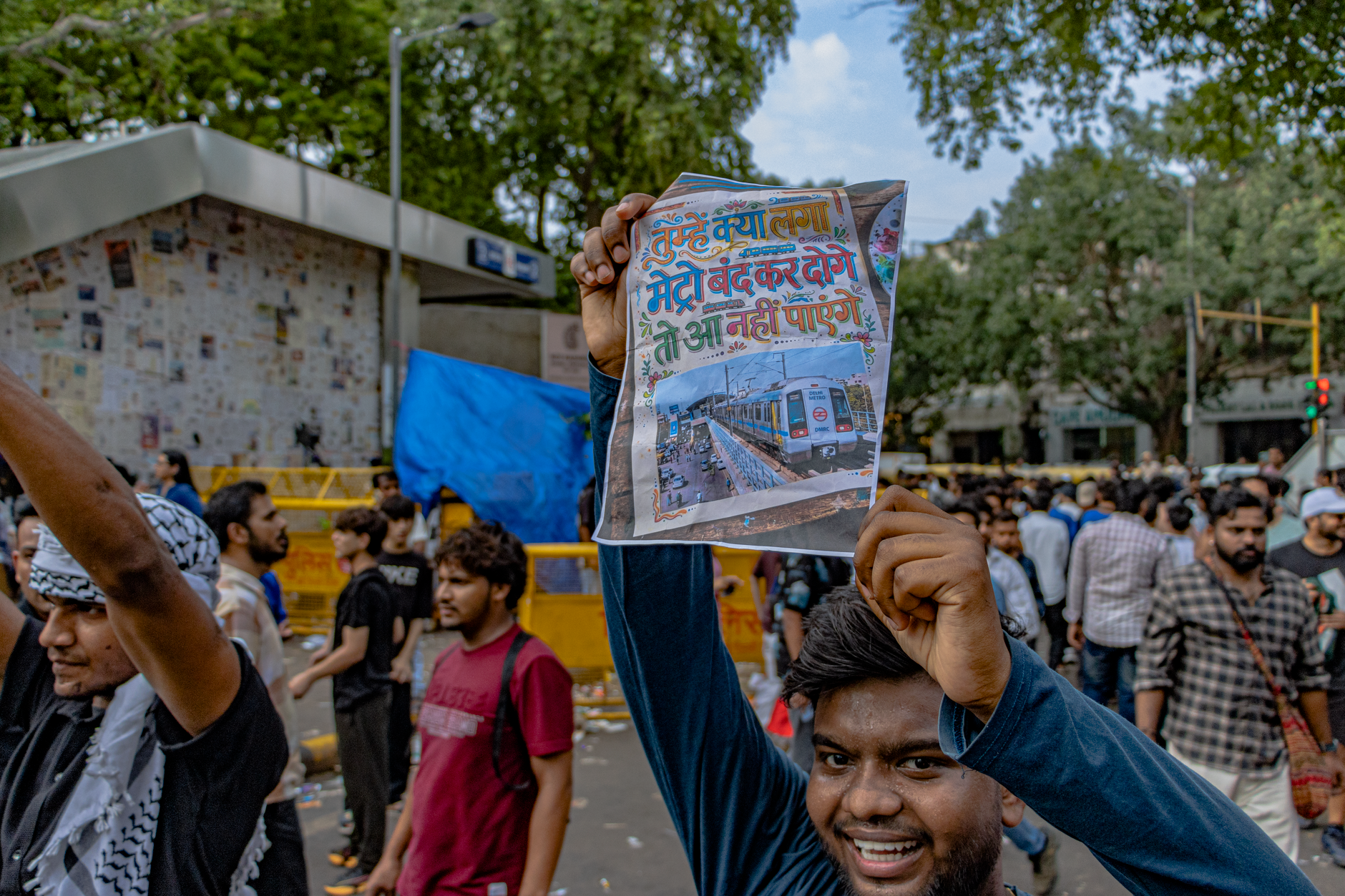
<li><b>April 1‑7, 2024:</b> Nationwide “Cockroach March” saw simultaneous sit‑ins in 45 cities, with participants carrying placards depicting cockroaches holding books.</li>
<li><b>April 15, 2024:</b> A delegation of student leaders met with the Ministry of Education, presenting a charter of six demands.</li>
</ol>
<p>The charter included:</p>
<ul>
<li>Immediate release of all pending examination results.</li>
<li>Freezing of tuition fee increases for the academic year 2024‑25.</li>
<li>Creation of a national youth employment guarantee scheme.</li>
<li>Increased budget allocation for government college infrastructure.</li>
<li>Transparent merit‑based scholarship distribution.</li>
<li>Establishment of a permanent student‑government dialogue forum.</li>
</ol>
Advertisement
Loading partner content...
<h2>Media and Government Reaction</h2>
<p>Mainstream news outlets initially mirrored the anchor’s dismissive tone, but coverage shifted as the protests gained momentum. By late April, several major newspapers ran editorials acknowledging the <b>legitimate grievances</b> behind the cockroach moniker. Television debates featured student representatives alongside policymakers, marking a rare instance of direct youth inclusion in national discourse.</p>
<p>The government’s response was mixed. While the Ministry of Education issued a statement promising to expedite result processing, officials cautioned against “unlawful obstruction of academic activities.” Police detained a handful of organizers under preventive custody provisions, prompting civil‑rights groups to raise concerns about the use of colonial‑era laws to stifle dissent.</p>
<blockquote>
<p>“Labeling young activists as cockroaches is less about the insects and more about refusing to see their strength.” – <b>Dr. Ananya Rao, Sociologist, Jawaharlal Nehru University</b></p>
</blockquote>
<h2>Expert Analysis</h2>
<p>Sociologists and political scientists have offered varied interpretations of the cockroach phenomenon.</p>
<h3>Dr. Ananya Rao (Sociology)</h3>
<p>Dr. Rao argues that the label reflects a generational shift in how dissent is expressed. “Young Indians are fluent in meme culture; they can turn a slur into a rallying cry within minutes. This agility makes traditional repression tactics less effective.”</p>
<h3>Prof. Suresh Mehta (Political Science)</h3>
<p>Prof. Mehta points to structural factors: “The cockroach protests are a symptom of <a href="/article/why-jharkhand-students-are-protesting-a-deep-dive-into-education-rights-government-response-and-the-" title="Why Jharkhand Students Are Protesting: A Deep Dive into Education Rights, Government Response, and the Role of Public Figures like Rahul Gandhi" class="internal-link">a deep</a>er mismatch between India’s educational output and its job‑creation capacity. Until we address the 23 % youth unemployment gap, such movements will recur.”</p>
<h3>Government Spokesperson</h3>
<p>In a press briefing, the Ministry of Education’s spokesperson stated, “We respect the right to peaceful protest and are reviewing the demands raised. However, we urge students to engage through established channels to avoid disruption of academic calendars.”</p>
<h2>Global Comparisons</h2>
<p>The cockroach protests echo other youth‑led movements that have adopted animal or insect symbolism to convey resilience.</p>
<table>
<thead>
<tr>
<th>Movement</th>
<th>Country</th>
<th>Symbol</th>
<th>Core Grievance</th>
</tr>
</thead>
<tbody>
<tr>
<td>Umbrella Movement</td>
<td>Hong Kong</td>
<td>Umbrella</td>
<td>Demand for democratic reforms</td>
</tr>
<tr>
<td>Chilean Student Protests</td>
<td>Chile</td>
<td>Penguin (via “Penguinazo”)</td>
<td>Education inequality</td>
</tr>
<tr>
<td>Fridays for Future</td>
<td>Global</td>
<td>Earth (often depicted as a resilient creature)</td>
<td>Climate inaction</td>
</tr>
<tr>
<td>Cockroach Protests</td>
<td>India</td>
<td>Cockroach</td>
<td>Unemployment, education costs, governance</td>
</tr>
</tbody>
</table>
<p>Like the Umbrella Movement’s use of everyday objects for protection, Indian protesters adopted the cockroach as a symbol of survival in a hostile environment. The Chilean “Penguinazo” similarly turned a seemingly fragile creature into a badge of endurance against authoritarian educational policies. These parallels suggest a global youth language where humor and animal metaphors serve to unite disparate struggles under a shared narrative of tenacity.</p>
Advertisement
Loading partner content...
<h2>What Lies Ahead</h2>
<p>The cockroach protests have already influenced policy discourse. In May 2024, the Parliamentary Standing Committee on Education recommended a review of fee regulation mechanisms and the establishment of a national youth job portal. Several state governments announced interim relief measures, including fee waivers for economically disadvantaged students.</p>
<p>Looking forward, analysts warn that without sustained structural reforms, the cockroach motif may evolve from a symbol of protest to a marker of chronic disillusionment. Potential legislative responses include:</p>
<ul>
<li>A Youth Employment Guarantee Act modeled on rural employment schemes.</li>
<li>Regular biannual fee‑review committees with student representation.</li>
<li>Expanded scholarship funds tied to merit and socioeconomic need.</li>
</ul>
<p>For civil society, the movement offers a lesson in leveraging digital culture to transform stigma into strength. By embracing the cockroach’s narrative of survival, young activists have demonstrated that even the most maligned symbols can become powerful catalysts for change.</p>
<h2>Conclusion</h2>
<p>The <b>India youth protests</b> tagged with the cockroach label are more than a fleeting social media trend. They encapsulate a generation’s confrontation with stark economic realities, an education system under strain, and a desire to be heard in the corridors of power. Through inventive symbolism, relentless organisation and a willingness to turn ridicule into resolve, protesters have reshaped the conversation around <b>Indian student activism</b> and <b>youth unemployment India</b>. As the country moves toward 2026 and beyond, the resilience embodied by the cockroach may well prove to be the defining trait of India’s next wave of civic engagement.</p></b></ul></ul>