
<h1><a href="/article/beyond-the-headlines-a-comprehensive-guide-to-india-s-dowry-death-laws-high-profile-cases-and-how-th" title="Beyond the Headlines: A Comprehensive Guide to India’s Dowry Death Laws, High‑Profile Cases, and How They Shape Society" class="internal-link">Dowry Death</a>s in India: A Systemic Crisis Exposed Through the Twisha Sharma Case – Legal, Social, and Cultural Breakdown</h1>
<p>When the news broke that <b>Twisha Sharma</b> had been found dead under suspicious circumstances, the nation’s collective gasp turned into a simmering outrage. Her case is not an isolated tragedy; it is a glaring symptom of a deep‑rooted epidemic that claims the lives of countless women every year. By dissecting the historical, legal, and cultural layers that sustain the practice, we can uncover why dowry deaths persist and, more importantly, what concrete steps can be taken to halt them.</p>
<h2>1. Historical Context: From Ancient Tradition to Modern Tragedy</h2>
<p>The dowry system has ancient origins, tracing back to the Vedic period where it was initially a form of <b>family security</b> for the bride. Over centuries, however, the practice morphed:</p>
<ul>
<li><b>Pre‑colonial era:</b> Dowry served as a modest gift, often in the form of household items.</li>
<li><b>British Raj:</b> Land revenue policies and patriarchal legal codes amplified the economic burden on brides’ families.</li>
<li><b>Post‑independence:</b> Rapid urbanisation and consumer culture turned dowry into a status symbol, inflating expectations dramatically.</li>
</ul>
Advertisement
Loading partner content...
<p>Today, dowry is less about gifting and more about extracting wealth, turning marriage into a financial transaction that can trigger violence when expectations are unmet.</p>
<h2>2. Legal Framework: IPC 304B and Recent Amendments</h2>
<p>India attempted to curb dowry‑related violence through legislation, yet enforcement remains patchy.</p>
<table>
<thead>
<tr>
<th>Law</th>
<th>Year Enacted</th>
<th>Key Provisions</th>
<th>Implementation Gaps</th>
</tr>
</thead>
<tbody>
<tr>
<td>Dowry Prohibition Act</td>
<td>1961</td>
<td>Criminalises demanding, giving, or taking dowry; punishable up to 5 years imprisonment.</td>
<td>Low conviction rates; victims often reluctant to file complaints.</td>
</tr>
<tr>
<td>Section 304B (IPC)</td>
<td>1983 (amended 2015)</td>
<td>Defines “dowry death” and prescribes up to 10 years imprisonment.</td>
<td>Proof of dowry demand is hard to establish; delays in trial prolong justice.</td>
</tr>
<tr>
<td>Criminal Law (Amendment) Act</td>
<td>2013</td>
<td>Introduced “intermediate” offences like “cruelty” and “harassment”.</td>
<td>Procedural complexities lead to misuse and under‑reporting.</td>
</tr>
</tbody>
</table>
<p>Recent amendments (2022‑2023) sought to strengthen evidentiary standards, but critics argue they still fail to protect victims adequately.</p>
Advertisement
Loading partner content...
<h2>3. Societal Stigma and Economic Pressures Driving Dowry Deaths</h2>
<p>Beyond statutes, the cultural mindset fuels the crisis:</p>
<ol>
<li><b>Patriarchal expectations:</b> A woman’s “value” is often measured by the dowry she brings, creating a market‑like pressure.</li>
<li><b>Financial strain:</b> Middle‑<a href="/article/why-india-s-middle-class-is-more-stressed-than-ever" title="Why India’s Middle Class Is More Stressed Than Ever" class="internal-link">class</a> families, eager for a “good match,” plunge into debt, leading to resentment and violence when repayments stall.</li>
<li><b>Stigma of divorce:</b> In many communities, separation is socially unacceptable, pushing women to endure abuse silently.</li>
</ol>
<p>These forces intersect, making dowry abuse a self‑reinforcing cycle that is difficult to break without systemic change.</p>
<h2>4. The Twisha Sharma Case: Court Proceedings and Legal Implications</h2>
Advertisement
Loading partner content...
<p>Twisha Sharma, a 26‑year‑old software engineer from Delhi, married into a family that allegedly demanded a hefty dowry. Within weeks, she was found dead at her in‑law’s residence. The case quickly became a litmus test for India’s legal response to dowry deaths.</p>
<blockquote>
“The law must not be a shield for the powerful; it must be a sword for the vulnerable.” – Justice (Retd.) R. K. Shah, quoted in a 2024 editorial.
</blockquote>
<p><b>Key developments:</b></p>
<ul>
<li><b>Initial FIR:</b> Filed under Section 304B <a href="/article/how-the-blanket-telegram-ban-is-reshaping-social-media-legal-battles-user-impact-and-the-future-of-m" title="How the Blanket Telegram Ban is Reshaping Social Media: Legal Battles, User Impact, and the Future of Messaging Apps" class="internal-link">and the</a> Dowry Prohibition Act.</li>
<li><b>Husband’s plea to surrender:</b> After being named as the primary accused, he filed a petition seeking bail, claiming “lack of evidence”.</li>
<li><b>Bail withdrawal:</b> The Delhi Sessions Court, citing the severity of the offence and the risk of tampering with evidence, denied bail and ordered the husband to remain in custody.</li>
<li><b>Implications:</b> The bail denial sent a strong signal that courts are willing to adopt a stricter stance, yet the lengthy trial timeline (projected 5‑7 years) raises concerns about delayed justice.</li>
</ul>
Advertisement
Loading partner content...
<p>For many observers, the case illustrates both progress (firm initial action) and persisting flaws (slow judicial machinery).</p>
<h2>5. Data Snapshot: Dowry‑Related Deaths in India</h2>
<p>According to the National Crime Records Bureau (NCRB), the numbers are stark:</p>
<table>
<thead>
<tr>
<th>Year</th>
<th>Dowry Deaths Reported</th>
<th>Conviction Rate (%)</th>
<th>States with Highest Incidence</th>
</tr>
</thead>
<tbody>
<tr>
<td>2018</td>
<td>7,041</td>
<td>4.3</td>
<td>Uttar Pradesh, Bihar, Madhya Pradesh</td>
</tr>
<tr>
<td>2019</td>
<td>7,112</td>
<td>4.1</td>
<td>Uttar Pradesh, Bihar, Rajasthan</td>
</tr>
<tr>
<td>2020</td>
<td>5,921</td>
<td>3.8</td>
<td>Uttar Pradesh, Madhya Pradesh, West Bengal</td>
</tr>
<tr>
<td>2021</td>
<td>6,500</td>
<td>4.0</td>
<td>Uttar Pradesh, Bihar, Karnataka</td>
</tr>
<tr>
<td>2022</td>
<td>6,878</td>
<td>3.9</td>
<td>Uttar Pradesh, Bihar, Tamil Nadu</td>
</tr>
</tbody>
</table>
<p>The conviction rate hovering below 5 % underscores a massive gap between law and its enforcement.</p>
Advertisement
Loading partner content...
<h2>6. Impact on Women’s Rights and Gender Equality</h2>
<p>Dowry deaths are not merely criminal statistics; they are a direct assault on <b>women’s rights</b> and the broader quest for gender equality. The repercussions include:</p>
<ul>
<li><b>Psychological trauma:</b> Survivors of dowry abuse experience chronic anxiety, depression, and PTSD.</li>
<li><b>Economic disenfranchisement:</b> Families lose breadwinners, forcing daughters into early marriage or labor.</li>
<li><b>Legal disenfranchisement:</b> Low conviction rates erode confidence in the justice system, discouraging future reporting.</li>
</ul>
<p>When a society tolerates the murder of women over dowry, it implicitly endorses gender hierarchy, undermining constitutional guarantees of equality.</p>
<h2>7. Grassroots Movements and Legal Advocacy</h2>
Advertisement
Loading partner content...
<p>Despite the grim statistics, a vibrant network of NGOs, activists, and community groups is fighting back.</p>
<ol>
<li><b>Mahila Samakhya:</b> Conducts village‑level workshops on legal rights and dowry awareness.</li>
<li><b>Breakthrough India:</b> Uses media campaigns to destigmatise reporting of dowry abuse.</li>
<li><b>National Commission for Women (NCW):</b> Issues periodic guidelines for police to handle dowry cases sensitively.</li>
</ol>
<p>These initiatives have achieved notable victories, such as the 2021 Supreme Court directive mandating fast‑track trials for dowry death cases. However, scaling these successes requires sustained funding and policy support.</p>
<h2>8. Solutions: Legal Reforms, Social Campaigns, and Technological Interventions</h2>
<p>Addressing the crisis demands a multi‑pronged strategy:</p>
Advertisement
Loading partner content...
<h3>8.1. Strengthening Legal Mechanisms</h3>
<ul>
<li><b>Fast‑track courts:</b> Establish dedicated benches for dowry‑related crimes to cut trial time to under two years.</li>
<li><b>Witness protection:</b> Implement robust programs to safeguard victims and their families from intimidation.</li>
<li><b>Amend evidentiary rules:</b> Allow <a href="/article/creating-engaging-social-media-content-the-art-of-capturing-attention-in-a-digital-age" title="Creating Engaging Social Media Content: The Art of Capturing Attention in a Digital Age" class="internal-link">digital</a> transaction records as prima facie evidence of dowry demand.</li>
</ul>
<h3>8.2. Amplifying Social Campaigns</h3>
<ul>
<li><b>Community pledges:</b> Encourage villages to sign “Zero Dowry” declarations, backed by local leaders.</li>
<li><b>School curricula:</b> Integrate gender‑sensitivity modules that debunk dowry myths from an early age.</li>
<li><b>Media partnerships:</b> Collaborate with Bollywood and regional cinema to portray dowry‑free marriages positively.</li>
</ul>
Advertisement
Loading partner content...
<h3>8.3. Leveraging Technology</h3>
<ul>
<li><b>Digital dowry monitoring:</b> Mandate that all dowry-related transactions above ₹10,000 be recorded on a secure, government‑run portal accessible to law enforcement.</li>
<li><b>Mobile reporting apps:</b> Deploy user‑friendly platforms (e.g., “Sakhi‑SOS”) that allow victims to file complaints anonymously, with GPS‑tagged evidence.</li>
<li><b>AI‑driven analytics:</b> Use machine learning to identify hotspots of dowry abuse based on complaint patterns, enabling targeted interventions.</li>
</ul>
<h3>8.4. How Individuals Can Act</h3>
<ol>
<li><b>Report promptly:</b> If you suspect dowry harassment, contact the nearest police station or dial 112. Use the “Sakhi‑SOS” app for discreet reporting.</li>
<li><b>Support victims:</b> Offer shelter, legal aid, or financial assistance through NGOs like “SNEHA” and “Maitri”.</li>
<li><b>Educate your circle:</b> Host community talks, share verified articles (e.g., from <a rel="nofollow noopener noreferrer" href="https://timesofindia.indiatimes.com" rel="nofollow noopener noreferrer">Times of India</a>), and challenge dowry narratives.</li>
<li><b>Advocate for policy change:</b> Sign petitions demanding fast‑track courts and digital monitoring, and contact local representatives.</li>
</ol>
Advertisement
Loading partner content...
<h2>Conclusion: From Tragedy to Transformation</h2>
<p>The <b>Twisha Sharma case</b> has shone an unforgiving light on a practice that has long been brushed aside as “cultural”. It is a call to action for lawmakers, civil society, and every citizen to reject a system that treats women as commodities. By tightening legal safeguards, reshaping societal attitudes, and harnessing technology, India can move toward a future where marriage is a partnership of equals, not a transaction measured in gold and grief.</p>
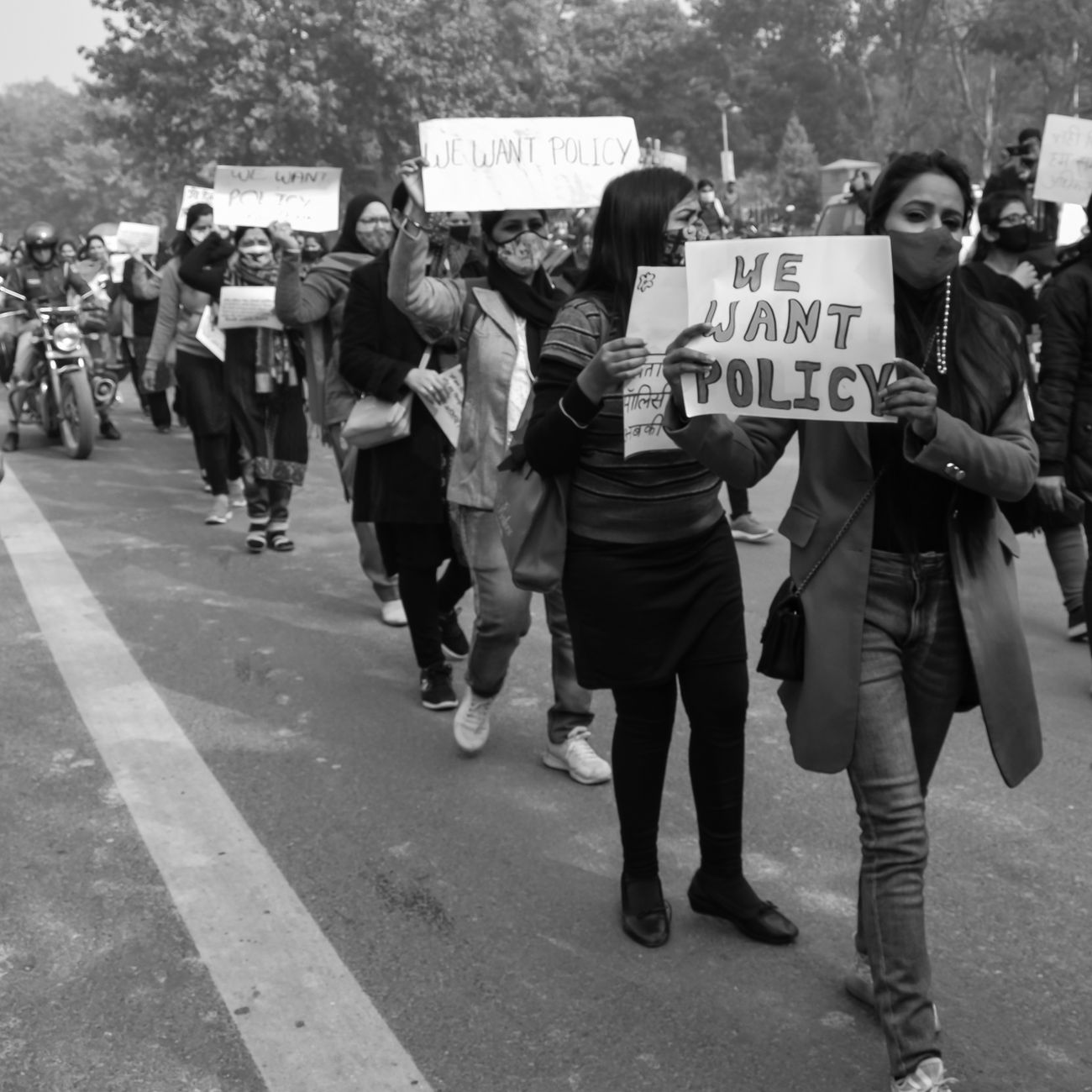
<p>Every report filed, every protest marched, and every dowry‑free wedding celebrated adds a brick to the foundation of a more just society. The time to act is now.</p>
<!-- Image Suggestions -->
<figure class="my-8 overflow-hidden rounded-3xl shadow-xl">
<img src="https://images.pexels.com/photos/11980104/pexels-photo-11980104.jpeg?auto=compress&cs=tinysrgb&dpr=2&h=650&w=940" alt="Dowry Protest" class="w-full h-[400px] object-cover" />
</figure>
<figure class="my-8 overflow-hidden rounded-3xl shadow-xl">
<img src="https://images.pexels.com/photos/30483132/pexels-photo-30483132.jpeg?auto=compress&cs=tinysrgb&dpr=2&h=650&w=940" alt="Indian Courtroom" class="w-full h-[400px] object-cover" />
</figure>
<figure class="my-8 overflow-hidden rounded-3xl shadow-xl">
<img src="https://images.pexels.com/photos/6392631/pexels-photo-6392631.jpeg?auto=compress&cs=tinysrgb&dpr=2&h=650&w=940" alt="Women's Empowerment" class="w-full h-[400px] object-cover" />
</figure>
<figure class="my-8 overflow-hidden rounded-3xl shadow-xl">
<img src="https://media0.giphy.com/media/v1.Y2lkPTlkZTM3ZjIwd3R2d2pmMGQ5a3h6ZWlhMXQ5cDBudTl3ZDBkcnQwZDlsNzZ4Nm41OSZlcD12MV9naWZzX3NlYXJjaCZjdD1n/xT8qBit7YomT80d0M8/giphy.gif" alt="Justice Scale" class="w-full h-[400px] object-cover" />
</figure></b></i></i></i></i>