<h1>Exam Integrity <a href="/article/first-ai-enabled-university-in-india-a-game-changer-for-higher-education" title="First AI-Enabled University in India — A Game Changer for Higher Education?" class="internal-link">in India</a>: <a href="/article/why-jharkhand-students-are-protesting-a-deep-dive-into-education-rights-government-response-and-the-" title="Why Jharkhand Students Are Protesting: A Deep Dive into Education Rights, Government Response, and the Role of Public Figures like Rahul Gandhi" class="internal-link">A Deep Dive into</a> Jharkhand’s Student Protests and the Future of Educational Reform</h1>
<p>Exam irregularities have become a silent crisis that erodes trust in India’s education system. When students suspect that marks are being manipulated, the very purpose of assessment — measuring learning and guiding future opportunities — collapses. The recent wave of protests in Jharkhand has thrust this issue into the national spotlight, revealing deep‑seated frustrations that transcend a single state.</p>
Advertisement
Loading partner content...
<h2>1. Introduction – Defining Exam Irregularities and Their Stakes</h2>
<p>Exam irregularities refer to any deviation from fair, transparent, and standardized assessment practices. This includes leakage of question papers, tampering with answer sheets, unauthorized assistance during tests, and manipulation of results by officials or private actors. <b>Such malpractice not only disadvantages honest candidates but also undermines the credibility of qualifications that employers and higher‑education institutions rely on.</b></p>
<p>In a country where competitive exams gatekeep access to prestigious jobs and colleges, the stakes are extraordinarily high. A single compromised exam can alter career trajectories, perpetuate inequality, and fuel social unrest. Understanding the roots and ramifications of these irregularities is therefore essential for any meaningful educational reform.</p>
<h2>2. Historical Context – Evolution of Exam Scams in India</h2>
<p>India’s struggle with exam fraud is not new; it dates back several decades and has evolved alongside technological advances. Early incidents involved manual copying and bribery of invigilators, while recent scandals exploit digital tools for large‑scale leakage.</p>
<ul>
<li><b>1991 – UPSC Prelims Leak:</b> Question papers for the civil services preliminary exam were reportedly sold to candidates, prompting the first major overhaul of UPSC security protocols.</li>
<li><b>2005 – CBSE Class XII Economics Paper Leak:</b> A widespread leak led to the re‑conduct of the exam for over 1.2 lakh students across multiple states.</li>
<li><b>2016 – Vyapam Scam (Madhya Pradesh):</b> Perhaps the most infamous case, involving thousands of fraudulent admissions and recruitment through manipulated medical and government exam scores.</li>
<li><b>2020 – NEET UG Online Proctoring Glitches:</b> Technical failures and alleged impersonation raised concerns about the reliability of computer‑based testing during the pandemic.</li>
</ul>
<p>Each episode exposed gaps in institutional oversight and prompted temporary fixes, yet a systemic culture of impunity often persisted. The recurrence of scandals suggests that reactive measures alone cannot curb the problem; a preventive, technology‑driven approach is needed.</p>
<figure class="my-8 overflow-hidden rounded-3xl shadow-xl">
<img src="https://images.pexels.com/photos/7092577/pexels-photo-7092577.jpeg?auto=compress&cs=tinysrgb&dpr=2&h=650&w=940" alt="exam hall" class="w-full h-[400px] object-cover" />
</figure>
Advertisement
Loading partner content...
<h2>3. Jharkhand Case Study – Protests, Players, Tactics, and <a href="/article/unlocking-the-power-of-social-media-marketing-tactics" title="Unlocking the Power of Social Media Marketing Tactics" class="internal-link">Media</a> Coverage</h2>
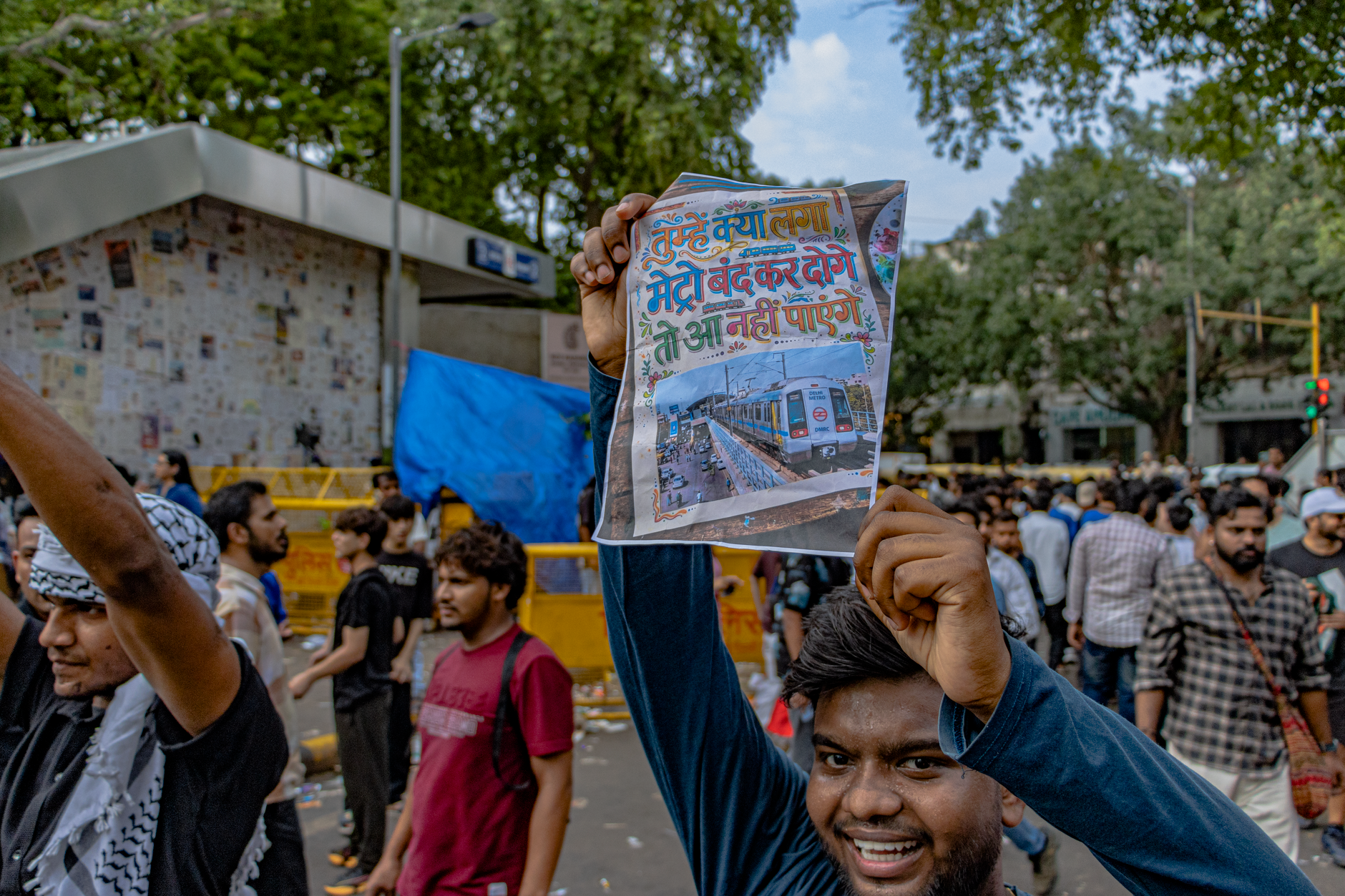
<p>In early 2026, students across Jharkhand’s government‑run colleges erupted in protest after rumors circulated that the state board’s Class XII results had been altered to favor certain candidates. The trigger was a sudden spike in perfect scores in a few districts, which statistical analysis showed to be improbable.</p>
<p>The protests were led by a coalition of student unions, notably the <b>Jharkhand Chhatra Sangharsh Samiti</b>, which organized sit‑ins, hunger strikes, and social‑media campaigns under the hashtag #ExamJusticeJH. Protest tactics combined peaceful marches with the strategic release of unverified but compelling data screenshots, aiming to pressure the administration into transparency.</p>
<blockquote>“We are not asking for grace marks; we are demanding that the marks we earned be respected,” said a spokesperson for the Sangharsh Samiti during a live‑streamed rally in Ranchi.</blockquote>
<p>Media coverage was extensive, with national news channels broadcasting live from protest sites and digital platforms amplifying student testimonies. The story resonated <a href="/article/beyond-the-candidate-swap-what-the-bjp-s-datia-defeat-reveals-about-indian-political-strategy" title="Beyond the Candidate Swap: What the BJP's Datia Defeat Reveals About Indian Political Strategy" class="internal-link">beyond</a> Jharkhand, prompting similar solidarity demonstrations in Bihar, Odisha, and West Bengal, thereby highlighting a nationwide anxiety about exam credibility.</p>
<h2>4. Impact Analysis – Consequences for Students, Institutions, and Society</h2>
<p>The fallout from perceived or actual exam irregularities extends far beyond individual disappointment. It affects motivation, <a href="/article/thinking-of-doing-something-different-up-medical-student-dies-of-suicide-a-call-for-mental-health-re" title="“Thinking Of Doing Something Different”: UP Medical Student Dies Of Suicide – A Call for Mental Health Reform in India" class="internal-link">mental health</a>, and long‑term socioeconomic outcomes.</p>
<table>
<thead>
<tr>
<th>Impact Area</th>
<th>Short‑Term Effects</th>
<th>Long‑Term Effects</th>
</tr>
</thead>
<tbody>
<tr>
<td>Students</td>
<td>Loss of trust, anxiety, protests, potential legal battles</td>
<td>Reduced enrollment in higher education, brain drain to private or foreign institutions</td>
</tr>
<tr>
<td>Educational Institutions</td>
<td>Reputational damage, increased scrutiny, possible funding cuts</td>
<td>Decline in employer confidence, difficulty attracting quality faculty</td>
</tr>
<tr>
<td>Society & Economy</td>
<td>Public outrage, media sensationalism, political pressure</td>
<td>Erosion of meritocracy, widening inequality, hampered skill development for the workforce</td>
</tr>
</tbody>
</table>
<p>Moreover, when merit is perceived as negotiable, the incentive to invest in genuine learning diminishes. Students may resort to rote memorization or malpractice themselves, creating a vicious cycle that devalues the very credentials the system aims to certify.</p>
<figure class="my-8 overflow-hidden rounded-3xl shadow-xl">
<img src="https://images.unsplash.com/photo-1569225034143-754335938607?crop=entropy&cs=tinysrgb&fit=max&fm=jpg&ixid=M3w4NjI1Nzh8MHwxfHNlYXJjaHwxfHxzdHVkZW50JTIwcHJvdGVzdHxlbnwwfDB8fHwxNzg2MDgxMjE5fDA&ixlib=rb-4.1.0&q=80&w=1080" alt="student protest" class="w-full h-[400px] object-cover" />
</figure>
Advertisement
Loading partner content...
<h2>5. Legal & Institutional Responses – Laws, Bodies, and Recent Reforms</h2>
<p>India’s legal framework addressing exam fraud includes several statutes and regulatory bodies, though enforcement remains inconsistent.</p>
<ul>
<li><b>The Indian Penal Code (IPC) Sections 420 (cheating) and 467 (forgery):</b> Used to prosecute individuals involved in paper leaks or result tampering.</li>
<li><b>The University Grants Commission (UGC) Regulations on Conduct of Examinations:</b> Mandate secure printing, CCTV monitoring, and sealed answer‑sheet handling for affiliated colleges.</li>
<li><b>The National Testing Agency (NTA) Act, 2017:</b> Centralizes conduct of major entrance exams (JEE, NEET, UGC‑NET) with standardized protocols and cyber‑security audits.</li>
<li><b>State‑Level Examination Boards:</b> Each state operates its own board; reforms vary widely, leading to a patchwork of standards.</li>
</ul>
<p>Recent reforms following the 2026 Jharkhand unrest include:</p>
<ol>
<li>Mandatory <b>end‑to‑end encryption</b> for digital question‑paper distribution.</li>
<li>Introduction of <b>biometric verification</b> for candidates at exam centers.</li>
<li>Establishment of an <b>independent exam‑integrity ombudsman</b> in Jharkhand, empowered to investigate complaints and recommend sanctions.</li>
<li>Increased budget allocation for <b>third‑party audits</b> of exam processes, with results made public within 30 days.</li>
</ol>
<p>While these steps signal progress, critics argue that punitive measures alone do not address the underlying incentives for corruption, such as opaque recruitment practices and political patronage.</p>
<h2>6. Prevention & Best Practices – Safeguarding Integrity</h2>
<p>Preventing exam irregularities requires a multi‑layered strategy that combines technology, procedural rigor, and cultural change.</p>
<ol>
<li><b>Secure Paper Management:</b> Use tamper‑evident packaging, GPS‑tracked logistics, and blockchain‑based logs to record every hand‑off from printing press to exam hall.</li>
<li><b>Digital Proctoring with AI:</b> Deploy facial‑recognition and eye‑tracking tools to detect impersonation or unauthorized assistance, while ensuring privacy safeguards.</li>
<li><b>Randomized Question Sets:</b> Generate unique paper variants for each candidate using algorithmic shuffling, making large‑scale leakage ineffective.</li>
<li><b>Transparent Result Auditing:</b> Publish statistical anomalies (e.g., unexpected score clusters) and allow independent statisticians to verify fairness.</li>
<li><b>Whistle‑blower Protection:</b> Create anonymous reporting channels with legal safeguards for those who expose malpractice.</li>
<li><b>Ethics Education:</b> Integrate modules on academic integrity into school curricula, emphasizing the long‑term value of honest effort.</li>
</ol>
<p>Implementing these practices demands investment, but the cost of inaction — measured in lost trust, litigation, and diminished human capital — far outweighs the expense.</p>
<figure class="my-8 overflow-hidden rounded-3xl shadow-xl">
<img src="https://images.pexels.com/photos/8358136/pexels-photo-8358136.jpeg?auto=compress&cs=tinysrgb&dpr=2&h=650&w=940" alt="blockchain technology" class="w-full h-[400px] object-cover" />
</figure>
Advertisement
Loading partner content...
<h2>7. Future Outlook – Emerging Technologies, Policy Trends, and Civil Society</h2>
<p>The next decade promises transformative tools that could make exam fraud exceedingly difficult, if not impossible.</p>
<ul>
<li><b>Artificial Intelligence for Anomaly Detection:</b> Machine‑learning models can analyze millions of answer patterns in real time, flagging statistically improbable performances for review.</li>
<li><b>Blockchain‑Based Credentialing:</b> Store exam results on a distributed ledger, ensuring immutability and enabling instant verification by employers or universities.</li>
<li><b>Zero‑Knowledge Proofs:</b> Allow candidates to prove they achieved a certain score without revealing the actual answer sheet, preserving privacy while preventing tampering.</li>
<li><b>Policy Shift Toward Competency‑Based Assessment:</b> Moving beyond high‑stakes single‑exam models to continuous evaluation reduces the payoff for cheating.</li>
<li><b>Strengthened Civil Society Oversight:</b> NGOs and student watchdog groups are increasingly using open‑data platforms to monitor exam processes, creating a culture of collective accountability.</li>
</ul>
<p>However, technology is not a panacea. Successful deployment hinges on robust governance, digital literacy among administrators, and safeguards against surveillance overreach. The dialogue sparked by the Jharkhand protests offers an opportunity to align technical solutions with democratic values.</p>
<h2>8. Conclusion – Lessons and Call to Action</h2>
<p>The Jharkhand student protests have laid bare a truth that many have long suspected: exam integrity is not a peripheral concern but the bedrock of a fair education system. Historical scandals reveal a pattern of reactive fixes, while the current unrest underscores the demand for systemic, preventive change.</p>
<p>Stakeholders must act now:</p>
<ul>
<li><b>Policy Makers:</b> Enforce uniform standards across state boards, fund technological upgrades, and protect whistle‑blowers.</li>
<li><b>Educational Institutions:</b> Adopt best‑practice protocols, conduct regular audits, and foster environments where honesty is celebrated.</li>
<li><b>Students and Parents:</b> Stay informed, advocate for transparency, and model ethical behavior in preparation and examination.</li>
<li><b>Tech Developers:</b> Build solutions that prioritize security, privacy, and accessibility, avoiding tools that exacerbate inequity.</li>
</ul>
<p>Only through coordinated effort can India transform its examination system from a source of anxiety into a reliable gateway to opportunity. The journey begins with acknowledging the problem, learning from Jharkhand’s courage, and committing to a future where every mark truly reflects merit.</p></b></i></i></i>