
<h1>Faith, Fatalities, and Failures: The Recurring Tragedy of Temple Stampedes in India and <a href="/article/beyond-fds-how-to-build-a-diversified-fixed-income-portfolio-in-2026" title="Beyond FDs: How to Build a Diversified Fixed-Income Portfolio in 2026" class="internal-link">How to</a> Prevent Them</h1>
<p>In June 2026, a joyous gathering at a crowded temple in Bihar turned into a nightmare within minutes, claiming dozens of lives and injuring scores more. The headlines flickered across news channels, but the grief settled deeper, into the lived reality of families mourning preventable <a href="/article/safe-sustainable-weight-loss-strategies-for-a-healthier-india" title="Safe & Sustainable Weight Loss Strategies for a Healthier India" class="internal-link">loss</a>. This was not an isolated accident; it was the latest, most visible entry in a ledger that stretches back decades, a recurring tragedy where faith collides with flawed infrastructure, and where the divine becomes deadly. Events conceived as pathways to spiritual liberation have, all too often, become sites of preventable death.</p>
<p>The paradox is stark: the more devout the gathering, the higher the risk of catastrophe, not because of divine will, but because of systemic neglect, crowd physics, and a culture of protocol that prioritizes prestige over people.</p>
<p>To understand why these disasters repeat, we must first redefine what a "stampede" actually is. In popular imagination, it is a panic-driven rush, a chaotic free-for-all where individuals trample one another in blind fear. Crowd science, however, tells a different story. What we label a stampede is often a "progressive crowd collapse," a physics-driven event where density reaches a critical threshold, <a href="/article/airborne-tragedies-unraveling-the-mysteries-of-recent-aviation-accidents-and-the-loss-of-indian-politicians" title="Airborne Tragedies: Unraveling the Mysteries of Recent Aviation Accidents and the Loss of Indian Politicians" class="internal-link">and the</a> collective force of the crowd liquefies human bodies.</p>
<p>At just three to four people per square meter, the pressure from behind compresses those in front, making breathing impossible, not because of trampling alone, but because of compressive asphyxiation. This is the "FIST" framework in action: Force, Information, Space, and <a href="/article/mastering-time-management-a-self-help-guide-for-indian-professionals" title="Mastering Time Management: A Self-Help Guide for Indian Professionals" class="internal-link">Time</a>. When density spikes, information flow stalls, space vanishes, and time compresses into seconds. Temples, with their ancient architecture and often single-entry designs, are particularly vulnerable to this invisible killer.</p>
Advertisement
Loading partner content...
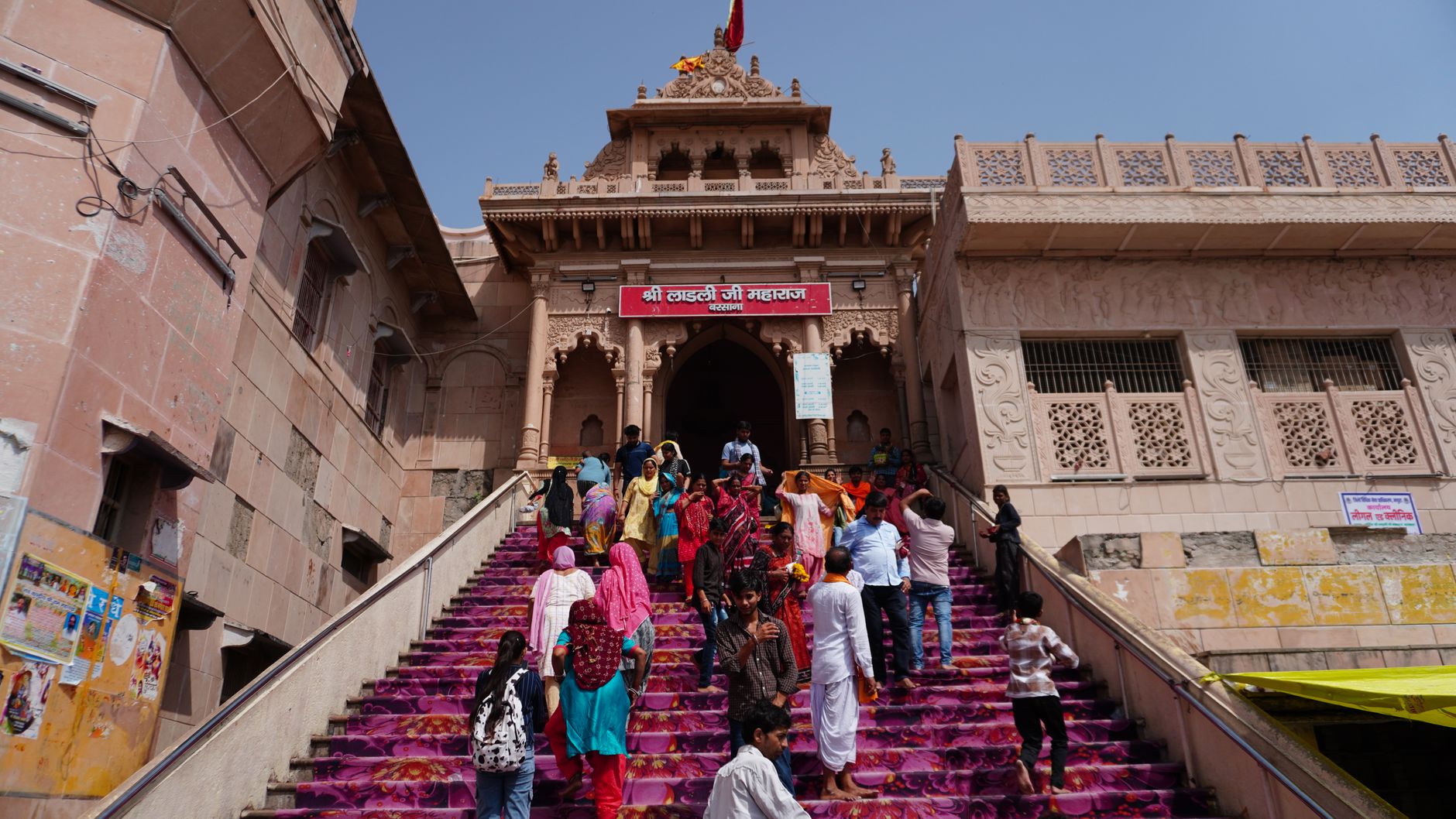
<p>Consider the architecture of a typical Indian temple: a single sanctum, a narrow corridor, perhaps a single steep staircase or a single gate. During festivals, these constraints are magnified tenfold. Add a VIP motorcade turning a routine entry into a blockade, a rumor of a collapsing roof, or the scent of limited prasad, and the conditions for disaster are met. The recent Bihar incident follows a pattern all too familiar to disaster researchers: a choke point, a surge, and a system unprepared for the physics of thousands of human bodies moving as one.</p>
<figure class="my-8 overflow-hidden rounded-3xl shadow-xl">
<img src="https://images.pexels.com/photos/18847277/pexels-photo-18847277.jpeg?auto=compress&cs=tinysrgb&dpr=2&h=650&w=940" alt="Indian temple interior crowd" class="w-full h-[400px] object-cover" />
</figure>
<p>As we move beyond the breaking news, this article investigates the deep roots of these tragedies, not to assign blame, but to illuminate the structural, cultural, and technological fractures that make them predictable—and therefore preventable.</p>
<h2>The Anatomy of an Indian Crowd Disaster: Density, Design, and Dynamics</h2>
Advertisement
Loading partner content...
<p>Every temple stampede shares a common set of engineering and operational failures. The science of crowd <a href="/article/debt-management-techniques-to-become-debt-free" title="Debt Management Techniques to Become Debt-Free" class="internal-link">management</a> has advanced significantly in the last two decades, yet many of our most sacred spaces remain stuck in designs conceived decades, if not centuries, ago. The critical metric here is person-per-square-meter density. 0 ppm (persons per square meter), movement is fluid and safe.</p>
<p>0 ppm, movement becomes difficult, and the risk of falls increases. 0 ppm, the crowd enters the danger zone: progressive collapse becomes likely, and compressive asphyxiation can set in within minutes.</p>
<p>Indian temples, especially those hosting monthly or annual festivals, frequently exceed 3.0 or 4.0 ppm at peak entry times. The reasons are structural: narrow doorway arches, slippery marble or tile flooring worn smooth by decades of bare feet, and the absence of barrier systems to regulate flow. These are not minor oversights; they are "death traps" by design, where the built environment does not accommodate the scale of modern devotion.</p>
<p>Contrast this with events like the Kumbh Mela or the Hajj. These gatherings draw millions, yet through massive investment, temporary infrastructure, and real-time monitoring, fatality rates have been dramatically reduced. The Kumbh Mela 2019, for instance, deployed an Integrated Command and Control Center (ICCC) with over 1,000 cameras feeding AI-driven crowd density analytics. Barriers were deployed in zig-zag patterns to force one-way movement, and holding areas were pre-designated to absorb surges.</p>
<p>The difference is scale of planning applied to transient events versus the static, often neglected infrastructure of weekly temple festivals.</p>
Advertisement
Loading partner content...
<p>At a local temple, the same density challenges exist, but the response is often ad hoc. There may be no trained crowd managers, no real-time monitoring, and no emergency egress routes designated in advance. The "design" is whatever space exists, and the "management" is often left to police officers trained in law enforcement, not in crowd psychology or physics.</p>
<figure class="my-8 overflow-hidden rounded-3xl shadow-xl">
<img src="https://images.unsplash.com/photo-1515141866783-3222fca27f70?crop=entropy&cs=tinysrgb&fit=max&fm=jpg&ixid=M3w4NjI1Nzh8MHwxfHNlYXJjaHwxfHxhbmNpZW50JTIwdGVtcGxlJTIwYXJjaGl0ZWN0dXJlfGVufDB8MHx8fDE3ODY5NTYxMDV8MA&ixlib=rb-4.1.0&q=80&w=1080" alt="ancient temple architecture" class="w-full h-[400px] object-cover" />
</figure>
<p>Understanding these mechanics is the first step toward redesigning not just physical spaces, but the entire ecosystem of crowd control at religious</p></i></i>