
<h1>Fortress City: How Modern Protests Are Forcing a Clash Between <a href="/article/demystifying-web3-how-decentralized-applications-are-reshaping-india-s-digital-future" title="Demystifying Web3: How Decentralized Applications Are Reshaping India's Digital Future" class="internal-link">Digital</a> Rights and State Control</h1>
<p>The rise of digital platforms has turned every city into a potential fortress, where the battle for expression is fought both online and offline. In India, this conflict reached a critical juncture during the <b>2019 Delhi Protest</b>, spearheaded by the grassroots organization <b>Citizens for Justice and Peace (CJP)</b>. This article unpacks how a single protest reshaped the discourse on digital rights, state surveillance, and the broader tapestry of Society & Culture in the subcontinent. As we explore the events, tactics, and aftermath, readers will gain actionable insights on safeguarding freedoms in an increasingly monitored world.</p>
<h2>The Birth of Citizens for Justice and Peace (CJP)</h2>
<p>Founded in the aftermath <a href="/article/the-power-of-the-youth-a-deep-dive-into-the-history-and-impact-of-student-activism-in-india" title="The Power of the Youth: A Deep Dive into the History and Impact of Student Activism in India" class="internal-link">of the</a> 2002 Gujarat riots, <b>Citizens for Justice and Peace (CJP)</b> emerged as a collective voice for victims seeking accountability. <b>Teesta Setalvad</b>, a pioneering human rights activist, co‑founded the NGO alongside a network of lawyers, journalists, and survivors. Over the years, CJP has championed cases ranging from communal violence to custodial deaths, consistently pushing for transparency through public hearings and legal advocacy.</p>
<p><figure class="my-8 overflow-hidden rounded-3xl shadow-xl">
<img src="https://images.pexels.com/photos/4542266/pexels-photo-4542266.jpeg?auto=compress&cs=tinysrgb&dpr=2&h=650&w=940" alt="Teesta Setalvad" class="w-full h-[400px] object-cover" />
</figure></p>
Advertisement
Loading partner content...
<h3>Mission and Methods</h3>
<ul>
<li>Providing legal aid and counseling to victims’ families.</li>
<li>Organizing public awareness campaigns on constitutional rights.</li>
<li>Leveraging digital platforms to document evidence and mobilize support.</li>
<li>Engaging with international human rights bodies to amplify marginalized voices.</li>
</ul>
<p>These methods made CJP a trusted name among civil society groups, especially among youth who increasingly rely on <a href="/article/how-the-blanket-telegram-ban-is-reshaping-social-media-legal-battles-user-impact-and-the-future-of-m" title="How the Blanket Telegram Ban is Reshaping Social Media: Legal Battles, User Impact, and the Future of Messaging Apps" class="internal-link">social media</a> for activism.</p>
<h2>The 2019 Delhi Protest: A Watershed Moment</h2>
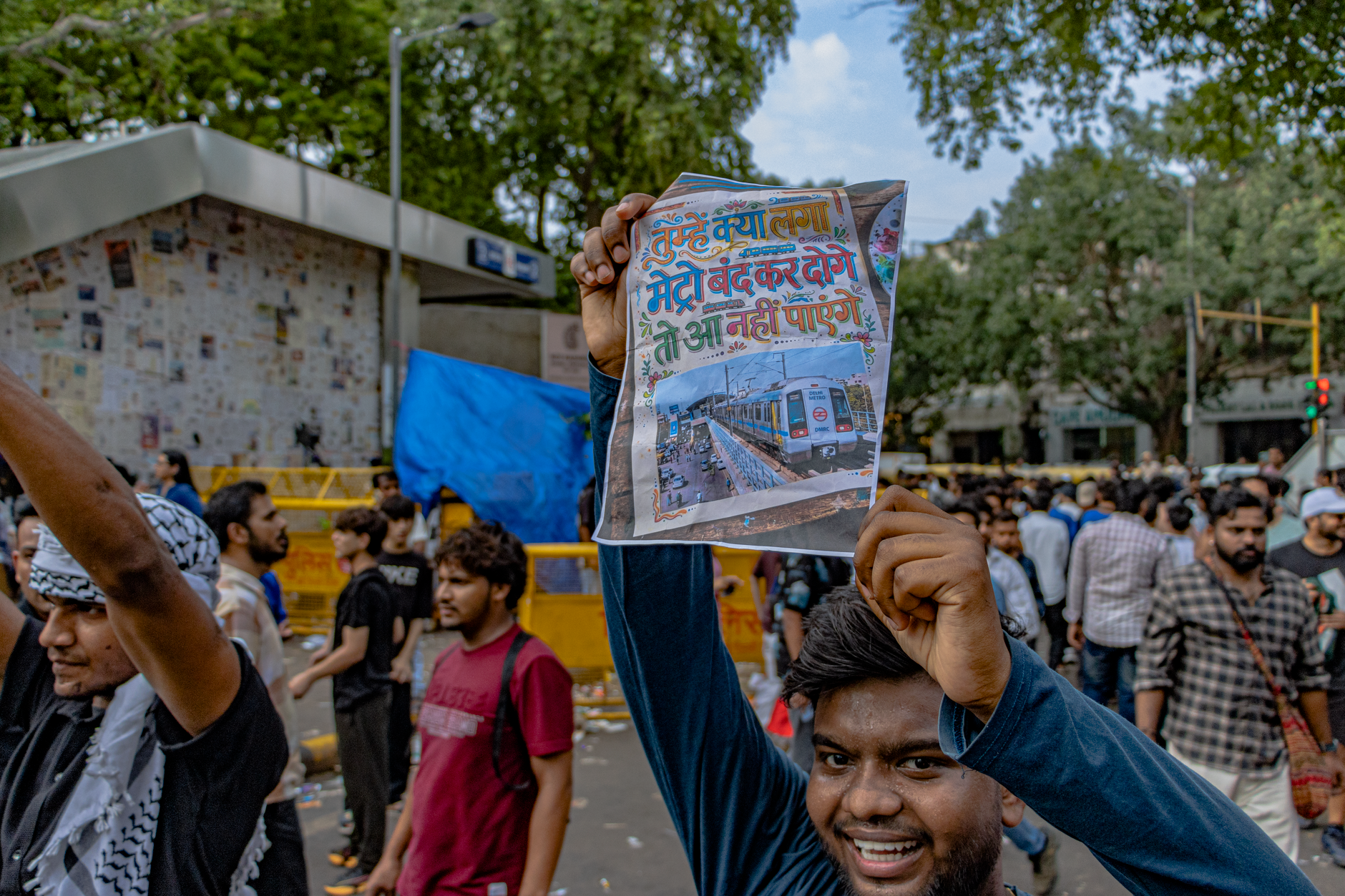
<p>The protest began in November 2019, sparked by the controversial Citizenship Amendment Act (CAA) and its accompanying National Register of Citizens (NRC). CJP joined thousands of students, lawyers, and ordinary citizens in a sit‑in at <a href="/article/the-pulse-of-youth-how-the-jantar-mantar-protests-are-redefining-environmental-activism-in-india" title="The Pulse of Youth: How the Jantar Mantar Protests Are Redefining Environmental Activism in India" class="internal-link">Jantar Mantar</a>, Delhi’s historic protest ground. The demonstration was notable for its <b>digital‑first approach</b>: live‑streaming, hashtag campaigns, and real‑time crowd‑sourcing of police actions.</p>
Advertisement
Loading partner content...
<p><figure class="my-8 overflow-hidden rounded-3xl shadow-xl">
<img src="https://images.pexels.com/photos/38727115/pexels-photo-38727115.png?auto=compress&cs=tinysrgb&dpr=2&h=650&w=940" alt="Delhi protest 2019" class="w-full h-[400px] object-cover" />
</figure></p>
<h3>Key Highlights</h3>
<blockquote>
<p>“We are not just <a href="/article/why-jharkhand-students-are-protesting-a-deep-dive-into-education-rights-government-response-and-the-" title="Why Jharkhand Students Are Protesting: A Deep Dive into Education Rights, Government Response, and the Role of Public Figures like Rahul Gandhi" class="internal-link">protesting a</a> law; we are defending the very fabric of our republic.” – <b>Teesta Setalvad</b>, during the 2019 rally.
</blockquote>
<ul>
<li>Over 5,000 participants gathered within the first 48 hours.</li>
<li>More than 10 million views were recorded on the protest’s official Twitter handle.</li>
<li>Live‑updates were posted on Instagram Stories, bypassing traditional news cycles.</li>
<li>Legal teams documented police excesses using encrypted messaging apps.</li>
</ul>
Advertisement
Loading partner content...
<p>The protest’s digital footprint attracted both global attention and state scrutiny, setting the stage for an unprecedented clash between digital rights and governmental control.</p>
<h2>Digital Rights Under Siege</h2>
<p>After the 2019 demonstrations, the Indian government introduced a series of measures aimed at curbing online dissent. These included:</p>
<ol>
<li><b>Amendment to the IT Act</b> allowing faster takedown of content deemed “anti‑national.”</li>
<li><b>New rules for social media intermediaries</b> mandating real‑time traceability of posts.</li>
<li><b>Expansion of the National Surveillance Grid</b> with AI‑driven monitoring of public gatherings.</li>
<li><b>Increased penalties</b> for “cyber‑terrorism” that critics say are vague and open to abuse.</li>
</ol>
<p>These policies directly impacted activists, journalists, and ordinary citizens who relied on digital tools for expression and organization.</p>
Advertisement
Loading partner content...
<h3>Impact on CJP’s Operations</h3>
<p>Within months of the protest, CJP’s website faced multiple takedown requests. The organization’s secure email servers were subjected to <b>deep packet inspection</b>, exposing correspondence with international human rights NGOs. According to a 2020 report by the <b>Digital Rights Foundation</b>, 73% of civil society groups reported increased difficulty in maintaining secure communications after the 2019 protests.</p>
<h2>State Control Tactics: From Legislation to Implementation</h2>
<p>The state’s response was not limited to legislation; it extended to on‑ground enforcement strategies that leveraged technology.</p>
<table border="1" cellpadding="5" cellspacing="0">
<thead>
<tr>
<th>Tactic</th>
<th>Digital Tool</th>
<th>Effect on Protesters</th>
</tr>
</thead>
<tbody>
<tr>
<td>Live‑monitoring of protest hashtags</td>
<td>Twitter API</td>
<td>Early identification of organizers for potential action</td>
</tr>
<tr>
<td>Geolocation tracking of mobile devices</td>
<td>Cell‑site simulation (Stingray)</td>
<td>Mapping of crowd movements in real time</td>
</tr>
<tr>
<td>Automated content removal</td>
<td>AI‑driven moderation platforms</td>
<td>Swift silencing of visual evidence</td>
</tr>
<tr>
<td>Legal notices to ISPs</td>
<td>Section 69 of IT Act</td>
<td>Blocking of websites without judicial review</td>
</tr>
</tbody>
</table>
Advertisement
Loading partner content...
<p>These tactics illustrate a <b>systematic effort to convert digital rights into state‑controlled domains</b>, turning the city’s “fortress” into a network of surveillance.</p>
<h2>Global Implications for Society & Culture</h2>
<p>The clash witnessed in Delhi resonates far beyond India’s borders. As nations grapple with balancing security and freedom, the <b>2019 Delhi Protest</b> serves as a case study for several trends:</p>
<ul>
<li><b>Rising digital authoritarianism</b> – Governments worldwide are adopting similar surveillance tools under the guise of national security.</li>
<li><b>Grassroots resilience</b> – Community‑driven encryption and decentralized platforms are emerging as countermeasures.</li>
<li><b>International advocacy</b> – Global NGOs are increasingly involved in defending digital rights, citing Indian precedents.</li>
<li><b> Cultural shift in activism</b> – The blending of offline protests with online storytelling is redefining how societies engage with political change.</li>
</ul>
<p>For Indian readers, understanding these dynamics is crucial to <b>preserving democratic freedoms</b> in an era where a single tweet can trigger a nation‑wide crackdown.</p>
Advertisement
Loading partner content...
<h2>Actionable Takeaways for Citizens</h2>
<p>Even as the state tightens its grip, there are practical steps individuals and groups can adopt to protect digital rights and sustain activism.</p>
<h3>1. Secure Communication Channels</h3>
<ul>
<li>Use end‑to‑end encrypted messaging apps such as Signal or Threema.</li>
<li>Enable two‑factor authentication on all accounts.</li>
<li>Regularly update passwords using a reputable password manager.</li>
</ul>
<h3>2. Document and Verify</h3>
Advertisement
Loading partner content...
<ul>
<li>Capture photos and videos with timestamps using tools like ExifTool.</li>
<li>Store evidence on decentralized cloud services (e.g., IPFS) to prevent unilateral deletions.</li>
<li>Cross‑verify information on multiple reputable sources before sharing.</li>
</ul>
<h3>3. Legal Preparedness</h3>
<ul>
<li>Know the specifics of the IT Act and the Indian Penal Code related to protests.</li>
<li>Maintain a list of pro‑bono lawyers and NGOs like CJP.</li>
<li>File complaints using the government’s online portals while keeping offline copies.</li>
</ul>
<h3>4. Community Building</h3>
Advertisement
Loading partner content...
<ul>
<li>Organize offline meet‑ups to discuss digital safety in private, encrypted groups.</li>
<li>Support local tech incubators that focus on privacy‑centric solutions.</li>
<li>Participate in awareness campaigns that highlight the importance of data sovereignty.</li>
</ul>
<p>By integrating these practices, citizens can <b>fortify the digital walls</b> of their activism against encroaching state control.</p>
<h2>Conclusion: The Ongoing Battle for a Free Fortress</h2>
<p>The narrative of the <b>Citizens for Justice and Peace (CJP)</b> and the <b>2019 Delhi Protest</b> is far from over. It is a living saga of how a determined civil society can challenge the twin pillars of digital repression and authoritarian governance. As India marches toward a future where technology and tradition intersect, the clash between <b>digital rights and state control</b> will remain a central theme in Society & Culture.</p>
<p>Understanding this dynamic equips us with the <b>knowledge and tools</b> to navigate the complexities of modern activism. Whether you are a student, a professional, or a retiree, your engagement—whether through a tweet, a secure message, or a silent march—contributes to the broader struggle for a truly open and inclusive fortress city.</p>
Advertisement
Loading partner content...
<p>Let this article serve as a catalyst for deeper conversations, informed action, and sustained advocacy. The battle for freedom in the digital age is not a single event; it is a continuous journey that begins with awareness and ends with collective resilience.</p></b></p></i></i>