<h1>How India's Steel Revolution Is Reshaping <a href="/article/how-india-s-5-point-maritime-trade-blueprint-is-redefining-global-shipping-a-complete-guide" title="How India’s 5‑Point Maritime Trade Blueprint Is Redefining Global Shipping – A Complete Guide" class="internal-link">Global</a> Power Dynamics Through Unexpected Russian Alliances and Trump's $15 Billion Vision</h1>
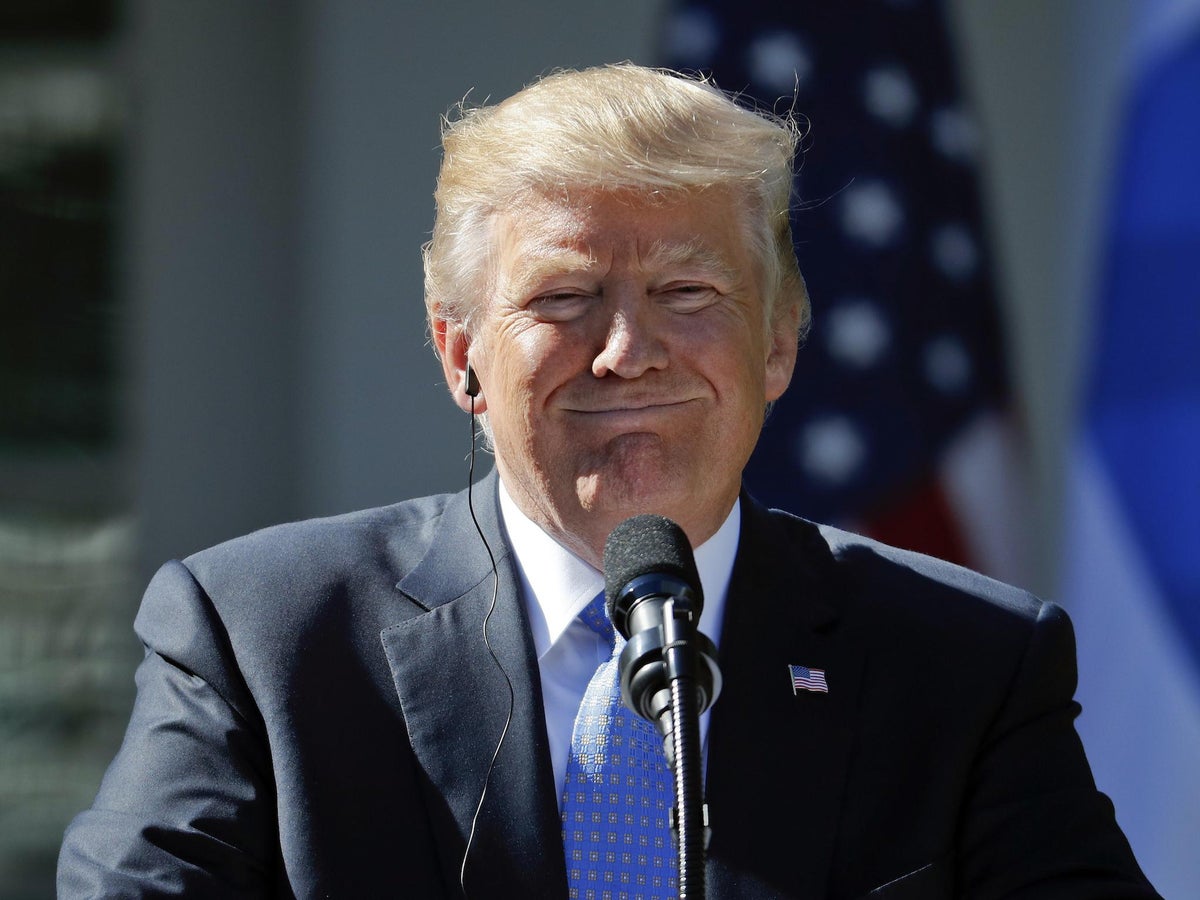
<p>In a move that has sent shockwaves through global commodity markets and diplomatic circles alike, a <b>$15 billion steel infrastructure project</b> has emerged at the intersection of American political ambition, Indian industrial aspiration, and Russian resource power. Announced by Donald Trump in mid-2026 during a high-profile event in Mumbai, the venture represents one of the most audacious attempts yet to rewire the global steel supply chain through an alliance that defies conventional geopolitical logic.</p>
<p>This isn't just another infrastructure deal. It's a <b>paradigm-shifting project</b> that brings together India’s growing manufacturing muscle, Russia’s vast energy reserves, and Trump’s branding of American business influence—all under the banner of building what could become one of Asia’s largest integrated steel complexes. But how did this unlikely trio come together? And what does it mean for the future of global trade, energy diplomacy, and economic sovereignty?</p>
<figure class="my-8 overflow-hidden rounded-3xl shadow-xl">
<img src="https://images.pexels.com/photos/37125625/pexels-photo-37125625.jpeg?auto=compress&cs=tinysrgb&dpr=2&h=650&w=940" alt="steel factory" class="w-full h-[400px] object-cover" />
</figure>
Advertisement
Loading partner content...
<h2>The Players Behind the Deal: JSW Steel and Its Strategic Gamble</h2>
<p>At the heart of this story is <b>JSW Steel Limited</b>, one of India’s premier private-sector steel producers headquartered in Mumbai. Founded in 1994 as part of the diversified JSW Group, the company has grown exponentially over the past three decades. With a current installed capacity of over 27 million tonnes per annum (MTPA), JSW Steel ranks among the top ten steel producers <a href="/article/effective-leadership-strategies-for-modern-workplaces-in-india" title="Effective Leadership Strategies for Modern Workplaces in India" class="internal-link">in India</a> and operates some of the world’s most advanced manufacturing facilities in Vijayanagar (Karnataka) and Dolvi (Maharashtra).</p>
<p>Under the leadership of <b>Mr. Sajjan Jindal</b>, who serves as both Chairman and Managing Director, JSW Steel has consistently pursued aggressive expansion strategies. From acquiring distressed assets during the 2008 financial crisis to investing heavily in green technology and renewable energy integration, Jindal has positioned his firm not merely as a commodity producer but as a strategic player in India’s push toward self-reliance—<i>Atmanirbhar Bharat</i>.</p>
<p>However, scaling up to meet India’s ambitious target of producing <b>300 million tonnes of steel annually by 2030</b>—more than double the current output—requires more than organic growth. That’s where the Russian connection comes into play.</p>
<h3>Why Partner With Sanctioned Nations?</h3>
<ul>
<li>Russia offers access to <b>low-cost coking coal and iron ore</b>, critical inputs that account for nearly 60% of total production costs.</li>
<li>Sanctions have made Russian raw materials available at steep discounts—sometimes up to 30–40% below global benchmarks.</li>
<li>Russia's Far East and Siberian regions offer untapped land banks ideal for large-scale industrial projects.</li>
</ul>
Advertisement
Loading partner content...
<p>Despite Western sanctions imposed following Moscow’s actions in Ukraine, many Indian companies—including JSW—have continued to engage with Russian partners, leveraging legal loopholes and third-country intermediaries to maintain operations while avoiding direct exposure to U.S. penalties.</p>
<h2>Trump’s Steel Seduction: Politics Meets Profit</h2>
<p>When Trump announced the $15 billion initiative in June 2026, few expected him to be directly involved in an overseas steel project. Yet there he was, standing beside Mr. Jindal and senior Russian officials inside a packed auditorium in Mumbai, declaring the birth of what he called “the greatest steel alliance the world has ever seen.”</p>
<p>So why did Trump insert himself into this venture? Analysts point to several factors:</p>
<blockquote>"Trump sees this as an opportunity to reassert American influence in <a href="/article/innovation-in-business-why-it-s-the-key-to-thriving-in-a-competitive-world" title="Innovation in Business: Why It’s the Key to Thriving in a Competitive World" class="internal-link">key</a> sectors without committing taxpayer dollars. By lending his name and brand to the project, he positions himself—and potentially American firms—as stakeholders in a future where U.S.-India-Russia trilateral cooperation becomes normalized."
<cite>— Dr. Sarah Mitchell, Geopolitical Economist, Brookings Institution</cite></blockquote>
Advertisement
Loading partner content...
<p>According to sources close to the negotiations, Trump’s team was approached by a consortium of American engineering and construction firms seeking entry into the Indian market. These companies saw an opening after India began relaxing foreign investment norms in heavy industry and infrastructure development.</p>
<p>In return for endorsing the project, Trump reportedly secured commitments from JSW and its Russian partners to source equipment, technology, and services worth billions from U.S.-based suppliers—including Caterpillar, General Electric, and Fluor Corporation.</p>
<table border="1">
<thead>
<tr>
<th>Component</th>
<th>Estimated Value</th>
<th>Primary Supplier Country</th>
</tr>
</thead>
<tbody>
<tr>
<td>Heavy Machinery</td>
<td>$4.2 Billion</td>
<td>USA</td>
</tr>
<tr>
<td>Raw Materials</td>
<td>$3.8 Billion</td>
<td>Russia</td>
</tr>
<tr>
<td>Technology Licensing</td>
<td>$2.5 Billion</td>
<td>Germany / Japan</td>
</tr>
<tr>
<td>Construction Services</td>
<td>$2.0 Billion</td>
<td>India</td>
</tr>
<tr>
<td>Financing & Infrastructure</td>
<td>$2.5 Billion</td>
<td>Multilateral</td>
</tr>
</tbody>
</table>
Advertisement
Loading partner content...
<p>The structure allows all parties to benefit financially while sidestepping direct confrontation with any <a href="/article/major-controversies-during-donald-trump-presidency" title="Major Controversies During Donald Trump’s Presidency" class="internal-link">major</a> power bloc—a delicate balancing act that reflects the increasingly multipolar nature of today’s global economy.</td></p>
<h2>The Russian Connection: Technology, Resources, and Sanctions Arbitrage</h2>
<p>While much attention focuses on Trump’s involvement, the real backbone of the project lies in its Russian partnerships. Key among them is <b>Norilsk Nickel (Nornickel)</b>, a state-linked mining giant that controls significant deposits of high-grade iron ore and nickel across Siberia and the Russian Far East.</p>
<p>Beyond raw materials, Russia is also providing cutting-edge metallurgical technologies developed jointly with German firms like Siemens and ThyssenKrupp. These include:</p>
<ol>
<li>Advanced blast furnace designs capable of processing low-grade ores efficiently;</li>
<li>Carbon capture and storage systems aimed at reducing emissions;</li>
<li>Digital twin modeling tools used for predictive maintenance and process optimization.</li>
</ol>
<p>Additionally, Moscow-based banks such as VTB Capital and Gazprombank are providing long-term financing packages totaling $6 billion, bypassing the SWIFT system via alternative payment networks like SPFS (System for Transfer Banking Operations).</p>
Advertisement
Loading partner content...
<p>These arrangements highlight how sanctioned nations are finding creative ways to participate in global commerce. Rather than isolating themselves, they're building parallel ecosystems that rival traditional Western-dominated ones.</p>
<figure class="my-8 overflow-hidden rounded-3xl shadow-xl">
<img src="https://ichef.bbci.co.uk/ace/branded_news/1200/cpsprodpb/acbc/live/b0aa9520-b54b-11f1-bc1f-3f186ca4140c.jpg" alt="Vladimir Putin" class="w-full h-[400px] object-cover" />
</figure>
<h2>The $15 Billion Blueprint: Scope, Scale, and Strategic Ambition</h2>
<p>The proposed complex will span two locations—one in Odisha and another in Chhattisgarh—covering roughly 10,000 acres combined. Once fully operational by 2032, the site will house:</p>
<ul>
<li>Three integrated steel plants each with a capacity of 10 MTPA;</li>
<li>A dedicated port terminal for importing raw materials and exporting finished goods;</li>
<li>An on-site township complete with schools, hospitals, and recreational facilities;</li>
<li>A research center focused on next-gen materials and sustainable manufacturing practices.</li>
</ul>
Advertisement
Loading partner content...
<p>Government data suggests the project will generate approximately 120,000 direct jobs and over 500,000 indirect ones across related industries. More importantly, it aims to reduce India's reliance on imported steel—a sector where the country currently imports around 7% of its requirements despite being rich in iron ore resources.</p>
<p>By 2030, the facility is projected to meet roughly 15% of India's total steel demand, making it a linchpin in New Delhi’s quest for <b>industrial independence</b>.</p>
<h2>Geopolitical Earthquake: Ripples Across Alliances</h2>
<p>For Washington, the deal poses familiar dilemmas. On one hand, it strengthens ties with India—a crucial partner in countering China’s rise. On the other, it deepens engagement with Russia, which continues to supply arms to Pakistan and maintain close strategic links with Beijing.</p>
<p>NATO allies have expressed concern over potential technology leakage, especially if dual-use equipment ends up in Russian defense applications. Meanwhile, China has quietly welcomed the development, viewing it as evidence that even traditional U.S. allies can diversify their partnerships without sacrificing mutual interests.</p>
Advertisement
Loading partner content...
<p>For India, the arrangement offers a rare chance to pursue multiple strategic objectives simultaneously:</p>
<ol>
<li>Secure affordable inputs for critical industries;</li>
<li>Access advanced technologies without relying solely on Chinese vendors;</li>
<li>Enhance bargaining leverage vis-à-vis both East and West;</li>
<li>Demonstrate resilience against external pressure and coercion.</li>
</ol>
<p>In essence, this project embodies the emerging doctrine of <b>strategic autonomy</b>—where middle powers like India navigate between competing blocs rather than aligning definitively with either side.</p>
<figure class="my-8 overflow-hidden rounded-3xl shadow-xl">
<img src="https://images.pexels.com/photos/3951603/pexels-photo-3951603.jpeg?auto=compress&cs=tinysrgb&dpr=2&h=650&w=940" alt="global map" class="w-full h-[400px] object-cover" />
</figure>
<h2>Historical Parallels: Lessons from Past Industrial Journeys</h2>
<p>History offers instructive precedents. South Korea’s rapid industrialization in the 1970s relied heavily on technology transfers from Japan and the United States. Brazil’s petrochemical boom in the 1980s leveraged partnerships with European multinationals despite facing debt crises and capital controls.</p>
Advertisement
Loading partner content...
<p>In each case, countries used unconventional alliances—not necessarily ideological alignments—to accelerate development. Today’s landscape differs mainly in scale and complexity, driven by digital connectivity, climate imperatives, and shifting geopolitical fault lines.</p>
<p>Yet the core principle remains unchanged: <b>resource nationalism combined with smart diplomacy can unlock pathways to prosperity</b>, especially when done at the right time and with the right partners.</p>
<h2>The Future of Industrial Sovereignty</h2>
<p>As supply chains fragment and nations prioritize resilience over efficiency, projects like the Indo-Russian-American steel venture may become the new norm rather than exception. They signal a move toward <b>economic decoupling</b>, where countries build redundancies and regional hubs to insulate themselves from shocks.</p>
<p>Critics argue such moves risk fragmenting the global economy into incompatible spheres. Supporters contend they foster healthier competition and innovation while allowing developing economies greater agency in shaping their own futures.</p>
Advertisement
Loading partner content...
<p>Whatever the verdict, one thing is clear: <b>steel—the very foundation of modern civilization—is once again becoming a symbol of national strength and geopolitical clout</b>.</p>
<h2>Expert Voices: What Analysts Are Saying</h2>
<p>We spoke with several experts to understand the broader implications of this landmark project:</p>
<blockquote>"This deal illustrates how commodity-rich nations are no longer passive recipients of Western capital and technology. Instead, they’re actively crafting hybrid models that blend elements from different systems to achieve optimal outcomes."
<citeline>— Prof. Rajiv Malhotra, Director, Institute for Advanced Study, Hyderabad</citeline></blockquote>
<blockquote>"Trump’s role here shouldn't be dismissed as mere celebrity endorsement. He's essentially acting as a broker—using his network and influence to stitch together a coalition that benefits all participants while skirting formal diplomatic channels."
<citeline>— Dr. Maria Kozlov, Senior Fellow, Center for Strategic and International Studies</citeline></blockquote>
Advertisement
Loading partner content...
<p>Others caution that the project faces logistical hurdles, including environmental clearances, local opposition, and fluctuating commodity prices. Still, if successful, it could serve as a template for similar ventures in Africa, Southeast Asia, and Latin America.</p>
<h2>Conclusion: A New Chapter in Global Commerce?</h2>
<p>Few projects encapsulate the contradictions and opportunities of our age better than this $15 billion steel saga. It blends corporate ambition with geopolitical maneuvering, technological ambition with environmental pragmatism, and old-world politics with new-era economics.</p>
<p>If completed, the complex will not only reshape India’s industrial landscape but also challenge prevailing assumptions about how global value chains function in an era of rising uncertainty and competing ideologies.</p>
<p>One thing is certain: <b>the geopolitics of steel is far from over—and neither is its power to redefine the rules of engagement between nations</b>.</p>
Advertisement
Loading partner content...
<figure class="my-8 overflow-hidden rounded-3xl shadow-xl">
<img src="https://bl-i.thgim.com/public/incoming/mxkls3/article71493014.ece/alternates/LANDSCAPE_1200/ey-sajjan-jindal.jpeg" alt="JSW Steel Plant" class="w-full h-[400px] object-cover" />
</figure>
<meta name="description" content="Explore how India's $15 billion steel venture with Russia and Trump reshapes global power dynamics, trade wars, and industrial sovereignty in 2026.">
<meta name="keywords" content="Indian steel mill, Russian business partnerships, Trump announced project, $15 billion infrastructure, geopolitics of steel, US-India trade relations, sanctioned countries cooperation, global steel market"></b></b></b></i></i></i></i>