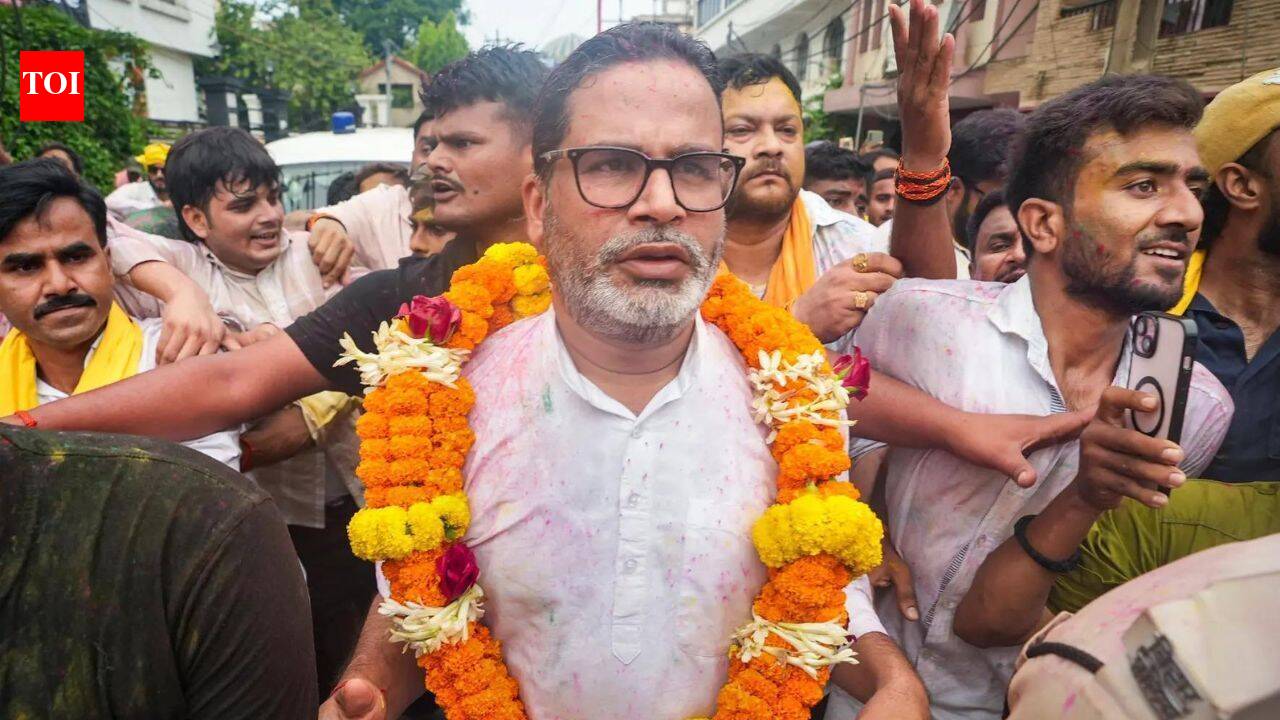

<h1>How Prashant Kishor's <a href="/article/the-bjp-reshuffle-unveiled-how-leadership-changes-are-reshaping-india-s-political-landscape" title="The BJP Reshuffle Unveiled: How Leadership Changes Are Reshaping India's Political Landscape" class="internal-link">Political</a> Ascent Redefined India's Electoral Landscape: From Poll Strategist to Lawmaker</h1>
<p>In the bustling, chaotic, and deeply complex arena of <b>Indian politics</b>, few names have commanded as much intrigue, fear, and fascination as <b>Prashant Kishor</b>. For years, he was the invisible hand behind the curtain, the mathematical genius who could turn a political campaign into a data-driven juggernaut. However, the <b>electoral transformation</b> we are witnessing in 2026 is something far more profound: the metamorphosis of a strategist into a direct participant in the democratic process. <b>Prashant Kishor is no longer just telling leaders how to win; he is now competing to lead.</b></p>
<p>His journey is not merely a personal success story; it is a reflection of the <b>evolving nature of Indian democracy</b>. As voters become increasingly sophisticated and data-aware, the traditional methods of grassroots mobilization are being supplemented by high-tech, psychological, and logistical precision. This article explores the meteoric rise of a man who cracked the code of the Indian voter and subsequently decided to rewrite the rules of the game himself.</p>
<figure class="my-8 overflow-hidden rounded-3xl shadow-xl">
<img src="https://images.pexels.com/photos/2245194/pexels-photo-2245194.jpeg?auto=compress&cs=tinysrgb&dpr=2&h=650&w=940" alt="Indian Election Campaign Crowd" class="w-full h-[400px] object-cover" />
</figure>
Advertisement
Loading partner content...
<h2>The Architect of Victory: The Era of the Master Strategist</h2>
<p>To underst<a href="/article/dipke-and-the-cockroach-janta-party-the-unconventional-force-reshaping-indian-politics" title="Dipke and the Cockroach Janta Party: The Unconventional Force Reshaping Indian Politics" class="internal-link">and the</a> lawmaker of today, we must first look at the <b>poll strategist</b> of yesterday. Before he was a household name, Kishor was a disruptor who introduced a scientific, granular approach to campaigning that had never been seen in the subcontinent. He treated elections not as mere rallies and slogans, but as <b>complex logistical puzzles</b> that could be solved through data analytics and micro-targeting.</p>
<p>The turning point that cemented his reputation was the <b>historic BJP strategy in 2014</b>. While many saw the landslide victory as an inevitable tide, Kishor and his team were working in the shadows, mapping out voter sentiment with unprecedented accuracy. By focusing on <b>perceived leadership qualities</b> and hyper-local issues, he helped create a blueprint for the modern, digital-first political campaign. This era marked the end of "gut-feeling" politics and the beginning of the <b>data-driven electoral era</b>.</p>
<p>Following the 2014 success, Kishor became the most sought-after professional in the country. He didn't just work for one party; he proved his versatility by working with a spectrum of ideologies. His ability to identify <b>regional powerhouses</b> and provide them with the technological edge needed to challenge established giants made him an indispensable asset to any political entity.</p>
Advertisement
Loading partner content...
<h3>Key Milestones in the Strategist's Career</h3>
<ul>
<li><b>The 2014 Paradigm Shift:</b> Revolutionizing the use of voter data to drive mass movements.</li>
<li><b>Regional Dominance:</b> Helping regional parties in South and East India leverage digital media to counter national narratives.</li>
<li><b>The Rise of Micro-Targeting:</b> Moving away from broad-stroke messaging to individualized voter engagement.</li>
</ul>
<figure class="my-8 overflow-hidden rounded-3xl shadow-xl">
<img src="https://images.pexels.com/photos/5561915/pexels-photo-5561915.jpeg?auto=compress&cs=tinysrgb&dpr=2&h=650&w=940" alt="Data Analytics Concept" class="w-full h-[400px] object-cover" />
</figure>
<h2>The Pivot to Politics: Crossing the Rubicon</h2>
<p>For a long time, the consensus in <b>Indian politics</b> was that a strategist could never become a politician. The "consultant" tag was often seen as a barrier to the perceived "authenticity" required for grassroots leadership. However, <b>Prashant Kishor broke this glass ceiling</b> by deciding that analyzing power was no longer enough—he wanted to exercise it.</p>
Advertisement
Loading partner content...
<p>The transition from a behind-the-scenes advisor to a legislative figure was marked by significant controversy and intense public scrutiny. Critics argued that his entry into direct politics was a <b>calculated move to monetize his brand</b>, while supporters viewed it as the natural evolution of a man who had seen the flaws in the system and wanted to fix them from within. This pivot was not a sudden leap but a <b>calculated, multi-year transition</b> involving direct engagement with the electorate through massive, ground-level outreach programs.</p>
<p>His legislative entry was characterized by a unique "bottom-up" approach. Instead of relying on traditional party machinery, he utilized his <b>deep understanding of voter psychology</b> to build a movement that felt more like a social crusade than a standard political campaign. This strategy allowed him to bypass traditional gatekeepers and speak directly to the aspirations of the youth and the marginalized.</p>
<p><blockquote>"Politics is no longer just about winning elections; it is about the precision of governance. I decided to move from designing the map to walking the terrain." — <b>Prashant Kishor</b> (Attributed during a 2025 campaign rally)</blockquote></p>
<h2>The Modern Lawmaker: A New Approach to Policy</h2>
<p>Since taking his seat in the legislature, <b>Prashant Kishor's lawmaker career</b> has been defined by a departure from traditional, rhetoric-heavy parliamentary debates. He has brought the same <b>analytical rigor</b> to the floor of the house that he once brought to the war rooms of political parties. His approach to policy-making is uniquely characterized by <b>evidence-based advocacy</b>.</p>
Advertisement
Loading partner content...
<p>Unlike many of his contemporaries who focus on ideological grandstanding, Kishor has focused on <b>technocratic solutions to systemic issues</b>. His legislative priorities have often centered around:
<ol>
<li><b>Digital Infrastructure:</b> Advocating for seamless digital access to government services to reduce corruption.</li>
<li><b>Youth Empowerment:</b> Proposing structural changes to the vocational training and employment landscape.</li>
<li><b>Data-Driven Governance:</b> Using real-time feedback loops from citizens to adjust local government policies.</li>
</ol>
</p>
<p>This "consultant-turned-legislator" style has created a new archetype in the Indian Parliament. He treats <b>policy as an iterative process</b>, constantly looking for data to prove or disprove the effectiveness of a law. While this has earned him respect from intellectuals and policy experts, it has often put him at odds with traditionalist politicians who prefer the old ways of patronage-based governance.</p>
<figure class="my-8 overflow-hidden rounded-3xl shadow-xl">
<img src="https://images.pexels.com/photos/2573473/pexels-photo-2573473.jpeg?auto=compress&cs=tinysrgb&dpr=2&h=650&w=940" alt="Parliament Building India" class="w-full h-[400px] object-cover" />
</figure>
Advertisement
Loading partner content...
<h2>Public Perception and the Weight of Controversy</h2>
<p>No rise as rapid as Kishor's can occur without significant friction. His journey has been a lightning rod for <b>intense public debate</b>. To his detractors, he is a "mercenary" who has commodified political victory, someone who views the sacred duty of representation through the lens of a corporate contract. The accusation that he treats <b>Indian politics</b> as a series of mathematical problems to be solved is a common critique used to undermine his perceived sincerity.</p>
<p>However, the public perception is far from monolithic. In many parts of India, he is seen as a <b>breath of fresh air</b>—a leader who understands the language of <a href="/article/the-art-of-absurdity-how-satire-and-surrealism-are-redefining-youth-political-protest-in-the-21st-ce" title="The Art of Absurdity: How Satire and Surrealism are Redefining Youth Political Protest in the 21st Century" class="internal-link">the 21st century</a>. His ability to use <a href="/article/unlocking-the-power-of-social-media-marketing-tactics" title="Unlocking the Power of Social Media Marketing Tactics" class="internal-link">social media</a>, data, and modern communication tools makes him highly relatable to the massive demographic of young, tech-savvy voters <a href="/article/effective-leadership-strategies-for-modern-workplaces-in-india" title="Effective Leadership Strategies for Modern Workplaces in India" class="internal-link">in India</a>. He has successfully navigated the transition from being a "hired gun" to a "voice for the people," a feat few in history have achieved.</p>
<table border="1" style="width:100%; border-collapse: collapse;">
<caption style="margin-bottom: 10px;"><b>Comparison of Political Roles</b></caption>
<thead>
<tr style="background-color: #f2f2f2;">
<th>Feature</th>
<th>The Poll Strategist Era</th>
<th>The Lawmaker Era (2026)</th>
</tr>
</thead>
<tbody>
<tr>
<td><b>Primary Objective</b></td>
<td>Winning elections for clients.</td>
<td>Implementing systemic policy changes.</td>
</tr>
<tr>
<td><b>Visibility</b></td>
<td>Low (Behind the scenes).</td>
<td>High (Public figure/MP).</td>
</tr>
<tr>
<td><b>Methodology</b></td>
<td>Data-driven campaign management.</td>
<td>Data-driven legislative advocacy.</td>
</tr>
<tr>
<td><b>Accountability</b></td>
<td>To political party leadership.</td>
<td>To the electorate/constituency.</td>
</tr>
</tbody>
</table>
Advertisement
Loading partner content...
<p>The controversy surrounding his transition often boils down to the concept of <b>political authenticity</b>. In a country where voters often value "son of the soil" or "grassroots worker" identities, Kishor’s "technocrat" identity is a radical departure. Yet, his success suggests that <b>competence and results</b> are becoming just as important to the modern voter as traditional lineage.</p>
<h2>Analyzing the Legacy: How He Changed the Game</h2>
<p>As we look at the landscape of <b>Indian politics in 2026</b>, the <b>political legacy</b> of Prashant Kishor is already becoming clear. He has fundamentally altered the "barrier to entry" for professional expertise in Indian governance. Before him, the path to power was almost exclusively through party hierarchy and local influence. After him, the path includes <b>strategic intelligence and data proficiency</b>.</p>
<p>His impact can be summarized in three major shifts in the political culture:
<ul>
<li><b>The Professionalization of Campaigns:</b> He turned electioneering into a professionalized industry, forcing all parties to upgrade their technological capabilities.</li>
<li><b>The Democratization of Information:</b> By using micro-targeting, he forced political parties to address much more specific, niche grievances of sub-communities.</li>
<li><b>The Shift in Leadership Archetypes:</b> He has paved the way for a new kind of leader—one who is as comfortable with a spreadsheet as they are with a public rally.</li>
</ul>
</p>
Advertisement
Loading partner content...
<p>Ultimately, <b>Prashant Kishor</b> represents the intersection of tradition and modernity. He has taken the ancient, ritualistic art of Indian campaigning and fused it with the cold, hard logic of modern data science. Whether his legislative career results in lasting structural change or remains a fascinating political experiment, there is no denying that <b>the era of the "amateur" politician is effectively over.</b></p>
<figure class="my-8 overflow-hidden rounded-3xl shadow-xl">
<img src="https://images.pexels.com/photos/14314638/pexels-photo-14314638.jpeg?auto=compress&cs=tinysrgb&dpr=2&h=650&w=940" alt="Abstract Digital Connections" class="w-full h-[400px] object-cover" />
</figure>
<p>As India moves further into this digital century, the lessons from Kishor's rise will continue to be studied. He has proven that in the modern age, <b>information is the ultimate currency of power</b>, and those who can master the flow of that information will inevitably shape the destiny of the nation.</p></b></i></i></i></i>