
<h1>How <a href="/article/india-s-60-b-russian-oil-pivot-how-us-tariff-threats-are-reshaping-global-energy-politics-and-what-i" title="India’s $60 B Russian Oil Pivot: How US Tariff Threats Are Reshaping Global Energy Politics and What It Means for India’s Energy Future" class="internal-link">Russian Oil</a> Redrew the <a href="/article/how-india-s-5-point-maritime-trade-blueprint-is-redefining-global-shipping-a-complete-guide" title="How India’s 5‑Point Maritime Trade Blueprint Is Redefining Global Shipping – A Complete Guide" class="internal-link">Global</a> Energy Map: Sanctions, Shadow Fleets, and the <a href="/article/australia-india-uranium-deal-how-pm-modi-s-new-trade-pact-is-reshaping-global-nuclear-energy" title="Australia‑India Uranium Deal: How PM Modi’s New Trade Pact is Reshaping Global Nuclear Energy" class="internal-link">New Trade</a> Routes Powering India & China</h1>
<p>In early 2026, a quiet but seismic shift occurred in Washington: Congress quietly extended a critical provision allowing the United States to waive sanctions on Russian oil shipments to India and China beyond the original expiry date. This legislative maneuver, buried in Section 221 of the Ukraine Supplemental Appropriations Act, was not a retreat from deterrence but a calculated recalibration. By signaling that Moscow’s oil exports to Asia would remain unblocked if they adhered to a $60-per-barrel price cap, the U.S. demonstrated a fundamental shift in its energy policy: <b>managing Russian flows to prevent global price chaos rather than attempting to choke them off entirely.</b> This decision encapsulates the new reality—a fractured, multipolar energy market where traditional Western leverage has been permanently diluted by the rise of Asian buyers and the shadow networks enabling their purchases.</p>
<h2>The Great Rerouting: Visualizing the Eastward Pivot</h2>
<p>The invasion of Ukraine in February 2022 triggered one of the most dramatic geopolitical realignments in modern energy history. Pre-war, European Union nations absorbed nearly half of Russia’s crude oil exports, primarily through pipelines and Black Sea routes. Today, that figure has collapsed. According to the International Energy Agency (IEA), <b>India and China now account for 84% of Russia’s seaborne crude exports as of 2025</b>, up from just 12% in 2021.</p>
<p>This seismic shift has rewritten the rules of global trade, with new logistical arteries emerging to transport discounted Urals crude from Baltic and Caspian ports to Asian refineries.</p>
Advertisement
Loading partner content...
<p>The mechanics of this rerouting are starkly simple yet profoundly consequential. Russian oil, once a staple of European energy security, now flows predominantly to Indian and Chinese refineries at prices significantly below Brent crude. In 2025, the Urals-Brent spread averaged $28 per barrel, a discount that reflects both the effectiveness of Western sanctions and the willingness of Asian buyers to accept lower-quality grades. This discount acts as a de facto subsidy, enabling Russia to fund its military operations while providing cheaper feedstock to Asian refiners.</p>
<p>For India, the deal is even more lucrative: its refiners import Russian crude at a 20-30% discount compared to Middle Eastern grades, allowing them to maintain profitability despite global economic headwinds.</p>
<p>The implications extend beyond price. This rerouting has created a new energy corridor, with tankers navigating from Primorsk or Novorossiysk through the Suez Canal to Indian and Chinese ports. The volume is staggering: Russia shipped approximately 5.2 million barrels per day (mb/d) to Asia in 2025, compared to 1.8 mb/d to Europe—a net increase of 3.4 mb/d redirected eastward. This shift has not only reshaped global trade patterns but has also redefined the balance of power in the oil market, placing Asian nations at the center of a new energy axis.</p>
<h2>The Price Cap G7 Mechanism: Architecture of a "Leaky" Dam</h2>
Advertisement
Loading partner content...
<p>In <a href="/article/navigating-geopolitical-tensions-a-strategic-response-to-israeli-criticism" title="Navigating Geopolitical Tensions: A Strategic Response to Israeli Criticism" class="internal-link">response to</a> Russia’s invasion, the G7 nations and EU introduced a controversial price cap mechanism in December 2022, setting the price limit at $60 per barrel for seaborne crude entering non-sanctioning countries. The cap was designed as a "safety valve": restrict Russian revenues without triggering a supply shock that could devastate global markets. However, its implementation has revealed a critical flaw—it was never intended to stop Russian oil from flowing but to limit its profitability. The cap relies on an "attestation" process, where sellers must prove their oil was sold below the threshold to qualify for Western insurance and financing.</p>
<p>Yet, this system is riddled with loopholes.</p>
<p>A key weakness lies in the role of Western insurance giants. Lloyd’s of London and other G7-dominated P&I (Protection and Indemnity) clubs provide the coverage essential for tankers to operate internationally. By restricting insurance for cargoes exceeding the cap, the mechanism aimed to make overpriced Russian oil uninsurable. However, in practice, many shadow fleet tankers have switched to non-G7 insurers in places like Dubai and Singapore, which offer coverage at lower rates.</p>
<p></p_value>
<p>Moreover, the cap’s porous nature is evident in the widening Urals-Brent discount. While the $60 cap theoretically limits Russian revenues, the actual realized prices often fall well below this level. In 2025, Urals sold to India averaged $42/bbl, and to China, $45/bbl—far below the cap. This discount reflects the cap’s inefficacy in constraining Moscow’s earnings while underscoring the buyers’ leverage.</p>
<p>Analysts estimate that the cap has reduced Russian oil revenues by 15-20% compared to pre-sanction levels, but the volume sold has increased, resulting in a net revenue decline of only 5-8%. The cap, therefore, functions less as a weapon and more as a negotiating tool—a "leaky dam" that slows the flow without stopping it entirely.</p>
Advertisement
Loading partner content...
<h2>The Shadow Fleet: The Dark Logistics Enabling the Trade</h2>
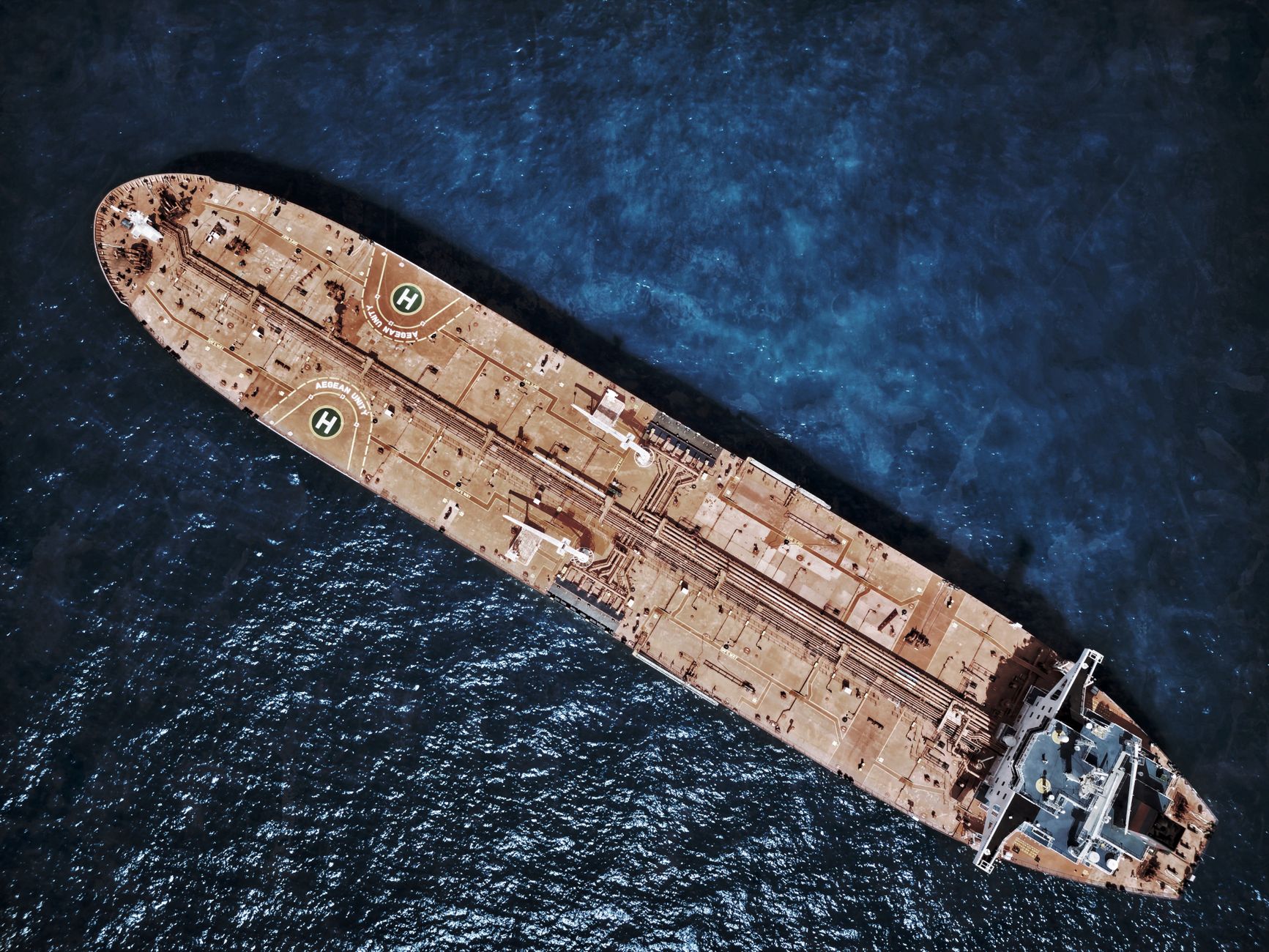
<p>The ability of Russian oil to circumvent sanctions hinges on the shadow fleet—a clandestine network of aging tankers, opaque ownership structures, and flag-hopping maneuvers that evade regulatory scrutiny. As of 2026, the shadow fleet comprises over 600 vessels, according to maritime analytics firm Clarksons, representing nearly 20% of the global crude tanker fleet. These ships, often built in the 1980s and 1990s, are riddled with mechanical issues and lack the safety certifications required for mainstream operations. Yet, they ply the seas with impunity, their crews operating under flags of convenience like Panama, Liberia, or Marshall Islands, which offer minimal oversight.</p>
<p>The shadow fleet’s operations are characterized by deliberate opacity. Ship-to-ship (STS) transfers in neutral waters—such as <a href="/article/how-the-reopening-of-the-strait-of-hormuz-could-reshape-global-oil-markets-a-complete-guide" title="How the Reopening of the Strait of Hormuz Could Reshape Global Oil Markets: A Complete Guide" class="internal-link">the Strait of Hormuz</a> or the Singapore Strait—allow for the blending of Russian crude with other grades, obscuring its origin. Ownership is frequently hidden through layers of shell companies registered in jurisdictions like Cyprus or the British Virgin Islands. This structure enables buyers to claim their oil is "substantially transformed" elsewhere, sidestepping sanctions.</p>
<p>However, the risks are immense. Uninsured spills, such as the 2023 incident off the coast of Sri Lanka involving a sanctioned tanker, highlight the environmental hazards posed by these vessels. </p_value>
Advertisement
Loading partner content...
<p>In response, Western governments have intensified sanctions, targeting specific vessels and their financiers. S.</p>
<p>Treasury sanctioned 12 shadow fleet tankers linked to Sovcomflot, Russia’s state-owned shipping company, marking a new phase of "whack-a-mole" enforcement. Yet, each sanctioned ship is quickly replaced by another, as the fleet’s turnover rate exceeds 30% annually. </p_value>
<h2>India & China: The New Swing Buyers & Geopolitical Tightrope</h2>
<p>India and China have adopted markedly different strategies to capitalize on Russia’s oil bonanza, reflecting their distinct geopolitical priorities and economic needs. India’s approach is rooted in pragmatism and strategic autonomy.</p>
<p>By the end of 2025, India had become the world’s largest importer of Russian crude, accounting for 18% of its total oil imports. New Delhi has embraced unconventional payment mechanisms, such as rupee-dirham swaps facilitated by Dubai-based banks, to bypass dollar-based sanctions. "</p_value>
<p>The political calculus is clear: cheaper oil helps India combat soaring fuel prices, which peaked at 115 INR per liter in 2024. Domestic protests over fuel costs had threatened to destabilize Prime Minister Narendra Modi’s government, but Russian imports have since reduced pump prices by 15%.</p>
<p></p_value>
Advertisement
Loading partner content...
<p>China’s strategy, by contrast, is more systematic and long-term. The country has secured spot purchases of Russian crude while also negotiating long-term pipeline deals via the ESPO (Eastern Siberian–Pacific Ocean) route, which delivers 30 mb/d directly to Dalian. China’s filling of its Strategic Petroleum Reserve (SPR) in 2025—at a time when global SPR inventories were contracting—demonstrates its commitment to energy security. Moreover, Beijing has accelerated its efforts to de-dollarize energy transactions, settling oil trades in yuan through the Shanghai International Energy Exchange (INE).</p>
<p></p_value>
<p>Despite their shared interest in Russian oil, India and China remain rivals in energy geopolitics. </p_value>
<h2>The Refining Loophole: How Russian Molecules Still Reach the West</h2>
<p>One of the sanctions regime’s most glaring failures is the "refining loophole," which allows Russian crude to re-enter Western markets via third-party refining. Under international law, oil that undergoes "substantial transformation"—such as refining into diesel or gasoline—is no longer subject to origin-based sanctions. This has enabled Indian refineries to process Russian Urals and sell the resulting products to Europe.</p>
<p></p_value>
<p>The process is intricate but legal. Russian crude enters India at ports like Kandla or Paradip, where it is blended and processed at facilities like Reliance’s Jamnagar complex. The refined products are then shipped to Europe via the Mediterranean or transshipped through Singapore. While this loophole technically complies with sanctions, it undermines their moral and economic intent.</p>
<p>European consumers benefit from cheaper fuel, while Russia continues to profit from its oil exports.</p>
Advertisement
Loading partner content...
<ol>
<li><b>Tightening the Screws</b>: A hardline approach sees the U.S. and EU expand secondary sanctions to target Asian buyers directly, lower the price cap to $50/bbl, and blacklist non-G7 insurers. This would force India and China to seek alternative suppliers, but at the risk of triggering global price spikes.</li>
<li><b>Managed Status Quo</b>: Washington prioritizes domestic energy costs ahead of the 2026 U.S. elections, allowing the cap to remain "leaky" while focusing on downstream reforms. This scenario keeps Russian oil flowing at discounted prices, stabilizing global markets but emboldening Moscow.</li>
<li><b>Structural Decoupling</b>: A convergence of factors—including EU green transitions, peak oil demand, and Western tech embargoes on Russian refineries—forces Russia to shut in wells due to a lack of spare parts and expertise. This would permanently reduce Russian output but at the cost of energy security for Asian nations.</li>
</ol>
<p>Each scenario carries profound implications. A tightening approach could reignite energy price volatility, while decoupling might accelerate the shift to renewables. The managed status quo, however, risks prolonging Moscow’s ability to fund its war effort through energy revenues—a scenario that would further fragment the global energy order.</p>
<h2>Conclusion: The New Energy Order</h2>
Advertisement
Loading partner content...
<p>The global oil market has entered an era of permanent fragmentation, split between G7-capped flows and non-G7 discount markets. S. sanctions waivers is not a concession but a recognition of this reality. Washington cannot afford to lose 3-4 mb/d of Russian supply without triggering economic paralysis in Asia and Europe alike.</p>
<p>The leverage has shifted decisively to Delhi and Beijing, whose ability to purchase and finance Russian oil at discounted prices gives them unprecedented influence over Moscow’s war chest. Meanwhile, intermediaries in Dubai, Singapore, and St. Petersburg have become the new energy gatekeepers, profiting from the shadow fleet’s opaque logistics.</p>
<p>This transformation is not merely about oil—it is about the erosion of Western energy hegemony and the rise of a multipolar world order. As Russian crude continues to flow eastward, the lessons of 2022-2026 will reshape geopolitics for decades: energy security is no longer about controlling resources, but about mastering the networks that move them. The age of unilateral sanctions is over; the era of negotiated energy flows has begun.</p>
<figure class="my-8 overflow-hidden rounded-3xl shadow-xl">
<img src="https://npr.brightspotcdn.com/dims3/default/strip/false/crop/6000x3375+0+313/resize/1400/quality/85/format/jpeg/?url=http%3A%2F%2Fnpr-brightspot.s3.amazonaws.com%2F5d%2F2a%2F3af10d4a4695a9afc4fc552426ef%2Fap26188697334259.jpg" alt="Global Oil Trade Routes" class="w-full h-[400px] object-cover" />
</figure>
Advertisement
Loading partner content...
<figure class="my-8 overflow-hidden rounded-3xl shadow-xl">
<img src="https://images.pexels.com/photos/33284879/pexels-photo-33284879.jpeg?auto=compress&cs=tinysrgb&dpr=2&h=650&w=940" alt="Shadow Fleet Tankers" class="w-full h-[400px] object-cover" />
</figure>
<figure class="my-8 overflow-hidden rounded-3xl shadow-xl">
<img src="https://images.pexels.com/photos/27852910/pexels-photo-27852910.jpeg?auto=compress&cs=tinysrgb&dpr=2&h=650&w=940" alt="Indian Refinery Diesel Output" class="w-full h-[400px] object-cover" />
</figure>
<figure class="my-8 overflow-hidden rounded-3xl shadow-xl">
<img src="https://s.yimg.com/lo/mysterio/api/b7c3e757c8762df290e234cc22bb932e5d72b5f26987074a7a60337a27963d6b/lightyear_networkapi/resizefill_w800_h532;quality_80;format_webp/https:%2F%2Fmedia.zenfs.com%2Fen%2Freuters.com%2Fe63bb1661b6feb25ef5107ba016971c1" alt="G7 Energy Summit" class="w-full h-[400px] object-cover" />
</figure></p></p></p></p></p></p></p></p></p></i></i></i></i>