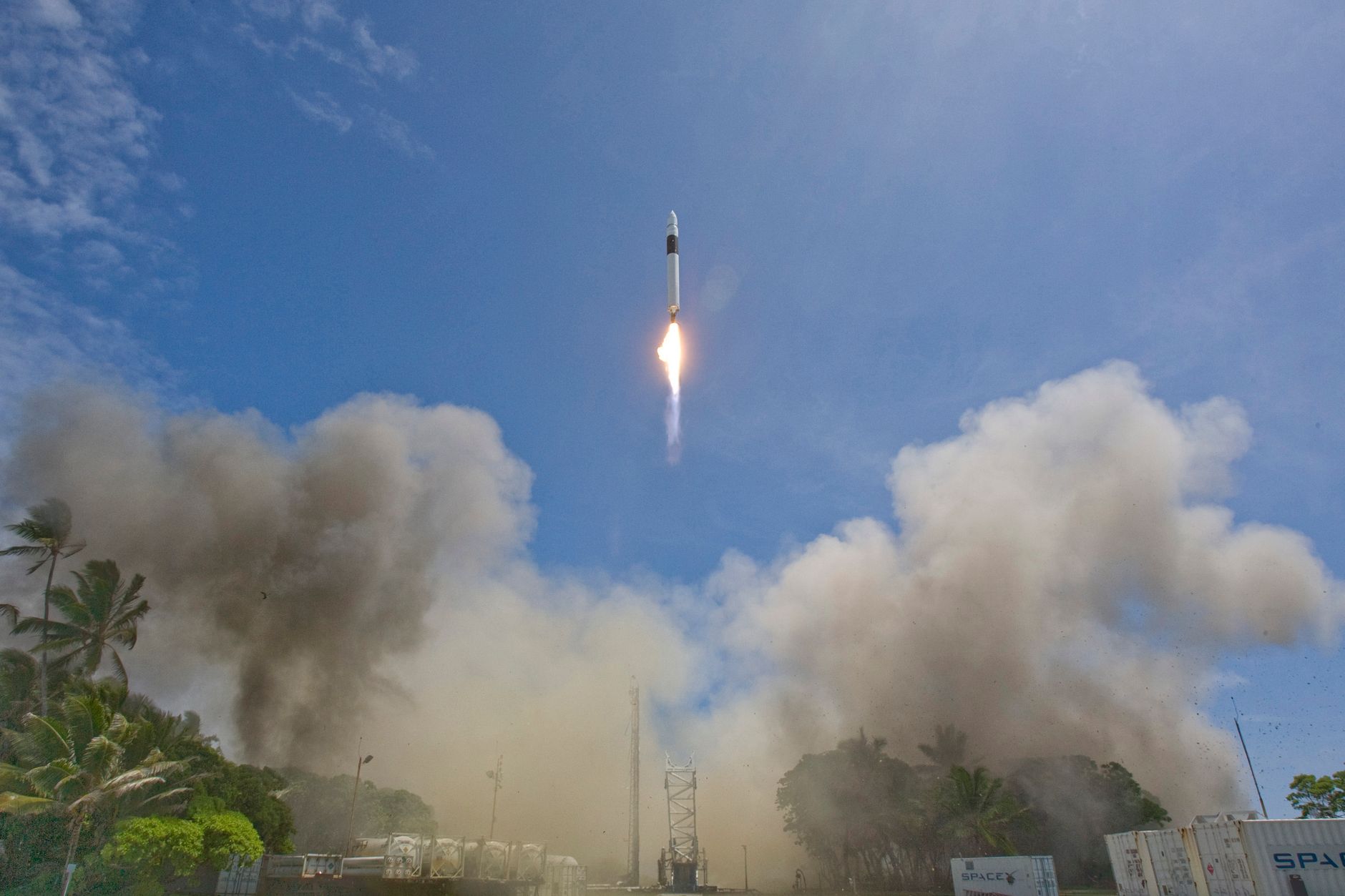

<h1>India's Private Space Race: How the First Private Orbital Rocket Is Transforming the Nation's Aerospace Industry</h1>
<p>For over five decades, the Indian sky was the undisputed playground of a single government agency. That era has now decisively ended. <b>The launch of India's first private-sector orbital rocket is not just a technical milestone—it is a structural reboot of the entire national aerospace economy.</b></p>
<p>As we move through 2026, the phrase "India private space sector" no longer sounds like a futuristic fantasy. It is a living, contracting, and rapidly scaling industry. This article breaks down what changed, who is building it, and why the orbital rocket launch by a non-state player is the most important shift since the dawn of ISRO.</p>
<figure class="my-8 overflow-hidden rounded-3xl shadow-xl">
<img src="https://images.pexels.com/photos/11086515/pexels-photo-11086515.jpeg?auto=compress&cs=tinysrgb&dpr=2&h=650&w=940" alt="India space rocket launch" class="w-full h-[400px] object-cover" />
</figure>
Advertisement
Loading partner content...
<h2>Why the Private Orbital Launch Is a Watershed Moment</h2>
<p>An orbital rocket is fundamentally different from a suborbital test vehicle. <b>To reach orbit, a rocket must achieve roughly 28,000 km/h while maintaining precise injection accuracy—a feat previously reserved for national agencies.</b></p>
<p>When an Indian startup accomplishes this, it proves that sovereign-level capability is no longer monopolized by the state. This unlocks commercial contracts, foreign investment, and indigenous supply chains.</p>
<p>The implications for students, engineers, and investors in India are massive. <b>A successful private orbital flight means careers in space tech are no longer limited to qualifying for a government exam.</b></p>
<h2>Background: India's Space Program and the Long State Monopoly</h2>
Advertisement
Loading partner content...
<p>ISRO was founded in 1969 with the vision of using space science for national development. Its achievements—from the Chandrayaan missions to the Mars Orbiter Mission—earned <a href="/article/how-india-s-5-point-maritime-trade-blueprint-is-redefining-global-shipping-a-complete-guide" title="How India’s 5‑Point Maritime Trade Blueprint Is Redefining Global Shipping – A Complete Guide" class="internal-link">global</a> respect.</p>
<p>Yet for decades, the sector remained closed. <b>ISRO privatization was never formally executed, but the ecosystem was so state-dominated that private firms only acted as vendors, not mission owners.</b></p>
<p>This structure ensured reliability but limited scale. With a 2026 perspective, it is clear the model needed evolution to serve the exploding demand for satellites.</p>
<h3><a href="/article/innovation-in-business-why-it-s-the-key-to-thriving-in-a-competitive-world" title="Innovation in Business: Why It’s the Key to Thriving in a Competitive World" class="internal-link">Key</a> ISRO Milestones Before Privatization</h3>
<ul>
<li>1975: Aryabhata, India's first satellite.</li>
<li>2014: Mars Orbiter Mission success on first attempt.</li>
<li>2017: PSLV-C37 launched 104 satellites in one mission.</li>
<li>2023: Chandrayaan-3 soft landing near lunar south pole.</li>
</ul>
Advertisement
Loading partner content...
<p>These wins built the foundation, but the capacity to launch weekly commercial payloads required new actors.</p>
<figure class="my-8 overflow-hidden rounded-3xl shadow-xl">
<img src="https://veja.abril.com.br/wp-content/uploads/2024/08/GettyImages-2282424553.jpg?quality=70&strip=info&resize=1080,565&crop=1" alt="ISRO logo" class="w-full h-[400px] object-cover" />
</figure>
<h2>What Changed: Policy Reforms and <a href="/article/india-s-private-space-revolution-the-rise-of-skyroot-s-vikram-1-rocket" title="India's Private Space Revolution: The Rise of Skyroot's Vikram-1 Rocket" class="internal-link">the Rise of</a> Startups</h2>
<p>The turning point was the creation of IN-SPACe in 2020 and the rollout of the Indian Space Policy 2023. <b>By 2026, IN-SPACe has cleared over 150 private missions and issued streamlined launch licenses.</b></p>
<p>Liberalization allowed startups to lease ISRO facilities, access legacy data, and build their own propulsion systems. The result is a vibrant cluster of Indian space startups.</p>
Advertisement
Loading partner content...
<h3>Major Policy Enablers</h3>
<ol>
<li>IN-SPACe as a single-window clearance agency.</li>
<li>NSIL mandated to transfer commercial SLV tech to industry.</li>
<li>Foreign direct investment up to 100% in satellite components.</li>
<li>Private ownership of space debris mitigation frameworks.</li>
</ol>
<p><b>The future of space technology in India is now co-authored by entrepreneurs, not just bureaucrats.</b></p>
<h2>The First Private Orbital Rocket Explained</h2>
<p>Unlike sounding rockets, this vehicle carried a functional payload into a 500 km sun-synchronous orbit. It used a privately developed semi-cryogenic engine and composite airframe.</p>
<p>The significance is not merely altitude. <b>It demonstrates that a non-ISRO entity can manage range safety, telemetry, and orbital insertion under Indian regulatory oversight.</b></p>
Advertisement
Loading partner content...
<h3>Technology Breakdown</h3>
<table border="1" cellpadding="8" cellspacing="0">
<thead>
<tr>
<th>Component</th>
<th>Private Solution</th>
<th>Legacy ISRO Equivalent</th>
</tr>
</thead>
<tbody>
<tr>
<td>Stage 1 Engine</td>
<td>3D-printed liquid engine</td>
<td>Vikas (factory-built)</td>
</tr>
<tr>
<td>Guidance</td>
<td>AI-assisted inertial nav</td>
<td>Deterministic software</td>
</tr>
<tr>
<td>Structure</td>
<td>Carbon-fiber monocoque</td>
<td>Aluminum alloy</td>
</tr>
<tr>
<td>Turnaround</td>
<td>21 days</td>
<td>60+ days</td>
</tr>
</tbody>
</table>
<p>This comparison shows why the private model is disruptive. <b>Speed and cost are redesigned from the material level upward.</b></p>
<figure class="my-8 overflow-hidden rounded-3xl shadow-xl">
<img src="https://dam.mediacorp.sg/image/upload/s--s5ENkjiu--/c_fill,g_auto,h_676,w_1200/fl_relative,g_south_east,l_mediacorp:cna:watermark:2024-04:reuters_1,w_0.1/f_auto,q_auto/v1/one-cms/core/2026-07-02T090112Z_1_LYNXMPEM610HO_RTROPTP_3_INDIA-SPACE-SKYROOT.JPG?itok=P2V8SBmK" alt="Indian private orbital rocket" class="w-full h-[400px] object-cover" />
</figure>
<h2>How It Is Transforming the Industry</h2>
<p>The orbital rocket launch has triggered a chain reaction across the value chain. Below are the five concrete transformations visible <a href="/article/beyond-fds-how-to-build-a-diversified-fixed-income-portfolio-in-2026" title="Beyond FDs: How to Build a Diversified Fixed-Income Portfolio in 2026" class="internal-link">in 2026</a>.</p>
Advertisement
Loading partner content...
<h3>1. Cost Reduction</h3>
<p>Private launchers have driven per-kg costs down by an estimated 40% compared to 2022 rates. <b>Indian startups now offer rideshare slots below $8,000 per kg to LEO.</b></p>
<h3>2. Innovation Speed</h3>
<p>Where ISRO cycles took years, private firms iterate in months. Open testing at private ranges accelerates failure-based learning.</p>
<h3>3. Global Competitiveness</h3>
<p>With competitive pricing, India is winning contracts from Southeast Asia and Africa. <b>The India private space sector is positioned as the "low-cost reliable" alternative to Western providers.</b></p>
<h3>4. Job Creation</h3>
<ul>
<li>Over 25,000 direct jobs in private space firms (2026 estimate).</li>
<li>80,000+ indirect roles in composites, software, and logistics.</li>
<li>New aerospace curricula in 30+ Indian universities.</li>
</ul>
Advertisement
Loading partner content...
<h3>5. Commercial Satellite Markets</h3>
<p>Earth observation, IoT connectivity, and agri-tech satellites are now funded by venture capital. <b>Orbital access means Indian data stays on Indian satellites.</b></p>
<blockquote>"The first private orbital rocket is the API call to India's space economy—once it works, everyone can build on top of it." — 2026 Industry Observer</blockquote>
<h2>Key Players to Watch in the Indian Space Startups Scene</h2>
<p>The ecosystem is no longer a one-horse race. Several firms define the new landscape.</p>
<h3>Emerging Companies</h3>
<ul>
<li><b>Skyroot Aerospace:</b> Vikram series small launch vehicles.</li>
<li><b>Agnikul Cosmos:</b> 3D-printed single-piece engines from Chennai.</li>
<li><b>Pixxel:</b> Hyperspectral imaging constellation for climate.</li>
<li><b>Bellatrix Aerospace:</b> Electric propulsion and green fuels.</li>
<li><b>Dhruva Space:</b> Satellite platforms and ground stations.</li>
</ul>
Advertisement
Loading partner content...
<p>Each addresses a different layer of the stack. <b>Together they form a domestic capability once dependent on imported parts.</b></p>
<figure class="my-8 overflow-hidden rounded-3xl shadow-xl">
<img src="https://images.unsplash.com/photo-1522071820081-009f0129c71c?crop=entropy&cs=tinysrgb&fit=max&fm=jpg&ixid=M3w4NjI1Nzh8MHwxfHNlYXJjaHwxfHxzcGFjZSUyMHN0YXJ0dXAlMjBlbmdpbmVlcnMlMjB3b3JraW5nfGVufDB8MHx8fDE3ODQ0MTQ4Njd8MA&ixlib=rb-4.1.0&q=80&w=1080" alt="space startup engineers working" class="w-full h-[400px] object-cover" />
</figure>
<h2>Future Trends in the Indian Space Economy</h2>
<p>Looking beyond 2026, several vectors will define the next decade.</p>
<h3>Small Satellites and Constellations</h3>
<p>Miniaturization allows 50+ satellites per launch. <b>This democratizes space <a href="/article/top-ott-releases-this-week-must-watch-picks-for-indian-audiences" title="Top OTT Releases This Week: Must-Watch Picks for Indian Audiences" class="internal-link">for Indian</a> municipalities monitoring floods and crops.</b></p>
Advertisement
Loading partner content...
<h3>Reusable Launch Vehicles</h3>
<p>Private prototypes for booster recovery are in advanced testing. Reuse could cut costs another 60% by 2029.</p>
<h3>Space Tourism Potential</h3>
<p>While suborbital joyrides remain premium, Indian firms are exploring zero-g research flights. <b>The future of space technology in India includes human-rated capsules by the early 2030s.</b></p>
<h3>Global Share Target</h3>
<table border="1" cellpadding="8" cellspacing="0">
<thead>
<tr>
<th>Year</th>
<th>India Global Space Share</th>
<th>Private Contribution</th>
</tr>
</thead>
<tbody>
<tr>
<td>2022</td>
<td>2%</td>
<td>Negligible</td>
</tr>
<tr>
<td>2026</td>
<td>4.5%</td>
<td>25%</td>
</tr>
<tr>
<td>2030 (target)</td>
<td>8%+</td>
<td>50%+</td>
</tr>
</tbody>
</table>
<p>The math is clear: without private players, the 8% goal is unreachable.</p>
<h2>Challenges Ahead for Private Space Firms</h2>
Advertisement
Loading partner content...
<p>The road is not frictionless. Real hurdles remain for the India private space sector.</p>
<h3>Regulatory Gaps</h3>
<p>Licensing is faster but liability law is ambiguous. <b>A single accident could expose startups to unlimited third-party claims without clear caps.</b></p>
<h3>Technical Hurdles</h3>
<ul>
<li>Reliable cryogenic upper stages still import-dependent.</li>
<li>Ground station bandwidth bottlenecks.</li>
<li>Radiation-hardened chips not yet made at scale in India.</li>
</ul>
<h3>Funding Winter Risk</h3>
<p>Global VC slowed in 2025–26. <b>Indian space startups must show revenue, not just prototypes, to survive the next cycle.</b></p>
<blockquote>"Policy opened the door, but capital discipline will decide who walks through it." — 2026 Investor Note</blockquote>
Advertisement
Loading partner content...
<h2>Conclusion: India as a Private Space Power</h2>
<p>The first private orbital rocket is a mirror of a confident nation. <b>It tells the world that ISRO privatization in spirit has succeeded without sacrificing public mission integrity.</b></p>
<p>For the reader in India—whether engineer, founder, or student—the message is actionable. <b>Learn propulsion, study RF systems, build for orbit.</b> The infrastructure now exists.</p>
<p>As 2026 unfolds, the India private space sector will likely log multiple orbital flights. <b>This is not a trend; it is the new baseline of Indian technology power.</b></p>
<p>The future of space technology in India is being written in private hangars, not just government complexes. And the rocket has already left the pad.</p></b></b></i></i></i></i>


