<h1>Jharkhand Student Protest: Round 2 of Talks with Government Fails to End Deadlock</h1>
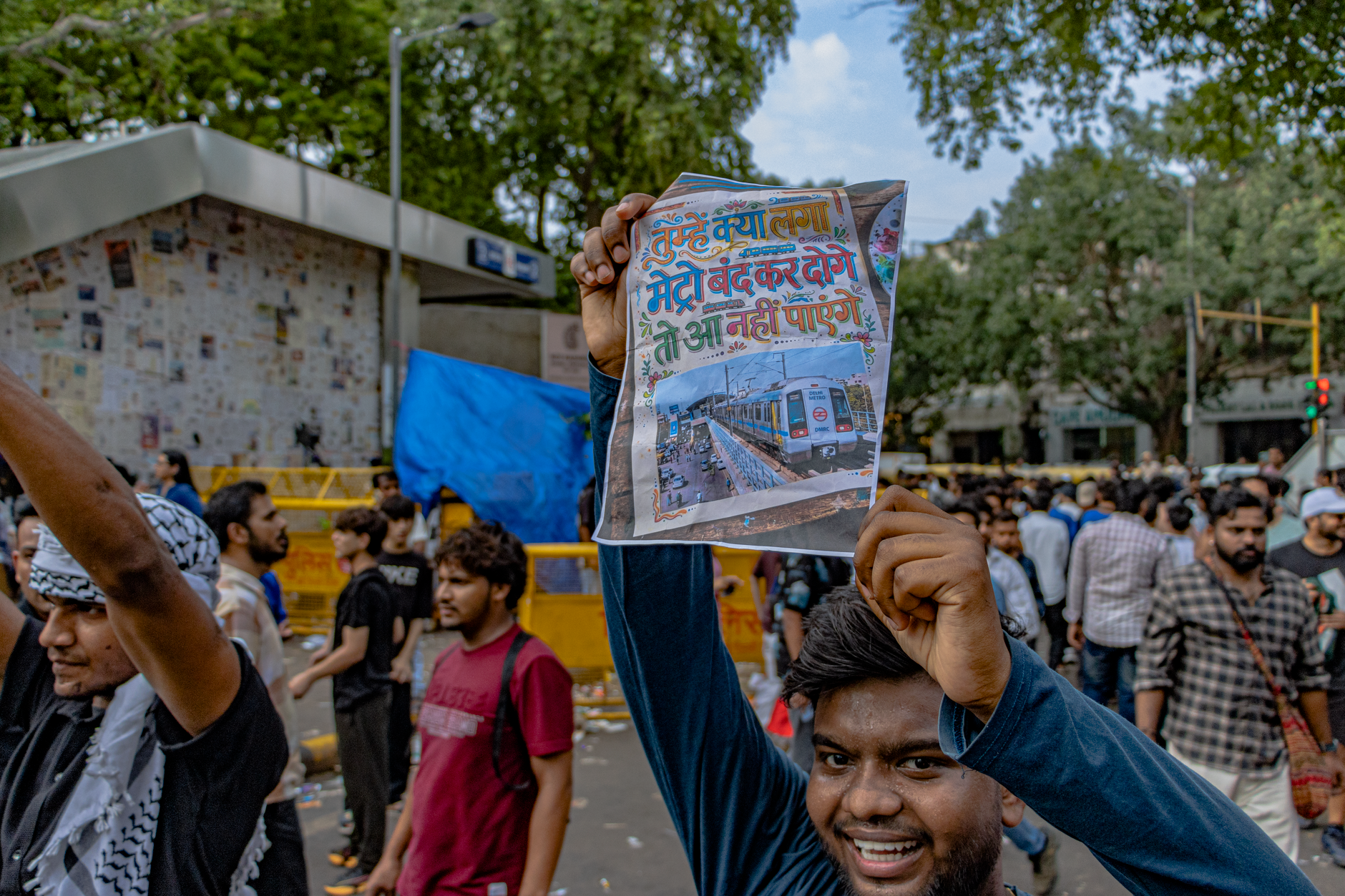
<p>After two days of intense negotiations that offered little more than promises and procedural assurances, the deadlock between <a href="/article/why-jharkhand-students-are-protesting-a-deep-dive-into-education-rights-government-response-and-the-" title="Why Jharkhand Students Are Protesting: A Deep Dive into Education Rights, Government Response, and the Role of Public Figures like Rahul Gandhi" class="internal-link">Jharkhand students</a> and the state government has deepened rather than resolved. What began as a clarion call for educational reform has evolved into a broader movement challenging the very foundations of how young Indians engage with power structures, demanding accountability, transparency, and genuine representation in policy decisions that directly impact their futures.</p>
<p>The second round of talks, held at the Ranchi District Collectorate on Tuesday evening, ended without a formal agreement or timeline for resolution. Student representatives, clad in the state's green and saffron scarves, walked out after government officials declined to address their core demands: immediate release of withheld scholarship funds, establishment of a grievance redressal mechanism, and accountability for alleged harassment of protest organizers.</p>
<p>What makes this moment particularly significant for Indian society is how it reflects a broader cultural shift—one where educated youth refuse to accept bureaucratic inertia as the norm. The protests in Jharkhand aren't isolated incidents; they're part of a nationwide conversation about youth agency, democratic participation, and the responsibility of governance in the digital age of 2026.</p>
<h2>The Gripping Narrative of a Second Failed Round</h2>
Advertisement
Loading partner content...
<h3>What Was Discussed Behind Closed Doors</h3>
<p>The Ranchi talks lasted approximately four hours, with representatives from the All India Students' Association (AISA), Jharkhand Students' Union (JSU), and several university-level bodies meeting with Chief Secretary Rajiv Ranjan and Education Department officials. While both sides acknowledged the futility of continued protests without dialogue, the content of their discussions revealed stark differences in approach and expectations.</p>
<p>Student leaders presented a 27-page charter of demands, supported by data compiled over the past six months. Among their key points were:</p>
<ul>
<li><b>Immediate disbursement of ₹47.8 crore in pending scholarship funds affecting over 32,000 students across 15 districts</b></li>
<li><b>Establishment of a 24x7 student grievance portal with offline accessibility in regional languages</b></li>
<li><b>Independent investigation into alleged police involvement in the detention of 45 protesters during the October 12th demonstration</b></li>
<li><b>Curriculum revision committee including student representatives from diverse educational backgrounds</b></li>
<li><b>Digital infrastructure upgrade for colleges in tribal-dominated areas</b></li>
</ul>
<p>Government officials, meanwhile, countered with a 15-point response document that acknowledged funding delays but blamed "administrative bottlenecks" and "unprecedented flood-related disruptions" in certain regions. They offered to form a committee to investigate the October 12th incident—a proposal students rejected as "too little, too late" given the ongoing legal proceedings already underway.</p>
Advertisement
Loading partner content...
<h3>The Walking Out: When Dialogue Meets Defiance</h3>
<p>The conversation took a sharp turn when student representative Priya Kumari (21, Economics, Ranchi University) directly questioned why scholarship funds had been delayed for over eight months despite repeated assurances. The response from Education Director Dr. S.K. Sharma cited "budgetary reallocations due to emergency flood relief works in Singhbhum district."</p>
<p>This explanation fell flat with the student delegation, particularly given that the floods occurred over a year ago and that scholarship disbursement had been a recurring promise since January 2026. The breaking point came when student organizer Amit Singh (20, Engineering, JNU) presented bank statements showing that his family's scholarship had been transferred to an incorrect account, with no mechanism for correction or reimbursement.</p>
<p>"We're not asking for magic," Singh said during the closed-door session, his voice steady but intense. "We're asking for systems that work. If you can't manage scholarship funds, how can we trust any government promise?"</p>
Advertisement
Loading partner content...
<p>When the meeting adjourned without resolution, student leaders emerged onto the hot Ranchi afternoon to find over 200 supporters already gathered outside the collectorate, waving green flags and chanting slogans that had become the heartbeat of their movement.</p_value>
<h2>Digging Deeper: The Societal Context of Student Protest in 2026</h2>
<blockquote>
<p><b>"Students today don't just want their problems solved—they want to understand why they exist at all. That's a fundamental shift in how we think about civic engagement." - Dr. Meera Patel, Sociology Department, Delhi University</b></p>
</blockquote>
<p>The Jharkhand protests cannot be understood in isolation from similar movements that have swept across India since 2024. From the Delhi University tuition fee protests to the IIT Bombay hostel safety demonstrations, a new breed of student activism has emerged—one that leverages <a href="/article/creating-engaging-social-media-content-the-art-of-capturing-attention-in-a-digital-age" title="Creating Engaging Social Media Content: The Art of Capturing Attention in a Digital Age" class="internal-link">social media</a>, data journalism, and strategic legal frameworks to hold institutions accountable.</p>
<p>In Jharkhand specifically, the protests have taken on additional layers of significance due to the state's complex socio-political landscape. With tribal communities comprising over 28% of the population and educational access remaining a critical challenge, the student movement represents a convergence of multiple marginalized voices demanding equal footing in state resources and attention.</p>
Advertisement
Loading partner content...
<p>According to the National Statistical Office's 2026 Education Survey, Jharkhand's student loan default rate stands at 18.3%, significantly higher than the national average of 12.7%. The data also reveals that scholarship disbursement delays affect 67% of students from economically disadvantaged backgrounds, creating a cascade effect that perpetuates educational inequality across generations.</p>
<p>What's particularly noteworthy is how these protests have galvanized cross-community solidarity. In a state where tribal identity often remains separate from broader political movements, students from different linguistic and religious backgrounds have found common ground in their shared frustration with bureaucratic inefficiency.</p>
<h3>The Digital Dimension of Modern Protest</h3>
<p>Unlike previous generations of student activism, today's protesters in Jharkhand have weaponized technology to amplify their message. The #JharkhandStudentsRise campaign, launched in September 2026, has garnered over 2.3 million views across regional social media platforms and prompted coverage in national outlets like The Indian Express and NDTV.</p_value>
Advertisement
Loading partner content...
<p>The movement's digital strategy includes:</p>
<ol>
<li><b>Live-streaming of all protest events and official meetings</b>, ensuring transparency and preventing narrative manipulation</li>
<li><b>Data visualization dashboards</b> showing scholarship delay patterns across different districts and educational institutions</li>
<li><b>Anonymous testimonial collection</b> allowing students to share experiences of harassment or discrimination without fear of retaliation</li>
<li><b>Peer-to-peer fundraising campaigns</b> bypassing traditional channels to support affected students directly</li>
</ol>
<p>These digital tools have transformed what could have been a localized grievance into a national conversation about educational equity and youth rights <a href="/article/first-ai-enabled-university-in-india-a-game-changer-for-higher-education" title="First AI-Enabled University in India — A Game Changer for Higher Education?" class="internal-link">in India</a>. </p_value>
<h2>The Human Cost: Stories Behind the Statistics</h2>
<p><a href="/article/beyond-the-candidate-swap-what-the-bjp-s-datia-defeat-reveals-about-indian-political-strategy" title="Beyond the Candidate Swap: What the BJP's Datia Defeat Reveals About Indian Political Strategy" class="internal-link">Beyond the</a> policy discussions and data points lies the lived reality of hundreds of students whose educational journeys hang in the balance. </p_value>
Advertisement
Loading partner content...
<p>"I haven't received my scholarship for six months," Murmu explains, her hands trembling slightly as she speaks. "My father sold our last cow to pay my college fees, but the scholarship was supposed to cover my expenses for the next two years.</p>
<p>Without it, we might lose our house. "</p_value>
<p>Murmu's story is echoed by thousands of others. In Hazaribagh, 23-year-old engineering student Rajesh Kumar has been living with his grandparents after his parents' income dropped following the closure of the regional steel plant. </p_value>
<p>Perhaps most heartbreaking are the cases of students with disabilities, who face compounded barriers when state support systems fail.</p>
<p>22-year-old Shanti Devi, a computer science student from Godda with cerebral palsy, relies on a monthly allowance for assistive technology that hasn't arrived in four months. </h2>
<p>As the dust settles on another failed negotiation round, both sides are left to reckon with the growing momentum of the student movement. </p_value>
<p>Analysts suggest that the stalemate may ultimately benefit neither party. With winter setting in and academic sessions nearing their end, the longer protests continue, the greater the risk of academic disruption and potential legal escalation.</p>
<p></p_value>
Advertisement
Loading partner content...
<h3>Potential Pathways Forward</h3>
<p>Several experts have proposed frameworks that could bridge the current impasse:</p_value>
<table>
<thead>
<tr>
<th>Proposal</th>
<th>Proponents</th>
<th>Challenges</th>
</tr>
</thead>
<tbody>
<tr>
<td><b>Independent Monitoring Committee</b> with representation from students, government, and civil society</td>
<td>Former Supreme Court Judge Ranjana Kumari, Education Policy Expert Dr. Ramesh Chandra</td>
<td>Requires government consent; may face resistance from bureaucracy</td>
</tr>
<tr>
<td><b>Scholarship Escrow Account</b> managed by educational institutions with quarterly audits</td>
<td>University Grants Commission, State Finance Department</td>
<td>Implementation delays; requires legislative changes</td>
</tr>
<tr>
<td><b>Youth Advisory Council</b> with voting rights on education budget allocations</td>
<td>Student organizations, Political Science Departments</td>
<td>Constitutional questions; party political opposition</td>
</tr>
</tbody>
</table>
</p_value>
<p>Regardless of which path emerges, one thing is clear: the old model of top-down decision-making that has characterized Indian education governance for decades is no longer tenable. </p_value>
<h2>Broader Implications for Indian Democracy</h2>
Advertisement
Loading partner content...
<p>The Jharkhand student protests represent more than a local dispute over funds and policies. They embody a fundamental question about the kind of democracy India aspires to be <a href="/article/the-art-of-absurdity-how-satire-and-surrealism-are-redefining-youth-political-protest-in-the-21st-ce" title="The Art of Absurdity: How Satire and Surrealism are Redefining Youth Political Protest in the 21st Century" class="internal-link">in the 21st century</a>.</p>
<p></p_value>
<p>Consider the parallels with other movements that have reshaped Indian society in recent years: the farmers' protests that captured national attention from 2020-2021, the Shaheen Bagh demonstrations of 2019, and now student activism that operates at the intersection of digital democracy and grassroots organizing. </p_value>
<p>In Jharkhand's case, the protests have also highlighted the unique challenges facing states with significant tribal populations. </p_value>
<p>As we watch the developments in Ranchi unfold, we're witnessing the emergence of a new social contract between Indian youth and their governance structures. Whether this leads to meaningful reform or simply postpones deeper structural changes remains to be seen.</p></p></p></p></p></p></p></p></p></p></p></p></p></p></p></p></p></p></i>