
<h1>JPSC Exam Controversy: Behind the Scenes of Jharkhand's Administrative Overhaul</h1>
<p>As <b>2026</b> unfolds, the dust has barely settled on what remains the most seismic disruption to Jharkhand's bureaucratic pipeline in two decades. The <b>JPSC exam controversy</b> did not merely cancel a test; it shattered the social contract between a young state and its aspirational youth. What began as a procedural dispute over answer keys and normalization formulas metastasized into a full-blown constitutional crisis, forcing a reckoning with the very architecture of <b>civil service recruitment</b> in the region. This is the anatomy of a systemic failure <a href="/article/why-jharkhand-students-are-protesting-a-deep-dive-into-education-rights-government-response-and-the-" title="Why Jharkhand Students Are Protesting: A Deep Dive into Education Rights, Government Response, and the Role of Public Figures like Rahul Gandhi" class="internal-link">and the</a> painful birth of a new administrative order.</p>
<figure class="my-8 overflow-hidden rounded-3xl shadow-xl">
<img src="https://static.toiimg.com/thumb/msid-132858690,width-1280,height-720,resizemode-6,overlay-toi_sw,pt-32,y_pad-600/photo.jpg" alt="Hemant Soren" class="w-full h-[400px] object-cover" />
</figure>
<h2>Origins: The Fault Lines of a Young State</h2>
<p>Jharkhand was carved out of Bihar in 2000 with a promise: tribal empowerment and resource justice. The Jharkhand Public Service Commission (JPSC) was envisioned as the gatekeeper of this promise, tasked with staffing the administration with local merit. However, the institution inherited the structural frailties of its parent cadre—chronic understaffing, <a href="/article/beyond-the-candidate-swap-what-the-bjp-s-datia-defeat-reveals-about-indian-political-strategy" title="Beyond the Candidate Swap: What the BJP's Datia Defeat Reveals About Indian Political Strategy" class="internal-link">political</a> interference, and opaque processes. For years, the Commission staggered through cycles of delayed notifications and litigation, creating a backlog that froze governance at the cutting edge.</p>
Advertisement
Loading partner content...
<p>The <a href="/article/the-bjp-reshuffle-unveiled-how-leadership-changes-are-reshaping-india-s-political-landscape" title="The BJP Reshuffle Unveiled: How Leadership Changes Are Reshaping India's Political Landscape" class="internal-link">political landscape</a> amplified the dysfunction. Successive governments—whether led by the JMM, BJP, or coalition arrangements—treated the JPSC as a patronage reservoir rather than a meritocratic altar. <b>Recruitment cycles became electoral currency</b>, announced hastily before polls and stalled indefinitely after. By 2021, the accumulation of the 7th, 8th, 9th, and 10th Civil Services exams into a single mega-exercise was less an administrative innovation and more a desperate dam-break to release pent-up pressure.</p>
<p>The decision to hold a combined Preliminary Test (PT) for four distinct vacancy years was the spark that ignited the powder keg.</p>
<h3>The Political Economy of Vacancies</h3>
<ul>
<li><b>Backlog Accumulation:</b> Nearly a decade of irregular exams created a "lost generation" of aspirants aging out of eligibility.</li>
<li><b>Reservation Complexity:</b> Jharkhand's unique 50%+ reservation matrix (ST, SC, OBC, EWS) made normalization across four vacancy years mathematically treacherous.</li>
<li><b>Domicile Politics:</b> The 100% domicile reservation for Class III/IV jobs (later struck down) signaled a polity obsessed with nativism over competence.</li>
</ul>
<h2>Facts: The Mechanics of the Meltdown</h2>
Advertisement
Loading partner content...
<p>The Combined Civil Services Preliminary Examination was conducted in September 2021. Within hours, <a href="/article/unlocking-the-power-of-social-media-marketing-tactics" title="Unlocking the Power of Social Media Marketing Tactics" class="internal-link">social media</a> erupted with allegations of <b>procedural anomalies</b> that read like a manual on how not to conduct a high-stakes exam. The core dispute centered on the "normalization" of scores across two shifts—a statistical necessity twisted into opacity. Candidates alleged that the cut-off marks for the unreserved category in Shift 1 were inexplicably higher than Shift 2, despite comparable difficulty, suggesting a flawed equipercentile equating method.</p>
<p>Further fueling the fire was the <b>withholding of answer keys</b> and the refusal to allow challenges—a violation of the Commission's own advertised rules. The RTI replies that followed were evasive, citing "ongoing process" exemptions. The final merit list, released months later, showed statistical impossibilities: candidates scoring zero or negative marks in Paper II (CSAT, qualifying nature) appearing in the final selected list for mains, while high scorers in Paper I were excluded. The High Court eventually stayed the mains exam, and the state government, facing an electoral timetable, took the unprecedented step of <b>cancelling the entire PT result</b> in 2022, ordering a fresh exam.</p>
<table>
<thead>
<tr>
<th>Parameter</th>
<th>Claimed by JPSC</th>
<th>Alleged by Aspirants</th>
</tr>
</thead>
<tbody>
<tr>
<td>Normalization Method</td>
<td>Equipercentile Equating (Standard)</td>
<td>Arbitrary Shift-wise Cut-offs</td>
</tr>
<tr>
<td>Answer Key Challenge</td>
<td>Not Provided (Clerical Error)</td>
<td>Deliberate Suppression of Objections</td>
</tr>
<tr>
<td>CSAT (Paper II) Role</td>
<td>Qualifying (33%)</td>
<td>Scores Ignored/Manipulated in Merit</td>
</tr>
<tr>
<td>Result Declaration</td>
<td>As per Rules</td>
<td>Violation of Advertisement Conditions</td>
</tr>
</tbody>
</table>
<h2>Protests & Public Reaction: The Street as Courtroom</h2>
Advertisement
Loading partner content...
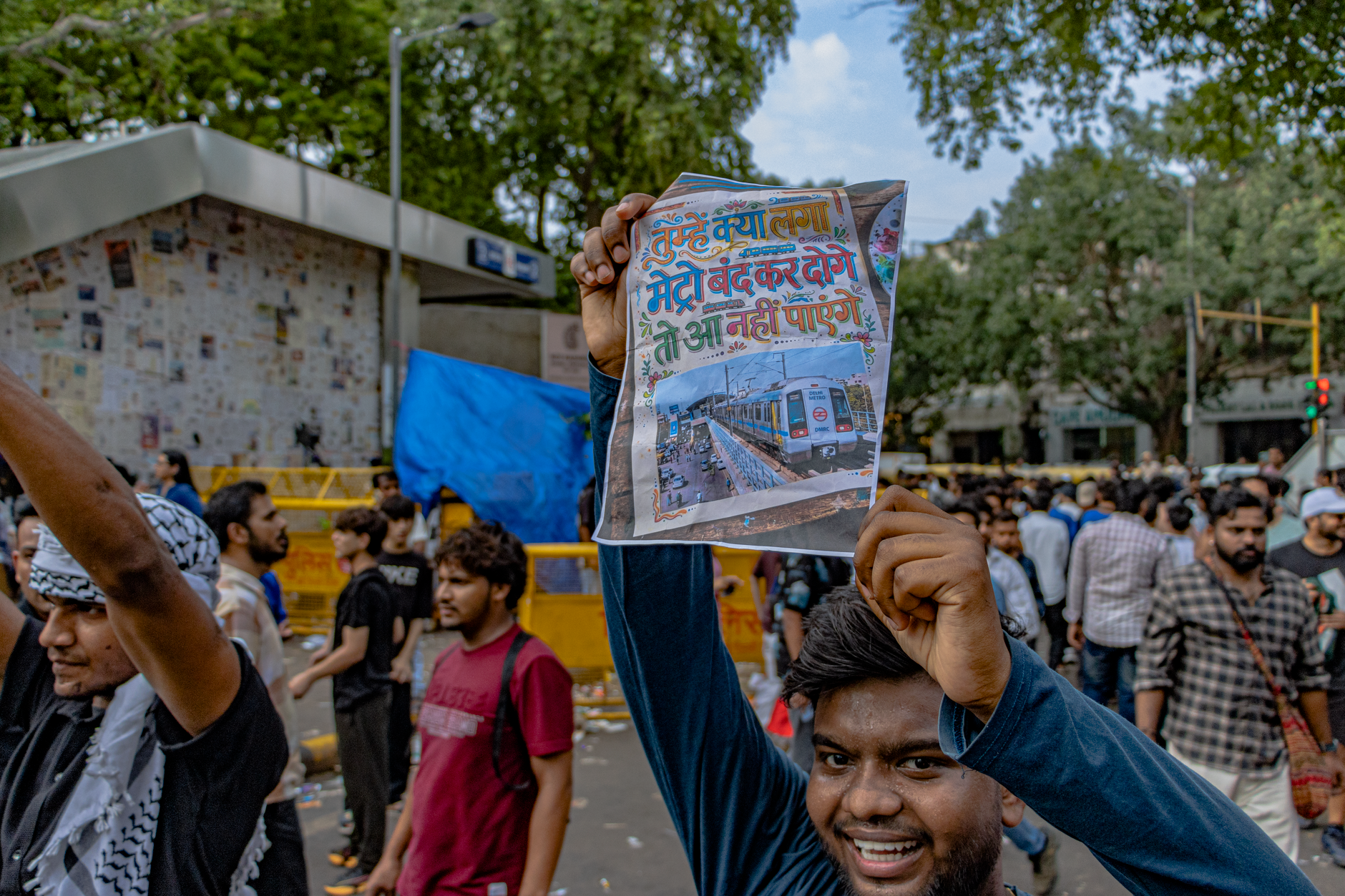
<p>The cancellation was a victory on paper, but the streets of Ranchi told a different story. For over 18 months, the Morabadi Ground became a permanent encampment of <b>student protests</b>—a demographic cross-section of Jharkhand's youth. They weren't just demanding a re-exam; they were demanding <b>accountability</b>. The protests evolved from dharnas to hunger strikes, from gheraoing the JPSC headquarters to blocking the Chief Minister's convoy.</p>
<p>The state responded with Section 144, water cannons, and FIRs naming student leaders under sections for rioting and damaging public property.</p>
<blockquote>
"We are not enemies of the state; we are its future administrators. Why does asking for a fair answer key feel like sedition?" — <i>A protestor's placard at Morabadi, 2022</i>
</blockquote>
<p>The societal impact was corrosive. Families liquidated savings for coaching in Delhi and Patna, only to watch eligibility windows close. The <a href="/article/thinking-of-doing-something-different-up-medical-student-dies-of-suicide-a-call-for-mental-health-re" title="“Thinking Of Doing Something Different”: UP Medical Student Dies Of Suicide – A Call for Mental Health Reform in India" class="internal-link">mental health</a> toll—suicides, depression, substance abuse—remains an uncounted statistic. The protests also exposed a generational disconnect: a political class fluent in identity politics but illiterate in administrative reform.</p>
<p>Civil society organizations, initially hesitant, eventually formed a "JPSC Nyay Manch," bridging tribal student unions and general category forums in a rare show of unity.</p>
Advertisement
Loading partner content...
<h3>Timeline of Agitation</h3>
<ol>
<li><b>Nov 2021:</b> Results declared; immediate uproar over cut-offs.</li>
<li><b>Jan 2022:</b> High Court stays Mains; students begin indefinite dharna.</li>
<li><b>Feb 2022:</b> CM announces cancellation of PT; fresh exam promised in 3 months.</li>
<li><b>May 2022:</b> Fresh PT conducted; new controversies over question paper leaks surface.</li>
<li><b>2023-2025:</b> Rolling protests against delayed mains, interview irregularities, and final merit list disputes.</li>
</ol>
<h2>CBI Probe Demand: The Quest for Institutional Accountability</h2>
<p>The demand for a <b>CBI probe</b> was not merely procedural; it was a vote of no confidence in the state's own vigilance mechanisms. Aspirants argued that the JPSC Chairman and Controller of Examinations were political appointees, making an internal inquiry or a state Vigilance Bureau probe inherently compromised. The legal framework is tricky: "Police" and "Public Order" are State subjects. A CBI investigation requires either state consent (under Section 6 of the DSPE Act) or a High Court/Supreme Court order.</p>
Advertisement
Loading partner content...
<p>The Jharkhand government, citing federalism, initially refused consent, arguing it would set a precedent for central agencies to investigate state recruitment bodies at the drop of a hat. However, the <b>Jharkhand High Court</b>, in a landmark 2023 judgment, observed that "the magnitude of allegations, involving the sanctity of the constitutional body under Article 315, transcends routine administrative error." The Court ordered a CBI probe into the 7th-10th JPSC PT irregularities, overriding the state's refusal by invoking the Court's inherent power to ensure justice.</p>
<h3>Precedents and Paradoxes</h3>
<ul>
<li><b>Vyapam Scam (MP):</b> CBI probe ordered by Supreme Court; resulted in mass arrests but criticized for slow conviction rates.</li>
<li><b>SSC Scam (West Bengal):</b> CBI/ED probes led to ministerial arrests; highlighted political nexus in recruitment.</li>
<li><b>JPSC Distinction:</b> Unlike Vyapam (middlemen), JPSC allegations pointed to <b>institutional design failure</b>—flawed software, opaque normalization, missing audit trails.</li>
</ul>
<p>The CBI probe, as of <b>2026</b>, has chargesheeted former JPSC officials and a private vendor responsible for the normalization software. It revealed that the "equipercentile" algorithm was hardcoded with erroneous parameters for Shift 2, effectively depressing scores for a specific batch of students. The probe shifted the narrative from "student unrest" to "criminal conspiracy," validating the aspirants' core grievance.</p>
Advertisement
Loading partner content...
<figure class="my-8 overflow-hidden rounded-3xl shadow-xl">
<img src="https://images.pexels.com/photos/38727115/pexels-photo-38727115.png?auto=compress&cs=tinysrgb&dpr=2&h=650&w=940" alt="student protest India" class="w-full h-[400px] object-cover" />
</figure>
<h2>Future Outlook: Rewiring the Recruitment Architecture</h2>
<p>The controversy forced a <b>root-and-branch overhaul</b> of the JPSC, the effects of which are visible in the 2026 recruitment cycle. The Jharkhand government enacted the "Jharkhand Public Service Commission (Transparency and Accountability) Act, 2024," mandating:</p>
<ul>
<li><b>Mandatory Answer Key Challenge Window:</b> 7-day window with nominal fee, refunded if objection sustained.</li>
<li><b>Live Normalization Dashboard:</b> Real-time publication of raw scores, shift-wise statistics, and normalization logic <i>before</i> result declaration.</li>
<li><b>Independent Audit:</b> CAG-empaneled IT audit of exam software pre- and post-examination.</li>
<li><b>Tenure Protection:</b> JPSC Chairman/Members removable only via Supreme Court judge inquiry, insulating them from political summary dismissal.</li>
</ul>
Advertisement
Loading partner content...
<p>Beyond legislation, the <b>administrative reforms</b> include the creation of a "Recruitment Mission Mode" unit within the Chief Secretary's office, monitoring all state PSCs (JPSC, JSSC, JPSC-Judicial) via a unified dashboard. The state has also moved to a <b>Common Eligibility Test (CET)</b> model for Group B/C posts, decoupling the screening test from the final merit to reduce litigation load. For aspirants, the "One-Time Registration" (OTR) portal eliminates repetitive form-filling and data mismatches.</p>
<h3>The Civil Society Watchdog</h3>
<p>A permanent "Aspirants' Grievance Redressal Council" has been institutionalized, comprising retired bureaucrats, legal aid lawyers, and elected student representatives. It has statutory powers to summon JPSC records and recommend disciplinary action. This co-governance model—unique in India—acknowledges that the state cannot audit itself. Early signs in the 2025-26 cycles show a 40% drop in High Court writ petitions against JPSC results, suggesting the trust deficit is narrowing, albeit slowly.</p>
<h2>Expert Analysis: Systemic Rot and Structural Cure</h2>
<p>We spoke to domain experts to dissect the pathology and prognosis of Jharkhand's recruitment crisis. Their consensus: the JPSC scandal was a symptom, not the disease.</p>
Advertisement
Loading partner content...
<h3>Legal Scholars: The Constitutional Vacuum</h3>
<p><b>Dr. Ananya Verma, Professor of Constitutional Law, NLU Ranchi:</b> "Article 315 creates the Commission but Article 320 leaves 'regulations' to the Commission itself, subject to Presidential/Governor approval. This creates a regulatory black hole. The JPSC framed its own opaque normalization rules *after* the exam.</p>
<p>The 2024 Act fixes this by mandating *pre-exam* publication of evaluation methodology in the Gazette.</p>
<h3>Administrative Experts: The Capacity Deficit</h3>
<p><b>Mr. ), Former Chief Secretary, Jharkhand:</b> "The JPSC has 12 sanctioned posts for Members; it functioned with 3 for years. The Controller of Examinations post was held on additional charge by a Deputy Secretary. You cannot run a ₹500 crore recruitment machine on ad-hocism.</p>
<p>The reform must be resource-backed: a dedicated IT cadre, psychometricians for test design, and a permanent legal cell.</p>
Advertisement
Loading partner content...
<h3>Sociologists: The Trust Deficit</h3>
<p><b>Dr. Priya Minz, Sociologist, Ranchi University:</b> "In Jharkhand, a government job isn't employment; it's <b>social mobility insurance</b> for first-generation learners from tribal and Dalit backgrounds. The controversy didn't just delay careers; it delegitimized the *merit* narrative. When the 'merit list' looks manipulated, the social contract fractures.</p>
<p>The protests were a demand for <b>procedural justice</b> as a proxy for <b>distributive justice</b>.</p>
<blockquote>
"Technology is the easy fix. Governance is the hard fix. Jharkhand has bought the software; it is still debugging the political will." — <i>Senior Bureaucrat, Condition of Anonymity</i>
</blockquote>
<h2>Conclusion: The Long Road to Legitimacy</h2>
Advertisement
Loading partner content...
<p>The <b>JPSC exam controversy</b> will remain a case study in Indian administrative failure for decades. It exposed how a</b></b></p></i></i>