
<h1>Meet Abhijeet Dipke: The Youth Revolutionary Using Satire to Challenge Political Norms</h1>
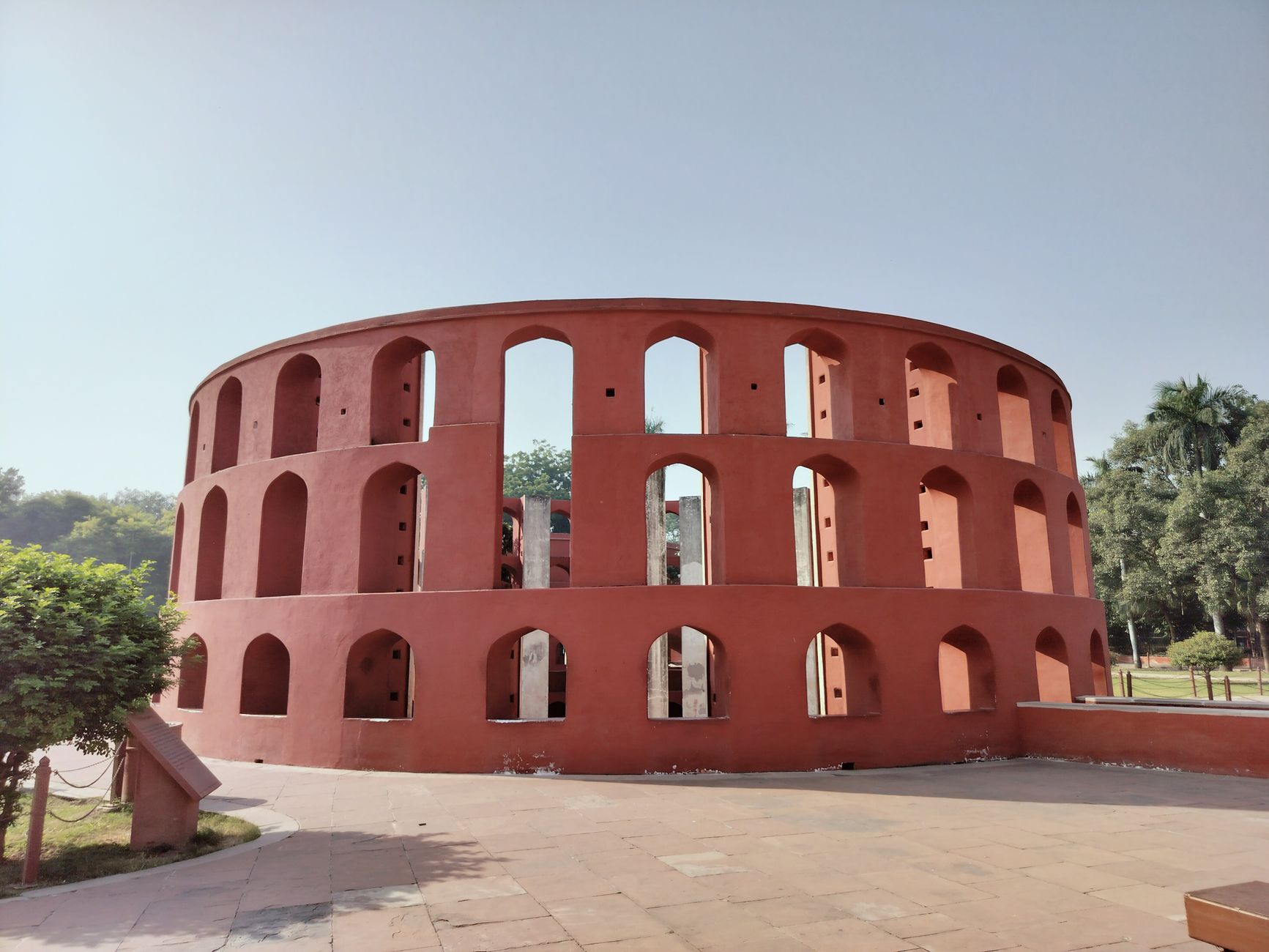
<p>In the he<a href="/article/the-art-of-absurdity-how-satire-and-surrealism-are-redefining-youth-political-protest-in-the-21st-ce" title="The Art of Absurdity: How Satire and Surrealism are Redefining Youth Political Protest in the 21st Century" class="internal-link">art of</a> New Delhi, where the architectural precision of <a href="/article/the-pulse-of-youth-how-the-jantar-mantar-protests-are-redefining-environmental-activism-in-india" title="The Pulse of Youth: How the Jantar Mantar Protests Are Redefining Environmental Activism in India" class="internal-link">Jantar Mantar</a> meets the chaotic energy of political dissent, a new kind of rebellion has taken root. It doesn't start with traditional slogans or rigid party manifestos, but with a smirk, a metaphor, and a peculiar choice of mascot. <b>Abhijeet Dipke has emerged as a polarizing yet fascinating figure, leading the "<a href="/article/protest-will-continue-until-education-minister-pradhan-resigns-cockroach-janta-party-founder-dipke" title="Protest will continue until Education Minister Pradhan resigns: Cockroach Janta Party founder Dipke" class="internal-link">Cockroach Janta Party</a>" to challenge the status quo of Indian governance.</b></p>
<p>While most political aspirants seek legitimacy through polished speeches and corporate funding, Dipke has chosen the path of the absurd. By framing political frustration through the lens of satire, he has managed to capture the attention of a disillusioned youth population. <b>This isn't just a prank; it is a calculated disruption of the traditional political discourse in India.</b></p>
<p>The movement represents a shift in how Gen Z and Millennials engage with power. Instead of asking for a seat at the table, they are laughing at the table itself. This article explores the intersection of humor and hardship, analyzing how Abhijeet Dipke is turning the "invisible" nature of the common citizen into a political weapon.</p>
Advertisement
Loading partner content...
<figure class="my-8 overflow-hidden rounded-3xl shadow-xl">
<img src="https://images.pexels.com/photos/29111169/pexels-photo-29111169.jpeg?auto=compress&cs=tinysrgb&dpr=2&h=650&w=940" alt="Jantar Mantar Delhi" class="w-full h-[400px] object-cover" />
</figure>
<h2>The Absurdity of Resistance: The Cockroach Janta Party at Jantar Mantar</h2>
<p>The scenes at Jantar Mantar have long been a staple of Indian democracy, usually characterized by hunger strikes and placards. However, the arrival of the Cockroach Janta Party brought a surrealist twist to these protests. <b>Abhijeet Dipke and his cohorts didn't just bring demands; they brought a narrative of survival.</b></p>
<p>The "Cockroach" isn't just a name; it is a statement of resilience. In the eyes of Dipke, the common Indian citizen—particularly the unemployed youth—is treated like a cockroach: ignored, stepped upon, and viewed as a nuisance. Yet, like the insect, the youth possess an uncanny ability to survive despite the harshest conditions. <b>This satirical framing allows the movement to voice grievances that would otherwise be dismissed as mere complaining.</b></p>
Advertisement
Loading partner content...
<p>By organizing "press conferences" and "rallies" under the banner of a party named after a pest, Dipke forces the public and the authorities to confront the irony of their situation. <b>The laughter generated by the satire serves as a gateway to <a href="/article/why-jharkhand-students-are-protesting-a-deep-dive-into-education-rights-government-response-and-the-" title="Why Jharkhand Students Are Protesting: A Deep Dive into Education Rights, Government Response, and the Role of Public Figures like Rahul Gandhi" class="internal-link">a deep</a>er, more painful conversation about systemic failure and institutional apathy.</b></p>
<h2>Symbolism of the Insect: Why Cockroaches Represent Political Frustration</h2>
<p>To understand the Cockroach Janta Party, one must understand the psychology of the metaphor. Why choose a cockroach over a lion or an elephant? The choice is a deliberate rejection of the "grandeur" associated with traditional political parties. <b>It is a celebration of the marginalized and the overlooked.</b></p>
<ul>
<li><b>Resilience:</b> Cockroaches are known to survive nuclear blasts; similarly, the Indian youth survive crumbling infrastructure and a volatile job market.</li>
<li><b>Invisibility:</b> They exist in the shadows, much like the millions of graduates who are statistically present but economically invisible.</li>
<li><b>Persistence:</b> No matter how many times they are suppressed, they return, symbolizing the undying spirit of democratic dissent.</li>
<li><b>The "Pest" Narrative:</b> By embracing the label of a "pest," Dipke strips the state of its power to belittle the protesters.</li>
</ul>
Advertisement
Loading partner content...
<p>This symbolism transforms a feeling of helplessness into a badge of honor. When Dipke speaks, he isn't just talking about policy; he is talking about the <b>existential dread of a generation that feels it is being treated as expendable.</b></p>
<blockquote>
"When the system treats you like a pest, the only way to fight back is to become the most organized pest the system has ever seen," says a student participant associated with the movement.
</blockquote>
<h2>From Conventional Paths to Radical Activism: The Journey of Abhijeet Dipke</h2>
<p>Abhijeet Dipke’s transition from a conventional student to a radical satirical leader is a mirror to the frustrations of millions. Like many, Dipke pursued education with the hope that meritocracy would lead to stability. However, the gap between academic qualifications and actual employment opportunities created a void of disillusionment. <b>This void was filled by a realization: the system is not broken; it is working exactly as intended for those at the top.</b></p>
<p>His education provided him with the analytical tools to dissect political rhetoric, but his experiences on the ground provided the fuel. Dipke realized that traditional protests were often ignored or easily suppressed because they followed a predictable script. <b>To get the attention of a numb administration, he decided to change the script entirely.</b></p>
Advertisement
Loading partner content...
<p>The shift toward radical activism wasn't an overnight decision but a gradual evolution. He began by questioning the "performative" nature of politics and eventually concluded that <b>satire is the only honest way to describe a dishonest system.</b> By positioning himself as a leader of the "Cockroaches," he bypassed the need for formal legitimacy and tapped into the raw, unfiltered anger of his peers.</p>
<figure class="my-8 overflow-hidden rounded-3xl shadow-xl">
<img src="https://images.pexels.com/photos/34355523/pexels-photo-34355523.jpeg?auto=compress&cs=tinysrgb&dpr=2&h=650&w=940" alt="Protest Art" class="w-full h-[400px] object-cover" />
</figure>
<h2>Analyzing the Tactics: How Satire Disrupts Political Discourse</h2>
<p>Traditional political discourse in India is often rigid, formal, and heavily scripted. Satire disrupts this by introducing unpredictability. When the Cockroach Janta Party holds a demonstration, the authorities are left confused: <b>Is this a joke, or is this a threat?</b> This confusion is where the power lies.</p>
Advertisement
Loading partner content...
<p>Satire acts as a "Trojan Horse." It lures the observer in with humor, but once inside, it delivers a sharp critique of governance. <b>By using irony, Dipke makes the state's reactions look ridiculous.</b> If the police arrest someone for a "cockroach protest," the act of arrest itself becomes a punchline, further delegitimizing the authority of the state.</p>
<table border="1">
<tr>
<th>Feature</th>
<th>Traditional Protest</th>
<th>Satirical Protest (Dipke's Approach)</th>
</tr>
<tr>
<td><b>Tone</b></td>
<td>Solemn, demanding, urgent</td>
<td>Ironic, mocking, absurd</td>
</tr>
<tr>
<td><b>Engagement</b></td>
<td>Appeal to empathy/justice</td>
<td>Appeal to irony/shared frustration</td>
</tr>
<tr>
<td><b>Visibility</b></td>
<td>Mainstream media (if lucky)</td>
<td>Viral social media (due to "weirdness")</td>
</tr>
<tr>
<td><b>State Response</b></td>
<td>Standard suppression/negotiation</td>
<td>Confusion, ridicule, or overreaction</td>
</tr>
</table>
<p>This approach is particularly effective in the age of the "attention economy." In a world of endless scrolling, a "Cockroach Party" is more likely to be shared on Instagram or X (formerly Twitter) than a standard list of demands. <b>The meme-ification of protest is not a dilution of the cause, but a modern amplification of it.</b></p>
<h2>The New Wave: Why This Generation of Indian Youth is Different</h2>
<p>The youth participation in modern Indian protests reflects a fundamental shift in psychology. Previous generations fought for independence or specific legislative changes. <b>Today's youth are fighting for a sense of dignity and a future that isn't a gamble.</b></p>
Advertisement
Loading partner content...
<p>Gen Z and Millennials in India are digitally native, meaning they have access to global movements. They see how satire is used in other democracies to challenge authoritarianism. They are less likely to trust a single "charismatic leader" and more likely to engage with movements that feel authentic and raw. <b>The Cockroach Janta Party resonates because it doesn't pretend to be a "savior"; it acknowledges the grime of the reality.</b></p>
<p>Furthermore, the current generation is exhausted by the "binary" of Indian politics. They are tired of being forced to choose between two or three dominant ideologies. <b>Satire allows them to be "anti-everything" while remaining "pro-people."</b> It provides a space for political engagement without the baggage of party loyalty.</p>
<figure class="my-8 overflow-hidden rounded-3xl shadow-xl">
<img src="https://images.unsplash.com/photo-1543269865-cbf427effbad?crop=entropy&cs=tinysrgb&fit=max&fm=jpg&ixid=M3w4NjI1Nzh8MHwxfHNlYXJjaHwxfHxZb3V0aCUyMEdyb3VwJTIwRGlzY3Vzc2lvbnxlbnwwfDB8fHwxNzgwNzQwMjQxfDA&ixlib=rb-4.1.0&q=80&w=1080" alt="Youth Group Discussion" class="w-full h-[400px] object-cover" />
</figure>
Advertisement
Loading partner content...
<h2>Government and Media Responses: Between Ridicule and Repression</h2>
<p>The response to Abhijeet Dipke and his movement has been a mix of indifference and mild alarm. Initially, the media treated the Cockroach Janta Party as a curiosity—a "quirky" story for the Sunday supplement. <b>However, as the movement gained traction among students, the tone shifted.</b></p>
<p>The government's challenge is that satire is difficult to prosecute. How do you charge someone with sedition for calling themselves a cockroach? <b>The ambiguity of the movement makes it a slippery target.</b> When the state ignores the movement, it allows the satire to grow; when the state suppresses it, it confirms the movement's narrative that the state is a bully.</p>
<p>The media's role has been contradictory. While some outlets provide a platform for the "spectacle," few dive deep into the underlying socioeconomic despair that fuels the satire. <b>The "funniness" of the protest often masks the tragedy of the unemployment and systemic corruption that Dipke is actually highlighting.</b></p>
Advertisement
Loading partner content...
<h2>Historical Context: Satire as a Political Tool</h2>
<p>Satire is not new to Indian politics. From the biting wit of 19th-century pamphlets to the legendary street plays of Safdar Hashmi, humor has always been a tool for the oppressed. <b>The difference today is the scale and the medium.</b></p>
<p>Globally, we have seen similar movements. The "Monster Rallies" in various European countries or the use of absurdist performance art in Hong Kong protests show a global trend: <b>when logic fails to move the needle, absurdity takes over.</b></p>
<ol>
<li><b>The Dadaist Movement:</b> Post-WWI, artists used nonsense to protest the "rationality" that led to global slaughter.</li>
<li><b>Political Cartoons:</b> R.K. Laxman’s "Common Man" was a silent, satirical critique of the Indian bureaucracy for decades.</li>
<li><b>Digital Satire:</b> The rise of meme culture has turned political critique into a daily, decentralized activity.</li>
</ol>
Advertisement
Loading partner content...
<p>Abhijeet Dipke is essentially continuing this lineage, but he is doing it in real-time, in the streets, and in the digital sphere. <b>He is the "Common Man" evolved for the era of the algorithm.</b></p>
<h2>The Future Outlook: Lasting Change or Temporary Trend?</h2>
<p>The critical question remains: can a satirical movement create lasting political change? History suggests that satire is excellent at <b>diagnosing the problem but often struggles to implement the solution.</b></p>
<p>For the Cockroach Janta Party to move beyond a "phenomenon," it must transition from disruption to construction. <b>The challenge for Dipke is to turn the laughter into a legible political agenda.</b> If the movement can channel its energy into specific policy demands—such as employment guarantees or educational reform—it could become a formidable force.</p>
<p>However, there is a risk. Satire can become its own end, where the "performance" of protest becomes more important than the protest itself. <b>If the movement becomes a brand rather than a battle, it will fade away.</b> But if it continues to evolve as a catalyst for youth mobilization, it could pave the way for a new, more transparent form of political engagement in India.</p>
Advertisement
Loading partner content...
<h2>Conclusion: The Significance of the Absurd in a Democracy</h2>
<p>The emergence of Abhijeet <a href="/article/dipke-and-the-cockroach-janta-party-the-unconventional-force-reshaping-indian-politics" title="Dipke and the Cockroach Janta Party: The Unconventional Force Reshaping Indian Politics" class="internal-link">Dipke and the Cockroach Janta Party</a> is a symptom of a deeper systemic crisis. When the channels of formal communication between the state and the youth are blocked, the youth will find a way to speak—even if they have to do it through the metaphor of an insect. <b>Satirical activism is a cry for help disguised as a joke.</b></p>
<p>In a healthy democracy, the state should be able to withstand ridicule. The ability to laugh at one's own flaws is a sign of strength. <b>The real danger for any government is not the person who shouts, but the person who laughs, because the latter has already stopped believing in the system's authority.</b></p>
<p>Abhijeet Dipke has reminded us that politics doesn't always have to be about podiums and power-plays. Sometimes, the most revolutionary thing one can do is to stand in the middle of Jantar Mantar and <b>refuse to take a broken system seriously.</b> By embracing the identity of the "cockroach," the youth of India are asserting that they are still here, they are surviving, and they are watching.</p>
Advertisement
Loading partner content...
<figure class="my-8 overflow-hidden rounded-3xl shadow-xl">
<img src="https://images.pexels.com/photos/2573473/pexels-photo-2573473.jpeg?auto=compress&cs=tinysrgb&dpr=2&h=650&w=940" alt="Indian Parliament" class="w-full h-[400px] object-cover" />
</figure></b></i></i></i></i>