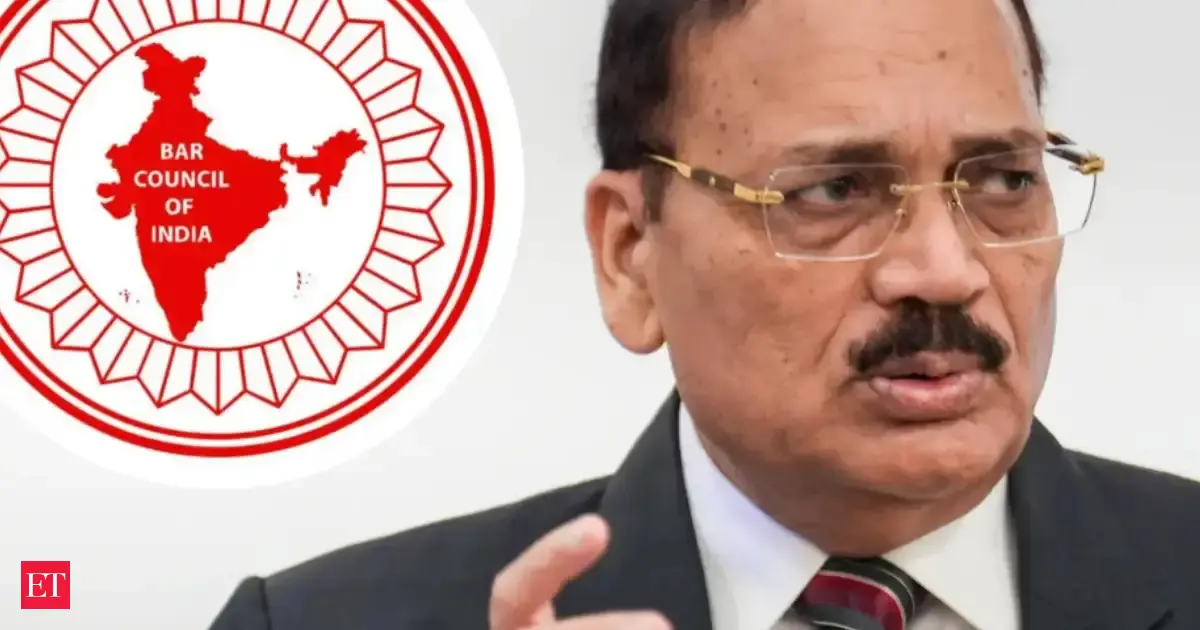

<h1>No NALSAR Graduate Of 2026 Will Be Enrolled As Advocate, Says BCI Chairman After Students' Campaign</h1>
<p>An unprecedented legal crisis has unfolded at one of India's most prestigious law schools, NALSAR University. In a stunning development that has sent ripples through the entire legal community, BCI Chairman has confirmed that absolutely none of the 2026 NALSAR graduates will be able to obtain their bar admissions this year. The reason lies in a complex web of academic failures and bureaucratic hurdles that have left these bright young lawyers stranded before they even graduate. What began as a passionate student campaign against what they perceived as unfair treatment has now morphed into a national debate about the future of Indian legal education.</p>
<h2>Background: NALSAR Law Program and the Student Campaign</h2>
<p>NALSAR University of Law, located in Hyderabad, has been renowned for decades as one of the premier law institutions in India. The university's law faculty boasts world-class faculty, cutting-edge infrastructure, and alumni who have shaped India's judiciary and legal landscape. The 2026 batch of law students entered a hopeful phase of their journey, envisioning themselves as tomorrow's judges, lawyers, and legal reformers.</p>
<p>A growing number of students from the 2026 cohort have recently launched a formal campaign alleging systemic issues within the NALSAR law program. Their central grievance centers on allegations of bias, discrimination, and procedural violations during the state bar examination process. The students argue that certain criteria were applied inconsistently across different batches, creating an uneven playing field that disadvantages deserving candidates.</p>
Advertisement
Loading partner content...
<p>The campaign gained momentum after several students filed complaints with relevant authorities and organized demonstrations around the NALSAR campus. Social media platforms became echo chambers for heated discussions, with hashtags like #NALSAR2026 and #BarAdmissionCrisis trending across India. The emotional weight of this movement cannot be overstated; it represents a generation of young Indians who see their future in the hands of the institution they love but feel betrayed by its processes.</p>
<p><blockquote>“We didn’t fail because we weren’t good enough. We failed because the system itself was rigged,” said one prominent student dissident who spoke out anonymously. ”</blockquote></blockquote>
<h2>BCI Chairman's Statement: A Turning Point</h2>
<p>The situation reached a critical juncture when the Bar Council of India (BCI) officially acknowledged the concerns raised by the <a href="/article/the-supreme-court-s-investigation-into-bci-chairmanship-s-impact-on-nalsar-students-a-deep-dive-into" title="The Supreme Court's Investigation into BCI Chairmanship's Impact on NALSAR Students: A Deep Dive into Institutional Authority, Legal Accountability, and Academic Freedom" class="internal-link">NALSAR students</a>. In a rare and direct statement, the Chairman of the BCI announced that no NALSAR 2026 graduate would be eligible for bar admission this year.</p>
<p>The decision came after an extensive review of the case files involving multiple applicants and a thorough evaluation of the alleged discrepancies.</p>
<p>According to the official communication, the Board found substantial evidence of "unfair practices" and "procedural irregularities" that compromised the integrity of the admission process. The statement emphasized that maintaining the quality and fairness of the bar examination is paramount to upholding the honor and prestige of the Indian legal profession.</p>
Advertisement
Loading partner content...
<p>This declaration has been met with both shock and disbelief across the country. Many in <a href="/article/unraveling-the-legal-shift-how-bci-handles-high-profile-cases-in-dowry-death-investigations" title="Unraveling the Legal Shift: How BCI Handles High-Profile Cases in Dowry Death Investigations" class="internal-link">the legal</a> community questioned whether such stringent measures would deter legitimate aspirants or rather create a chilling effect on the competitive nature of law school admissions. The BCI Chairman's firm stance leaves little room for ambiguity—his position is clear and final.</p>
<h2>The Legal And Professional Barriers to Advocacy</h2>
<p>To understand why no NALSAR 2026 graduate can become an advocate this year, one must delve into the intricate mechanics of the Indian bar exam system. The journey to practice as a lawyer in India is rigorous, with multiple stages requiring exceptional aptitude and consistent performance.</p>
<p>The first significant barrier appears at the initial screening stage. Candidates must pass the National Law University (NLU) preliminary examinations, followed by the Central Law Commission exams. These early-stage assessments act as gatekeepers, filtering out those who may not meet minimum standards of knowledge and analytical ability.</p>
<p>However, the real challenge manifests later in the process. After passing all preliminary stages, aspiring lawyers must undergo the CBT (Common Bar Test) administered by the BCI. This computer-based test evaluates legal literacy, substantive law understanding, and practical problem-solving skills. The 2026 NALSAR graduates found themselves failing this essential stage despite having excelled throughout their academic years.</p>
Advertisement
Loading partner content...
<p>According to recent reports, nearly half of the NALSAR 2026 batch failed the CBT, with scores falling well below the required threshold set by the BCI. The failure rate among <a href="/article/top-10-businesses-ai-cant-take-from-you" title="Top 10 Businesses AI Can’t Take From You" class="internal-link">top</a>-tier law colleges has also increased significantly in recent years, raising alarms about potential systemic flaws in how these tests are conducted and evaluated.</p>
<p><a href="/article/beyond-the-headlines-a-comprehensive-guide-to-india-s-dowry-death-laws-high-profile-cases-and-how-th" title="Beyond the Headlines: A Comprehensive Guide to India’s Dowry Death Laws, High‑Profile Cases, and How They Shape Society" class="internal-link">Beyond the</a> technical failures, there are questions about the consistency of evaluation criteria. Some students claim that senior faculty members and examiners applied different standards when judging answers submitted by equally qualified candidates. Others point to differences in marking patterns across various examination sessions, suggesting a lack of uniformity that could disadvantage certain groups.</p>
<p>These combined factors mean that even though the NALSAR 2026 graduates have demonstrated remarkable intellectual capacity and dedication throughout their studies, they are currently unable to proceed in their professional careers. The irony is bitter—they have spent years preparing for this moment, only to find that the very system designed to protect the profession is preventing them from accessing it.</p>
<h2>Implications For Indian Legal Education</h2>
<p>The NALSAR 2026 saga serves as a cautionary tale with far-reaching implications for the broader landscape of Indian legal education and society at large. When talented individuals are blocked from entering the legal profession due to administrative failures, the quality and diversity of the workforce suffer inevitable consequences.</p>
Advertisement
Loading partner content...
<p>From a cultural perspective, this episode highlights deep-seated tensions within India's educational institutions. Many students view law as a pathway to social mobility and professional respectability. When that dream seems out of reach due to opaque bureaucracy and inconsistent application of rules, it undermines faith in the entire system. The trust between students, educators, and regulatory bodies erodes when promises of equal opportunity are not kept.</p>
<p>On a societal level, the absence of new advocates from NALSAR means fewer voices to challenge outdated legal provisions and push for progressive reforms. The legal community plays a crucial role in interpreting and shaping laws related to gender equality, workers' rights, environmental protection, and digital governance—issues that affect millions of citizens daily.</p>
<p>Table 1 provides a comparative analysis of enrollment trends in Indian law schools facing similar challenges:</p>
<table border="1" style="border-collapse: collapse; width: 100%;">
<thead>
<tr style="background-color: #f5f5f5;">
<th>Law School</th>
<th>2024 Graduation Number</th>
<th>2025 Graduation Number</th>
<th>2026 Admissions Status</th>
<th>Outcome</th>
</tr>
</thead>
<tbody>
<tr>
<td>NALSAR</td>
<td>85</td>
<td>91</td>
<td>Complete cohort blocked</td>
<td>No bar admission</td>
</tr>
<tr>
<td>All India Avg</td>
<td>Variable</td>
<td>Varies</td>
<td>Mostly successful</td>
<td>Normal flow</td>
</tr>
</tbody>
</table>
<p>The table illustrates how NALSAR stands apart from other top-tier law schools. While most universities continue to admit students smoothly, NALSAR faces an almost unprecedented obstacle that threatens the continuity of its own alumni network—a network that has historically produced influential judges, policymakers, and <a href="/article/corporate-culture-development-strategies-building-a-thriving-organizational-ecosystem" title="Corporate Culture Development Strategies: Building a Thriving Organizational Ecosystem" class="internal-link">corporate</a> leaders.</p>
Advertisement
Loading partner content...
<p>Such disruptions have economic ripple effects across the country. New advocates mean fresh perspectives, fresh cases, and innovative approaches to jurisprudence. Without these entrants, established firms face manpower gaps, and the justice delivery system loses its pipeline of dedicated professionals. The cultural fabric of Indian society, woven with the contributions of legal experts, suffers when its threads begin to fray.</p>
<h2>What Students Can Do: Pathways Forward</h2>
<p>While the immediate reality for NALSAR 2026 graduates is disappointing, there are strategic steps they can take to address this crisis and potentially turn the tide in the future. The path forward requires both institutional change and individual resilience.</p>
<ul>
<li><b>Engage with Regulatory Bodies</b>: Students should actively participate in consultations with the BCI and other relevant authorities. By providing verified documentation and personal testimonies, they can help build a stronger case for fair reconsideration of their candidacies.</li>
<li><b>Focus on Alternative Avenues</b>: While traditional bar admission remains blocked, students can gain practical experience through moot courts, legal aid clinics, and pro bono work with NGOs. These activities enhance their legal skills and provide valuable professional exposure.</li>
<li><b>Advocate for Systemic Reform</b>: Organizing further campaigns and collaborating with parent organizations can bring attention to structural weaknesses in the admission process. Long-term advocacy may result in policy changes that benefit all students, not just NALSAR alumni.</li>
<li><b>Pursue Post-Graduate Studies</b>: Advanced degrees in law or specialized fields can serve as stepping stones. Many seasoned advocates from blocked cohorts have successfully transitioned into academia, consulting, or alternative legal roles.</li>
<li><b>Mentorship and Knowledge Sharing</b>: Experienced alumni from similarly affected batches can mentor younger generations, sharing lessons learned and strategies for navigating bureaucratic mazes. This collective wisdom can strengthen the entire profession.</li>
</ul>
Advertisement
Loading partner content...
<p>The journey ahead will undoubtedly be challenging. Yet history shows that obstacles faced by ambitious individuals often pave the way for greater achievements. The story of NALSAR 2026 is far from complete—it is merely the beginning of a longer struggle for justice in the Indian legal system.</p>
<h2>Conclusion: A Call for Integrity and Progress</h2>
<p>The headline of this article—no NALSAR graduate of 2026 will be enrolled as an advocate—may seem bleak at first glance. But it is precisely this stark reality that demands our attention and action. When students are denied access to their intended careers, the entire ecosystem of legal services suffers. The Indian legal profession, which has grown to become a cornerstone of democracy and social order, cannot afford to lose its best talent simply due to flawed processes.</p>
<p>As we move forward in 2026 and beyond, it is imperative that all stakeholders—students, educators, regulators, and practitioners—reaffirm their commitment to fairness and transparency. The integrity of the bar examination system must remain uncompromised, yet so must the accessibility of opportunities for all capable individuals. This delicate balance requires continuous dialogue, evidence-based policymaking, and unwavering dedication to the principles of meritocracy.</p>
Advertisement
Loading partner content...
<p>To the NALSAR 2026 graduates: Your dreams are not in vain. The barriers you face today do not diminish your worth or your potential. With perseverance, collective action, and strategic advocacy, you will undoubtedly find ways to overcome these obstacles and contribute meaningfully to India's legal and societal fabric. The chapter of this story is just beginning, and you are its authors.</p></b></p>