
<h1>Parliament monsoon session LIVE: Session set for tense finish amid standoff over student protests, FCRA bill</h1>
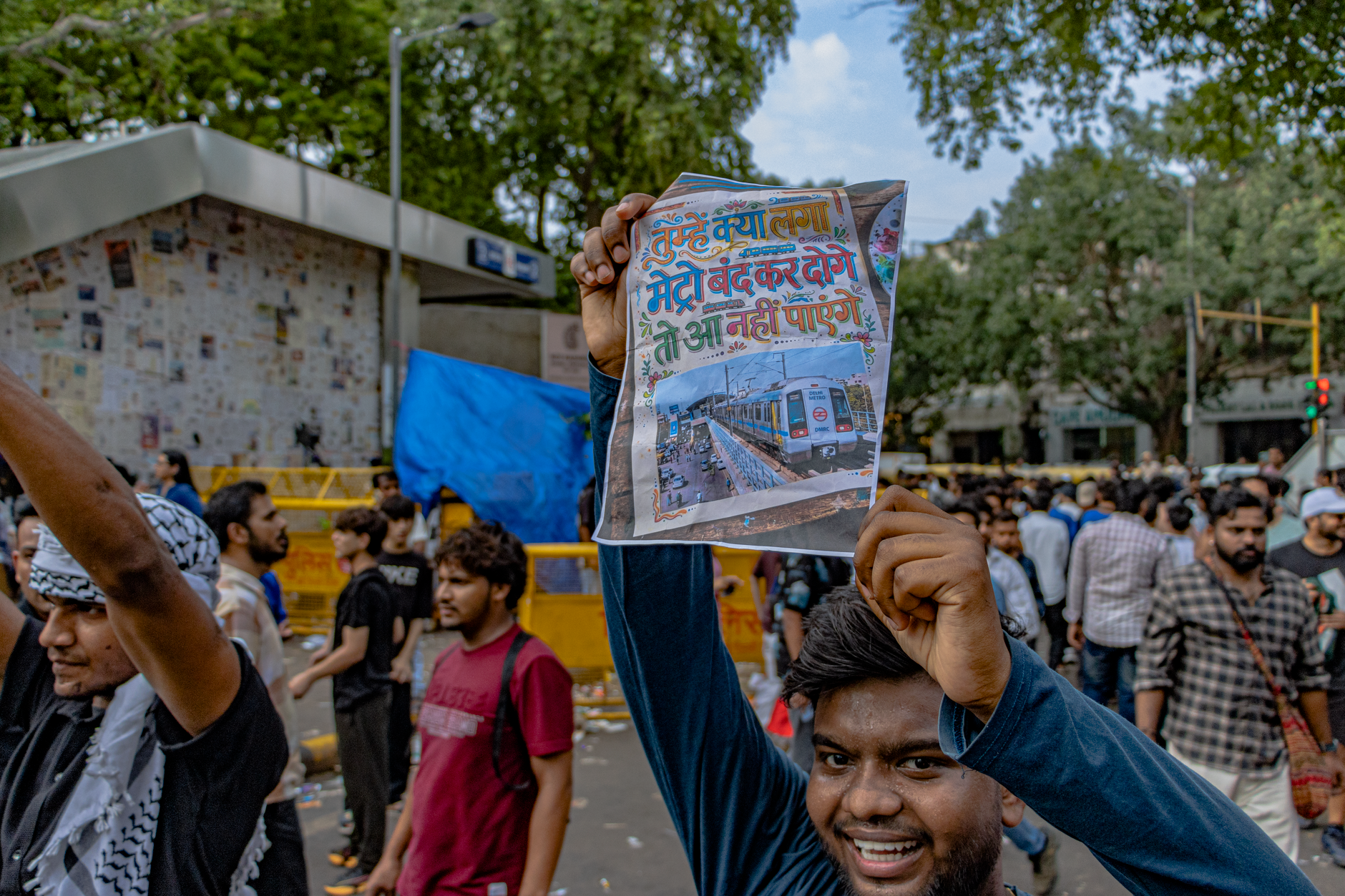
<p>The 2026 Parliament monsoon session has descended into one of the most confrontational gatherings in recent memory, with the spotlight firmly on student-led demonstrations and the controversial <a href="/article/quad-foreign-ministers-meet-live-jaishankar-rubio-sign-india-u-s-critical-minerals-framework" title="Quad Foreign Ministers Meet LIVE: Jaishankar, Rubio Sign India‑U.S. Critical Minerals Framework" class="internal-link">Foreign</a> Contribution Regulation Act (FCRA) amendment bill. As legislators brace for a tense finale, the intersection of youth activism, civil liberties, and governmental oversight has sparked nationwide debate. The atmosphere inside the Lok Sabha and Rajya Sabha corridors reflects <a href="/article/why-jharkhand-students-are-protesting-a-deep-dive-into-education-rights-government-response-and-the-" title="Why Jharkhand Students Are Protesting: A Deep Dive into Education Rights, Government Response, and the Role of Public Figures like Rahul Gandhi" class="internal-link">a deep</a>er societal shift, where the younger generation demands accountability while the state tightens regulatory frameworks. This live coverage unpacks the key moments, the underlying tensions, and what the outcome means for India’s democratic fabric.</p>
<h2>The Genesis of the Standoff: Student Protests and the FCRA Bill</h2>
<p>Student protests across campuses in 2026 have evolved from localized grievances into a pan-India movement demanding transparency, educational reform, and space for dissent. The catalyst for the current parliamentary standoff is the FCRA bill, which proposes stricter monitoring of foreign funds received by non-governmental organizations, many of which partner with universities for research and outreach programs. <b>Activists argue</b> that the bill, as drafted, could muzzle legitimate civil society work and curb the freedom of expression that students have long championed. <b>Government officials counter</b> that enhanced oversight is necessary to prevent foreign interference in India’s internal affairs and to ensure that funds channeled through NGOs align with national interests.</p>
Advertisement
Loading partner content...
<p>The timing of the monsoon session could not be more critical. With examination reforms, reservation policies, and campus infrastructure deficits already fueling unrest, the FCRA bill has become a flashpoint representing broader concerns about autonomy and oversight. <b>Protestors</b> have staged walkouts, sit-ins, and social media campaigns that have trended under hashtags demanding "education, not regulation." <b>Parliamentary</b> proceedings have been repeatedly disrupted as opposition members seek a debate on the bill’s implications for academic freedom.</p>
<p>As the session progresses, the relationship between the street and the chamber becomes increasingly intertwined. The voices echoing from campus gates are now resonating in the hallowed halls of Sansad Bhavan, forcing every party to take a stance. This dynamic illustrates how <b>Society & Culture</b> shapes legislative priorities, and why the current standoff is about more than just a single bill—it’s about the future of public discourse in India.</p>
<h2>Inside the Chamber: Key Debates and Walkouts</h2>
<p>The first week of the monsoon session set a combative tone, with multiple adjournments over disruptions related to the student protest issue. <b>Leaders of the opposition</b> insisted that the FCRA bill could not be passed without a thorough discussion, citing precedents from previous sessions where similar legislation faced civil society scrutiny. <b>The treasury benches</b>, however, maintained that the bill was time-sensitive and required swift passage to address emerging security concerns. This deadlock led to several walkouts, with opposition members staging protests outside the parliamentary complex, carrying placards that read "Education is not a threat" and "Protect civil society."</p>
Advertisement
Loading partner content...
<p>In a notable turn of events, a group of students managing to enter the gallery area shouted slogans in support of unrestricted academic research, prompting an immediate security response. The incident was broadcast live, amplifying the pressure on lawmakers to address the underlying causes of the unrest. <b>Speaker Om Birla</b> appealed for decorum, emphasizing that the monsoon session should focus on productivity, but the momentum of the student movement made silence impossible. The repeated interruptions have resulted in lost legislative time, with critical bills on infrastructure and healthcare waiting in the wings.</p>
<p>Mid-session, a all-party meet was convened in a bid to break the impasse. While some regional parties expressed willingness to discuss the FCRA bill’s finer points, the central opposition remained firm on withdrawing the most contentious clauses. <b>Civil society observers</b> noted that the stalemate reflects a broader trust deficit between the state and its citizens, particularly the youth. The walkouts and shouted slogans have become a barometer for measuring how much room there is for dissent within the world’s largest democracy.</p>
<p>As the session moves toward its final days, the focus shifts to whether a compromise can be reached or if the adjournments will continue. The interplay of procedural tactics and public pressure creates a complex tableau of governance in 2026. For observers of <b>Society & Culture</b>, the parliamentary theater is a mirror reflecting the nation’s evolving relationship with power, protest, and policy-making.</blockquote>
Advertisement
Loading partner content...
<p>["<figure class="my-8 overflow-hidden rounded-3xl shadow-xl">
<img src="https://images.pexels.com/photos/2561629/pexels-photo-2561629.jpeg?auto=compress&cs=tinysrgb&dpr=2&h=650&w=940" alt="student protest demonstration"" class="w-full h-[400px] object-cover" />
</figure></p>
<h2>Civil Society Response: How Society & Culture Shapes the Narrative</h2>
<p>Beyond the walls of Parliament, civil society organizations, journalists, and ordinary citizens have weighed in on the FCRA bill and the student protests, creating a rich tapestry of opinion that spans the spectrum of Indian <b>Society & Culture</b>. Editorial columns in leading newspapers have debated whether the bill is a necessary safeguard or an overreach that could stifle humanitarian work. Many columnists argue that the bill’s vague definitions of "foreign influence" could be weaponized against critics, a concern amplified by recent raids on NGOs that many view as politically motivated. Others contend that transparency in funding is a reasonable expectation for any entity operating within national borders.</p>
<p>Social media platforms have become the primary arena for this debate, with trending topics shifting rapidly between #FCRAReform, #StudentRights, and #ParliamentMonsoon2026. Influencers and academicians have used their platforms to educate the public on the historical context of the FCRA, which was originally enacted in 1976 to regulate foreign donations, and how the 2026 amendments compare. <b>Data from the Ministry of Home Affairs</b> shows a steady increase in foreign contribution registrations over the past decade, fueling the government’s rationale for stricter oversight. However, <b>independent analysts</b> point out that the correlation between funding spikes and security threats remains tenuous, suggesting the bill may address perceived risks more than documented ones.</p>
Advertisement
Loading partner content...
<p>The student protest movement has also garnered international attention, with foreign media outlets drawing parallels to global student movements in Europe and North America. This cross-border comparison has sparked a domestic conversation about whether India is aligning with global standards of academic freedom or moving toward a more restrictive model. <b>Grassroots organizations</b> have organized webinars and panel discussions, featuring lawyers, educators, and former bureaucrats, to dissect the bill’s implications. These events have seen robust participation, indicating a public appetite for informed debate rather than soundbite politics.</p>
<p>In rural and urban pockets alike, the discourse has permeated local chai shops, community centers, and WhatsApp groups, making the FCRA bill and student issues household topics. This widespread engagement underscores <a href="/article/unlocking-the-power-of-social-media-marketing-tactics" title="Unlocking the Power of Social Media Marketing Tactics" class="internal-link">the power of</a> <b>Society & Culture</b> to influence policy outcomes when citizens feel their voices are at stake. As the monsoon session hurtles toward its conclusion, the sheer volume of public commentary may force lawmakers to reconsider the bill’s trajectory, or at least craft a more nuanced response to the concerns raised.</p>
<h2>Comparative Perspectives: Global Trends in Campus Activism</h2>
<p>India is not alone in grappling with the tension between campus activism and governmental regulation. A look at global trends in 2026 reveals patterns that contextualize the current monsoon session standoff. In the United States, campus protests against geopolitical issues have led to legislative proposals aimed at enhancing campus safety while preserving free speech—a balance that Indian lawmakers are also attempting to strike with the FCRA bill. <b>European universities</b> have faced similar debates over foreign funding, particularly from state-affiliated entities, leading to transparency laws that are often more detailed and less punitive than India’s current draft.</p>
Advertisement
Loading partner content...
<p>In Brazil, student-led movements have successfully influenced policy changes regarding educational funding and research autonomy, offering a case study in how sustained protest can yield legislative concessions. The Brazilian model emphasizes dialogue over confrontation, a approach that Indian opposition parties have begun to advocate for during the monsoon session. Meanwhile, in South Africa, recent protests have focused on decolonizing curricula, highlighting that student demands often extend beyond funding regulations to encompass broader structural reforms. These international lenses provide valuable insights into what strategies might work best for India’s unique political and social landscape.</p>
<p>Comparative analysis also reveals that the timing of the FCRA bill’s introduction coincides with a global tightening of NGO regulations, driven partly by <a href="/article/navigating-geopolitical-tensions-a-strategic-response-to-israeli-criticism" title="Navigating Geopolitical Tensions: A Strategic Response to Israeli Criticism" class="internal-link">geopolitical tensions a</a>nd <a href="/article/the-rise-of-lifestyle-diseases-in-young-adults-causes-and-solutions" title="The Rise of Lifestyle Diseases in Young Adults — Causes and Solutions" class="internal-link">the rise of</a> hybrid warfare. <b>Security experts</b> note that many democracies are revisiting their foreign funding laws, but the extent of India’s proposed amendments stands out for its breadth. <b>Academic researchers</b> caution against adopting a one-size-fits-all approach, stressing that India’s diversity—linguistic, cultural, and institutional—requires tailored solutions rather than wholesale imports of foreign models. The monsoon session’s debate, therefore, is as much about internal governance as it is about positioning India within the global discourse on civil society</p></p></i>