<h1>Pellet Guns in Protests: <a href="/article/beyond-the-headlines-a-comprehensive-guide-to-india-s-dowry-death-laws-high-profile-cases-and-how-th" title="Beyond the Headlines: A Comprehensive Guide to India’s Dowry Death Laws, High‑Profile Cases, and How They Shape Society" class="internal-link">A Comprehensive Guide to</a> Their Use, Impact, <a href="/article/why-jharkhand-students-are-protesting-a-deep-dive-into-education-rights-government-response-and-the-" title="Why Jharkhand Students Are Protesting: A Deep Dive into Education Rights, Government Response, and the Role of Public Figures like Rahul Gandhi" class="internal-link">and the</a> <a href="/article/thinking-of-doing-something-different-up-medical-student-dies-of-suicide-a-call-for-mental-health-re" title="“Thinking Of Doing Something Different”: UP Medical Student Dies Of Suicide – A Call for Mental Health Reform in India" class="internal-link">Call for</a> Regulation</h1>
<p>In the chaotic landscape of <a href="/article/effective-leadership-strategies-for-modern-workplaces-in-india" title="Effective Leadership Strategies for Modern Workplaces in India" class="internal-link">modern</a> civil unrest, the tools used for <b>crowd control</b> have become a focal point of intense ethical and legal debate. Among the most controversial of these tools are <b>pellet guns</b>—weapons designed to be "non-lethal" but capable of causing permanent, life-altering damage. As societies navigate the complexities of public demonstrations in 2026, the line between maintaining order and violating <b>human rights</b> has never been thinner.</p>
<p>A pellet gun is a device that fires small, metal or plastic projectiles at high velocities. While they are marketed as a safer alternative to kinetic projectiles or live ammunition, the <b>reality on the ground</b> tells a different story. For many <b>injured protesters</b>, these weapons represent a source of lifelong trauma rather than a measured response to unrest. This guide explores the multifaceted dimensions of this technology, from its medical consequences to the <b>Supreme Court</b> interventions that shape Indian law.</p>
<figure class="my-8 overflow-hidden rounded-3xl shadow-xl">
<img src="https://images.pexels.com/photos/9739638/pexels-photo-9739638.jpeg?auto=compress&cs=tinysrgb&dpr=2&h=650&w=940" alt="Protest crowd" class="w-full h-[400px] object-cover" />
</figure>
Advertisement
Loading partner content...
<h2>The Evolution of Crowd Control: A Historical Context</h2>
<p>The use of pellet guns in managing <b>civil unrest</b> is not a new phenomenon, but its escalation has been significant. Historically, crowd control relied on water cannons, tear gas, or batons. However, as protests have become more intense and decentralized, security forces have increasingly turned to pellet-based launchers.</p>
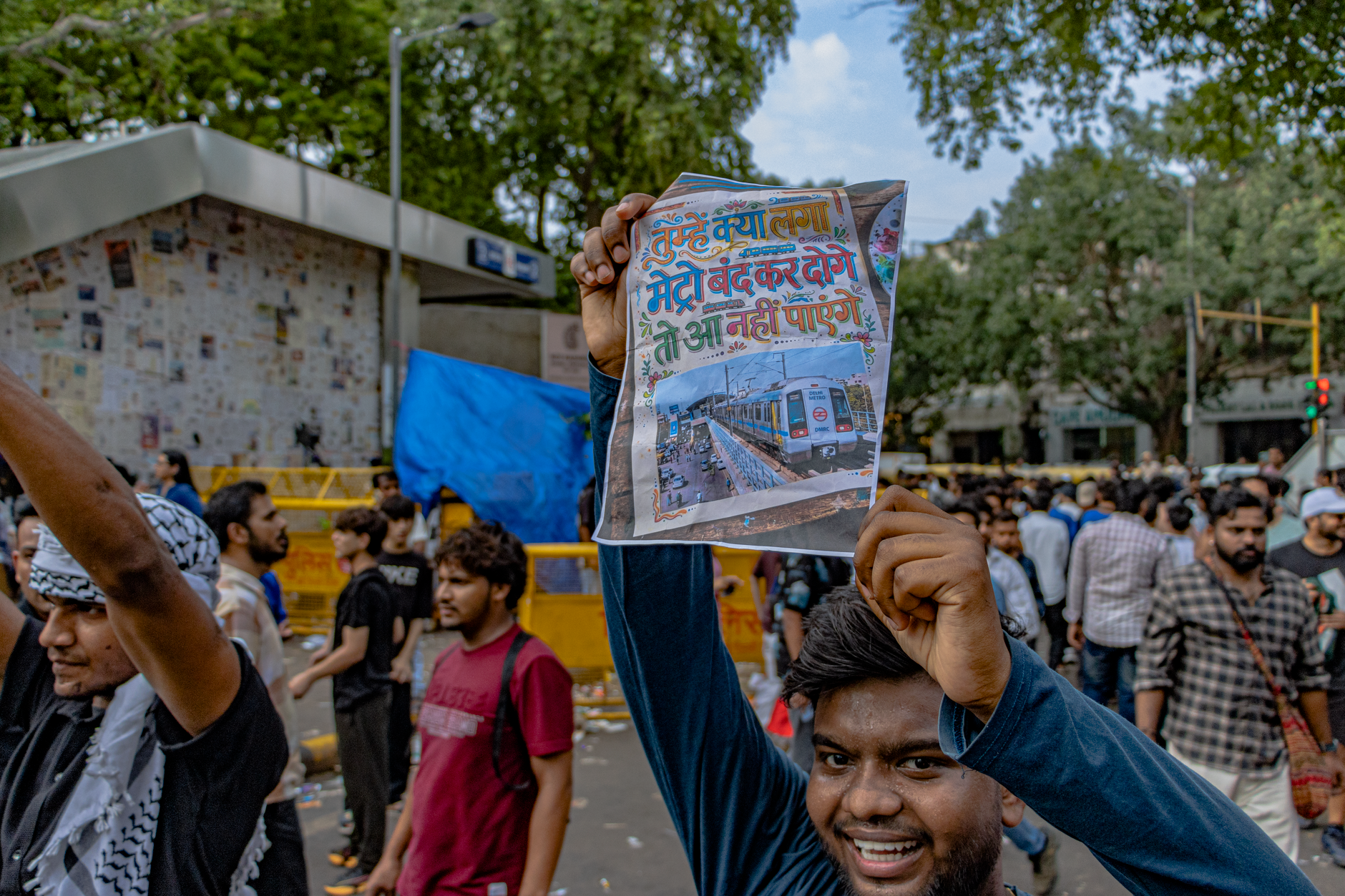
<p>In the Indian context, the use of these weapons has been most heavily documented in regions like <b>Kashmir</b> and during periods of intense <b>civil unrest</b> in major urban hubs like <b>Delhi</b>. In Kashmir, the deployment of pellet guns has been a recurring theme in news cycles for years, leading to significant international scrutiny regarding the <b>human rights</b> implications of their use. The escalation from traditional methods to pellet guns marks a shift in how states manage dissent.</p>
<p><b>The shift toward pellet guns was driven by a perceived need for a middle ground</b> between "too soft" (water cannons) and "too lethal" (live rounds). Yet, the historical data suggests that the "middle ground" is often an illusion. The frequency of deployment has increased as governments seek more immediate ways to disperse crowds that refuse to move, often leading to a cycle of escalation between protesters and security forces.</p>
Advertisement
Loading partner content...
<h2>The Human Cost: A Medical and Psychological Perspective</h2>
<p>The term "non-lethal" is often criticized by medical professionals as a misnomer. When a pellet strikes a human body, the kinetic energy transferred can result in injuries that are anything but minor. The <b>medical reality</b> of <b>pellet gun injuries</b> is a major driver behind the movement to <b>ban pellet guns</b> in sensitive areas.</p>
<p><b>The most devastating impact is seen in ocular injuries.</b> Even with protective eyewear, the velocity of these projectiles can lead to:
<ul>
<li><b>Permanent blindness</b> due to retinal detachment or globe rupture.</li>
<li>Severe <b>eye injuries</b> that require multiple reconstructive surgeries.</li>
<li>Loss of intraocular pressure, leading to chronic pain and vision degradation.</li>
</ul>
</p>
<p>Beyond the eyes, the physical trauma extends to the rest of the body. We have seen documented cases of <b>organ rupture</b>, broken bones, and deep tissue bruising. The physical pain is often compounded by the <b>psychological trauma</b> of being targeted by what is perceived as an indiscriminate weapon. For many young protesters, a single encounter with a pellet gun can mean a lifetime of disability and mental health struggles.</p>
Advertisement
Loading partner content...
<figure class="my-8 overflow-hidden rounded-3xl shadow-xl">
<img src="https://images.pexels.com/photos/7579824/pexels-photo-7579824.jpeg?auto=compress&cs=tinysrgb&dpr=2&h=650&w=940" alt="Medical doctor examining patient" class="w-full h-[400px] object-cover" />
</figure>
<blockquote>"The use of pellet guns in crowd control settings often results in injuries that are disproportionate to the threat posed, leading to long-term disability that challenges our definition of 'non-lethal'." — Medical Ethics Review, 2025.</blockquote>
<p>The <b>treatment for protesters</b> who sustain these injuries is often specialized and expensive. In many instances, the state's responsibility to provide <b>medical care for injured individuals</b> becomes a point of contention. When the state deploys a weapon, there is an ethical—and often legal—expectation that the state must also bear the cost of the resulting injuries.</p>
<h2><a href="/article/unraveling-the-legal-shift-how-bci-handles-high-profile-cases-in-dowry-death-investigations" title="Unraveling the Legal Shift: How BCI Handles High-Profile Cases in Dowry Death Investigations" class="internal-link">The Legal</a> and Ethical Battleground: Rights vs. Order</h2>
Advertisement
Loading partner content...
<p>The debate over pellet guns is not just a medical one; it is a <b>legal and ethical battleground</b>. At the heart of the conflict is the tension between the state's duty to maintain <b>public order</b> and its obligation to protect <b>human rights</b>. This tension has frequently reached the <b>Supreme Court</b> of India.</p>
<p>Various <b>legal petitions</b> have been filed over the years, asking the court to <b>ban pellet guns</b> or at least strictly regulate their use. The arguments presented to the court generally fall into two categories:
<ol>
<li><b>The State's Argument:</b> Pellet guns are essential tools for managing large-scale riots and preventing mass casualties that would occur with live ammunition.</li>
<li><b>The Petitioner's Argument:</b> The weapons are inherently indiscriminate and violate the fundamental right to life and bodily integrity.</li>
</ol>
</p>
<p><b>The Supreme Court has, in various instances, intervened</b> to demand more accountability. The court has emphasized that the use of force must be proportional. When a weapon causes permanent disability, it is difficult to argue that the force used was proportional to the act of protest. The <b>Delhi government</b> and other state administrations have also faced scrutiny over how these weapons are deployed and the subsequent <b>treatment for protesters</b>.</p>
Advertisement
Loading partner content...
<p>The legal debate also touches upon <b>accountability</b>. Who is responsible when a pellet gun causes a permanent injury? Is it the officer who pulled the trigger, the commanding officer who authorized the deployment, or the state itself? This lack of clear accountability remains a significant hurdle in achieving justice for <b>injured protesters</b>.</p>
<figure class="my-8 overflow-hidden rounded-3xl shadow-xl">
<img src="https://images.pexels.com/photos/6077797/pexels-photo-6077797.jpeg?auto=compress&cs=tinysrgb&dpr=2&h=650&w=940" alt="Scales of justice" class="w-full h-[400px] object-cover" />
</figure>
<h2>Global Perspectives: How Other Democracies Manage Unrest</h2>
<p>To understand the dilemma, it is helpful to look at how other democracies handle <b>crowd control</b>. The use of pellet guns is not unique to India, but the regulatory frameworks vary wildly. In many Western democracies, the focus is on "de-escalation" and "less-lethal" technologies that minimize the risk of permanent injury.</p>
Advertisement
Loading partner content...
<table border="1" style="width:100%; border-collapse: collapse;">
<thead>
<tr style="background-color: #f2f2f2;">
<th>Region/Country</th>
<th>Primary Crowd Control Methods</th>
<th>Regulation Level</th>
</tr>
</thead>
<tbody>
<tr>
<td><b>European Union</b></td>
<td>Water cannons, acoustic devices, tear gas</td>
<td>High (Strict protocols on use)</td>
</tr>
<tr>
<td><b>North America</b></td>
<td>Rubber bullets, tear gas, pepper spray</td>
<td>Moderate (Subject to intense legal oversight)</td>
</tr>
<tr>
<td><b>South Asia (General)</b></td>
<td>Pellet guns, tear gas, water cannons</td>
<td>Variable (Often high-intensity deployment)</td>
</tr>
</tbody>
</table>
<p>In many European nations, the use of kinetic projectiles like rubber bullets is strictly regulated by <b>police protocols</b> that require high levels of training and specific conditions for deployment. The goal is to ensure that the tool used is the least harmful option available to achieve the objective. This stands in contrast to the use of pellet guns, which can be fired into a crowd with a high degree of unpredictability.</p>
<p><b>The global trend is moving toward more sophisticated, non-lethal alternatives</b> that prioritize the safety of both the officers and the civilians. Technologies such as "smart" deterrents and acoustic devices are being tested to provide a way to disperse crowds without the risk of permanent physical damage.</p>
<h2>The Path Forward: Accountability and Reform</h2>
<p>As we move further into 2026, the call for <b>policy reform</b> regarding pellet guns is growing louder. If the goal of modern policing is to maintain order while respecting <b>human rights</b>, then the current reliance on pellet guns must be re-evaluated. There are several key areas where progress can be made:</p>
Advertisement
Loading partner content...
<p><b>First, the adoption of non-lethal alternatives is crucial.</b> The development and deployment of tools that do not carry the risk of permanent blindness or organ rupture should be a priority for law enforcement agencies. This includes better training for officers on when and how to use existing tools, and the adoption of newer, safer technologies.</p>
<p><b>Second, there must be absolute accountability.</b> There needs to be a clear, transparent legal framework that holds authorities accountable for the misuse of crowd control weapons. This includes:
<ul>
<li><b>Mandatory reporting</b> of every instance where pellet guns are deployed.</li>
<li><b>Independent investigations</b> into cases of permanent injury or death.</li>
<li><b>Compensation frameworks</b> that ensure <b>injured protesters</b> receive immediate and adequate medical and financial support.</li>
</ul>
</p>
<p><b>Third, medical infrastructure must be prepared.</b> If the state chooses to use these weapons, the state must be prepared for the consequences. This means ensuring that hospitals in protest-prone areas are equipped with specialized ophthalmic and trauma surgeons to provide immediate <b>treatment for protesters</b>.</p>
Advertisement
Loading partner content...
<figure class="my-8 overflow-hidden rounded-3xl shadow-xl">
<img src="https://images.pexels.com/photos/7734574/pexels-photo-7734574.jpeg?auto=compress&cs=tinysrgb&dpr=2&h=650&w=940" alt="Policy document and pen" class="w-full h-[400px] object-cover" />
</figure>
<p>Ultimately, the path forward requires a shift in mindset. Instead of viewing crowd control as a battle to be won, it should be viewed as a situation to be managed through <b>de-escalation</b> and communication. The use of weapons that leave a trail of permanent disability is not a sign of effective policing, but a failure of civil management.</p>
<h2>Conclusion</h2>
<p>The debate over <b>pellet guns</b> is a microcosm of a much larger struggle within modern societies: the struggle to balance the necessity of <b>public order</b> with the sacredness of <b>human rights</b>. While the state has a legitimate interest in managing <b>civil unrest</b>, this interest cannot supersede the right of a citizen to live without the fear of being permanently maimed by state-sanctioned weaponry.</p>
Advertisement
Loading partner content...
<p><b>The human cost of pellet gun injuries is too high to ignore.</b> From the devastating loss of sight to the lifelong psychological scars, the impact on individuals and their families is profound. As we look toward a future of evolving social dynamics and protest movements, the legal and ethical frameworks governing <b>crowd control</b> must evolve as well.</p>
<p>The <b>Supreme Court</b>, the <b>Delhi government</b>, and various international bodies all play a role in this ongoing dialogue. However, the ultimate solution lies in a commitment to a <b>humane approach</b>—one that prioritizes de-escalation, ensures accountability, and recognizes that the strength of a democracy is measured not by how it suppresses dissent, but by how it protects the dignity of every individual, even in moments of intense unrest.</p></b></i></i></i></i>