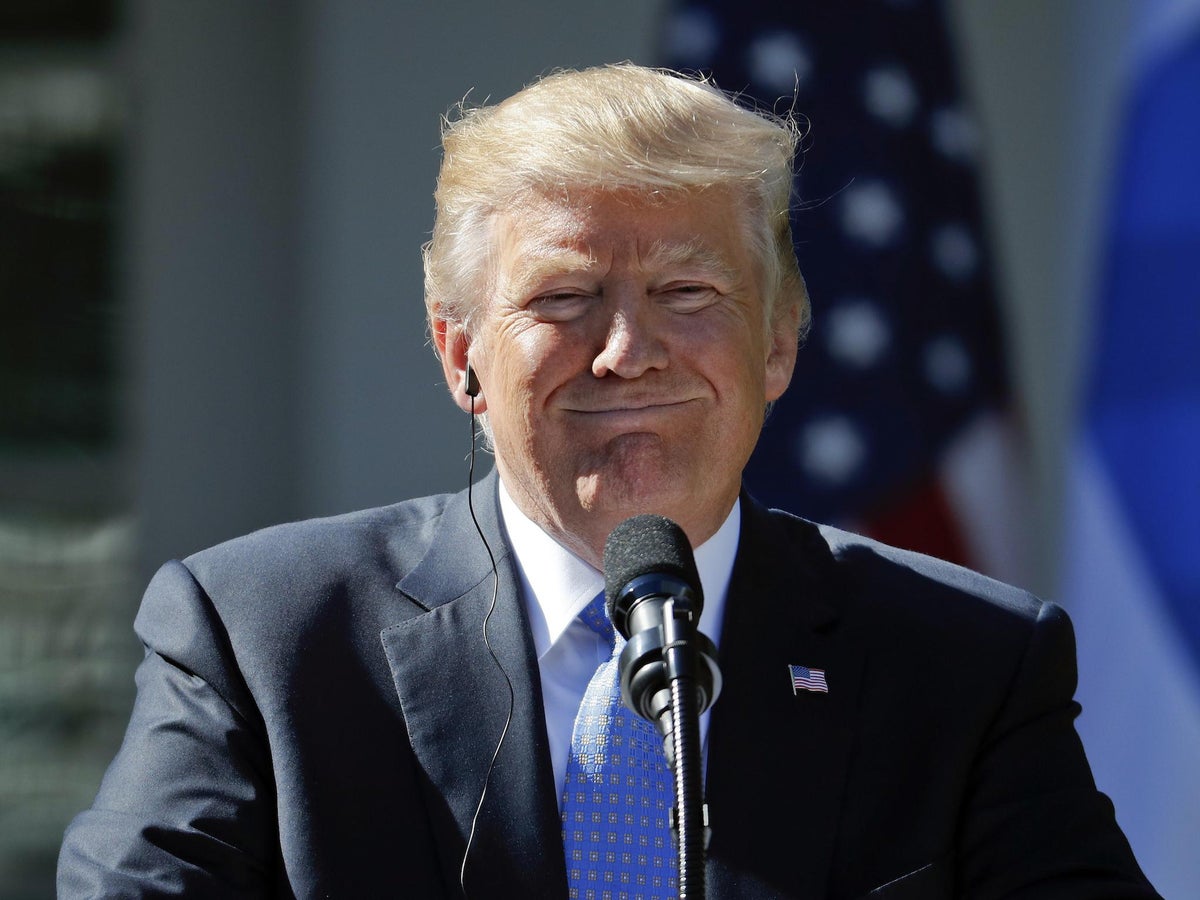
<h1>PM Modi Good Friend, India and U.S. Will Get to <a href="/article/australia-india-uranium-deal-how-pm-modi-s-new-trade-pact-is-reshaping-global-nuclear-energy" title="Australia‑India Uranium Deal: How PM Modi’s New Trade Pact is Reshaping Global Nuclear Energy" class="internal-link">Trade</a> Deal: Trump — Decoding the Diplomacy of Personal Chemistry</h1>
<p>When former President Donald Trump recently declared <b>PM Modi good friend, India and U.S. will get to trade deal</b>, the statement reverberated far beyond the usual diplomatic cables. It wasn't just a prediction about tariffs or market access; it was a testament to a unique era of geopolitics where <b>personal chemistry between leaders</b> acts as the primary lubricant for the complex machinery of statecraft. For an Indian audience watching the global order shift in real-time, this intersection of personality and policy offers a fascinating lens through which to view the <b>India-US relationship</b>.</p>
<p>The remark, characteristic of Trump’s transactional yet deeply personal style, encapsulates a broader truth: the trajectory of the world’s most consequential bilateral partnership in the 21st century has often hinged on the rapport between the Prime Minister of India <a href="/article/india-italy-relations-the-cultural-diplomacy-behind-modi-s-colosseum-visit-and-the-future-of-indo-eu" title="India-Italy Relations: The Cultural Diplomacy Behind Modi's Colosseum Visit and the Future of Indo-European Ties" class="internal-link">and the</a> President of the United States. From "Howdy Modi" to "Namaste Trump," the optics have been grand, but the underlying currents—trade disputes, strategic alignment on China, technology transfer, and the powerful Indian diaspora—run deep. This article dissects the layers behind the headline, exploring how <b>leader-level diplomacy</b> shapes the societal and cultural fabric of this partnership.</p>
Advertisement
Loading partner content...
<figure class="my-8 overflow-hidden rounded-3xl shadow-xl">
<img src="https://images.pexels.com/photos/6949993/pexels-photo-6949993.jpeg?auto=compress&cs=tinysrgb&dpr=2&h=650&w=940" alt="India US flag handshake diplomacy" class="w-full h-[400px] object-cover" />
</figure>
<h2>The Architecture of a "Bromance": Personal Diplomacy in the Digital Age</h2>
<p>Diplomacy has traditionally been the domain of faceless bureaucrats, lengthy communiqués, and rigid protocols. However, the Modi-Trump dynamic introduced a new paradigm: <b>leader-centric diplomacy</b> amplified by social media and mass rallies. This isn't merely about two men getting along; it is a strategic calculation.</p>
<h3>Why Personal Chemistry Matters in High-Stakes Geopolitics</h3>
<p>In the absence of a formal alliance treaty (like NATO), the <b>India-US partnership</b> relies heavily on trust. Trust reduces transaction costs. When leaders share a wavelength, their bureaucracies are signaled to "find a way" rather than "find an obstacle."</p>
Advertisement
Loading partner content...
<ul>
<li><b>Signaling Strategic Intent:</b> Public displays of warmth signal to third parties—most notably China—that the partnership has political cover at the highest level.</li>
<li><b>Domestic Political Capital:</b> For PM Modi, the optics of a US President embracing India validates his foreign policy narrative domestically. For Trump, the Indian-American vote bank and the "Ahmedabad crowd" visuals served his electoral calculus.</li>
<li><b>Crisis Management:</b> During the early days of the COVID-19 pandemic, a direct phone call between the two leaders facilitated the supply of hydroxychloroquine and later, raw materials for vaccine production. Bureaucracy would have taken weeks; the personal channel took hours.</li>
</ul>
<blockquote>
"In international relations, there are no permanent friends, only permanent interests. But personal chemistry acts as the bridge that allows interests to converge faster than they otherwise would." — <cite>Former Indian Foreign Secretary (paraphrased)</cite>
</blockquote>
<h3>The "Gujarat Model" Meets "The Art of the Deal"</h3>
<p>There is a striking stylistic similarity between the two leaders. Both rose from outside the traditional political elite—Modi from the RSS pracharak background and Gujarat CM office, Trump from Manhattan real estate and reality TV. Both mastered <b>direct communication with the masses</b>, bypassing hostile media establishments. Both project an image of decisive, strongman leadership.</p>
Advertisement
Loading partner content...
<p>This stylistic resonance creates a <b>cognitive ease</b> in negotiations. When Trump says "we will get a trade deal," he isn't just being optimistic; he is acknowledging a shared language of leverage, deadlines, and public announcements that both leaders understand intuitively.</p>
<h2>The Trade Conundrum: Beyond the Rhetoric</h2>
<p>If personal chemistry is the engine, trade is often the friction point. Trump’s <a href="/article/major-controversies-during-donald-trump-presidency" title="Major Controversies During Donald Trump’s Presidency" class="internal-link">presidency</a> was defined by a tariff-heavy approach, famously calling India a "<b>tariff king</b>." The removal of India from the Generalized System of Preferences (GSP) in 2019 was a sharp blow, executed despite the personal warmth.</p>
<h3>The Structural Mismatch</h3>
<p>The trade relationship suffers from a structural asymmetry. The US wants greater market access for agriculture, medical devices, and Harley-Davidson motorcycles (a famous Trump obsession). India seeks relaxation on H-1B visas, recognition as a "Trade Agreements Act" designated country, and restoration of GSP benefits.</p>
Advertisement
Loading partner content...
<table>
<thead>
<tr>
<th>US Priority</th>
<th>India Priority</th>
<th>Status Quo</th>
</tr>
</thead>
<tbody>
<tr>
<td>Market access for Agri/Dairy</td>
<td>H-1B Visa flexibility / STEM talent flow</td>
<td>Stalemate (Sanitary/Phytosanitary barriers vs Cap limits)</td>
</tr>
<tr>
<td>Medical Device Price Caps removal</td>
<td>GSP Restoration / TAA Designation</td>
<td>Deadlock (India cites public health; US cites IP/Market access)</td>
</tr>
<tr>
<td>Data Localization relaxation</td>
<td>Ease of doing business / FDI in Insurance/Defense</td>
<td>Progress (FDI limits raised; Data bill evolving)</td>
</tr>
<tr>
<td>Intellectual Property Rights (IPR) enforcement</td>
<td>Removal from Special 301 Priority Watch List</td>
<td>Ongoing dialogue (India on Watch List persistently)</td>
</tr>
</tbody>
</table>
<h3>The "Mini-Deal" Strategy vs. The "Big Deal" Elusion</h3>
<p>During Trump's first term, the goalposts shifted from a Comprehensive Trade Agreement to a "mini-deal" (Phase 1). Even that proved elusive. Why? Because <b>trade is domestic politics</b>.</p>
<p>Indian farmers are a potent vote bank; US dairy farmers are a potent lobby. No amount of personal bonhomie can wish away the political cost of antagonizing these groups.</p>
<p>However, the <b>Trump 2.0</b> context (or a potential future administration with similar views) changes the calculus. The global supply chain shift—<b>China Plus One</b>—gives India unprecedented leverage. The US *needs* India as a manufacturing alternative. This structural necessity might finally force the "deal" that personal chemistry promised but bureaucracy delayed.</p>
Advertisement
Loading partner content...
<h2>Strategic Convergence: The China Factor</h2>
<p>If trade is the argument, China is the glue. The <b>Indo-Pacific strategy</b> and the <b>Quad (Quadrilateral Security Dialogue)</b> are the architectural achievements of this era. Here, the personal equation between Modi and Trump accelerated institutionalization.</p>
<h3>From "Strategic Autonomy" to "Strategic Alignment"</h3>
<p>India has historically guarded its "strategic autonomy" jealously. Yet, under Modi, with Trump's encouragement, India moved closer to the US orbit—signing foundational agreements like <b>LEMOA, COMCASA, and BECA</b>. These agreements allow for logistics sharing, secure communication, and geospatial intelligence sharing.</p>
<ol>
<li><b>LEMOA (2016):</b> Logistics Exchange Memorandum of Agreement – Allows military access to each other's bases for refueling/repair.</li>
<li><b>COMCASA (2018):</b> Communications Compatibility and Security Agreement – Enables encrypted comms and interoperability.</li>
<li><b>BECA (2020):</b> Basic Exchange and Cooperation Agreement – Sharing geospatial intelligence (maps, satellite data) critical for missile targeting.</li>
</ol>
Advertisement
Loading partner content...
<p>These were not signed because Modi and Trump liked each other; they were signed because the <b>threat perception from China</b> aligned perfectly. The personal rapport simply removed the hesitation and "trust deficit" that plagued earlier decades.</p>
<h3>Defense Trade: The Tangible Outcome</h3>
<p>Defense trade has skyrocketed from near zero in 2008 to over <b>$20 billion</b> today. The procurement of MH-60R Seahawk helicopters, Apache attack helicopters, C-130J and C-17 transport aircraft, and the impending deal for MQ-9B Predator drones are hallmarks of this trust. The <b>GE F414 jet engine deal</b> (manufacturing in India for Tejas Mk2) is the crown jewel—a transfer of "crown jewel" technology previously denied to even closest allies.</p>
<figure class="my-8 overflow-hidden rounded-3xl shadow-xl">
<img src="https://images.pexels.com/photos/31351552/pexels-photo-31351552.jpeg?auto=compress&cs=tinysrgb&dpr=2&h=650&w=940" alt="fighter jet manufacturing technology india" class="w-full h-[400px] object-cover" />
</figure>
Advertisement
Loading partner content...
<h2>The Diaspora Bridge: Society, Culture, and Soft Power</h2>
<p>No analysis of the Modi-Trump dynamic is complete without the <b>Indian-American diaspora</b>. Numbering over 4.5 million, this community is the wealthiest, most educated ethnic group in the US. They are the living, breathing bridge between the two societies.</p>
<h3>Howdy Modi and Namaste Trump: Spectacle as Strategy</h3>
<p>The <b>Howdy Modi (Houston, 2019)</b> and <b>Namaste Trump (Ahmedabad, 2020)</b> events were not just rallies; they were strategic signaling events.</p>
<ul>
<li><b>For India:</b> It projected the image of a confident, global power whose leader commands rock-star status abroad. It validated the "New India" narrative for the domestic audience.</li>
<li><b>For the US:</b> It mobilized a key voting bloc. The Indian-American vote, concentrated in swing states like Texas, Michigan, and Pennsylvania, became a target demographic.</li>
<li><b>Cultural Impact:</b> These events mainstreamed Indian culture in US politics—Diwali at the White House, Yoga on the Capitol lawn, Sanskrit shlokas in Congressional records.</li>
</ul>
Advertisement
Loading partner content...
<h3>The "Kamala Factor" and Shifting Dynamics</h3>
<p>The rise of <b>Kamala Harris</b> (first Indian-American VP) and <b>Nikki Haley</b> / <b>Vivek Ramaswamy</b> in the Republican primaries signals a maturation. The diaspora is no longer a monolith; it is a political force field with diverse views. This complicates the "personal diplomacy" model. The relationship can no longer rely solely on the PM-President phone call; it must be institutionalized to survive changes in leadership on both sides.</p>
<blockquote>
"The diaspora is the ballast of the relationship. Leaders come and go, but the 4.5 million stories of success, struggle, and integration create a permanent constituency for strong ties." — <cite>Analyst, Carnegie Endowment for International Peace</cite>
</blockquote>
<h2>Technology and Innovation: The New Frontier (iCET)</h2>
<p>Moving beyond defense and trade, the <b>Initiative on Critical and Emerging Technologies (iCET)</b> launched in 2023 represents the future. It focuses on AI, Quantum Computing, Semiconductors, Telecom (6G), and Space.</p>
Advertisement
Loading partner content...
<h3>Breaking the "Technology Denial" Regime</h3>
<p>For decades, India faced technology denial regimes (sanctions post-1974/1998 nuclear tests). iCET aims to dismantle this. The <b>GE Jet Engine deal</b> and the <b>Semiconductor Supply Chain partnership</b> are its first fruits.</p>
<p>This is where <b>society and culture</b> intersect with hard power. The Indian STEM talent pool—both <a href="/article/mastering-social-media-strategy-in-india-a-comprehensive-guide" title="Mastering Social Media Strategy in India: A Comprehensive Guide" class="internal-link">in India a</a>nd the US—is the fuel for this engine. The <b>H-1B visa</b> debate, often a sore point, is being reframed: it's not just about "cheap labor" but about "talent circulation" that powers Silicon Valley and Bengaluru simultaneously.</p>
<h3>Space: The Final Frontier of Cooperation</h3>
<p>The <b>Artemis Accords</b> signing by India (2023) and the <b>NASA-ISRO Synthetic Aperture Radar (NISAR)</b> mission symbolize a shift from "vendor-client" to "co-developers." The upcoming mission to send an Indian astronaut to the ISS (International Space Station) is a direct outcome of high-level political clearance.</p>
Advertisement
Loading partner content...
<h2>Challenges: Where Friendship H<a href="/article/innovation-in-business-why-it-s-the-key-to-thriving-in-a-competitive-world" title="Innovation in Business: Why It’s the Key to Thriving in a Competitive World" class="internal-link">its the</a> Wall of Interest</h2>
<p>To be <b>evergreen</b> in analysis, we must acknowledge the fault lines. "Good friend" status does not grant immunity.</p>
<h3>1. The Russia Conundrum</h3>
<p>India’s refusal to condemn Russia’s invasion of Ukraine and continued oil/defense purchases irritate Washington. The <b>S-400 missile system</b> purchase risked CAATSA sanctions (waived eventually). This remains the biggest strategic divergence. The US wants India to reduce Russia dependence; India sees Russia as a hedge against China and a source of cheap energy.</p>
<h3>2. Human Rights and Democracy Discourse</h3>
<p>The US State Department reports on religious freedom, CAA/NRC protests, and the "Pegasus" spyware allegations create friction. The Biden administration raised these more publicly than Trump did. A future Trump administration might ignore them, but the <b>US Congress, media, and civil society</b> will not. This creates a structural tension between "values-based" foreign policy and "interest-based" realpolitik.</p>
Advertisement
Loading partner content...
<h3>3. The Khalistan/Sikh Extremism Issue</h3>
<p>The alleged plot to assassinate a Sikh separatist on US soil (the Nikhil Gupta case) and the killing in Canada (Hardeep Singh Nijjar) brought the issue of <b>transnational repression</b> to the forefront. The US indictment was a sharp signal: "Friendship does not cover extrajudicial actions on our soil." This is a new, dangerous friction point.</p>
<h3>4. Trade Protectionism: The "Reciprocal Tariff" Threat</h3>
<p>Trump’s recent rhetoric on <b>"Reciprocal Tariffs"</b> ("If they charge us 50%, we charge them 50%") threatens the very trade deal he predicts. India’s average tariff rates are higher than the US. A blunt reciprocal tariff policy would hit Indian exports (gems, jewelry, pharma, textiles) hard. The "deal" might simply be a managed truce rather than a comprehensive FTA.</p>
[IMAGE_SUGGESTION: giphy, handshake agreement deal]
Advertisement
Loading partner content...
<h2>The Road Ahead: Institutionalizing the "Personal"</h2>
<p>The central lesson of the Modi-Trump era is that <b>personal chemistry is a necessary but insufficient condition</b> for a great power partnership. It opens doors; it does not keep them open.</p>
<h3>What "Getting a Trade Deal" Actually Looks Like</h3>
<p>If a deal materializes, it will likely be <b>sectoral and incremental</b>, not a grand FTA.</p>
<ul>
<li><b>Sector 1: Critical Minerals & Green Energy.</b> Joint exploration, processing, and supply chains for Lithium, Cobalt, Rare Earths.</li>
<li><b>Sector 2: Digital Trade.</b> Cross-border data flows, digital payments interoperability (UPI going global), cybersecurity standards.</li</b></b></ul></li></i></i>