
Rouble Nagi: The Teacher Who Turned Streets Into Classrooms
<a href="/article/beyond-fds-how-to-build-a-diversified-fixed-income-portfolio-in-2026" title="Beyond FDs: How to Build a Diversified Fixed-Income Portfolio in 2026" class="internal-link">In 2026</a>, <b>Rouble Nagi</b> gained global recognition after receiving the <b>Global Teacher Prize</b>, one of the highest honours in education presented by the <b>Varkey Foundation</b>. Her work stands out not because she teaches inside elite institutions, but because she transformed some of the most neglected spaces <a href="/article/why-gen-z-is-redefining-work-marriage-and-success-in-india" title="Why Gen Z Is Redefining Work, Marriage, and Success in India" class="internal-link">in India</a> into vibrant learning environments for children who otherwise might never attend school.
Her Educational Philosophy
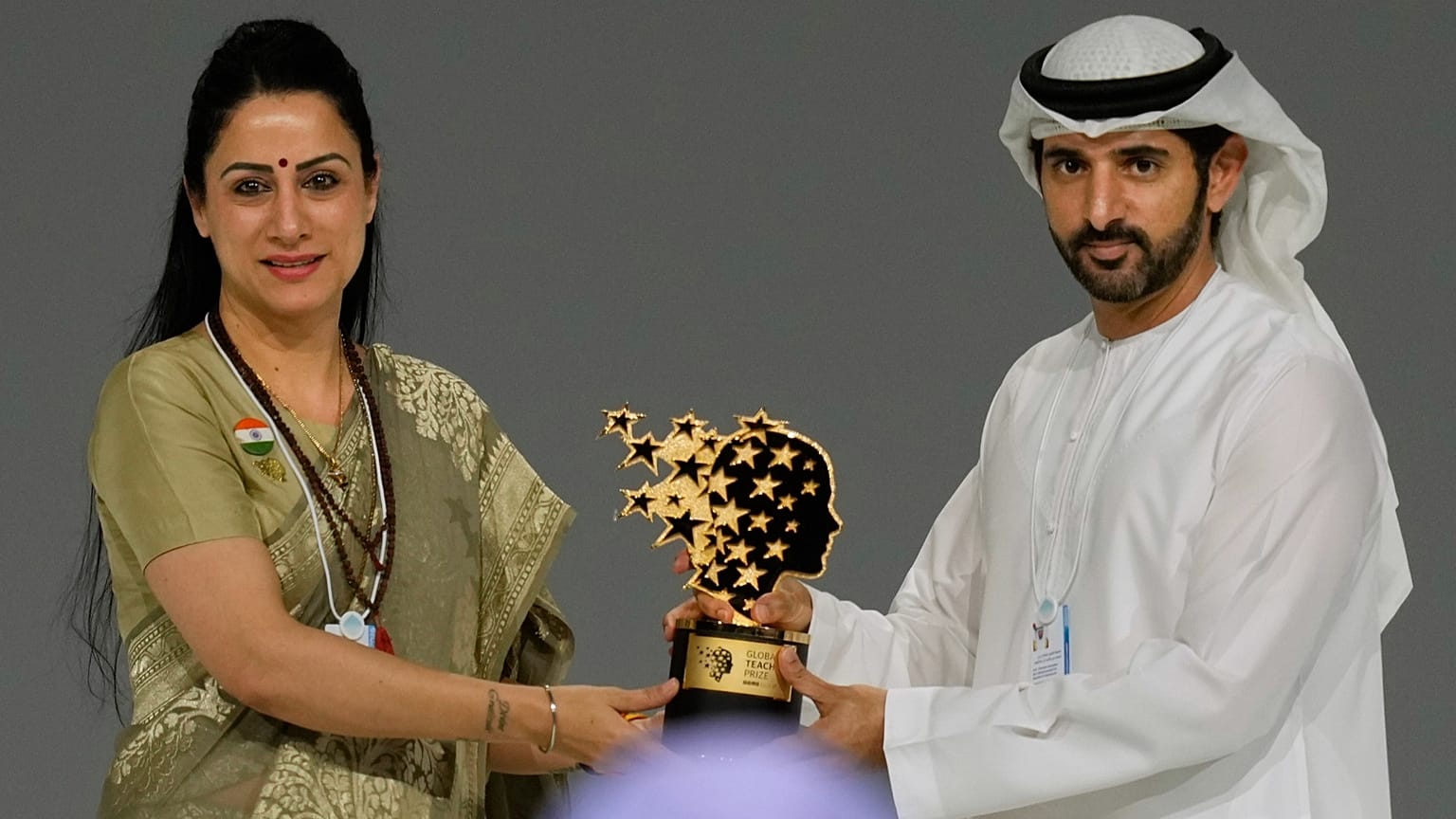
Rouble Nagi's approach is rooted in a simple but powerful belief: <b>education must reach the child — not the other way around</b>. Instead of waiting for infrastructure or government systems, she built learning spaces directly inside underserved communities.
Her model integrates several innovative approaches:
- Visual learning through murals
- Community-based teaching
- Flexible learning hours
- Creative engagement

She treats <i>environment as curriculum</i> — meaning walls, streets, and neighbourhoods themselves become teaching tools. This philosophy challenges traditional educational norms by bringing knowledge directly to where children live and play.
Her Ideas and Teaching Beliefs
While exact word-for-word quotes vary across interviews, these are consistent statements and principles she has publicly expressed:
Advertisement
Loading partner content...
- Education should be accessible anywhere — even without classrooms or textbooks.
- Art is a universal language that helps children understand complex ideas faster.
- Learning must feel joyful, not forced, especially for children facing poverty or trauma.
- Community involvement is essential — parents and neighbours must be part of education.
- Creativity builds confidence, which is often more valuable than memorisation.
These ideas form the backbone of her educational model and explain why her programs succeed where traditional systems sometimes struggle. By focusing on the holistic development of children rather than academic metrics alone, Nagi has created a paradigm shift in how we think about education delivery.
Innovation: Turning Walls Into Teachers
One of her most revolutionary contributions is the concept of <b>educational murals</b>. These murals include:
- Alphabets and phonics charts
- Numbers and math puzzles
- Hygiene lessons
- Environmental awareness visuals
- Inspirational messages
Children interact with them daily while playing or walking through their neighbourhood. Learning becomes <b>constant, natural, and playful</b> rather than restricted to school hours. This innovative approach transforms passive environments into active learning spaces, making education an integral p<a href="/article/creating-engaging-social-media-content-the-art-of-capturing-attention-in-a-digital-age" title="Creating Engaging Social Media Content: The Art of Capturing Attention in a Digital Age" class="internal-link">art of</a> children's daily lives.
The murals serve multiple purposes simultaneously: they beautify otherwise neglected urban spaces, provide educational content, and create a sense of community ownership. Local artists often collaborate with Nagi to create these murals, further strengthening community ties.

Impact and Scale
Her initiatives have achieved remarkable measurable results:
Advertisement
Loading partner content...
- Hundreds of community learning centres established
- Over 1 million children reached
- Thousands of volunteers trained
- Multiple urban slums converted into learning zones
This scale of impact is one reason she was selected from thousands of educators worldwide for the Global Teacher Prize. The recognition has not only elevated her personal achievements but has also drawn international attention to the potential of community-based education models.
What makes these numbers particularly impressive is that they were achieved without massive funding or institutional backing. Instead, Nagi's success stems from her ability to mobilize existing community resources and create sustainable learning ecosystems that continue to thrive even after initial implementation.

Why Her Work Matters Globally
Rouble Nagi's success has influenced educators and policymakers across continents because her model solves real-world problems:
- When there is a lack of classrooms, he solved it by using Public Places.
- Low attendance ? - She brought learning to homes
- Limited funding ? - She managed it with low-cost art tools
- Student disengagement ? - She made the learning interactive
Her work proves that <b><a href="/article/innovation-in-business-why-it-s-the-key-to-thriving-in-a-competitive-world" title="Innovation in Business: Why It’s the Key to Thriving in a Competitive World" class="internal-link">innovation in</a> education doesn't always require technology — sometimes it requires imagination</b>. In an era where digital solutions often dominate educational discourse, Nagi's analog approach demonstrates that the most effective interventions may sometimes be the simplest.
Her model addresses systemic inequalities by providing educational access to marginalized populations who have been left behind by traditional systems. By removing barriers to entry such as uniforms, fees, and fixed schedules, she has made education truly inclusive and accessible.
Advertisement
Loading partner content...
Lessons the World Can Learn From Her
Educators, NGOs, and governments can replicate her approach by:
- Using local artists to design learning walls
- Involving community volunteers as mentors
- Making lessons visual and activity-based
- Creating flexible learning schedules
- Designing curriculum around local needs
Her model is especially powerful for regions facing poverty, migration, conflict, or infrastructure gaps. The adaptability of her approach means it can be implemented in diverse contexts with minimal resources, making it a scalable solution for global education challenges.
One of the key takeaways from Nagi's work is the importance of cultural relevance in education. By incorporating local languages, stories, and contexts into her murals and teaching methods, she creates learning experiences that resonate with children's lived realities, increasing both engagement and retention.
The Future of Rouble Nagi's Educational Revolution
As Rouble Nagi continues to expand her reach, her influence is likely to grow exponentially. The Global Teacher Prize has provided her with a global platform to advocate for educational equity and share her methodology with educators worldwide.
Her approach has particular relevance <a href="/article/holistic-approaches-to-mental-wellness-in-the-digital-age" title="Holistic approaches to mental wellness in the digital age" class="internal-link">in the</a> post-pandemic educational landscape, where traditional schooling models have been disrupted. The flexibility and adaptability of her community-based learning centers offer a compelling alternative that can complement or even replace conventional systems in certain contexts.
Advertisement
Loading partner content...
Perhaps most importantly, Rouble Nagi's work challenges us to reimagine the very purpose of education. For her, it's not merely about academic achievement but about empowering children with the confidence, creativity, and critical thinking skills they need to transform their own lives and communities.
In Conclusion
Rouble Nagi didn't just teach children — she redefined what a classroom can be. Her work reminds the world that a <b>great teacher is not defined by where they teach, but by how many lives they transform</b>.
In a world where educational inequality remains one of the most persistent challenges, Nagi's innovative approach offers a beacon of hope. By bringing education directly to children rather than expecting them to overcome barriers to access it, she has created a model that puts learners at the center of the educational ecosystem.
As we look toward the future of education, Rouble Nagi's street classrooms stand as a powerful testament to the fact that sometimes, the most revolutionary ideas are the simplest ones. Her work continues to inspire educators worldwide to think beyond traditional boundaries and create learning environments that meet children where they are.