<h1>The Ayodhya Ram Temple: <a href="/article/mastering-social-media-strategy-in-india-a-comprehensive-guide" title="Mastering Social Media Strategy in India: A Comprehensive Guide" class="internal-link">A Comprehensive Guide</a> to Its Architecture, Spiritual Significance, and Cultural Legacy</h1>
<p>Welcome to an in‑depth exploration of one of modern India’s most remarkable spiritual landmarks. The Ayodhya Ram Temple stands not only as a place of worship but as a living testament to the nation’s artistic heritage, architectural ingenuity, and enduring devotional culture. This guide delves into the temple’s <b>Nagara</b> style architecture, the sacred <b>Ram Lalla</b> idol, and the broader socio‑economic transformation it has sparked, offering readers a thorough understanding of why this structure matters to <a href="/article/email-marketing-best-practices-a-complete-guide-for-indian-businesses-in-2024" title="Email Marketing Best Practices: A Complete Guide for Indian Businesses in 2024" class="internal-link">Indian</a>s and the world alike.</p>
<h2>Historical and Spiritual Importance of Ayodhya</h2>
<p>Ayodhya, meaning “the city that cannot be conquered,” has been revered for millennia as the birthplace of Lord Rama. Ancient texts such as the Ramayana describe Ayodhya as a city of unparalleled virtue, where Rama reigned justly before embarking on his epic <a href="/article/self-help-series-a-journey-into-inner-transformation" title="Self-Help Series: A Journey Into Inner Transformation" class="internal-link">journey</a>. The site’s <b>spiritual significance</b> grew over centuries, with successive generations of devotees envisioning a grand temple that would commemorate Rama’s earthly origin.</p>
<p>The <b>reconstruction of <a href="/article/navigating-legalities-and-cultural-tensions-the-ram-temple-donation-case-unfolds" title="Navigating Legalities and Cultural Tensions: The Ram Temple Donation Case Unfolds" class="internal-link">the Ram Temple</a></b> marks a milestone in India’s cultural narrative. After a legal journey spanning decades, the temple’s foundation stone was laid in August 2020, and the <b>Pran Pratishtha</b> (consecration) ceremony took place on 22 January 2024. This moment is celebrated not merely as a religious event but as a reaffirmation of India’s living heritage, drawing millions of pilgrims and curious visitors alike.</p>
Advertisement
Loading partner content...
<h2>Architectural Marvel: The Nagara Style</h2>
<h3>Nagara Architecture – Principles and Forms</h3>
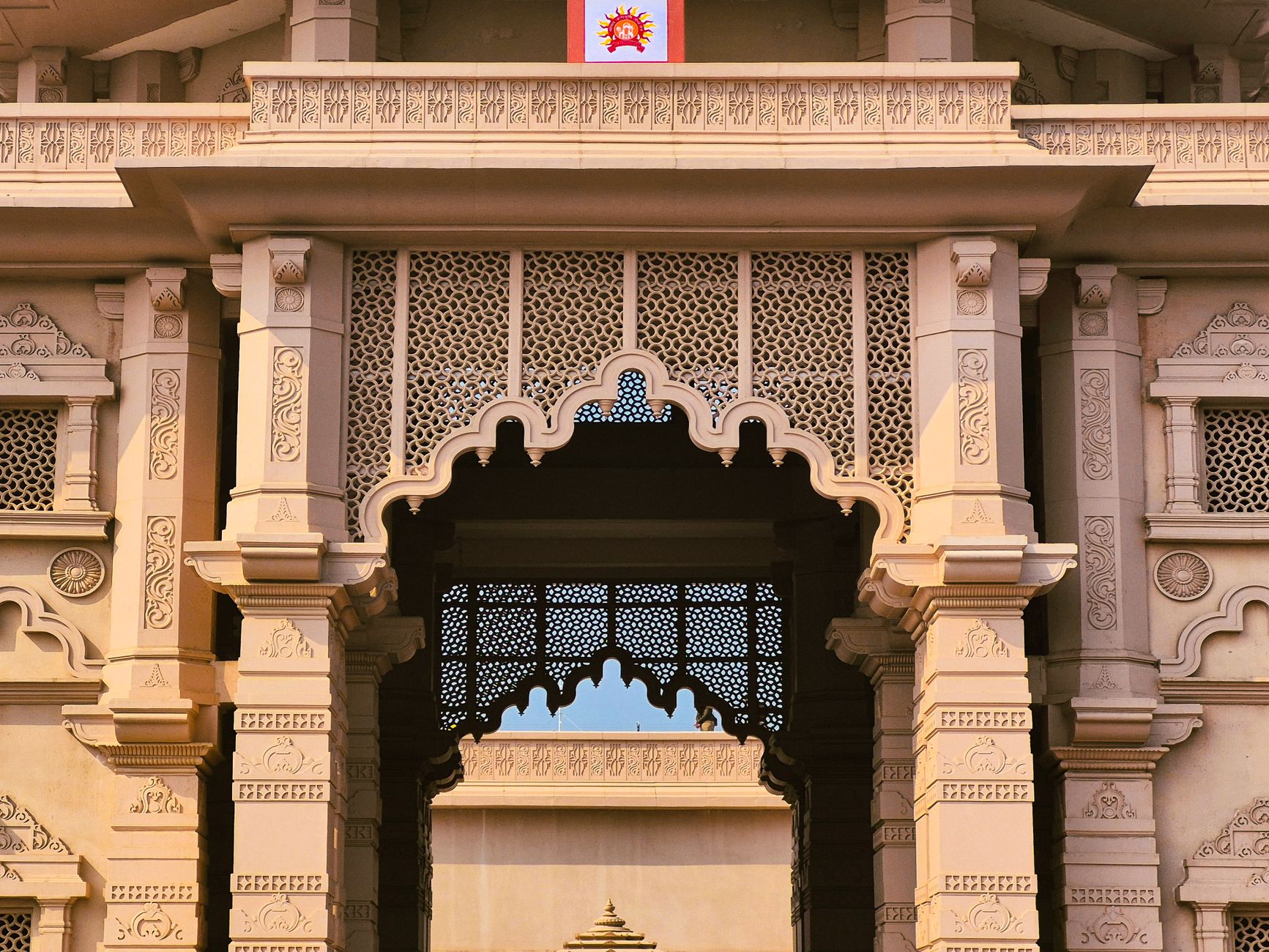
<p>The Ayodhya Ram Temple exemplifies the <b>Nagara</b> style, a classical Indian temple architecture that originated in the north‑central region of the subcontinent. This style is distinguished by its <b>tower (shikhara)</b> that rises in a curvilinear shape, symbolizing the cosmic mountain.</p>
<ul>
<li><b>Curvilinear Shikara:</b> The temple’s spire ascends in a series of receding curves, echoing the Himalayas.</li>
<li><b>Decorative Cornices:</b> Overhanging eaves and ornate moldings create a rhythmic visual flow.</li>
<li><b>Vertical Emphasis:</b> The verticality draws the worshipper’s gaze upward, towards the divine.</li>
</ul>
<h3>Materials and Construction Techniques</h3>
Advertisement
Loading partner content...
<p>The temple is built entirely from <b>pink sandstone</b>, quarried in Rajasthan. This stone not only provides durability but also imparts a warm hue that changes with the daylight, enhancing the temple’s spiritual aura. Notably, the builders avoided iron or steel, opting for <b>ancient Indian techniques</b> such as interlocking stones, dowels, and precise chiseling.</p>
<p><figure class="my-8 overflow-hidden rounded-3xl shadow-xl">
<img src="https://images.pexels.com/photos/36478003/pexels-photo-36478003.jpeg?auto=compress&cs=tinysrgb&dpr=2&h=650&w=940" alt="Ayodhya Ram Temple architecture" class="w-full h-[400px] object-cover" />
</figure></p>
<h3>Symbolic Carvings and Pillars</h3>
<p>Every inch of the temple’s exterior and interior is adorned with intricate carvings. Mythological scenes from the Ramayana, celestial beings, and geometric patterns are etched into the sandstone, each holding a deeper meaning:</p>
<ol>
<li><b>Ganga and Yamuna</b> – representing the flow of life.</li>
<li><b>Navagraha</b> – the nine planetary deities, symbolizing cosmic order.</li>
<li><b>Lotus motifs</b> – signifying purity and spiritual awakening.</li>
</ol>
Advertisement
Loading partner content...
<p> pillars, known as <b>stambhas</b>, are designed to look like slender trunks of a tree, reinforcing the idea of the temple as a living organism.</p>
<h2>The Journey of the Ram Lalla Idol</h2>
<h3>Choosing the Stone</h3>
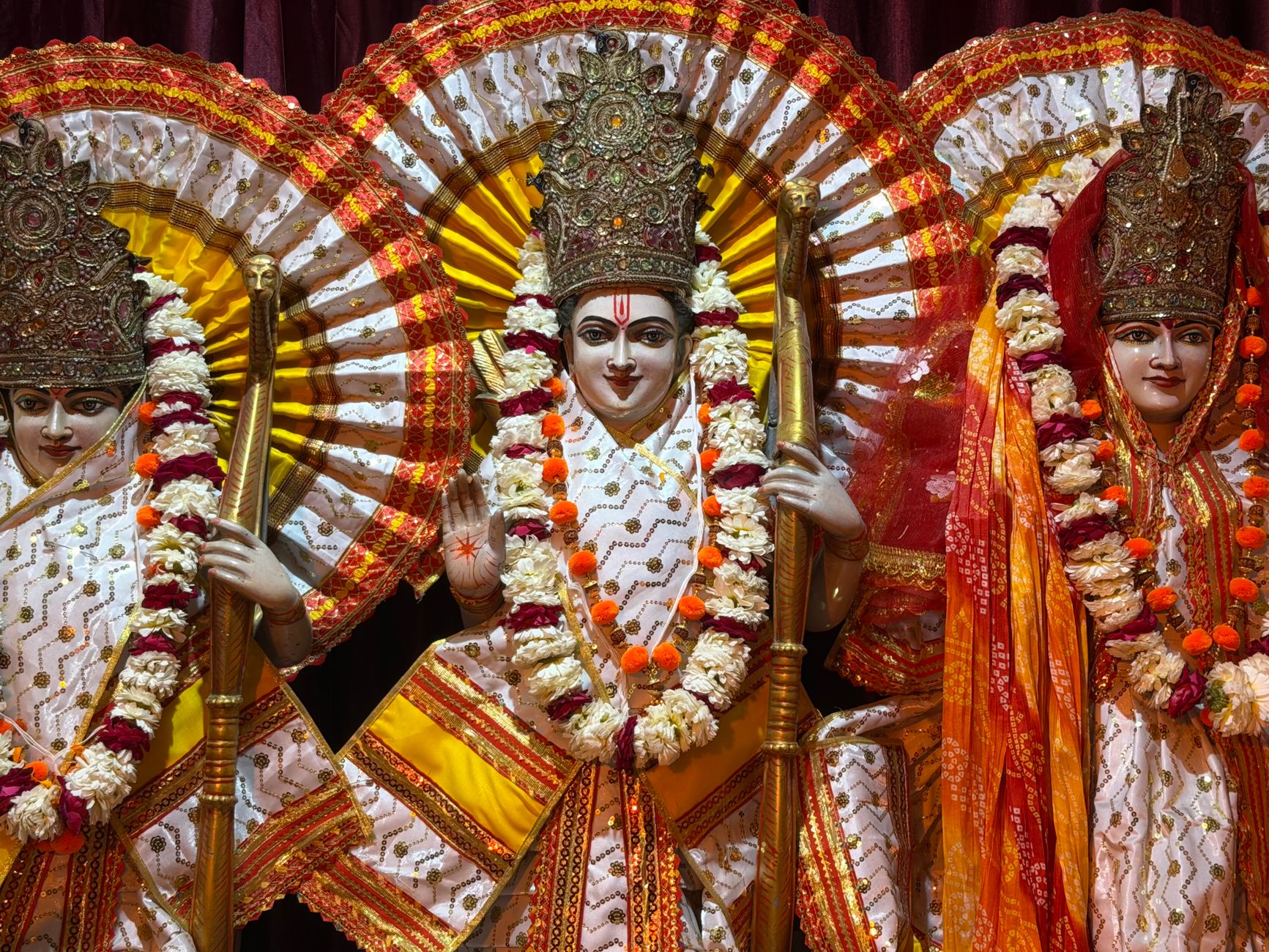
<p>The <b>Ram Lalla</b> idol, depicting child Rama, is carved from a single block of <b>black granite</b>. This choice reflects the timeless nature of the deity—eternal, unchanging, and beyond the material world. The stone’s deep color symbolizes the infinite sky, inviting devotees to contemplate the boundless nature of divinity.</p>
<h3>Craftsmanship and Iconography</h3>
Advertisement
Loading partner content...
<p>Artisans from various parts of India were invited to contribute to the idol’s creation. The idol’s posture—standing with a bow in hand—captures the moment before Rama’s exile, embodying both youthful vigor and divine purpose. The eyes are meticulously polished to reflect the light, creating a sense of alertness and compassion.</p>
<p><figure class="my-8 overflow-hidden rounded-3xl shadow-xl">
<img src="https://images.pexels.com/photos/18253868/pexels-photo-18253868.jpeg?auto=compress&cs=tinysrgb&dpr=2&h=650&w=940" alt="Ram Lalla idol" class="w-full h-[400px] object-cover" />
</figure></p>
<h3>Theological Significance</h3>
<p>In Hindu theology, the <b>Ram Lalla</b> form represents the <b>Lila</b> (divine play) of Vishnu as a child, emphasizing the accessibility of the divine. Devotees believe that the child form invites a parental affection, making the worship experience deeply personal and emotionally resonant.</p>
Advertisement
Loading partner content...
<h2>Historical Context: From Dispute to Restoration</h2>
<p>The Ayodhya site has a complex past. Ancient texts mention a temple dedicated to Rama that existed for centuries before the 16th century. However, historical records also note that a mosque, the Babri Masjid, was constructed in 1528 CE by order of the Mughal emperor Babur, marking the beginning of a long-standing religious contention.</p>
<p>Over the ensuing centuries, the site became a focal point of <b>devotional practice</b>, with devotees performing rituals and gatherings despite legal uncertainties. The <b>legal battle</b> that began in the 1980s culminated in a landmark Supreme Court verdict in 2019, directing the formation of a trust to oversee the temple’s development and allocating an adjacent plot for a mosque. This balanced approach aimed to honor both historical narratives and contemporary pluralism.</p>
<p>The <b>journey toward the temple’s completion</b> involved meticulous planning, community participation, and adherence to traditional Vastu Shastra principles. The result is a structure that respects its historical roots while embodying modern construction standards.</p>
<h2>Rituals and Traditions: A Devotee’s Experience</h2>
Advertisement
Loading partner content...
<h3>Key Pujas Performed Daily</h3>
<table border="1" cellpadding="5" cellspacing="0">
<thead>
<tr>
<th>Puja</th>
<th>Time</th>
<th>Significance</th>
</tr>
</thead>
<tbody>
<tr>
<td>Archana</td>
<td>05:00 AM</td>
<td>Morning offering of flowers and incense to Ram Lalla</td>
</tr>
<tr>
<td>Madhyanna Aarti</td>
<td>12:00 PM</td>
<td>Midday devotional song and lamp ceremony</td>
</tr>
<tr>
<td>Sayankala Aarti</td>
<td>07:00 PM</td>
<td>Evening prayer marking the day’s conclusion</td>
</tr>
</tbody>
</table>
<h3>Pran Pratishtha Ceremony</h3>
<p>The <b>Pran Pratishtha</b> ceremony, held on 22 January 2024, was a watershed moment. It involved the ritual infusion of divine energy into the idol, transforming the stone into a living embodiment of Rama. The ceremony lasted for several days, featuring Vedic chants, fire sacrifices, and the participation of thousands of priests and devotees.</p>
<blockquote>
<p>“The Pran Pratishtha is not merely an inauguration; it is the awakening of a centuries‑old yearning of a nation to reconnect with its spiritual roots.” – Dr. Meera Sharma, Historian of Indian Temple Traditions
</blockquote>
Advertisement
Loading partner content...
<h3>What Visitors Can Expect</h3>
<p>Today, the temple complex offers a <b>holistic pilgrimage experience</b>. The main sanctum sanctorum houses the Ram Lalla idol, accessible through a series of decorated corridors. Devotees can participate in:</p>
<ul>
<li><b>Bhog Darshan</b> – a sanctified meal offering.</li>
<li><b>Shayana Aarti</b> – night‑time prayer during the deity’s symbolic rest.</li>
<li><b>Educational exhibits</b> – showcasing the temple’s architecture and history.</li>
</ul>
<p>Visitors are encouraged to dress modestly, observe silence in <a href="/article/breaking-the-inner-robot-from-automatic-living-to-conscious-living" title="Breaking the "Inner Robot": From Automatic Living to Conscious Living" class="internal-link">the inner</a> chambers, and follow the prescribed ritual timings to fully engage with the spiritual atmosphere.</p>
<h2>Economic and Social Impact</h2>
Advertisement
Loading partner content...
<h3>Spurring Spiritual Tourism</h3>
<p>Since the temple’s consecration, Ayodhya has witnessed an unprecedented influx of pilgrims, both domestic and international. The <b>Ayodhya spiritual tourism</b> boom has led to the development of:</p>
<ul>
<li>Modern airports and railway stations with enhanced connectivity.</li>
<li>New hotels, restaurants, and guest houses to accommodate visitors.</li>
<li>Improved road networks and signage for easy navigation.</li>
</ul>
<p><figure class="my-8 overflow-hidden rounded-3xl shadow-xl">
<img src="https://images.pexels.com/photos/36478003/pexels-photo-36478003.jpeg?auto=compress&cs=tinysrgb&dpr=2&h=650&w=940" alt="Ayodhya tourism development" class="w-full h-[400px] object-cover" />
</figure></p>
<h3>Empowering Local Livelihoods</h3>
Advertisement
Loading partner content...
<p>The temple’s construction and subsequent operations have generated <b>thousands of jobs</b>, from stone carvers to hospitality staff. Local artisans have been revitalized, with traditional crafts such as <b>block printing</b> and <b>wood carving</b> finding new markets among visiting devotees.</p>
<p>Moreover, the temple’s charitable trusts have launched initiatives in education, healthcare, and rural development, fostering a broader socio‑economic upliftment in the region.</p>
<h2>Future Outlook: Preserving Heritage for Generations</h2>
<h3>Long‑Term Vision for the Temple Complex</h3>
<p>Planners envision a <b>comprehensive temple city</b> that integrates spiritual, cultural, and educational facilities. Proposed expansions include:</p>
Advertisement
Loading partner content...
<ul>
<li>A global <b>Rama museum</b> chronicling the deity’s stories across art forms.</li>
<li>Research centers for <b>Vedic sciences</b>, Ayurveda, and traditional architecture.</li>
<li>Green spaces and water bodies to reflect the temple’s harmony with nature.</li>
</ul>
<h3>Role in Preserving Indian Heritage</h3>
<p>The Ayodhya Ram Temple stands as a <b>living museum</b> of India’s architectural brilliance and spiritual ethos. By adhering to ancient building techniques while embracing modern conservation practices, the temple complex sets a precedent for preserving historical sites without compromising authenticity.</p>
<p>Future generations will have the opportunity to experience a seamless blend of <b>contemporary relevance and timeless tradition</b>, ensuring that the cultural legacy of Ayodhya continues to inspire and educate.</p>
<p>In summary, the Ayodhya Ram Temple is far more than a place of worship; it is a masterpiece of <b>Nagara style temples</b>, a beacon of <b>Ram Lalla idol significance</b>, and a catalyst for <b>Ayodhya spiritual tourism</b>. Its architectural grandeur, deep spiritual roots, and socio‑economic impact make it a cornerstone of India’s cultural identity, inviting all who visit to partake in a timeless journey of devotion and discovery.</p></b></p></i></i></i>