<h1>The Complete Guide to Jharkhand Student Protests: Origins, Demands, Government Response, and Future Outlook</h1>
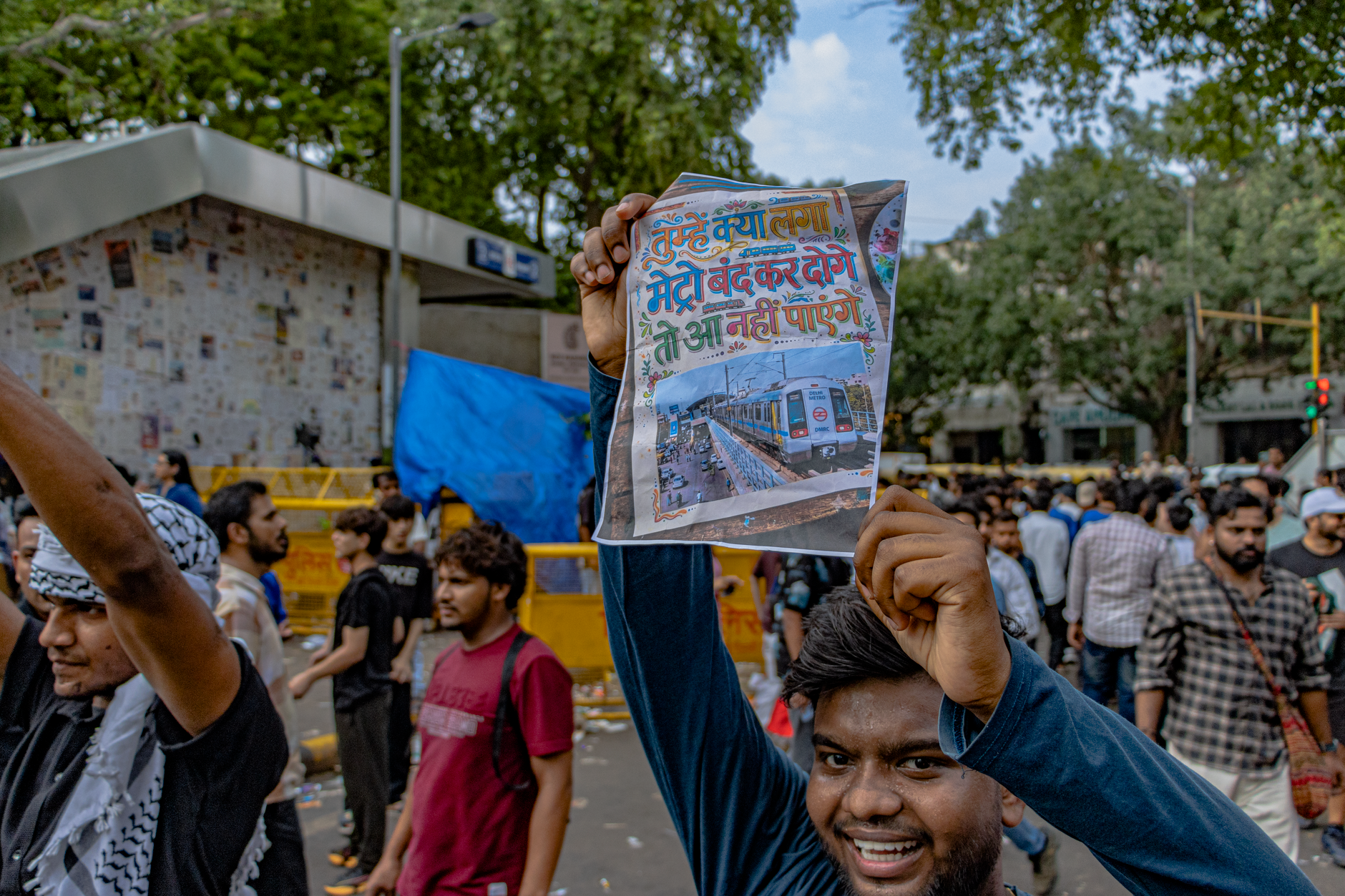
<p>The air on Jharkhand’s university campuses has been thick with chants, banners, and a palpable sense of urgency for months now. What began as isolated grievances over fee hikes has snowballed into a statewide movement that draws inspiration from decades of student activism across India. This article unpacks the roots, the evolving demands, the stalled negotiations, and what the future may hold for Jharkhand’s youth.</p>
<figure class="my-8 overflow-hidden rounded-3xl shadow-xl">
<img src="https://images.pexels.com/photos/32347985/pexels-photo-32347985.jpeg?auto=compress&cs=tinysrgb&dpr=2&h=650&w=940" alt="student protest" class="w-full h-[400px] object-cover" />
</figure>
<h2>Historical Background: Student Activism in Jharkhand and India</h2>
<p>Jharkhand’s tradition of student dissent mirrors the broader Indian narrative, where campuses have often served as incubators for social change. From the anti‑Emergency protests of the 1970s to the anti‑Mandal agitations of the 1990s, student bodies have repeatedly challenged policy decisions that affect their futures. In Jharkhand, the formation of the <a href="/article/why-jharkhand-students-are-protesting-a-deep-dive-into-education-rights-government-response-and-the-" title="Why Jharkhand Students Are Protesting: A Deep Dive into Education Rights, Government Response, and the Role of Public Figures like Rahul Gandhi" class="internal-link">Jharkhand Students</a>’ Union (JSU) in the early 2000s gave a structured voice to tribal and rural students advocating for better representation in higher education.</p>
<p>Nationally, landmark movements such as the 2016 JNU fee protest, the 2020 DU anti‑CAA demonstrations, and the 2022 BHU solidarity marches have shown how student grievances can quickly escalate into national debates. These precedents provide both a tactical blueprint and a cautionary tale for Jharkhand’s current organizers, who are keen to avoid the pitfalls of fragmentation while maintaining pressure on the state government.</p>
Advertisement
Loading partner content...
<h2>Timeline of the Current Protest</h2>
<p>Understanding the protest’s evolution requires a look at key milestones that have shaped its trajectory.</p>
<ol>
<li><b>January 2026:</b> A sudden increase in tuition fees at Ranchi University triggers the first student sit‑in.</li>
<li><b>February 2026:</b> Protests spread to Dumka and Jamshedpur campuses; the Jharkhand Student Coalition (JSC) is formed to unify demands.</li>
<li><b>March 2026:</b> The JSC presents a charter of eight demands to the Higher Education Department; initial talks end without concrete outcomes.</li>
<li><b>April 2026:</b> A faction advocating for stronger reservation policies breaks away, forming the Jharkhand Reservation Front (JRF).</li>
<li><b>May 2026:</b> Government offers a conditional fee waiver for economically weaker sections; students reject it as insufficient.</li>
<li><b>June 2026:</b> A statewide rally in Ranchi draws over 15,000 participants; <a href="/article/mastering-social-media-strategy-in-india-a-comprehensive-guide" title="Mastering Social Media Strategy in India: A Comprehensive Guide" class="internal-link">social media</a> hashtags trend nationally.</li>
<li><b>July 2026:</b> Talks resume after a mediation attempt by the State Human Rights Commission; again, no breakthrough.</li>
<li><b>August 2026:</b> The protest enters its sixth month, with intermittent class boycotts affecting exam schedules.</li>
</ol>
<p>Each phase has revealed new layers of complexity, from ideological splits to shifting government tactics. The lack of a decisive resolution has kept the movement alive, albeit with growing fatigue among some participants.</p>
<h2>Core Demands and Factional Differences</h2>
<p>The protest’s demand list is extensive, but three thematic clusters dominate the discourse.</p>
<ul>
<li><b>Education Reforms:</b> Revision of fee structures, introduction of a uniform scholarship scheme, and upgrading of infrastructure in government colleges.</li>
<li><b>Employment Guarantees:</b> Assurance of state‑funded job placements for graduates, revival of campus placement cells, and stricter enforcement of existing reservation quotas in public sector jobs.</li>
<li><b>Reservation and Social Justice:</b> Expansion of OBC and EWS quotas in higher education, implementation of a tribal sub‑plan for universities, and protection against discrimination on campus.</li>
</ul>
Advertisement
Loading partner content...
<p>While the JSC emphasizes fee reductions and employment guarantees, the JRF pushes for a more aggressive reservation agenda, arguing that economic relief alone will not address entrenched caste‑based inequities. A third, smaller group—the Jharkhand Student Democratic Alliance (JSDA)—focuses on civil liberties, demanding the withdrawal of police cases filed against protestors and the repeal of a controversial campus security ordinance enacted in early 2026.</p>
<p>These differences have occasionally led to public disagreements, but leaders repeatedly stress that the overarching goal remains a fairer, more accessible education system for Jharkhand’s youth.</p>
<h2>Government’s Stance and Negotiation Attempts</h2>
<p>The Jharkhand government has responded with a mix of conciliatory gestures and firm boundaries. Official statements repeatedly cite fiscal constraints as the reason for rejecting wholesale fee rollbacks, while highlighting existing welfare schemes such as the Jharkhand Merit Scholarship and the Chief Minister’s Employment Guarantee Programme.</p>
<p>Negotiation teams, led by the Minister <a href="/article/first-ai-enabled-university-in-india-a-game-changer-for-higher-education" title="First AI-Enabled University in India — A Game Changer for Higher Education?" class="internal-link">for Higher Education</a>, have held six formal rounds of talks since February. Concessions on the table have included:</p>
<table>
<thead>
<tr>
<th>Concession Offered</th>
<th>Status</th>
<th>Student Response</th>
</tr>
</thead>
<tbody>
<tr>
<td>10% tuition fee rebate for SC/ST students</td>
<td>Accepted in principle</td>
<td>Seen as tokenistic; demand for universal rebate persists</td>
</tr>
<tr>
<td>Creation of a placement cell in each district college</td>
<td>Pilot launched in three districts</td>
<td>Welcomed but deemed insufficient in scale</td>
</tr>
<tr>
<td>Increase of OBC quota from 21% to 27%</td>
<td>Under review</td>
<td>JRF insists on 33% to match central norms</td>
</tr>
<tr>
<td>Withdrawal of FIRs against 20 protestors</td>
<td>Partial compliance (10 cases dropped)</td>
<td>JSDA calls for complete withdrawal</td>
</tr>
</tbody>
</table>
<p>Despite these offers, trust deficits linger. Student leaders accuse the administration of using procedural delays to dilute protest momentum, while government officials argue that some demands exceed the state’s budgetary capacity. The mediation attempts by the State Human Rights Commission have so far failed to bridge this gap, largely because each side views the other's concessions as non‑negotiable.</p>
<h2>Impact on Campuses, Daily Life, and Society</h2>
<p>The prolonged agitation has left a noticeable imprint on academic life and the broader Jharkhand populace.</p>
<ul>
<li><b>Academic Disruption:</b> Regular class boycotts have delayed semester examinations by an average of three weeks, prompting concerns about graduation timelines.</li>
<li><b>Economic Ripple Effects:</b> Local businesses near campuses report a 15% dip in sales during protest weeks, while transport services face occasional route diversions.</li>
<li><b>Social Polarisation:</b> While many citizens express sympathy for the students’ plight, sections of the <a href="/article/why-india-s-middle-class-is-more-stressed-than-ever" title="Why India’s Middle Class Is More Stressed Than Ever" class="internal-link">middle class</a> worry about the impact on public order and the potential for violence.</li>
<li><b>Administrative Strain:</b> University administrations have redirected resources to manage protest logistics, affecting maintenance and library services.</li>
</ul>
<p>Nonetheless, the movement has also sparked constructive dialogue in town halls and college seminars, where educators and policymakers debate long‑term reforms beyond the immediate protest agenda.</p>
Advertisement
Loading partner content...
<h2>Role of Social Media, Student Unions, and Civil Society</h2>
<p>Digital platforms have been the lifeblood of the Jharkhand student protest, enabling rapid mobilisation and narrative control.</p>
<p>Hashtags such as #JharkhandStudentRise and #FeeJustice have amassed millions of impressions on Twitter and Instagram, with short video clips of rallies going viral across regional WhatsApp groups. Student unions have leveraged these channels to broadcast live updates, share legal aid contacts, and counter misinformation spread by opposition groups.</p>
<p>Civil society organisations—including the People’s Union for Civil Liberties (PUCL) Jharkhand chapter and various NGOs focused on tribal rights—have provided logistical support, legal counsel, and mediation expertise. Their involvement has lent the protest a broader legitimacy, attracting sympathy from academics, journalists, and even some retired bureaucrats.</p>
<p>However, the reliance on online activism has also exposed participants to surveillance and cyber‑harassment, prompting calls for stronger digital rights protections within the student community.</p>
<h2>Comparative Analysis with Other Indian Student Protests</h2>
<p>Placing Jharkhand’s struggle within a national context reveals both similarities and distinctive features.</p>
<p>Like the 2020 DU protests against the Citizenship Amendment Act, Jharkhand’s demonstrators have combined specific policy grievances with a broader demand for democratic participation. Yet, unlike the largely urban, English‑medium campus protests seen in Delhi or Hyderabad, Jharkhand’s movement draws heavily from rural colleges and tribal institutions, giving it a unique socio‑economic dimension.</p>
<p>The JNU fee protest of 2016 also centred on affordability, but its resolution came after a prolonged judicial intervention—a route Jharkhand students have so far avoided, preferring direct negotiation. Meanwhile, the BHU solidarity marches of 2022 showcased <a href="/article/unlocking-the-power-of-social-media-marketing-tactics" title="Unlocking the Power of Social Media Marketing Tactics" class="internal-link">the power of</a> inter‑campus alliances, a tactic that Jharkhand factions are now exploring through planned exchange programmes with student bodies in Bihar and Odisha.</p>
<p>These comparisons suggest that while Jharkhand’s protest shares the DNA of nationwide student activism, its emphasis on tribal reservation and rural employability sets it apart as a regional variant with potential national relevance.</p>
<h2>Expert Opinions on Resolution and Long‑Term Implications</h2>
<p>To gauge possible pathways forward, we consulted scholars and practitioners familiar with higher education policy and youth movements.</p>
<blockquote>
<p>“The Jharkhand protest is less about a single fee hike and more about a crisis of trust between the state and its young populace. Sustainable resolution will require transparent budgeting, a permanent grievance redressal cell, and a commitment to implement reservation policies in letter and spirit.”</p>
<footer>— Dr. Ananya Mitra, Professor of Sociology, Ranchi University</footer>
</blockquote>
<blockquote>
<p>“From a policy standpoint, the government’s fiscal concerns are genuine, but the opportunity cost of prolonged unrest—lost academic weeks, deterrence to investment, and brain drain—far outweighs the short‑term savings from resisting fee reforms.”</footer>
<blockquote>— Rajesh Kumar, Former Secretary, Department of Higher Education, Jharkhand</footer>
</blockquote>
<blockquote>
<p>“Student leaders must be wary of fragmentation. A unified charter that links fee reforms with job guarantees and social justice will be harder for the administration to dismiss as a collection of disparate demands.”</footer>
<footer>— Priya Lakshmi, Student Leader, JSC</footer>
</blockquote>
<p>The consensus among experts is that a multi‑pronged approach—combining immediate financial relief, structural reforms in reservation, and measurable employment outcomes—offers the best chance of ending the stalemate while addressing the root causes of discontent.</p>
Advertisement
Loading partner content...
<h2>Future Outlook: Scenarios and Lessons</h2>
<p>Looking ahead, three plausible scenarios emerge for the Jharkhand student protest.</p>
<ol>
<li><b>Negotiated Settlement:</b> If the government agrees to a phased fee reduction coupled with a time‑bound reservation increase and a job‑placement guarantee, protests could taper off by late 2026. This would likely set a precedent for other states grappling with similar issues.</li>
<li><b>Prolonged Stagnation:</b> Continued deadlock could lead to protest fatigue, sporadic clashes, and a potential shift toward more radical factions. Academic calendars would suffer further delays, impacting the employability of graduating batches.</li>
<li><b>External Mediation Success:</b> Intervention by a respected national body—such as the University Grants Commission or the Supreme Court‑appointed committee—could broker a compromise, though this would depend on both sides accepting third‑party authority.</li>
</ol>
<p>Regardless of the outcome, the movement offers vital lessons for student activism across India: the importance of clear, unified demands; the strategic use of digital tools for organisation; and the necessity of engaging civil society to broaden support bases.</p>
<p>Policymakers, meanwhile, should recognise that student protests are not merely disruptive events but signals of deeper systemic gaps that, if ignored, risk eroding faith in democratic institutions.</p>
<h2>Conclusion</h2>
<p>The Jharkhand student protests embody a vibrant, albeit tense, chapter in India’s ongoing dialogue about education, equity, and youth empowerment. By tracing their origins, mapping their evolving demands, and analysing the government’s response, we gain insight into how localized struggles can reflect—and influence—national conversations. As the situation continues to unfold, the resilience and ingenuity of Jharkhand’s students serve as a reminder that democratic participation thrives when young voices are heard, respected, and incorporated into the shaping of public policy.</p>
[IMAGE_SUGG</b></b></b></b></p></p></i>