
<h1>The Hidden Crisis: Exam Fraud in India – Causes, Consequences, and the Road to Reform</h1>
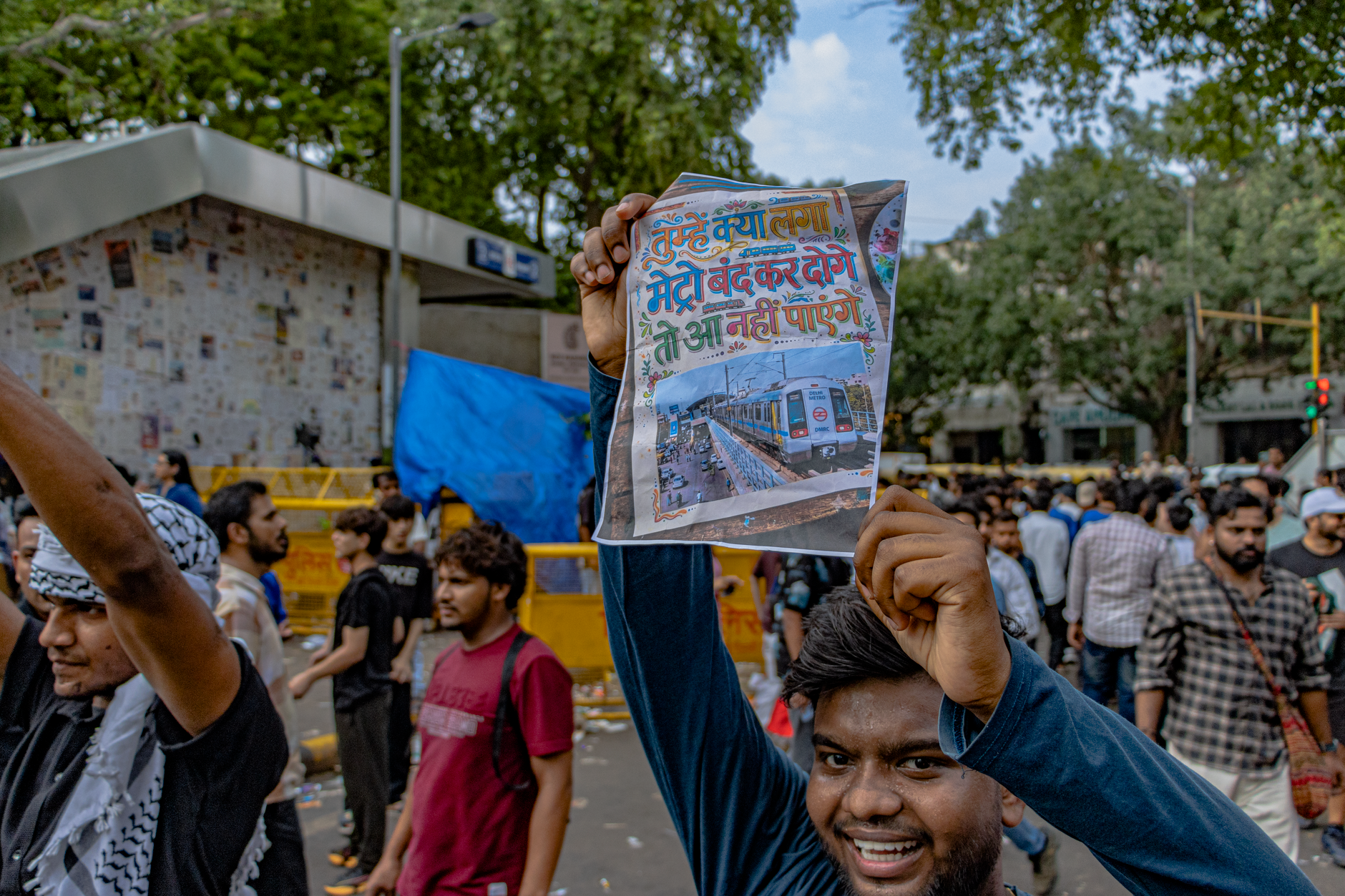
<p>In early 2026, thousands of aspirants flooded the streets of Ranchi after allegations that question papers were leaked before the Jharkhand state board exams, sparking a wave of student protests that reverberated across the nation. <b>This unprecedented outcry highlights a deep‑seated crisis of exam fraud in India</b>, a problem that undermines educational integrity and public confidence. The incident is not an isolated event; it reflects a systemic vulnerability that has plagued the country for decades.</p>
<figure class="my-8 overflow-hidden rounded-3xl shadow-xl">
<img src="https://images.pexels.com/photos/32347985/pexels-photo-32347985.jpeg?auto=compress&cs=tinysrgb&dpr=2&h=650&w=940" alt="student protest" class="w-full h-[400px] object-cover" />
</figure>
<h2>The Anatomy of Indian Examinations</h2>
<p>India’s examination landscape is dominated by a handful of high‑stakes boards that shape career trajectories for millions. <b>Each board operates with distinct authority, yet all share a common vulnerability to irregularities</b>. Understanding this anatomy is essential to grasp why fraud thrives.</p>
Advertisement
Loading partner content...
<h3>Major Examination Boards</h3>
<ul>
<li><b>CBSE</b> – Central Board of Secondary Education conducts the Class 10 and Class 12 board exams, serving over 12 million students annually.</li>
<li><b>State Boards</b> – Each state runs its own curriculum and examinations, often aligning with local language and syllabus requirements.</li>
<li><b>IIT‑JEE</b> – The Joint Entrance Examination for engineering aspirants remains the most competitive entrance test, with a selection rate below 1 %.</li>
<li><b>NEET</b> – The National Eligibility cum Entrance Test for medical courses attracts over 2 million candidates each year.</li>
<li><b>Other Competitive Exams</b> – Exams such as the UPSC civil services, CLAT for law, and various state‑level entrance tests complete the ecosystem.</li>
</ul>
<p>These examinations serve as gateways to prestigious colleges, lucrative jobs, and social mobility, making them prime targets for fraud. <b>The pressure to succeed creates a high‑stakes environment where cheating becomes a tempting shortcut</b> for many.</p>
<h2>Historical Context</h2>
<h3>1990s to Early 2000s</h3>
<p>The first major scandal emerged in 1998 when a paper‑leak ring was uncovered in Uttar Pradesh, involving the illicit sale of mathematics question papers to private coaching centers. <b>That incident sparked nationwide media coverage and led to the first official inquiries into exam security</b>. In the early 2000s, the introduction of computer‑based testing in select states revealed new avenues for hacking, prompting the need for stronger safeguards.</p>
Advertisement
Loading partner content...
<h3>Landmark Scandals</h3>
<p>2005 saw the “IIT‑JEE paper leak” where a senior official was arrested for selling solved papers to coaching institutes, resulting in the cancellation of the exam for thousands of candidates. <b>This scandal forced the Ministry of Human Resource Development (MHRD) to issue stricter protocols for paper printing and distribution</b>. More recently, the 2022 NEET controversy, where a whistleblower alleged that a senior official supplied answers to a select group, reignited public debate on examination fairness.</p>
<h2>How Irregularities Happen</h2>
<h3>Paper Leaking</h3>
<p>Paper leaking occurs when question papers are obtained before the scheduled date, often through insider networks within printing presses or exam centers. <b>In 2023, a leaked physics paper surfaced on <a href="/article/social-media-algorithms-explained-how-they-shape-your-feed" title="Social Media Algorithms Explained: How They Shape Your Feed" class="internal-link">social media</a> just hours before the CBSE Class 12 exam, prompting immediate investigations</b>. The rapid spread of the document compromised the exam’s credibility and forced a re‑examination for affected students.</p>
<h3>Impersonation</h3>
<p>Impersonation involves a substitute taking the exam on behalf of the actual candidate, usually with the help of forged identity documents. <b>In 2021, a case in Delhi revealed a network that swapped students’ photographs on Aadhaar cards to enable proxy candidates</b>. This practice not only violates the sanctity of the exam but also jeopardizes the future prospects of genuine aspirants.</p>
Advertisement
Loading partner content...
<h3>Technology Hacks</h3>
<p>Cybercriminals exploit weak network security to hack into exam servers, altering answer keys or siphoning data. <b>In early 2024, a ransomware attack on a state board’s online portal temporarily disabled the exam interface, allowing a handful of candidates to view encrypted answer files</b>. Though the breach was quickly contained, it exposed the fragility of digital infrastructure.</p>
<h3>Bribery of Examiners</h3>
<p>Examiners and invigilators may be bribed to overlook irregularities, alter answer sheets, or provide inside information. <b>Investigations in 2022 uncovered a bribery ring in Karnataka where officials received cash to change scores for selected candidates</b>. Such corruption erodes trust in the entire evaluation system.</p>
<h2>The Ripple Effect on Society</h2>
<h3>Impact on Students</h3>
<p>Students who fall victim to fraud experience loss of confidence, heightened anxiety, and diminished career prospects. <b>Surveys conducted in 2025 indicated that 38 % of affected students reported severe stress and considered abandoning their academic pursuits</b>. The psychological toll extends <a href="/article/beyond-the-headlines-a-comprehensive-guide-to-india-s-dowry-death-laws-high-profile-cases-and-how-th" title="Beyond the Headlines: A Comprehensive Guide to India’s Dowry Death Laws, High‑Profile Cases, and How They Shape Society" class="internal-link">beyond the</a> classroom, affecting families and communities.</p>
Advertisement
Loading partner content...
<h3>Impact on Teachers</h3>
<p>Teachers face ethical dilemmas when pressured to compromise exam integrity, and many fear repercussions that could jeopardize their employment. <b>In 2024, a survey of 5,000 teachers revealed that 22 % considered leaving the profession due to perceived lack of institutional support</b>. This brain drain weakens the quality of education.</p>
<h3>Impact on Employers</h3>
<p>Employers encounter a mismatch between academic credentials and actual competencies, leading to hiring inefficiencies and reduced productivity. <b>Companies reported a 15 % increase in onboarding costs for graduates whose exam scores were later found to be fraudulent</b>. This inefficiency underscores the economic cost of exam irregularities.</p>
<h3>Public Trust</h3>
<p>Public trust in educational institutions and governmental bodies declines when fraud is exposed, fueling cynicism and social unrest. <b>Polling data from 2026 shows that only 42 % of Indians believe the current exam system is fair</b>, a stark decline from 68 % a decade earlier.</p>
<h2>Case Study: Jharkhand Protests</h2>
<h3>Background</h3>
<p>In February 2026, the Jharkhand Board of Secondary Education announced the cancellation of the Class 10 board exams after allegations that question papers were sold to private coaching centers. <b>Students, parents, and teachers converged in Ranchi, demanding transparency and accountability</b>. The protests lasted for ten days, drawing national media attention.</p>
Advertisement
Loading partner content...
<h3>Allegations</h3>
<p>Officials alleged that a senior clerk in the board’s examination wing facilitated the illegal sale of mathematics and science papers for a fee ranging from ₹5,000 to ₹15,000 per set. <b>The leaked papers reportedly included solved answers, enabling candidates to achieve inflated scores</b>. The scandal implicated several private coaching institutes that benefited from the unfair advantage.</p>
<h3>Authorities Response</h3>
<p>The state government ordered a forensic audit of the examination department, suspended the involved officials, and promised a re‑examination for all affected candidates. <b>Additionally, a special task force was formed to monitor future exam processes, incorporating biometric verification at examination centers</b>. However, critics argue that the response was reactive rather than preventive.</p>
<h3>Grassroots Activism Insight</h3>
<p>The Jharkhand protests illustrate the power of student‑led movements to demand reform. <b>Organizers used social media platforms to coordinate demonstrations, distribute petitions, and amplify their message beyond state borders</b>. This digital mobilization showcases a new wave of civic engagement in the fight for educational integrity.</p>
<h2>Legal and Regulatory Framework</h2>
Advertisement
Loading partner content...
<h3>Key Laws</h3>
<p>The primary legislation governing corruption in public offices is the Prevention of Corruption Act, 1988, which criminalizes bribery and abuse of authority by public servants, including exam officials. <b>Violations can attract up to seven years of imprisonment and hefty fines</b>. The Right to Education Act, 2009, mandates free and compulsory education, indirectly supporting the need for fair assessment.</p>
<h3>Role of CBSE and State Departments</h3>
<p>CBSE operates under the Ministry of Education and has established a Central Examination Monitoring Cell to oversee paper security and digital distribution. <b>State Education Departments are responsible for implementing these guidelines at the regional level, though implementation varies widely</b>. Coordination between central and state authorities remains a critical challenge.</p>
<h3> Supreme Court Intervention</h3>
<p>The Supreme Court has intervened in several high‑profile cases, issuing directives for stricter penalties and the adoption of technology‑driven solutions. <b>In 2023, the Court ordered all state boards to adopt biometric authentication for invigilators and candidates, marking a pivotal shift toward enhanced security</b>. The judiciary’s involvement underscores the constitutional right to a fair examination.</p>
<h2>Reform Initiatives and <a href="/article/email-marketing-best-practices-a-complete-guide-for-indian-businesses-in-2024" title="Email Marketing Best Practices: A Complete Guide for Indian Businesses in 2024" class="internal-link">Best Practices</a></h2>
Advertisement
Loading partner content...
<h3>Digital Exam Platforms</h3>
<p>Transitioning to fully digital examinations reduces the risk of paper leaks and enables real‑time monitoring. <b>Pilot projects in Gujarat and <a href="/article/why-the-whistle-is-trending-across-tamil-nadu-in-2026" title="Why the “Whistle” Is Trending Across Tamil Nadu in 2026" class="internal-link">Tamil Nadu</a> have shown a 30 % decrease in irregularities during the first year of implementation</b>. Scaling these platforms nationally could transform the examination landscape.</p>
<figure class="my-8 overflow-hidden rounded-3xl shadow-xl">
<img src="https://images.pexels.com/photos/6684265/pexels-photo-6684265.jpeg?auto=compress&cs=tinysrgb&dpr=2&h=650&w=940" alt="digital exam platform" class="w-full h-[400px] object-cover" />
</figure>
<h3>Biometric Verification</h3>
<p>Biometric verification, including fingerprint and facial recognition, ensures that the person taking the exam is the registered candidate. <b>In 2025, the Karnataka Board introduced biometric kiosks, resulting in a 25 % drop in impersonation attempts</b>. However, privacy concerns necessitate robust data protection policies.</p>
Advertisement
Loading partner content...
<h3>AI‑Based Plagiarism Detection</h3>
<p>Artificial intelligence algorithms can analyze answer scripts for patterns indicative of copying or leaked content. <b>AI‑driven plagiarism detection tools, deployed by the CBSE in 2024, flagged 12 % of scripts for further review, leading to timely corrective actions</b>. Continuous improvement of these models is essential to stay ahead of evolving cheating techniques.</p>
<figure class="my-8 overflow-hidden rounded-3xl shadow-xl">
<img src="https://images.pexels.com/photos/14066351/pexels-photo-14066351.jpeg?auto=compress&cs=tinysrgb&dpr=2&h=650&w=940" alt="technology hacks" class="w-full h-[400px] object-cover" />
</figure>
<h3>NGO Interventions</h3>
<p>Several non‑governmental organizations have launched campaigns to promote ethical study habits and monitor exam conditions. <b>The ‘Exam Integrity Forum’, a coalition of student groups and educators, conducts workshops in 15 states, reaching over 200,000 participants annually</b>. Their grassroots approach complements governmental reforms.</p>
Advertisement
Loading partner content...
<h2>Voices from the Field</h2>
<blockquote> “When I saw my friend’s name on a leaked paper, I felt both betrayed and terrified for my own future,” says Ananya Sharma, a Class 12 student from Jharkhand. </blockquote>
<blockquote> “As an examiner, I was asked to look the other way for a small bribe; the moral conflict was unbearable,” confides Rajiv Mehta, a senior invigilator in Delhi. </blockquote>
<blockquote> “Our students deserve a fair chance; the current system is broken, and we must rebuild it together,” asserts Dr. Leena Rao, a policy analyst at the Ministry of Education. </blockquote>
<h2>What Students and Teachers Can Do</h2>
Advertisement
Loading partner content...
<h3>Spotting Irregularities</h3>
<p>Students should verify the authenticity of exam notifications through official portals and report any suspicious communication to the board’s helpline. <b>Teachers can play a vital role by monitoring exam centers for irregular patterns, such as unusual answer sheets or last‑minute changes</b>.</p>
<h3>Reporting Mechanisms</h3>
<p>Most boards have dedicated email addresses and toll‑free numbers for lodging complaints. <b>Utilizing the Right to Information (RTI) Act to request audit reports can also uncover hidden malpractices</b>. Prompt reporting helps maintain the credibility of the examination process.</p>
<h3>Ethical Study Habits</h3>
<p>Adopting disciplined study routines, utilizing verified study materials, and participating in mock exams conducted under strict supervision foster genuine learning. <b><a href="/article/why-jharkhand-students-are-protesting-a-deep-dive-into-education-rights-government-response-and-the-" title="Why Jharkhand Students Are Protesting: A Deep Dive into Education Rights, Government Response, and the Role of Public Figures like Rahul Gandhi" class="internal-link">Students are</a> encouraged to join peer‑study groups that emphasize honesty and collaborative problem‑solving</b>.</p>
<h2>Future Outlook</h2>
<h3>AI‑Driven Detection</h3>
<p>Emerging AI technologies promise real‑time anomaly detection, such as analyzing typing speed and response patterns during online exams. <b>Researchers at the Indian Institute of Technology are developing predictive models that can flag suspicious behavior with over 90 % accuracy</b>. If integrated responsibly, these tools could dramatically reduce fraud.</p>
Advertisement
Loading partner content...
<figure class="my-8 overflow-hidden rounded-3xl shadow-xl">
<img src="https://images.pexels.com/photos/17603742/pexels-photo-17603742.jpeg?auto=compress&cs=tinysrgb&dpr=2&h=650&w=940" alt="AI exam security" class="w-full h-[400px] object-cover" />
</figure>
<h3>Blockchain Credentials</h3>
<p>Blockchain offers a tamper‑proof method for issuing and verifying academic certificates. <b>Several universities have piloted blockchain‑based transcript verification, ensuring that employers can trust the authenticity of qualifications</b>. Widespread adoption could diminish the incentive for fraudulent score inflation.</p>
<h2>Conclusion</h2>
<p>Exam fraud in India is a multifaceted crisis that threatens the aspirations of millions, the integrity of educators, and the trust of society at large. <b>Addressing this challenge requires coordinated action from policymakers, educational institutions, technology providers, and citizens</b>. By embracing digital transformation, strengthening legal frameworks, and fostering a culture of ethical learning, India can pave the way for a fairer, more transparent education system. <b>Join the movement for exam integrity – share this article, sign the reform petitions, and become an advocate for change</b>.</p>
Advertisement
Loading partner content...
<h2>Suggested Sub‑headings for CMS</h2>
<ul>
<li>The Hidden Crisis: Exam Fraud in India – Causes, Consequences, and the Road to Reform</li>
<li>The Anatomy of Indian Examinations</li>
<li>Major Examination Boards</li>
<li>Historical Context</li>
<li>How Irregularities Happen</li>
<li>Paper Leaking</li>
<li>Impersonation</li>
<li>Technology Hacks</li>
<li>Bribery of Examiners</li>
<li>The Ripple Effect on Society</li>
<li>Impact on Students</li>
<li>Impact on Teachers</li>
<li>Impact on Employers</li>
<li>Public Trust</li>
<li>Case Study: Jharkhand Protests</li>
<li>Background</li>
<li>Allegations</li>
<li>Authorities Response</li>
<li>Grassroots Activism Insight</li>
<li>Legal and Regulatory Framework</li>
<li>Key Laws</li>
<li>Role of CBSE and State Departments</li>
<li>Supreme Court Intervention</li>
<li>Reform Initiatives and Best Practices</li>
<li>Digital Exam Platforms</li>
<li>Biometric Verification</li>
<li>AI‑Based Plagiarism Detection</li>
<li>NGO Interventions</li>
<li>Voices from the Field</li>
<li>What Students and Teachers Can Do</li>
<li>Spotting Irregularities</li>
<li>Reporting Mechanisms</li>
<li>Ethical Study Habits</li>
<li>Future Outlook</li>
<li>AI‑Driven Detection</li>
<li>Blockchain Credentials</li>
<li>Conclusion</li>
</ul></b></b></b></i></i></i></i>