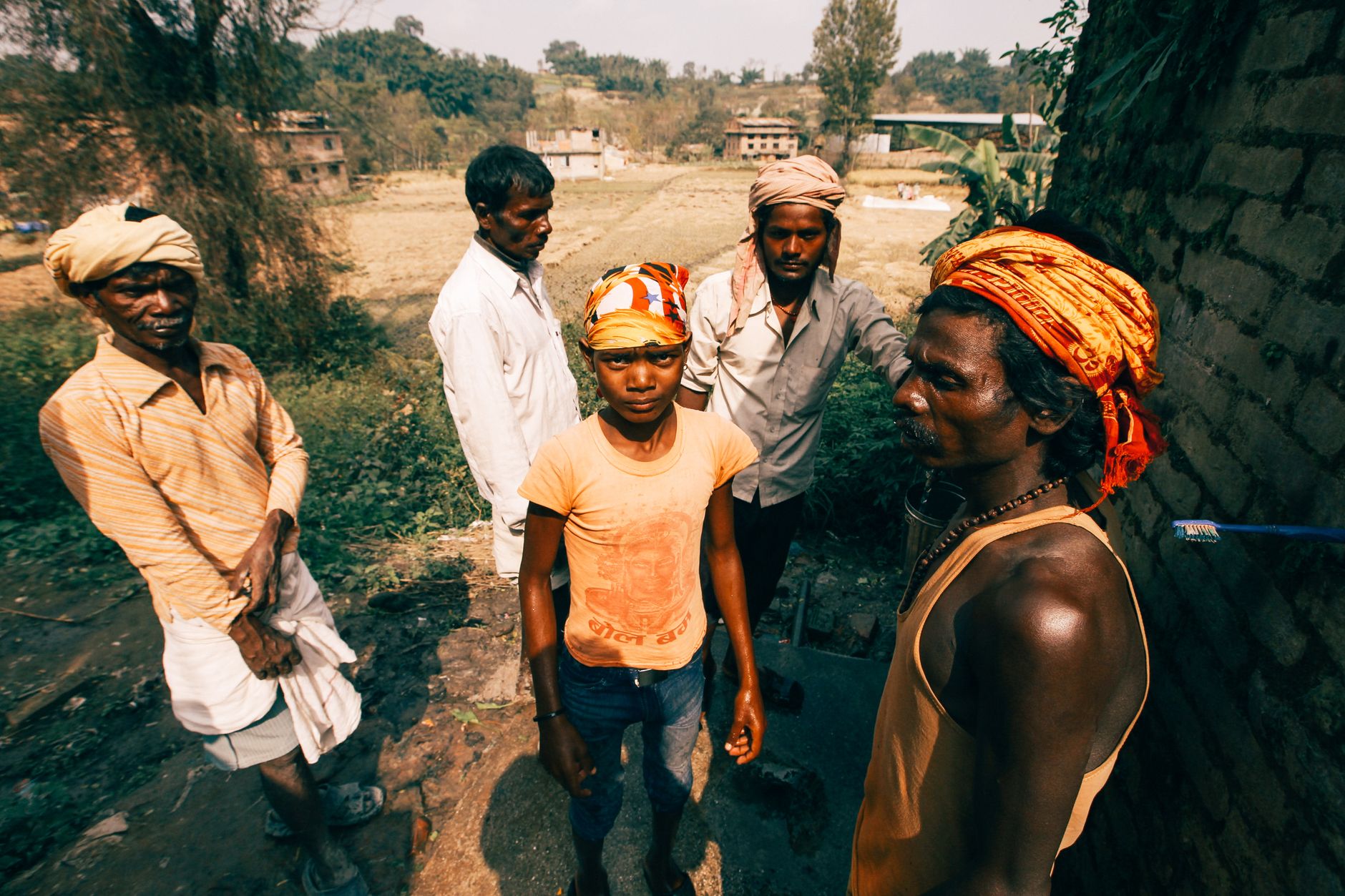
<h1>The Invisible Workforce: A Deep Dive into the Plight and Peril of Migrant Workers in Jammu & Kashmir's Conflict Zone</h1>
<p>In the mist-shrouded valleys of Kulgam district, a group of construction workers—many of them young men from the distant plains of Uttar Pradesh and Bihar—were gunned down in a brazen attack that sent shockwaves across the region. The victims, some barely out of their teens, had traveled hundreds of kilometers seeking a livelihood in one of India’s most volatile territories. Their deaths were not just another headline; they were a stark reminder of an invisible workforce that toils in the shadows of conflict, building infrastructure by day while living under the constant threat of violence by night.</p>
<p>This is the story of <b>migrant workers in Jammu & Kashmir</b>—a community caught between economic necessity and existential danger. They are the backbone of the region’s growth, yet they remain among its most vulnerable residents. As insurgency and terrorism continue to <a href="/article/beyond-the-headlines-a-comprehensive-guide-to-india-s-dowry-death-laws-high-profile-cases-and-how-th" title="Beyond the Headlines: A Comprehensive Guide to India’s Dowry Death Laws, High‑Profile Cases, and How They Shape Society" class="internal-link">shape</a> the security landscape, these laborers face a dual tragedy: they are indispensable to the local economy, but their presence often makes them targets.</p>
<figure class="my-8 overflow-hidden rounded-3xl shadow-xl">
<img src="https://s.yimg.com/lo/mysterio/api/146a0356f9c89203a8bc53868dfa8e294a0a73f9e485b305300e9291e8a8ae7c/lightyear_networkapi/resizefill_w866_h488;quality_80;format_webp/https:%2F%2Fmedia.zenfs.com%2Fen%2Fbbc_us_articles_995%2Fceadcd74e9f74f9062c889c8317c27e2" alt="Jammu and Kashmir" class="w-full h-[400px] object-cover" />
</figure>
Advertisement
Loading partner content...
<h2>Historical Context: Why Workers Came to the Valley</h2>
<p>The roots of labor migration to Jammu & Kashmir trace back to the early 20th century, when the princely state began attracting laborers for road construction projects and apple orchard development. However, it was during the post-independence era—particularly after the outbreak of militancy in the late 1980s—that the demand for cheap, mobile labor surged. With local populations reluctant to engage in certain jobs due to safety concerns, outsiders filled the gap.</p>
<ul>
<li><b>Construction Industry:</b> From roads to bridges, migrant workers have been instrumental in shaping J&K’s infrastructural growth.</li>
<li><b>Agriculture & Horticulture:</b> Apple orchards and saffron fields rely heavily on seasonal labor from states like West Bengal, Assam, and Odisha.</li>
<li><b>Textiles & Handicrafts:</b> Traditional artisans and factory hands alike depend on migrant support systems to meet global demand.</li>
</ul>
<p>Over time, entire villages in Bihar and Eastern UP became dependent on remittances from family members working in the Valley. Entire economies shifted as men left home in search of work, creating a diaspora within the nation itself.</p>
<h3>A Demographic Shift Over Decades</h3>
Advertisement
Loading partner content...
<p>By the 1990s, with the rise of armed insurgency, the demographic profile of migrants changed dramatically. While earlier waves were primarily skilled craftsmen or contractors, later arrivals were predominantly unskilled laborers—more exposed, less protected, and easier targets.</p>
<blockquote>"We came here because there was no work back home. But every morning feels like rolling the dice—will today be the day we get killed?"<br>—Anonymous laborer from Siwan, Bihar</blockquote>
<h2>The Economic Lifeline vs. The Security Threat</h2>
<p>Migrant workers form the invisible engine of J&K’s economy. Without them, critical infrastructure projects would stall, agricultural output would decline, and tourism—the lifeline of many districts—would suffer. Yet, their very visibility as outsiders renders them politically and <a href="/article/social-norms-and-behavioral-change-how-culture-shapes-our-daily-choices-in-india" title="Social Norms and Behavioral Change: How Culture Shapes Our Daily Choices in India" class="internal-link">social</a>ly precarious.</p>
<table border="1" cellpadding="10" cellspacing="0">
<tr>
<th>Sector</th>
<th>Dependency on Migrant Labor (%)</th>
<th>Primary Source States</th>
</tr>
<tr>
<td>Construction</td>
<td>70%</td>
<td>Bihar, UP, Rajasthan</td>
</tr>
<tr>
<td>Agriculture</td>
<td>45%</td>
<td>West Bengal, Odisha, Assam</td>
</tr>
<tr>
<td>Handicrafts</td>
<td>30%</td>
<td>UP, Bihar, Haryana</td>
</tr>
</table>
Advertisement
Loading partner content...
<p><b>The paradox is clear:</b> these workers are essential yet expendable. They contribute to the region’s prosperity without reaping its benefits. Their presence fuels resentment among some locals who see them as competitors, while simultaneously making them targets for militant groups who view them as symbols of state occupation.</p>
<h3>Targeted Violence and Psychological Warfare</h3>
<p>Cross-border terrorism has increasingly targeted non-local civilians, especially laborers, in attempts to destabilize the region’s economy and create communal tension. Attacks are often carried out in remote areas where response times are slow, leaving victims isolated and helpless.</p>
<ol>
<li>Abduction and forced recruitment attempts</li>
<li>Selective targeting based on religion or caste identity</li>
<li>Use <a href="/article/unlocking-the-power-of-social-media-marketing-tactics" title="Unlocking the Power of Social Media Marketing Tactics" class="internal-link">of social media</a> to spread fear and intimidate families back home</li>
</ol>
<p>Beyond physical harm, the psychological toll cannot be understated. Many workers live in constant fear, unable to return home even during festivals or emergencies due to threats or curfews.</p>
Advertisement
Loading partner content...
<h2>The Human Cost: Trauma, Displacement, and Survival</h2>
<p>For millions of migrant workers, life in J&K is marked by anxiety, uncertainty, and trauma. Those who survive attacks often carry invisible scars—depression, PTSD, and survivor guilt that go untreated due to stigma and lack of mental health resources.</p>
<figure class="my-8 overflow-hidden rounded-3xl shadow-xl">
<img src="https://images.pexels.com/photos/33539406/pexels-photo-33539406.jpeg?auto=compress&cs=tinysrgb&dpr=2&h=650&w=940" alt="migrant worker stress" class="w-full h-[400px] object-cover" />
</figure>
<p><b>Displacement isn’t always geographic:</b> it can also mean emotional alienation. These workers are strangers in a land they help build, welcomed only when needed and forgotten otherwise.</p>
<ul>
<li>Families torn apart by long-term separation</li>
<li>Lack of access to healthcare and education for children</li>
<li>Limited legal recourse in cases of injury or exploitation</li>
</ul>
Advertisement
Loading partner content...
<p>Women, though fewer in number, face additional vulnerabilities—including sexual harassment, domestic abuse, and lack of safe housing. Children accompanying parents often drop out of school entirely, perpetuating cycles of poverty and illiteracy.</p>
<h3>Loss of Livelihood During Unrest</h3>
<p>During periods of heightened tension or shutdowns, work comes to a standstill. Wages dry up, food becomes scarce, and shelter conditions deteriorate. Without formal contracts or insurance, these workers bear the brunt of political instability.</p>
<blockquote>"When curfew was imposed last year, we hadn’t eaten properly for three days. No work, no money, nowhere to go."<br>—Daily wage laborer from Gonda, UP</blockquote>
<h2>Governmental & Institutional Responses</h2>
Advertisement
Loading partner content...
<p>The government has introduced several measures aimed at protecting migrant workers, including:</p>
<ul>
<li><b>National Career Service (NCS):</b> Job fairs and skill development programs tailored for J&K-bound laborers</li>
<li><b>Security Escort Schemes:</b> Deployment of paramilitary forces near labor camps</li>
<li><b>Rehabilitation Packages:</b> Financial aid and relocation support post-attack incidents</li>
</ul>
<p>However, implementation remains inconsistent. Corruption, bureaucratic delays, and inadequate coordination between central and state agencies often render these initiatives ineffective.</p>
<h3>Challenges in Policing a Transient Population</h3>
<p>Tracking and securing a workforce that moves frequently poses significant logistical challenges. Many laborers lack proper documentation, making it difficult to monitor movements or provide timely assistance during crises.</p>
Advertisement
Loading partner content...
<p><b>Moreover,</b> policing efforts are frequently reactive rather than preventive. Intelligence gathering lags behind real-time threats, and communication breakdowns between field operatives and headquarters exacerbate vulnerabilities.</p>
<h2>The Future of Labor in a Conflict Zone</h2>
<p>As geopolitical tensions evolve and newer forms of insurgency emerge, the future of migrant labor in J&K remains uncertain. Changing patterns of conflict—including cyber warfare, drone surveillance, and hybrid tactics—<a href="/article/india-s-60-b-russian-oil-pivot-how-us-tariff-threats-are-reshaping-global-energy-politics-and-what-i" title="India’s $60 B Russian Oil Pivot: How US Tariff Threats Are Reshaping Global Energy Politics and What It Means for India’s Energy Future" class="internal-link">are reshaping</a> both risk profiles and mitigation strategies.</p>
<figure class="my-8 overflow-hidden rounded-3xl shadow-xl">
<img src="https://www.aljazeera.com/wp-content/uploads/2026/07/14136917-1784843093.jpg?resize=1920%2C1440" alt="Jammu and Kashmir future" class="w-full h-[400px] object-cover" />
</figure>
<p><b>Economic shifts may offer new opportunities:</b> With increased investment in tourism infrastructure and digital connectivity, sectors beyond traditional construction might absorb more labor. However, this also introduces fresh risks—including exposure to online radicalization and surveillance.</p>
Advertisement
Loading partner content...
<h3>Potential Solutions and Policy Reforms</h3>
<p>To protect this invisible workforce, experts recommend:</p>
<ol>
<li><b>Formalization of Employment Contracts:</b> Mandatory registration and verification through biometric ID systems</li>
<li><b>Enhanced Security Protocols:</b> Real-time alert mechanisms using mobile apps and satellite tracking</li>
<li><b>Mental Health Support Systems:</b> On-site counselors and telemedicine services for trauma care</li>
<li><b>Social Integration Programs:</b> Language training, cultural orientation, and grievance redressal forums</li>
</ol>
<p><b>Ultimately,</b> ensuring the safety and dignity of migrant workers requires not just policy reform but a fundamental shift in how society perceives and values their contribution.</p>
<h2>Conclusion: Honoring the Invisible Builders</h2>
Advertisement
Loading partner content...
<p>The tragic deaths in Kulgam are symptomatic of a larger crisis—one that reflects the intersection of poverty, politics, and peril in conflict zones. These workers are not statistics; they are fathers, sons, dreamers whose sweat and sacrifice lay the foundation for progress in one of India’s most challenging regions.</p>
<p><b>It is time we recognize them not merely as laborers, but as heroes whose invisible hands shape visible change—and whose voices deserve to be heard in the corridors of power.</b></p>
<p>Only then can we begin to address the systemic neglect that continues to place them at risk, and work toward a future where dignity walks hand-in-hand with development.</p>
<figure class="my-8 overflow-hidden rounded-3xl shadow-xl">
<img src="https://live-production.wcms.abc-cdn.net.au/1d7b530ae03fcc20ee649610ef26d021?impolicy=wcms_watermark_news&cropH=2160&cropW=3840&xPos=0&yPos=0&width=862&height=485&imformat=generic" alt="migrant worker memorial" class="w-full h-[400px] object-cover" />
</figure></b></b></b></b></i></i></i></i>