
<h1>The Mediterranean Gateway: <a href="/article/why-jharkhand-students-are-protesting-a-deep-dive-into-education-rights-government-response-and-the-" title="Why Jharkhand Students Are Protesting: A Deep Dive into Education Rights, Government Response, and the Role of Public Figures like Rahul Gandhi" class="internal-link">A Deep Dive into</a> the Spain-Morocco Migration Crisis <a href="/article/how-the-blanket-telegram-ban-is-reshaping-social-media-legal-battles-user-impact-and-the-future-of-m" title="How the Blanket Telegram Ban is Reshaping Social Media: Legal Battles, User Impact, and the Future of Messaging Apps" class="internal-link">and the</a> Geopolitics of Borders</h1>
<p>In 2026, the Mediterranean has <a href="/article/debt-management-techniques-to-become-debt-free" title="Debt Management Techniques to Become Debt-Free" class="internal-link">become</a> a stark symbol of human desperation and <a href="/article/navigating-geopolitical-tensions-a-strategic-response-to-israeli-criticism" title="Navigating Geopolitical Tensions: A Strategic Response to Israeli Criticism" class="internal-link">geopolitical</a> tension. The Spain-Morocco migration crisis, a decades-old phenomenon, has escalated into a complex emergency, claiming lives, straining resources, and reshaping diplomatic relations. While the immediate focus often centers on the harrowing journeys of migrants crossing the Strait of Gibraltar, the underlying causes and consequences are far more intricate. This article explores the systemic factors driving the crisis, the geopolitical stakes, and the human stories that define it.</p>
<p>By examining the interplay of geography, economics, and <a href="/article/unlocking-the-power-of-social-media-marketing-tactics" title="Unlocking the Power of Social Media Marketing Tactics" class="internal-link">power</a>, we uncover how a seemingly localized issue has become a global challenge.</p>
<h2>The Geography of Migration: The Strait of Gibraltar and the Ceuta-Melilla Enclaves</h2>
<p>The Strait of Gibraltar, a narrow 14.3-kilometer waterway separating Spain and Morocco, is the most common route for migrants seeking entry into Europe. Its strategic location makes it a chokepoint, where thousands attempt to cross each year. The strait’s geography is both a barrier and a magnet: it is narrow enough to be crossed by boats but treacherous due to strong currents and limited visibility. For many, the alternative routes—overland through the Sahara or by sea from other parts of Africa—are even more perilous.</p>
Advertisement
Loading partner content...
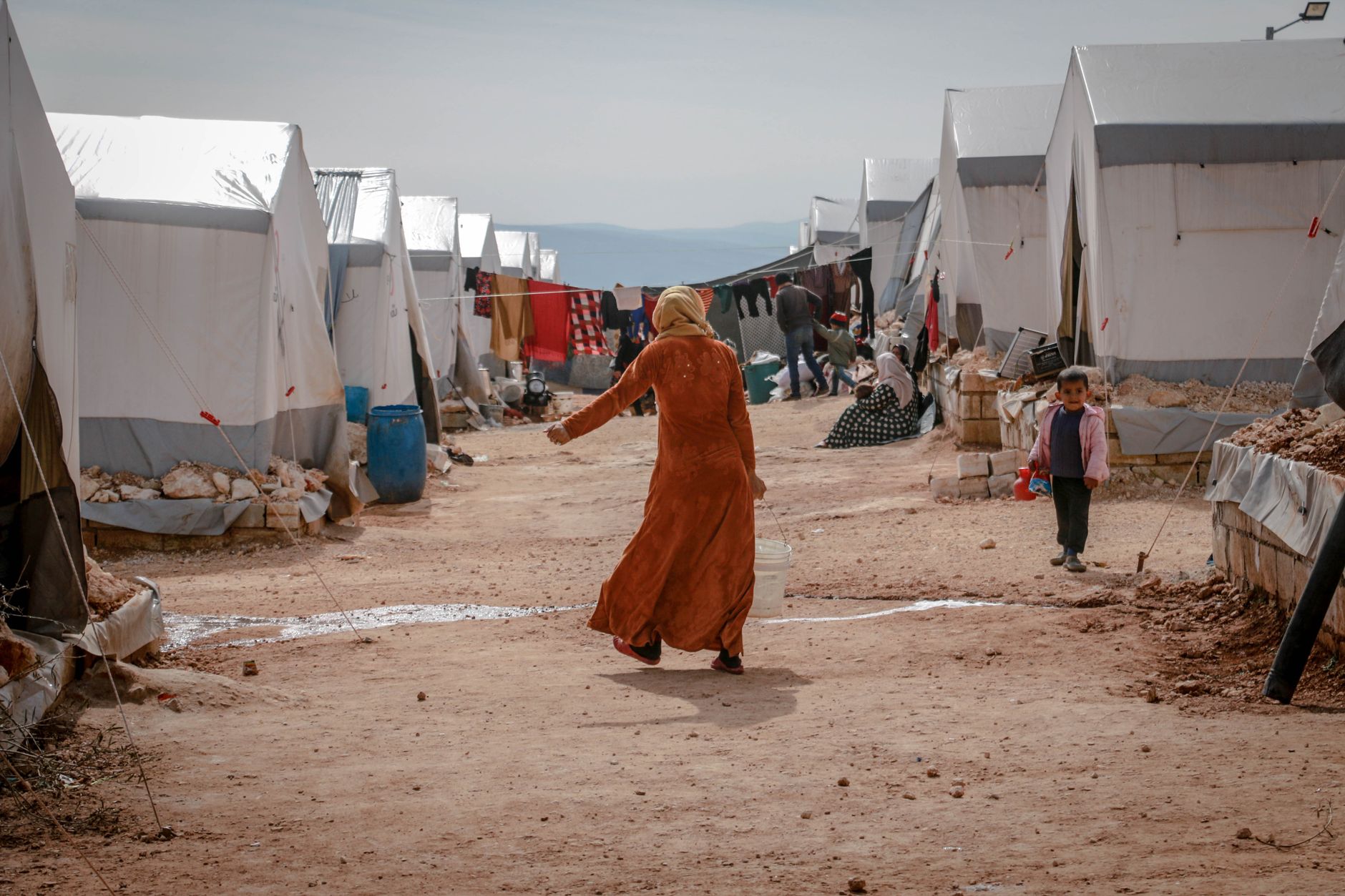
<p><b>The enclaves of Ceuta and Melilla are critical nodes in this network.</b> These two Spanish territories, located in North Africa, serve as checkpoints and temporary shelters for migrants. Ceuta, a city on the Atlantic coast, and Melilla, a coastal town near the Strait, are the first points of contact for many migrants arriving from Morocco. Their status as Spanish territories means that migrants who reach them are technically in Spain, even if they are still in Morocco. This creates a unique legal and logistical challenge, as Spain must manage the flow of people while respecting Morocco’s sovereignty over its coastline.</p>
<p>Melilla, in particular, has become a focal point of the crisis. In 2026, over 12,000 migrants were processed in Melilla alone, with many attempting to cross the border into Spain. 5 square kilometers—highlights the strain on local resources. Migrants often congregate in makeshift camps, facing overcrowding, limited access to healthcare, and bureaucratic delays.</p>
<p>The <b>Ceuta border crisis</b> has intensified in recent years, with reports of migrants being detained for weeks or even months before being transferred to Spain.</p>
<p>To better understand the scale of this issue, consider the following table comparing the two enclaves:</p>
Advertisement
Loading partner content...
<table border="1">
<tr>
<th>Enclave</th>
<th>Population</th>
<th>Migrant Arrivals (2026)</th>
<th>Key Challenges</th>
</tr>
<tr>
<td>Ceuta</td>
<td>80,000</td>
<td>9,500</td>
<td>Overcrowding, limited infrastructure</td>
</tr>
<tr>
<td>Melilla</td>
<td>100,000</td>
<td>12,000</td>
<td>Bureaucratic delays, healthcare shortages</td>
</tr>
</table>
<p>These enclaves are not just physical spaces; they are symbols of the fragile balance between migration control and humanitarian responsibility. Their strategic importance has led to increased security measures, including the deployment of Frontex and the Spanish Guardia Civil.</p>
<h2>The 'Push' and 'Pull' Factors: Socio-Economic Forces Driving Migration</h2>
<p>The Spain-Morocco migration crisis is rooted in a combination of push and pull factors. Push factors refer to the conditions in the migrants’ home countries that drive them to leave, while pull factors are the attractions of Spain and the EU that lure them. In 2026, these factors have become more pronounced due to regional instability and economic shifts.</p>
<p><b>In North and Sub-Saharan Africa, poverty, conflict, and climate change are major push factors.</b> Countries like Niger, Nigeria, and Somalia face severe food insecurity, exacerbated by droughts and desertification. For example, the Sahel region has seen a 20% increase in climate-related displacement since 2020. In Morocco, while the country is more stable than its neighbors, economic disparities and limited job opportunities push many Moroccans to seek better prospects in Spain. Additionally, the <b>geopolitical instability</b> in neighboring countries—such as the ongoing conflicts in Mali and Burkina Faso—has forced millions to flee northward.</p>
Advertisement
Loading partner content...
<p>On the other side of the Mediterranean, <b>economic stability and political safety</b> in Spain and the EU act as powerful pull factors. Spain’s relative economic resilience, coupled with the EU’s free movement policy, makes it an attractive destination. Migrants often hear stories of employment opportunities, especially in sectors like construction and agriculture. However, the reality is often harsher: many migrants face low wages, exploitation, and limited access to social services.</p>
<p>It is also important to note that the migration wave is not uniform. <b>Sub-Saharan Africans</b> tend to arrive via Morocco, while North Africans, including Moroccans themselves, may cross directly. This diversity complicates the crisis, as different groups have varying needs and vulnerabilities. For instance, a migrant from Senegal may have different legal rights compared to a Moroccan national.</p>
<h2>The Geopolitical Tug-of-War: Migration as a Diplomatic Tool</h2>
<p>The Spain-Morocco migration crisis is not just a humanitarian issue; it is a geopolitical battleground. Both countries use migration management as a tool to assert influence and shape regional dynamics. In 2026, this dynamic has intensified as Spain seeks to balance its EU obligations with its relationship with Morocco.</p>
Advertisement
Loading partner content...
<p><b>Morocco has leveraged migration control to strengthen its position in the region.</b> By restricting the flow of migrants, Morocco aims to pressure Spain into adopting stricter border policies. This includes deploying additional security forces along the border and imposing penalties on individuals who attempt to cross illegally. Morocco’s approach is often framed as a matter of sovereignty, but it also serves to limit the number of migrants reaching Spain, which could strain Spanish resources.</p>
<p>Meanwhile, <b>Spain uses migration as a diplomatic lever</b> to maintain its influence in North Africa. The Spanish government has invested heavily in joint operations with Morocco, including the deployment of Frontex and the Spanish Guardia Civil. These efforts are not just about security; they are also about projecting power. By demonstrating a commitment to border control, Spain aims to reassure EU allies and counter narratives that portray it as lenient on migration.</p>
<p>The EU’s role in this geopolitical game is significant. As a member of the Schengen Area, Spain is bound by EU migration policies, which require cooperation with neighboring countries. However, the EU’s fragmented approach to migration—with some member states adopting stricter measures than others—creates friction. In 2026, this has led to tensions between Spain and other EU nations over how to allocate resources for border security.</p>
Advertisement
Loading partner content...
<h2>The Role of Border Security: Frontex, Guardia Civil, and Military Deployment</h2>
<p>Border security is a cornerstone of the Spain-Morocco migration crisis. In 2026, the Spanish government has deployed a combination of civil and military forces to manage the flow of migrants. This includes the use of Frontex, the EU’s border agency, and the Spanish Guardia Civil, which operates on the ground.</p>
<p><b>Frontex has expanded its role in the Mediterranean.</b> In 2026, the agency has increased its presence along the Spanish-Moroccan border, conducting joint patrols and coordinating with local authorities. Frontex’s mandate includes monitoring migration routes, rescuing migrants at sea, and assisting in border control. However, its effectiveness is often limited by political constraints and the sheer scale of the crisis.</p>
<p>The <b>Spanish Guardia Civil</b> plays a critical role in daily operations. Equipped with advanced technology such as drones and surveillance systems, the Guardia Civil monitors the border and responds to migrant attempts. However, the agency’s resources are stretched thin. In 2026, reports indicate that the Guardia Civil has had to prioritize certain areas, leading to gaps in coverage along less populated stretches of the border.</p>
Advertisement
Loading partner content...
<p>Military deployment has also become a feature of the crisis. The Spanish Army has been called upon to assist in border security, particularly in areas where civilian forces are overwhelmed. While this provides a temporary boost to security, it raises concerns about the militarization of the border and the potential for human rights abuses. Critics argue that the use of military force can deter migrants from seeking help, exacerbating the crisis.</p>
<h2>Humanitarian and Legal Perspectives: Asylum and Human Rights</h2>
<p>The Spain-Morocco migration crisis raises profound humanitarian and legal questions. International law, particularly the 1951 Refugee Convention, guarantees the right to seek asylum. However, the reality on the ground often falls short of these principles.</p>
<p><b>Many migrants face barriers to accessing asylum procedures.</b> In 2026, reports indicate that over 30% of migrants arriving in Spain are denied entry or are deported without proper legal recourse. This is often due to the complexity of the asylum process, which requires documentation and legal representation that many migrants lack. Additionally, the <b>ceuta border crisis</b> has led to prolonged detentions, with some migrants held for months in overcrowded facilities.</p>
Advertisement
Loading partner content...
<p>Human rights organizations have condemned the treatment of migrants by both Spain and Morocco. The <b>geopolitical impact of migration</b> is evident in the way border enforcement is used to marginalize vulnerable populations. For example, pushbacks—where migrants are forced to return to Morocco without being processed—have been criticized as violations of international law. These actions not only endanger lives but also undermine the credibility of Spain and Morocco as responsible actors in the region.</p>
<p>Legal experts argue that the crisis highlights the need for a more humane approach to border management. This includes expanding legal pathways for migration, such as asylum centers in Morocco or Spain, and improving the efficiency of asylum procedures. However, political sensitivities often prevent such measures from being implemented.</p>
<h2>Future Outlook: Climate Change and Regional Instability</h2>
<p>The Spain-Morocco migration crisis is unlikely to resolve itself in the near future. In fact, <b>changing climate patterns</b> and regional</p>