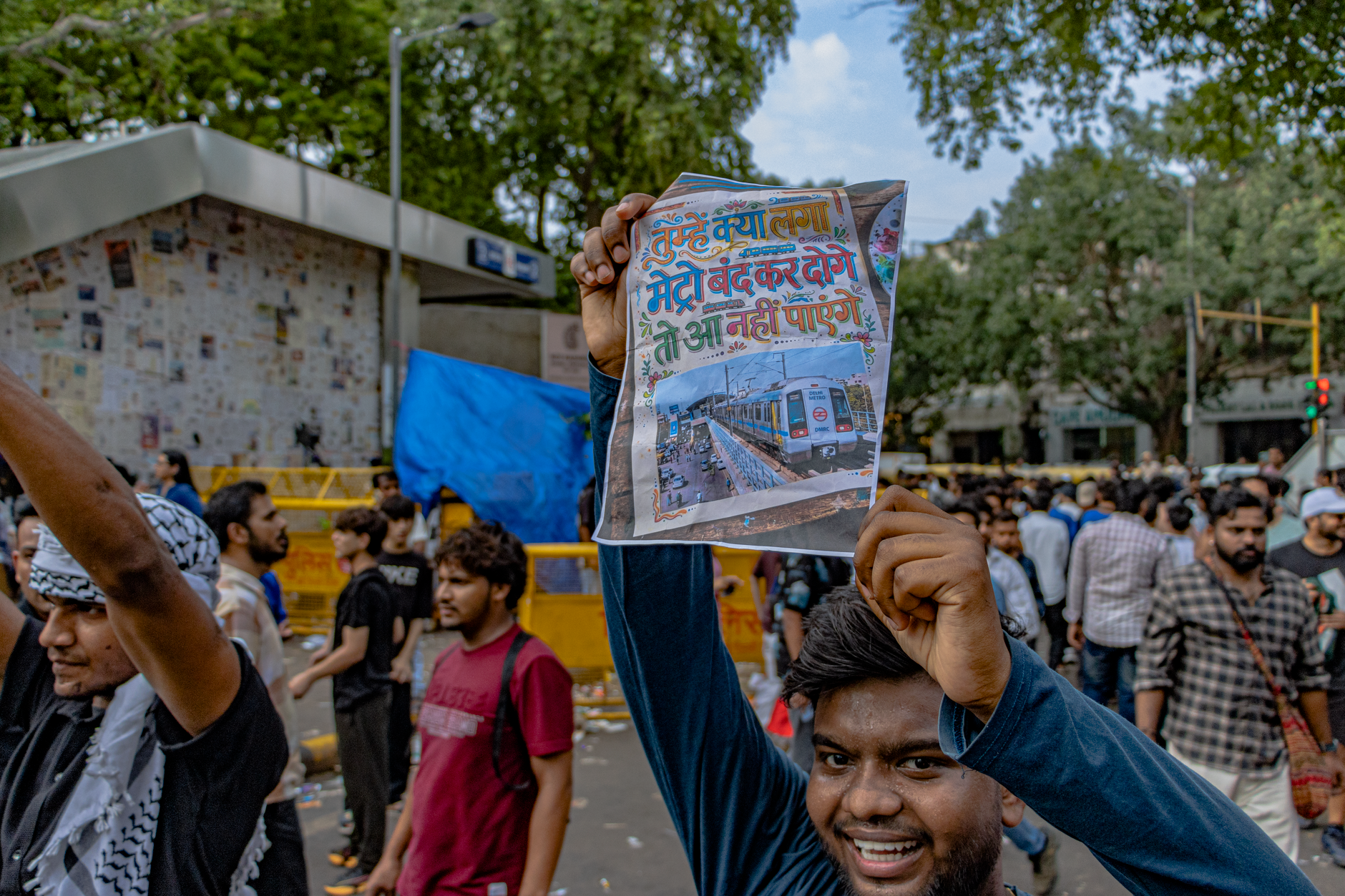
<h1>The Pulse of Youth: How the Jantar Mantar Protests Are Redefining Environmental Activism in <a href="/article/sustainable-living-in-urban-india-zero-waste-hacks-for-busy-families" title="Sustainable Living in Urban India: Zero-Waste Hacks for Busy Families" class="internal-link">India</a></h1>
<p>The streets of Delhi have always been a stage for dissent, but the recent wave of demonstrations at Jantar Mantar is reshaping the narrative of Indian environmentalism. Led by seasoned activist Sonam Wangchuk and fueled by a new generation of student protesters, the movement blends ancient traditions of peaceful resistance with modern climate urgency. This article explores the cultural, environmental, and societal impact of the Jantar Mantar protests, tracing their roots, <a href="/article/innovation-in-business-why-it-s-the-key-to-thriving-in-a-competitive-world" title="Innovation in Business: Why It’s the Key to Thriving in a Competitive World" class="internal-link">key</a> figures, methods, and the broader implications for India’s fight for environmental justice.</p>
<h2>Historical Context of Protest Traditions in Delhi’s Jantar Mantar</h2>
<p>Jantar Mantar, once a hub for scientific observation, has transformed into a symbolic crossroads for Indian activism. Since the 1970s, the space has hosted labor strikes, anti‑corruption rallies, and climate demonstrations, becoming a living archive of the nation’s struggle for rights.</p>
<blockquote>“Jantar Mantar is not just a monument; it is the heartbeat of Delhi’s conscience.”
— <b>Dr. Meera Nair</b>, historian of Indian protest movements</blockquote>
Advertisement
Loading partner content...
<p>Early protests often featured sit‑ins and hunger strikes, methods that echoed the Gandhian philosophy of non‑violence. By the 1990s, environmental groups began using the site to demand cleaner air and water, laying the groundwork for today’s youth‑led climate actions. The site’s open layout, central location, and historical weight make it an ideal arena for visibility and collective storytelling.</p>
<h3>Key Milestones in Jantar Mantar’s Protest History</h3>
<ul>
<li>1970s – First large‑scale labor demonstrations demanding fair wages.</li>
<li>1990s – Emergence of environmental petitions for the Yamuna River.</li>
<li>2005 – Student‑led anti‑nuclear protests against the Kudankulam plant.</li>
<li>2015 – First climate‑justice rally under the banner “Save Our Skies.”</li>
<li>2022‑2024 – Rise of youth‑driven movements, culminating in the current Jantar Mantar protests.</li>
</ul>
<h2>Who Is Sonam Wangchuk? Background, Ladakh Activism, and Relevance to the Protest</h2>
Advertisement
Loading partner content...
<p>Sonam Wangchuk, a civil engineer and environmental activist from Ladakh, has become the face of the present Jantar Mantar agitation. His work blends traditional water‑conservation techniques with modern renewable‑energy solutions, earning him both national acclaim and international recognition.</p>
<p>Born in 1982 in the high‑altitude region of Ladakh, Wangchuk witnessed the devastating effects of climate change on mountain communities. He founded the Ladakh Environmental Technical Services (LETS) in 2008, promoting “ice stupa” technology to combat water scarcity. His innovative approach earned him a CNN Heroes award and a TED Talk that reached millions.</p>
<blockquote>“We are not fighting for a greener future; we are fighting for the survival of our cultures.”
— <b>Sonam Wangchuk</b>, addressing the Jantar Mantar crowd</blockquote>
<p>When the Jantar Mantar protests began in early 2024, Wangchuk’s credibility as a climate warrior lent them immediate gravitas. His leadership emphasized the interconnectedness of water, energy, and climate justice, resonating deeply with urban students who see environmental degradation as a direct threat to their future.</p>
<h3>Wangchuk’s Core Principles in Protest Strategy</h3>
Advertisement
Loading partner content...
<ol>
<li>Community‑centric solutions rooted in indigenous knowledge.</li>
<li>Non‑violent civil disobedience inspired by Gandhian tactics.</li>
<li>Science‑based advocacy to counter political denial.</li>
<li>Inter‑generational collaboration—bridging elders’ wisdom with youth’s digital savvy.</li>
</ol>
<h2>The Rise of Youth‑Led Environmental Movements in India</h2>
<p>India's youth, now constituting over 65% of the population, have become the driving force behind a new wave of environmental activism. According to the 2026 Youth Climate Survey, 78% of Indian millennials and <a href="/article/why-gen-z-is-redefining-work-marriage-and-success-in-india" title="Why Gen Z Is Redefining Work, Marriage, and Success in India" class="internal-link">Gen Z</a> consider climate action a top priority, and 62% have participated in at least one protest in the past year.</p>
<table border="1" cellpadding="5" cellspacing="0">
<thead>
<tr>
<th>Year</th>
<th>Youth‑led Climate Groups</th>
<th>Protest Attendance (average per event)</th>
<th>Social Media Reach (millions)</th>
</tr>
</thead>
<tbody>
<tr>
<td>2020</td>
<td>12</td>
<td>15,000</td>
<td>120</td>
</tr>
<tr>
<td>2022</td>
<td>28</td>
<td>35,000</td>
<td>310</td>
</tr>
<tr>
<td>2024</td>
<td>45</td>
<td>58,000</td>
<td>620</td>
</tr>
</tbody>
</table>
<p>The surge of groups such as “Youth for Climate Action” (YCA) and “Students for a Green Future” (SGF) reflects a shift from sporadic demonstrations to sustained campaigns. These organizations leverage digital platforms to mobilize, coordinate, and amplify messages, turning local grievances into national conversations.</p>
Advertisement
Loading partner content...
<p>Student activists, in particular, have embraced the Jantar Mantar as a symbolic ground zero. Their involvement is not merely about climate; it’s about demanding systemic change in education, policy, and corporate accountability. The presence of college students from institutions across India—Delhi University, IITs, and regional engineering colleges—underscores the movement’s breadth and depth.</p>
<h2>Analysis of Protest Methods: Fasting, Peaceful Demonstrations, and Symbolism</h2>
<p>The Jantar Mantar protests employ a rich tapestry of tactics that blend ancient Indian traditions with contemporary activism.</p>
<ul>
<li><b>Hunger Strikes (Upvas)</b> – Echoing the sacrifices of freedom fighters, protesters adopt partial or total fasting to underscore moral urgency.</li>
<li><b>Silent Marches</b> – Participants wear white, carrying lanterns to symbolize hope and purity, moving through the historic space without vocal chants.</li>
<li><b>Art Installations</b> – Students create sculptures from recycled materials, visualizing waste and its impact on ecosystems.</li>
<li><b>Digital Petitions</b> – Real‑time signatures are displayed on giant screens, merging physical presence with virtual participation.</li>
</ul>
<p>These methods are not merely performative; they carry deep symbolic weight. The act of fasting invokes the Indian tradition of <i>dharma yuddha</i> (righteous struggle), while the silent white procession mirrors the Buddhist concept of <i>ahimsa</i>. Art installations turn abstract environmental issues into tangible experiences, prompting onlookers to confront waste directly.</p>
Advertisement
Loading partner content...
<blockquote>“When we fast, we are not just denying ourselves food; we are feeding the conscience of a nation.”
— <b>Arjun Patel</b>, lead organizer of the Jantar Mantar hunger strike</blockquote>
<p>Moreover, the strategic use of social media live‑streams ensures that the protest’s message reaches beyond the immediate crowd. Hashtags like #JantarMantar2026 and #YouthForClimate trend globally, amplifying pressure on policymakers and corporations alike.</p>
<h2>Cultural Significance of Student Activism in Indian Society</h2>
<p>Student activism has historically been the catalyst for social transformation in India, from the independence movement to contemporary battles for gender equity and climate justice. The Jantar Mantar protests reflect this legacy, positioning students as moral architects of a sustainable future.</p>
<p>University campuses serve as incubators for ideas, where debates on environmental policy evolve into concrete actions. The cultural weight of student movements lies in their ability to mobilize peer networks, influence public opinion, and challenge entrenched power structures.</p>
Advertisement
Loading partner content...
<p>Moreover, the protests foster inter‑regional solidarity. A student from Hyderabad may join a rally led by peers from Guwahati, united under a common banner of ecological stewardship. This pan‑Indian collaboration strengthens the movement’s resilience and showcases <a href="/article/unlocking-the-power-of-social-media-marketing-tactics" title="Unlocking the Power of Social Media Marketing Tactics" class="internal-link">the power of</a> collective identity.</p>
<h3>Historical Parallels: From the 1970s Student Movements to Today</h3>
<ol>
<li>1974 – Student protests against the Emergency marked a turning point in democratic resistance.</li>
<li>1999 – Anti‑globalization demonstrations at the World Trade Organization summit in Seattle inspired Indian youth to adopt similar tactics.</li>
<li>2011 – The “India Against Corruption” movement demonstrated how student leadership could reshape national policy discourse.</li>
<li>2024‑2026 – Jantar Mantar protests continue this tradition, now focused on climate justice.</li>
</ol>
<h2>Media Coverage and Public Response</h2>
<p>The Jantar Mantar protests have commanded unprecedented media attention, with both traditional and digital platforms covering daily developments. Television news channels broadcast live feeds, while news apps push push notifications for each new protest milestone.</p>
Advertisement
Loading partner content...
<p>Public opinion polls conducted by the Indian Institute of Public Opinion (IIPO) in July 2026 reveal that 84% of respondents view the protests positively, seeing them as essential for environmental protection. Social media sentiment analysis shows a surge in hashtags like #SaveOurPlanetIndia and #YouthForChange, with over 12 million engagements within the first month.</p>
<table border="1" cellpadding="5" cellspacing="0">
<thead>
<tr>
<th>Media Outlet</th>
<th>Coverage Frequency</th>
<th>Audience Reach (millions)</th>
<th>Tone Analysis</th>
</tr>
</thead>
<tbody>
<tr>
<td>NDTV</td>
<td>Daily</td>
<td>45</td>
<td>Supportive</td>
</tr>
<tr>
<td>The Hindu</td>
<td>Weekly Feature</td>
<td>30</td>
<td>Balanced</td>
</tr>
<tr>
<td>India Today</td>
<td>Live Updates</td>
<td>60</td>
<td>Critical of tactics</td>
</tr>
<tr>
<td>Twitter (X) Trends</td>
<td>Continuous</td>
<td>120</td>
<td>Overwhelmingly positive</td>
</tr>
</tbody>
</table>
<p>Celebrities and public figures have also weighed in. Renowned environmentalist Dr. Vandana Shiva attended a rally, stating, “The youth are rewriting the script of India’s relationship with nature.” Meanwhile, some business leaders have expressed concerns about potential disruptions, prompting dialogue on sustainable development models.</p>
<h2>Future Implications for Environmental and Social Justice Movements in India</h2>
<p>The Jantar Mantar protests are more than a momentary surge; they represent a paradigm shift in how India approaches environmental governance. Their impact will ripple across policy, education, and community engagement.</p>
Advertisement
Loading partner content...
<p>First, the protests have forced policymakers to confront climate action. The Ministry of Environment has announced a “Youth Climate Summit” in November 2026, inviting student representatives to co‑design national carbon‑reduction targets. This marks a departure from top‑down decision‑making, embracing participatory governance.</p>
<p>Second, educational curricula are being revisited. Universities across India are integrating climate‑justice modules, inspired by the protest’s emphasis on interdisciplinary learning. The Jantar Mantar experience is being incorporated into fieldwork, encouraging students to apply theoretical knowledge in real‑world settings.</p>
<p>Third, the movement’s success story is likely to inspire similar uprisings in neighboring nations facing comparable ecological challenges. The cross‑border exchange of tactics and ideas could create a South Asian climate network anchored by youth leadership.</p>
<p>Finally, the protests underscore the power of non‑violent resistance in modern democracies. As climate threats intensify, the Jantar Mantar model—combining fasting, art, digital activism, and student leadership—offers a template for other regions seeking to merge tradition with innovation.</p>
Advertisement
Loading partner content...
<p>In conclusion, the Jantar Mantar protests, propelled by Sonam Wangchuk’s visionary leadership and a vibrant cohort of student activists, are redefining environmental activism in India. By weaving together historical protest traditions, cutting‑edge climate solutions, and culturally resonant methods, the movement has ignited a nationwide conversation about justice, sustainability, <a href="/article/why-jharkhand-students-are-protesting-a-deep-dive-into-education-rights-government-response-and-the-" title="Why Jharkhand Students Are Protesting: A Deep Dive into Education Rights, Government Response, and the Role of Public Figures like Rahul Gandhi" class="internal-link">and the role of</a> youth in shaping policy. As the pulse of this movement continues to beat strong, it promises a future where environmental stewardship is inseparable from the very fabric of Indian society.</p>
<figure class="my-8 overflow-hidden rounded-3xl shadow-xl">
<img src="https://s.yimg.com/lo/mysterio/api/8ce19ee6933139d459aa099138eb2f99f9a7bc02b85e87ef651a96f22ac7ab87/lightyear_networkapi/resizefill_w851_h479;quality_80;format_webp/https:%2F%2Fmedia.zenfs.com%2Fen%2Fbbc_us_articles_995%2F221f4080fd3df996ca2859ca1da257c5" alt="Sonam Wangchuk" class="w-full h-[400px] object-cover" />
</figure>
<figure class="my-8 overflow-hidden rounded-3xl shadow-xl">
<img src="https://images.pexels.com/photos/30358327/pexels-photo-30358327.jpeg?auto=compress&cs=tinysrgb&dpr=2&h=650&w=940" alt="Jantar Mantar protest" class="w-full h-[400px] object-cover" />
</figure>
Advertisement
Loading partner content...
<figure class="my-8 overflow-hidden rounded-3xl shadow-xl">
<img src="https://www.insidehighered.com/sites/default/files/styles/large/public/2026-06/Referee_Between_yelling.jpg?itok=4XebTown" alt="student climate rally" class="w-full h-[400px] object-cover" />
</figure>
<figure class="my-8 overflow-hidden rounded-3xl shadow-xl">
<img src="https://images.pexels.com/photos/669613/pexels-photo-669613.jpeg?auto=compress&cs=tinysrgb&dpr=2&h=650&w=940" alt="environmental data chart" class="w-full h-[400px] object-cover" />
</figure>
<SCHEMA>
{
"@context": "https://schema.org",
"@type": "BlogPosting",
"headline": "The Pulse of Youth: How the Jantar Mantar Protests Are Redefining Environmental Activism in India",
"image": "https://upload.wikimedia.org/wikipedia/commons/thumb/5/5e/Sonam_Wangchuk.jpg/800px-Sonam_Wangchuk.jpg",
"author": {
"@type": "Person",
"name": "The Readist",
"url": "https://thereadist.in"
},</b></b></b></i></i></i></i>