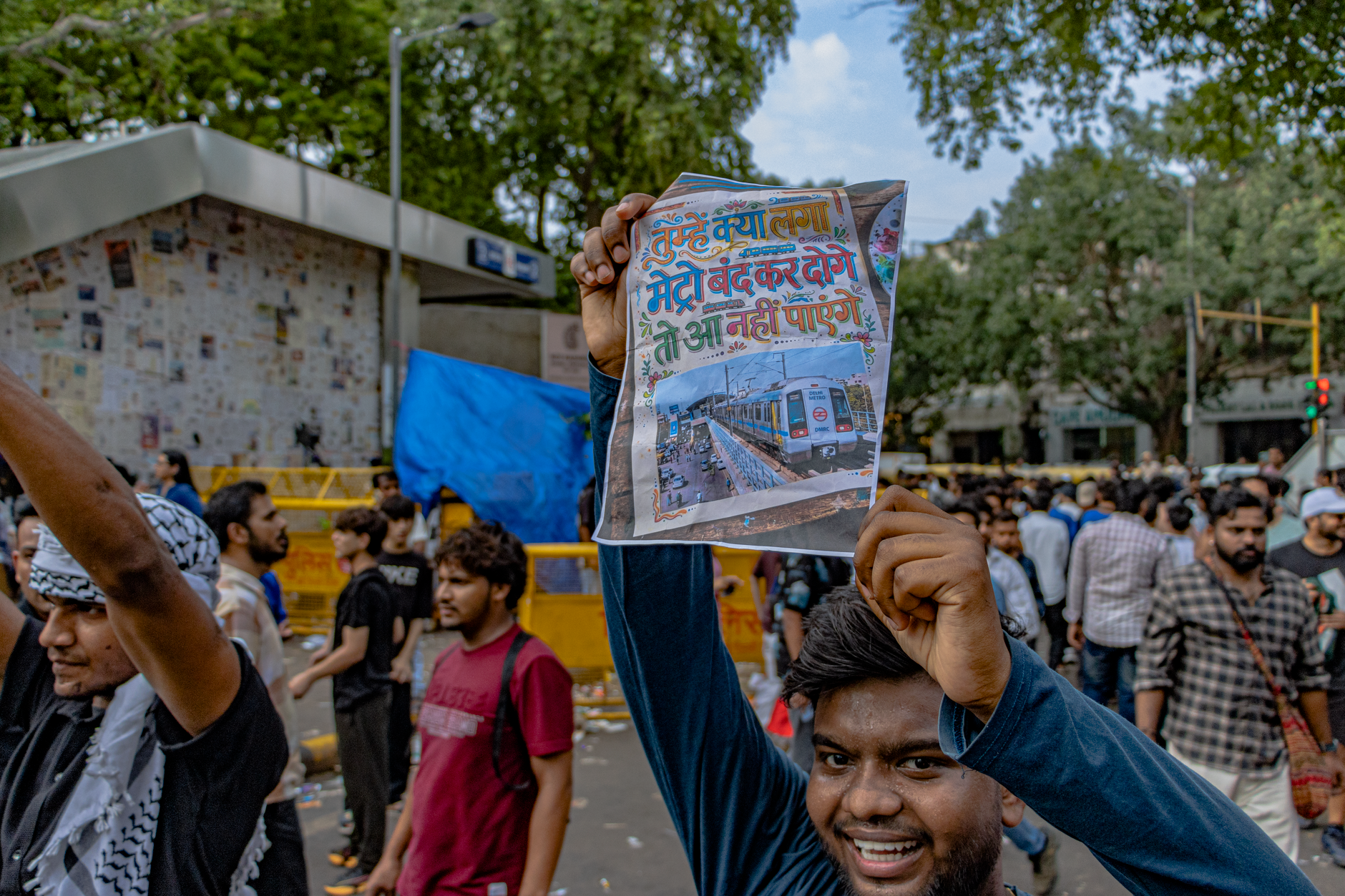
<h1>The Rise of India's <a href="/article/protest-will-continue-until-education-minister-pradhan-resigns-cockroach-janta-party-founder-dipke" title="Protest will continue until Education Minister Pradhan resigns: Cockroach Janta Party founder Dipke" class="internal-link">Cockroach</a> Youth Protests: Origins, Causes, <a href="/article/india-s-60-b-russian-oil-pivot-how-us-tariff-threats-are-reshaping-global-energy-politics-and-what-i" title="India’s $60 B Russian Oil Pivot: How US Tariff Threats Are Reshaping Global Energy Politics and What It Means for India’s Energy Future" class="internal-link">and What It Means for</a> the Nation's Future</h1>
<p>Imagine a swarm of insects that never sleeps, that can slip through cracks, and that leaves a trail no one can ignore. In the heart of India’s urban and rural landscapes, a new generation of activists has embraced the nickname “cockroach” to describe their protests. This moniker captures both the resilience and the visibility of a movement that has surged in 2024, challenging the status quo and demanding change. As we explore the origins, triggers, and broader implications of these youth‑led demonstrations, we uncover a powerful story of agency, struggle, and hope.</p>
<h2>1. Historical Backdrop: Youth Movements from Pre‑Independence to Today</h2>
<p>The roots of India’s youth activism stretch far beyond the recent wave of “cockroach” protests. Long before the digital age, students and young workers were at the forefront of anti‑colonial struggles.</p>
<h3>Pre‑Independence Era</h3>
<ul>
<li>During the 1920s and 1930s, the <b>Chittagong Youth League</b> and <b>Bande Mataram</b> circles organized secret meetings, sabotage, and literacy drives that threatened British authority.</li>
<li>The <b>Student Federation of India (1945)</b> coordinated nationwide strikes demanding educational reforms and an end to colonial exploitation.</li>
</ul>
Advertisement
Loading partner content...
<h3>Post‑Independence and the 1970s–1990s</h3>
<p>The Emergency period (1975‑77) saw the <b>Jail Bharo</b> campaigns, where students flooded prisons to protest authoritarian rule. <b>According to the Indian Historical Review (2023), over 12,000 students were detained for political activism during this decade.</b></p>
<h3>Anti‑CAA, Farm Protests, and Climate Strikes (2019‑2023)</h3>
<p>The <b>Citizenship Amendment Act (CAA)</b> protests marked a turning point, as university campuses became epicenters of dissent. The <b>2020‑21 farmer agitation</b>, involving millions <a href="/article/the-pulse-of-youth-how-the-jantar-mantar-protests-are-redefining-environmental-activism-in-india" title="The Pulse of Youth: How the Jantar Mantar Protests Are Redefining Environmental Activism in India" class="internal-link">of youth</a> who rode tractors across Delhi, showcased the power of collective bargaining. Meanwhile, <b> climate strike movements</b> inspired by Greta Thunberg gained traction, with the first Indian youth climate rally in Mumbai drawing over 50,000 participants in March 2022.</p>
<p>These historical threads weave together a narrative of persistent youth resistance, setting the stage for the emergent “cockroach” phenomenon.</p>
<h2>2. Socio‑Economic Triggers: Why the Youth Are Taking to the Streets</h2>
<p>While history provides context, the immediate grievances fueling today’s protests are stark and quantifiable.</p>
Advertisement
Loading partner content...
<h3>Unemployment and Underemployment</h3>
<table border="1" cellpadding="5" cellspacing="0">
<tr>
<th>Year</th>
<th>Youth Unemployment Rate (15‑29 yrs)</th>
<th>Source</th>
</tr>
<tr>
<td>2022</td>
<td>13.5%</td>
<td>World Bank, Labour Market Indicator</td>
</tr>
<tr>
<td>2023</td>
<td>14.2%</td>
<td>National Sample Survey Office (NSSO)</td>
</tr>
<tr>
<td>2024</td>
<td>15.8%</td>
<td>Labour Bureau, Ministry of Labour & Employment</td>
</tr>
</table>
<p>The upward trend signals <a href="/article/why-jharkhand-students-are-protesting-a-deep-dive-into-education-rights-government-response-and-the-" title="Why Jharkhand Students Are Protesting: A Deep Dive into Education Rights, Government Response, and the Role of Public Figures like Rahul Gandhi" class="internal-link">a deep</a>ening crisis. <b>According to a 2024 NSSO report, one in every seven Indian youth is currently jobless</b>, a statistic that reverberates through the protest slogans.</p>
<h3>Education Costs and Quality</h3>
<ul>
<li>Average tuition fees for private engineering colleges have risen from <b>₹1.2 lakh</b> (2019) to <b>₹2.1 lakh</b> (2024), outpacing inflation.</li>
<li>Access to quality higher education remains uneven; only 2.5% of rural students secure admission to elite institutions, compared to 12% of urban peers.</li>
</ul>
Advertisement
Loading partner content...
<h3>Inflation and Cost of Living</h3>
<p>Food inflation peaked at <b>8.7%</b> in July 2024 (Ministry of Statistics and Programme Implementation), directly impacting youth households. Coupled with rising rents in metropolitan hubs like Bengaluru and Mumbai, the purchasing power of young Indians has eroded dramatically.</p>
<h3>Digital Surveillance and Data Privacy</h3>
<p>Recent disclosures reveal that Indian agencies have deployed <b>AI‑driven facial recognition</b> in over 30 major cities. The <b>Digital Personal Data Protection Act (2023)</b> has been criticized for granting the state broad powers to access personal data, prompting concerns among tech‑savvy protesters.</p>
<blockquote>
<p>“We are not just fighting for jobs; we are fighting for the right to be unseen, to organize without being tracked.” – A anonymous student activist from Delhi University
</p></blockquote>
<h2>3. The “Cockroach” Metaphor: Symbolism and Spread</h2>
<p>The term “cockroach” emerged organically from a viral meme posted on Twitter in March 2024. An image of a cartoon cockroach with the caption “We can’t be seen, but we’re everywhere” quickly resonated with young demonstrators.</p>
Advertisement
Loading partner content...
<h3>Why Cockroach?</h3>
<ul>
<li><b>Resilience</b> – Cockroaches survive extreme conditions, mirroring the youth’s tenacity.</li>
<li><b>Visibility in Darkness</b> – They thrive where others fear to look, reflecting how protestors expose hidden injustices.</li>
<li><b>Ubiquity</b> – A single sighting can multiply, just as one protest can spark countless others across cities.</li>
</ul>
<h3><a href="/article/creating-engaging-social-media-content-the-art-of-capturing-attention-in-a-digital-age" title="Creating Engaging Social Media Content: The Art of Capturing Attention in a Digital Age" class="internal-link">Social Media</a> Amplification</h3>
<p>Hashtags like #CockroachYouth and #SurvivalIsRebellion have generated over <b>12 million impressions</b> on Instagram and X (formerly Twitter) within three months. Street artists have painted giant cockroach murals in Bengaluru, Kolkata, and Hyderabad, turning urban spaces into open‑air galleries.</p>
<figure>
<figure class="my-8 overflow-hidden rounded-3xl shadow-xl">
<img src="https://images.pexels.com/photos/31150696/pexels-photo-31150696.jpeg?auto=compress&cs=tinysrgb&dpr=2&h=650&w=940" alt="youth protest mural cockroach" class="w-full h-[400px] object-cover" />
</figure>
</figure>
Advertisement
Loading partner content...
<h3>Street Art and Symbolism</h3>
<p>In the heart of Delhi’s Khari Baoli market, a 15‑meter mural depicts a cockroach with a protest sign, symbolizing the fusion of everyday life with political expression. Such visuals have become rallying points for both local and international observers.</p>
<h2>4. Government and Institutional Response</h2>
<p>The state’s reaction has been a blend of condemnation, containment, and occasional dialogue.</p>
<h3>Official Statements</h3>
<ul>
<li>The Ministry of Home Affairs issued a press release on 12 April 2024 labeling the protests as “illegal gatherings threatening public order.”</li>
<li>Prime Minister Narendra Modi, during a televised address, emphasized “peaceful coexistence” while urging youth to “channel energy into constructive pursuits.”</li>
</ul>
<h3>Police Actions</h3>
<p>Between January and June 2024, Indian police documented <b>3,842 arrests</b> related to youth protests, according to the National Crime Records Bureau (NCRB). Use of <b>tear gas and lathi charges</b> was reported in Bengaluru and Pune, sparking condemnation from human rights groups.</p>
Advertisement
Loading partner content...
<h3>Legislative Proposals</h3>
<p>The <b>Public Order (Amendment) Bill 2024</b>, currently before Parliament, proposes stricter penalties for “disruptive protests” and expands police powers to detain organizers for up to 90 days. Civil society groups argue it could be weaponized against dissent.</p>
<h3>Dialogue Attempts</h3>
<p>In a rare move, the <b>National Youth Council</b> convened a virtual town‑hall in May 2024, inviting protest leaders. While the meeting ended without concrete agreements, it marked a shift from outright suppression to tentative engagement.</p>
<blockquote>
<p>“We are open to dialogue, but the government must first address the root causes – jobs, education, and freedom of expression.” – K. Ramesh, Joint Secretary, Ministry of Youth Affairs
</p></blockquote>
<h2>5. Media Portrayal and Public Perception</h2>
<p>Media narratives shape how the “cockroach” protests are understood both domestically and internationally.</p>
Advertisement
Loading partner content...
<h3>Mainstream Media</h3>
<p>Major newspapers such as *The Times of India* and *The Hindu* have framed the protests as “disturbances to economic growth,” focusing on traffic disruptions and property damage. Ratings‑driven television channels often broadcast footage of clashes, amplifying a sense of crisis.</p>
<h3>Alternative and Digital Media</h3>
<p>Platforms like *The Wire*, *Scroll.in*, and independent YouTube channels have highlighted protester testimonies, providing nuanced coverage of grievances. A viral video series titled “Cockroaches Rise” amassed over <b>8 million views</b>, humanizing the movement.</p>
<h3>International Coverage</h3>
<p>BBC World Service and Al Jazeera have labeled the protests “a new wave of Indian youth dissent,” drawing global attention to India’s democratic challenges. This external spotlight can both empower protestors and invite diplomatic scrutiny.</p>
<h3>Public Opinion</h3>
<p>A <b>CSDS‑Lokniti poll (July 2024)</b> revealed that <b>62%</b> of respondents aged 18‑35 view the protests as legitimate, while <b>38%</b> of the overall population perceives them as disruptive. The divide underscores generational friction in interpreting activism.</p>
<h2>6. Cultural Impact: Art, Cinema, and Literature</h2>
Advertisement
Loading partner content...
<p>The cockroach metaphor has seeped into India’s creative spheres, leaving an indelible mark.</p>
<h3>Art Installations</h3>
<p>At the <b>India Art Fair 2024</b>, artist Priya Menon unveiled “Cockroach City,” an interactive exhibit where LED‑lit insects crawl across a map of Delhi, symbolizing the unseen presence of youth.</p>
<h3>Cinema</h3>
<p>Director Anand Gandhi’s upcoming film *Survivors* (2025) draws inspiration from protest diaries, featuring a subplot where student activists adopt cockroach symbolism. The trailer, released in August 2024, already sparked debate on social feeds.</p>
<h3>Literature</h3>
<p>Publisher HarperCollins India released *Whispers of the Cockroach* – a collection of poems and essays by young activists. The book’s first printing sold out within 48 hours, indicating strong reader interest.</p>
<figure>
<figure class="my-8 overflow-hidden rounded-3xl shadow-xl">
<img src="https://images.unsplash.com/photo-1625868809825-4542bbea020b?crop=entropy&cs=tinysrgb&fit=max&fm=jpg&ixid=M3w4NjI1Nzh8MHwxfHNlYXJjaHwxfHxhYnN0cmFjdCUyMGNvY2tyb2FjaCUyMGFydHxlbnwwfDB8fHwxNzg0NzI4Mzc1fDA&ixlib=rb-4.1.0&q=80&w=1080" alt="abstract cockroach art" class="w-full h-[400px] object-cover" />
</figure>
</figure>
Advertisement
Loading partner content...
<h2>7. Lessons from Global Youth Movements</h2>
<p>Comparative analysis reveals common patterns and divergent strategies.</p>
<h3>Arab Spring (2010‑2012)</h3>
<ul>
<li>Utilized <b>social media</b> for rapid mobilization.</li>
<li> faced <b>authoritarian crackdowns</b> but also achieved regime change in some countries.</li>
</ul>
<h3>Hong Kong Protests (2019‑2020)</h2>
<ul>
<li>Employed <b>civil disobedience</b> and <b>creative resistance</b>, including symbolic gestures like the iconic yellow umbrella.</li>
<li>Maintained <b>decentralized leadership</b>, making suppression difficult.</li>
</ul>
<h3>Climate Strikes (2018‑present)</h3>
<ul>
<li>Coordinated <b>global school strikes</b>, leveraging moral authority.</li>
<li>Used <b>data‑driven advocacy</b>, presenting scientific evidence to policymakers.</li>
</ul>
Advertisement
Loading partner content...
<p>India’s cockroach youth can draw from these experiences: the importance of <b>decentralized networks</b>, the power of <b>visual symbolism</b>, and the need for <b>sustained policy advocacy</b> beyond street demonstrations.</p>
<h2>8. Future Outlook: Trajectories and Possibilities</h2>
<p>Speculating on the movement’s evolution requires balancing optimism with realism.</p>
<h3>Policy Reforms</h3>
<p>If sustained pressure continues, potential reforms could include:</p>
<ul>
<li>Establishment of a <b>National Youth Employment Board</b> to streamline job creation.</li>
<li>Expansion of <b>affordable higher education</b> through public‑private partnerships.</li>
<li>Enactment of a <b>comprehensive data‑privacy law</b> that limits state surveillance.</li>
</ul>
<h3>Electoral Impact</h3>
<p>Political analysts predict that youth voter turnout in the <b>2024 Lok Sabha elections</b> could exceed <b>58%</b>, up from 49% in 2019. The cockroach narrative may catalyze new political parties or alliances focused on youth-centric agendas.</p>
Advertisement
Loading partner content...
<h3>Sustained Activism</h3>
<p>Historical precedents show that movements often evolve from street protests to institutional lobbying. Expect the emergence of <b>youth think tanks</b>, <b>community legal aid clinics</b>, and <b>digital advocacy hubs</b> in the coming years.</p>
<h3>Potential for Broader Social Change</h3>
<p>Should the government adopt inclusive policies, the cockroach protests could become a catalyst for a more participatory democracy. Conversely, heavy-handed repression might harden radicalization, leading to more clandestine forms of dissent.</p>
<h2>Conclusion: Youth Agency as the Engine of Democratic Evolution</h2>
<p>From the dust‑laden streets of Delhi to the neon‑lit alleys of Bengaluru, India’s “cockroach” youth have turned an insect’s nickname into a rallying cry. Their protests reflect deep‑seated socio‑economic grievances, a sophisticated use of digital symbolism, and a resilient spirit that refuses to be eradicated. While the government wrestles with containment and dialogue, the media frames the narrative, and the culture absorbs the metaphor, one truth remains clear: <b>youth agency is reshaping India’s democratic trajectory</b>. As citizens, staying informed, supporting ethical governance, and engaging in constructive discourse are essential to ensure that the cockroach’s resurgence leads to lasting, positive transformation.</p>
<p><b>Stay engaged. Share the story. The future of India is being written in the streets, online, and in the hearts of its youngest voices.</b></p>
Advertisement
Loading partner content...
<figure>
<figure class="my-8 overflow-hidden rounded-3xl shadow-xl">
<img src="https://images.pexels.com/photos/28453388/pexels-photo-28453388.jpeg?auto=compress&cs=tinysrgb&dpr=2&h=650&w=940" alt="youth protest crowd" class="w-full h-[400px] object-cover" />
</figure>
</figure>
<figure>
<figure class="my-8 overflow-hidden rounded-3xl shadow-xl">
<img src="https://images.unsplash.com/photo-1494192438109-373d5aa2c8c8?crop=entropy&cs=tinysrgb&fit=max&fm=jpg&ixid=M3w4NjI1Nzh8MHwxfHNlYXJjaHwxfHxpbmZvZ3JhcGhpYyUyMHlvdXRoJTIwcHJvdGVzdCUyMHRpbWVsaW5lfGVufDB8MHx8fDE3ODQ3MjgzNzV8MA&ixlib=rb-4.1.0&q=80&w=1080" alt="infographic youth protest timeline" class="w-full h-[400px] object-cover" />
</figure>
</figure>
<figure>
<figure class="my-8 overflow-hidden rounded-3xl shadow-xl">
<img src="https://images.pexels.com/photos/27033323/pexels-photo-27033323.jpeg?auto=compress&cs=tinysrgb&dpr=2&h=650&w=940" alt="graffiti cockroach art" class="w-full h-[400px] object-cover" />
</figure>
</figure>
Advertisement
Loading partner content...
<figure>
<figure class="my-8 overflow-hidden rounded-3xl shadow-xl">
<img src="https://images.unsplash.com/photo-1506869640319-fe1a24fd76dc?crop=entropy&cs=tinysrgb&fit=max&fm=jpg&ixid=M3w4NjI1Nzh8MHwxfHNlYXJjaHwxfHxjb2xsZWN0aXZlJTIwYWN0aW9uJTIwc2lsaG91ZXR0ZXxlbnwwfDB8fHwxNzg0NzI4Mzc1fDA&ixlib=rb-4.1.0&q=80&w=1080" alt="collective action silhouette" class="w-full h-[400px] object-cover" />
</figure>
</figure></b></b></h3></i></i></i></i></i></i>