<h1>The Silence of the Dragon: What Nagoshi's Cancelled PS5 Project Teaches Us About Modern Game Development</h1>
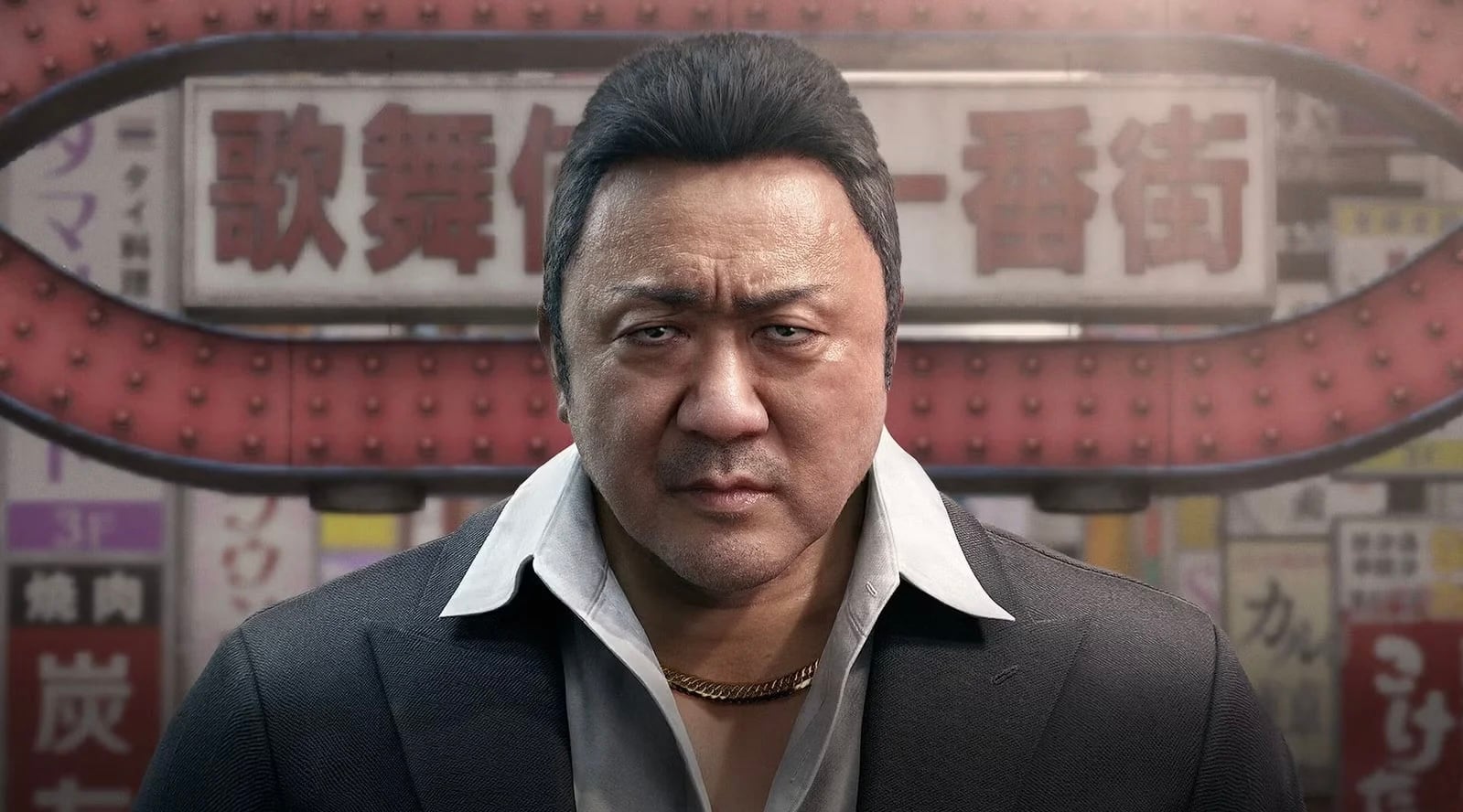
<p>The news broke quietly, a stark contrast to the bombastic reveals usually associated with <b>Toshihiro Nagoshi</b>. The creator of the <i>Yakuza</i> (now <i>Like a Dragon</i>) franchise had ventured out on his own, founding Nagoshi Studio with the backing of NetEase, promising a "Gang of Dragon" experience for the <b>PS5</b>. Now, reports from outlets like <b>Push Square</b> confirm the project is dead, the studio shuttered, and the dream deferred. It is a sobering moment for the industry.</p>
<p>This isn't just another cancellation notice. It is a case study in the <b>volatility of modern AAA development</b>. <a href="/article/real-estate-investment-tips-and-strategies-for-indian-investors-in-2026" title="Real Estate Investment Tips and Strategies for Indian Investors in 2026" class="internal-link">For Indian</a> gamers and developers watching the global scene, this event offers a rare, transparent look at the friction between creative ambition and corporate reality. We are not here to mourn a game we never played; we are here to dissect <b>why titans fall</b>.</p>
<figure class="my-8 overflow-hidden rounded-3xl shadow-xl">
<img src="https://kotaku.com/app/uploads/2026/11/IMG_6456.jpeg" alt="Toshihiro Nagoshi" class="w-full h-[400px] object-cover" />
</figure>
Advertisement
Loading partner content...
<h2>The Legacy Weight: Why "The Yakuza Creator" Label Is a Double-Edged Sword</h2>
<p>Nagoshi-san didn't just make games; he built a cultural phenomenon. The <i>Yakuza</i> series redefined the open-world genre by prioritizing density over width, narrative absurdity over gritty realism, and a distinctly Japanese heartbeat. When he left Ryu Ga Gotoku Studio (RGG), the industry watched with bated breath. <b>Expectations were stratospheric.</b></p>
<p>" Fans wanted <i>Yakuza</i> but better. Investors wanted <i>Yakuza</i> numbers but new IP ownership. Nagoshi wanted creative freedom. </b> The pressure to deliver a "spiritual successor" while legally distinct enough to avoid Sega lawsuits is a creative straitjacket.</p>
<p>Many developers in India face similar pressures when pivoting from service work to original IP.</p>
Advertisement
Loading partner content...
<h3>The "Gang of Dragon" Vision: What We Know</h3>
<p>Details were scarce, by design. The project, often referred to as "Project Century" or "Gang of Dragon" in leaks, promised a historical setting—likely early 20th century—diverging from the modern Kamurocho streets. It aimed for <b>Unreal Engine 5 fidelity</b> on PS5, targeting a global launch. NetEase provided the war chest; Nagosi provided the vision.</p>
<ul>
<li><b>Setting:</b> Rumored 1910s-1920s Japan/China backdrop.</li>
<li><b>Engine:</b> Unreal Engine 5 (a shift from RGG's proprietary Dragon Engine).</li>
<li><b>Scope:</b> Full AAA production, cinematic focus.</li>
<li><b>Publisher:</b> NetEase Games (Chinese conglomerate).</li>
</ul>
<p>The silence after the initial 2021/2022 announcements was the first red flag. In 2026, <b>radio silence usually equals reboot or cancellation</b>.</p>
Advertisement
Loading partner content...
<h2>The Anatomy of a Studio Death: Systemic Risks in 2026</h2>
<p>Why did Nagoshi Studio fail? It wasn't a lack of talent. It was a convergence of structural faults plaguing the entire <b>Technology</b> and entertainment sector. Understanding these helps anyone <a href="/article/corporate-culture-development-strategies-building-a-thriving-organizational-ecosystem" title="Corporate Culture Development Strategies: Building a Thriving Organizational Ecosystem" class="internal-link">building a</a> tech venture today.</p>
<h3>1. The Engine Swap Trap</h3>
<p>RGG Studio spent over a decade refining the <b>Dragon Engine</b>. It handles seamless transitions, massive NPC counts, and distinct combat physics. Moving to Unreal Engine 5 sounds smart on paper—better lighting, Nanite geometry, larger hiring pool. But <b>tech debt transfers</b>.</p>
<p>You lose the "secret sauce" tools built for your specific gameplay loops. For a studio starting from zero, building those tools from scratch in UE5 while making a game is a <b>multi-year sinkhole</b>.</p>
Advertisement
Loading partner content...
<h3>2. The Publisher-Developer Power Dynamic</h3>
<p>NetEase is a giant. They acquire studios to secure <a href="/article/platform-specific-content-strategies-a-indian-marketer-s-guide-to-social-media-success" title="Platform-Specific Content Strategies: A Indian Marketer's Guide to Social Media Success" class="internal-link">content</a> pipelines. When a project misses milestones—or when the market shifts (live-service fatigue, rising costs)—the parent company pulls the plug to protect quarterly margins. <b>Creative autonomy evaporates the moment ROI projections dip.</b> This is a critical lesson for Indian studios signing with global publishers: <b>contractual "creative control" clauses are tested only in crisis.</b></p>
<h3>3. The "AAA or Bust" Fallacy</h3>
<p>The industry binary—Indie vs. AAA—is a trap. Nagoshi Studio aimed straight for the <b>$100M+ budget tier</b>. In 2026, that requires 5-7 million units sold just to break even.</p>
<p>The middle ground ("AA")—games like <i>Hellblade</i>, <i>Plague Tale</i>, or <i>Hi-Fi Rush</i>—offers better risk/reward ratios. Betting the entire studio on a single swing-for-the-fences title leaves zero runway for iteration.</p>
Advertisement
Loading partner content...
<blockquote>
"The most dangerous moment for a legendary developer isn't failure; it's the pressure to replicate success without the safety net that built the original." — Industry Veteran, GDC 2025 Post-Mortem
</blockquote>
<figure class="my-8 overflow-hidden rounded-3xl shadow-xl">
<img src="https://images.pexels.com/photos/31862218/pexels-photo-31862218.jpeg?auto=compress&cs=tinysrgb&dpr=2&h=650&w=940" alt="Game Development Studio Office" class="w-full h-[400px] object-cover" />
</figure>
<h2>The Japanese Console Landscape in 2026: A Shifting Foundation</h2>
<p>To understand the cancellation, we must look at the platform holder. The <b>PS5</b> install base is healthy, but software attachment rates for *new* Japanese IPs are worrying. <i>Final Fantasy XVI</i> and <i>Rebirth</i> sold well but missed internal targets. <i>Forspoken</i> flopped.</p>
<p><i>Stellar Blade</i> succeeded but had a specific niche appeal.</p>
Advertisement
Loading partner content...
<p>Sony's strategy has pivoted. They are chasing <b>live-service (Gaas)</b> and PC ports to amortize costs. A single-player, narrative-heavy, historically-set action game with no multiplayer component is <b>the hardest pitch in 2026 boardrooms</b>. It has no recurring revenue tail.</p>
<p>It has high localization costs. It has a "one-and-done" consumer lifecycle.</p>
<table>
<thead>
<tr>
<th>Factor</th>
<th>Impact on "Gang of Dragon"</th>
<th>Current Market Reality (2026)</th>
</tr>
</thead>
<tbody>
<tr>
<td>Development Cost</td>
<td>Estimated $80M - $120M+</td>
<td>AAA budgets up 30% since 2020</td>
</tr>
<tr>
<td>Break-even Units</td>
<td>5M - 7M copies</td>
<td>Only established IPs hit this reliably</td>
</tr>
<tr>
<td>Platform Holder Priority</td>
<td>Low (Single Player Only)</td>
<td>Sony prioritizing GaaS/PC</td>
</tr>
<tr>
<td>Publisher Patience</td>
<td>~3-4 Years</td>
<td>NetEase tightening belt globally</td>
</tr>
</tbody>
</table>
<h2>Actionable Lessons: Building Resilient Studios in the Modern Era</h2>
<p>Whether you are a solo dev in Bangalore, a mid-size studio in Pune, or a corporate strategist, the Nagoshi Studio closure offers concrete takeaways. <b>Don't just read history; engineer against it.</b></p>
Advertisement
Loading partner content...
<h3>Lesson 1: Prototype the "Unfun" Stuff First</h3>
<p>Don't build the cinematic intro. Build the <b>crowd simulation system</b>. Build the <b>combat state machine</b>. Build the <b>localization pipeline</b>.</p>
<p>Nagoshi's team likely spent months on vertical slices (pretty demos) to please publishers. Vertical slices lie. They hide production risk.</p>
<h3>Lesson 2: Diversify Revenue Before Launch</h3>
<p>A single SKU (Stock Keeping Unit) is a single point of failure. Modern studios need <b><a href="/article/mastering-portfolio-diversification-strategies" title="Mastering Portfolio Diversification Strategies" class="internal-link">portfolio</a> theory</b>.
<ul>
<li><b>Core Project:</b> The ambitious AA/AAA title.</li>
<li><b>Live Ops/Service:</b> A smaller mobile/web companion or tool.</li>
<li><b>Work-for-Hire/Co-dev:</b> Steady cash flow to extend runway.</li>
<li><b>IP Licensing/Merch:</b> Revenue streams independent of game sales.</li>
</ul>
If Nagoshi Studio had a mobile card battler or a co-dev contract running, they might have survived the "milestone miss" conversation.</p>
Advertisement
Loading partner content...
<h3>Lesson 3: Define "Done" Before You Start</h3>
<p>Scope creep killed more studios than bad code. <b>Lock the feature set 18 months before target launch.</b> Use "Timeboxing": "We have 6 months to make the combat feel good. If it's not fun in 6 months, we cut the feature or change the genre." Nagoshi's perfectionism—legendary in RGG—becomes toxic without Sega's infinite patience and established pipeline.</p>
<h3>Lesson 4: Own Your Engine, Or Own Your Workflow</h3>
<p>If you use UE5/Unity, you rent the foundation. </b> Custom editors, automated QA bots, proprietary animation state machines. This is your IP. If the studio closes, these tools are assets.</p>
<p>If you only use standard engine features, you own nothing but content—which is hard to sell without the team.</p>
Advertisement
Loading partner content...
<figure class="my-8 overflow-hidden rounded-3xl shadow-xl">
<img src="https://images.unsplash.com/photo-1515879218367-8466d910aaa4?crop=entropy&cs=tinysrgb&fit=max&fm=jpg&ixid=M3w4NjI1Nzh8MHwxfHNlYXJjaHwxfHxWaWRlbyUyMEdhbWUlMjBQcm9ncmFtbWluZyUyMENvZGUlMjBTY3JlZW58ZW58MHwwfHx8MTc5MzczMDg1MXww&ixlib=rb-4.1.0&q=80&w=1080" alt="Video Game Programming Code Screen" class="w-full h-[400px] object-cover" />
</figure>
<h2>The Void Left Behind: Who Carries the Torch?</h2>
<p>With Nagoshi gone (for now) and RGG Studio pivoting to <i>Like a Dragon</i> turn-based RPGs and <i>Pirate Yakuza in Hawaii</i> spin-offs, the <b>"Brawler Drama" genre</b>—real-time combat + soap opera narrative + minigame density—is effectively orphaned at the AAA level.</p>
<p>This is an <b>opportunity</b>. </b> We see indie attempts (<i>Streets of Kamurocho</i> mods, <i>Yakuza</i>-likes on Steam), but no major successor. For Indian developers, this genre is <b>culturally resonant</b>. Our cities—Mumbai, Delhi, Kolkata—offer the same density, contrast, and narrative chaos as Kamurocho.</p>
<p>A "Mumbai Dragon" built with AA scope, Unreal Engine 5, and local cultural specificity could capture a massive underserved global audience.</p>
Advertisement
Loading partner content...
<h3>Checklist: Pitching a "Yakuza-like" in 2026</h3>
<ol>
<li><b>Setting:</b> Real-world density (Dharavi, Old Delhi, Shibuya equivalent).</li>
<li><b>Combat:</b> Accessible brawler + "Heat Actions" equivalent (contextual finishers).</li>
<li><b>Loop:</b> Main Story (15hrs) + Substories (30hrs) + Minigames (Infinite).</li>
<li><b>Tech:</b> UE5 + Custom Crowd/Dialogue tools (Build once, reuse forever).</li>
<li><b>Budget:</b> Target $15M-$25M (AA), not $100M. Ship on PC/PS5/Xbox Day 1.</li>
<li><b>Monetization:</b> Premium $40 + Cosmetic DLC only. No GaaS.</li>
</ol>
<h2>The Human Cost: Beyond the Balance Sheet</h2>
<p>We analyze budgets and engines, but <b>80+ developers</b> just lost their jobs. Artists who moved cities. Engineers who turned down other offers. QA testers with mortgages.</p>
<p>The "official death" of a studio is a human catastrophe. The industry treats labor as a variable cost, but <b>institutional knowledge is the real asset</b>. When a studio dies, the "muscle memory" of how to make *that specific type of game* vanishes. It takes years <a href="/article/a-future-where-we-create-games-together-with-ai-capcom-s-bold-vision-to-rebuild-the-re-engine-as-an-" title="'A Future Where We Create Games Together With AI' — Capcom's Bold Vision to Rebuild the RE Engine as an AI-Generation Powerhouse" class="internal-link">to rebuild</a>.</p>
Advertisement
Loading partner content...
<p>For the Indian tech ecosystem, which relies heavily on service models and outsourcing, this is a warning. <b>Moving to product development requires retaining senior talent through volatility.</b> Equity, profit-sharing, and psychological safety aren't HR buzzwords; they are <b>risk mitigation strategies</b>.</p>
<figure class="my-8 overflow-hidden rounded-3xl shadow-xl">
<img src="https://images.pexels.com/photos/33513532/pexels-photo-33513532.jpeg?auto=compress&cs=tinysrgb&dpr=2&h=650&w=940" alt="PlayStation 5 Console" class="w-full h-[400px] object-cover" />
</figure>
<h2>Conclusion: The Dragon Sleeps, The Lesson Remains</h2>
<p>The "Gang of Dragon" is gone. Push Square reported the obituary; the industry moves to the next headline. But the structural forces that killed Nagoshi Studio—<b>runaway costs, publisher impatience, engine friction, genre risk aversion</b>—are intensifying. They will claim more studios in 2026 and 2027.</p>
Advertisement
Loading partner content...
<p>The survivors won't be the ones with the biggest budgets or the most famous names. They will be the ones who <b>treated development as a systems engineering problem</b>, not just an art project. They will build tools before content. They will diversify revenue before launch.</p>
<p>They will scope down to ship up.</p>
<p>Toshihiro Nagoshi is a legend.</b></p></i></i></i></i>