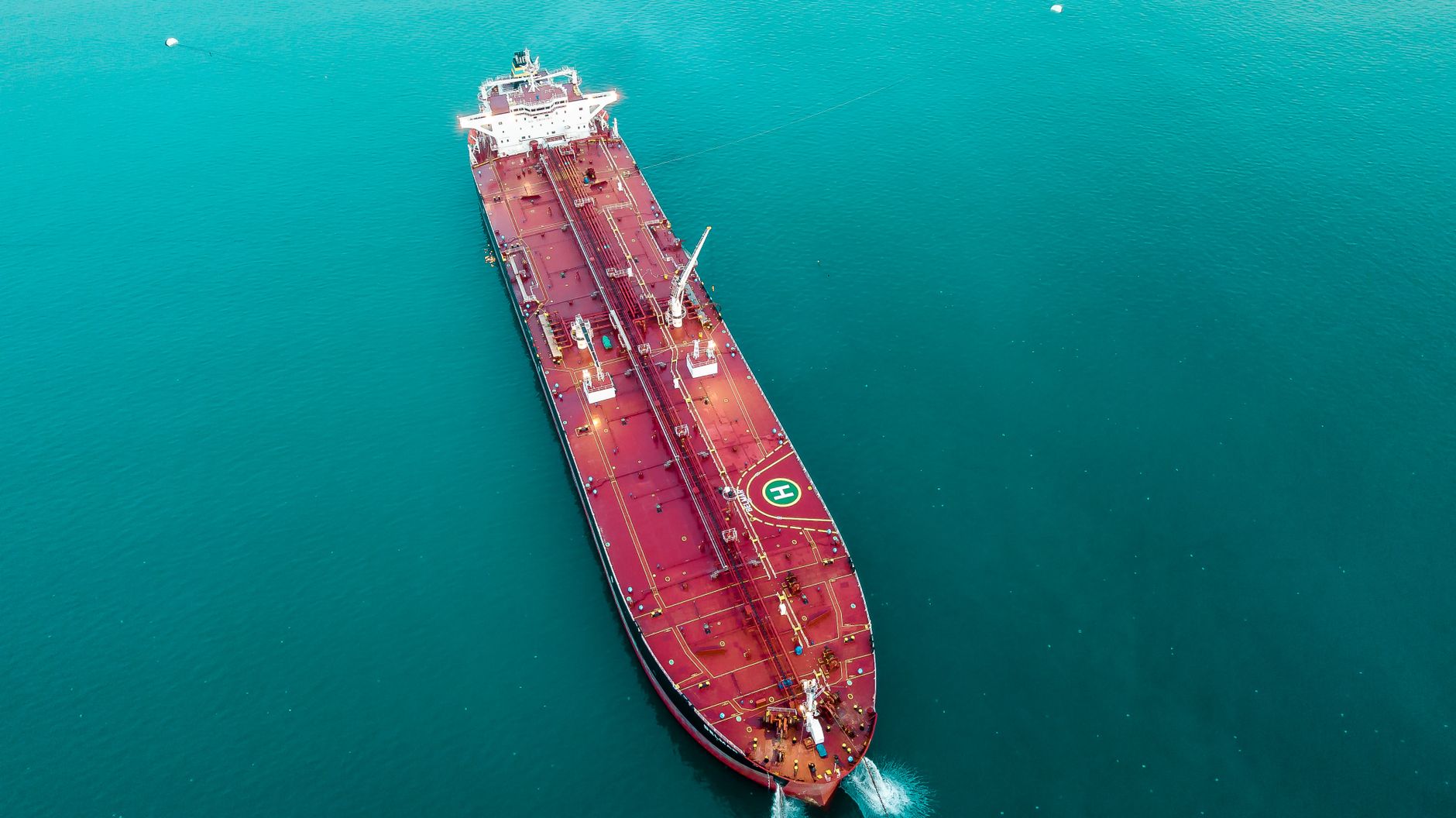

<h1>The Untold Journey of <a href="/article/mastering-time-management-a-self-help-guide-for-indian-professionals" title="Mastering Time Management: A Self-Help Guide for Indian Professionals" class="internal-link">Indian</a> Seafarers: Risks, Realities, and the Road Ahead</h1>
<p>The vast, undulating expanse of the ocean often masks a harrowing reality for those who call it their workplace. Recently, the news of three crew members missing from a vessel sent shockwaves through the maritime community, serving as a <b>stark reminder of the fragility of life at sea</b>. While these headlines flicker and fade, the systemic vulnerabilities of the men and women who fuel global trade remain largely invisible to the land-dwelling population.</p>
<p>For millions of Indians, the merchant navy is not just a career; it is a gamble with nature and geopolitics. Every time a ship leaves the harbor, a family waits in anxiety, knowing that their loved one is navigating a world where <b>help is often thousands of nautical miles away</b>. This is the story of the invisible backbone of global commerce—the Indian seafarer.</p>
<p>To understand the current crisis, we must look beyond the individual tragedies. We must analyze the intersection of <b>economic desperation, geopolitical volatility, and the gaps in international labor protections</b>. This article delves into the depths of the maritime world to uncover the risks, the resilience, and the urgent need for systemic reform.</p>
Advertisement
Loading partner content...
<h2>The Deep Roots: History of Indian Seafaring</h2>
<p>India’s relationship with the ocean is as old as civilization itself. Long before the modern <b>Indian merchant navy</b>, the Lothal dockyard of the Indus Valley Civilization proved that Indians were masters of the sea over 4,000 years ago. From the Chola Empire's naval expeditions to the spice trade with Rome and Arabia, India has always been a maritime powerhouse.</p>
<p>In the modern era, this legacy has evolved into a professionalized industry. Today, India is one of the largest providers of certified seafarers globally. <b>Thousands of Indian officers and ratings</b> man the bridges and engine rooms of ships flying flags from Panama to Liberia, ensuring that oil, grain, and electronics reach their destinations.</p>
<p>According to industry estimates, India contributes a significant percentage of the world's officer-level manpower. The transition from traditional sailing to high-tech tankers and bulk carriers has seen India emerge as a <b>hub for maritime training</b>, though the growth has often outpaced the implementation of safety protocols.</p>
<figure class="my-8 overflow-hidden rounded-3xl shadow-xl">
<img src="https://images.pexels.com/photos/3218465/pexels-photo-3218465.jpeg?auto=compress&cs=tinysrgb&dpr=2&h=650&w=940" alt="Ancient Indian trade routes map" class="w-full h-[400px] object-cover" />
</figure>
Advertisement
Loading partner content...
<h2>Why Indians Choose the Deck: The Economic Magnet</h2>
<p>The decision to join the merchant navy is rarely based on a love for the ocean alone. For many young Indians, particularly from coastal states like Kerala, Tamil Nadu, and Maharashtra, it is a <b>ticket to rapid upward social mobility</b>. The financial incentives are staggering compared to entry-level shore jobs in India.</p>
<p>The primary drivers for choosing this path include:</p>
<ul>
<li><b>High Earning Potential:</b> Tax-free salaries (under specific conditions) and foreign currency earnings allow seafarers to build houses and secure their family's future in a few short years.</li>
<li><b>Global Exposure:</b> The opportunity to visit diverse ports and experience international cultures is a major draw for adventurous youth.</li>
<li><b>Structured Career Path:</b> A clear hierarchy from Deck Cadet to Captain or Engine Cadet to Chief Engineer provides a sense of professional progression.</li>
</ul>
<p>However, the recruitment process is often a minefield. Many aspiring seafarers fall prey to <b>fraudulent recruitment agents</b> who promise high-paying jobs in exchange for exorbitant "placement fees." This vulnerability often leaves young men in debt before they even step foot on a vessel, forcing them to accept <b>substandard contracts and unsafe working conditions</b>.</p>
Advertisement
Loading partner content...
<h2>Life Aboard Modern Tankers: A Floating Pressure Cooker</h2>
<p>Life on a modern tanker is a study in contradictions: it is a marvel of engineering and a site of extreme isolation. Unlike cruise ships, tankers are utilitarian, designed for the transport of volatile liquids like crude oil and LNG. The daily routine is a grueling cycle of <b>four-on, eight-off watches</b>, where vigilance is the only thing preventing a catastrophe.</p>
<p>The living conditions are often cramped, and the psychological toll of "ship-time" is immense. Seafarers spend months away from their spouses and children, communicating via sporadic satellite internet. <b>The mental strain of isolation</b> is compounded by the high-stakes nature of their work.</p>
<p>On a tanker, the risks are amplified. A single spark or a failed valve can lead to an explosion. The crew must adhere to strict "no smoking" rules and rigorous safety drills, yet <b>fatigue often leads to human error</b>. When a crew is understaffed, the pressure to maintain schedules overrides the need for rest, creating a dangerous environment.</p>
Advertisement
Loading partner content...
<h2>Safety Risks and Threats: Navigating a Minefield</h2>
<p>The dangers faced by Indian seafarers are not limited to the elements. The modern ocean is a geopolitical chessboard where crews are often the unintended pawns. From the Gulf of Aden to the Red Sea, <b>piracy remains a persistent threat</b>, with crews facing kidnapping for ransom.</p>
<p>Recent years have seen a surge in "collateral damage" from state-level conflicts. The U.S. strikes off the coast of Oman and tensions in the Bab-el-Mandeb strait have placed crews in the direct line of fire. <b>Seafarers are often caught in crossfires</b> of missile strikes and drone attacks, with little more than a "citadel" (a reinforced safe room) for protection.</p>
<p>Beyond geopolitics, the physical risks are diverse:</p>
Advertisement
Loading partner content...
<ol>
<li><b>Industrial Accidents:</b> Falls from heights, machinery failures, and chemical leaks are common.</li>
<li><b>Health Emergencies:</b> A medical emergency in the middle of the Atlantic can be fatal, as evacuation via helicopter is prohibitively expensive and logistically complex.</li>
<li><b><a href="/article/mental-health-awareness-in-the-workplace-building-a-supportive-environment" title="Mental Health Awareness in the Workplace: Building a Supportive Environment" class="internal-link">Mental Health</a> Crisis:</b> Depression and anxiety are rampant due to prolonged separation and the "invisible" nature of their struggle.</li>
</ol>
<blockquote>
"The world sees the ship as a dot on a radar, but for the crew, it is a floating prison where the only escape is the end of the contract." — Anonymous Indian Second Officer.
</blockquote>
<figure class="my-8 overflow-hidden rounded-3xl shadow-xl">
<img src="https://images.pexels.com/photos/5520019/pexels-photo-5520019.jpeg?auto=compress&cs=tinysrgb&dpr=2&h=650&w=940" alt="Cargo ship in rough sea" class="w-full h-[400px] object-cover" />
</figure>
<h2>Legal Protections: The Shield of the MLC</h2>
Advertisement
Loading partner content...
<p>To combat these hazards, the international community established the <b>Maritime Labour Convention (MLC, 2006)</b>, often described as the "Seafarers' Bill of Rights." This ILO treaty sets minimum requirements for nearly every aspect of working and living conditions.</p>
<p>The MLC covers critical areas such as:</p>
<table>
<thead>
<tr>
<th>Feature</th>
<th>MLC Requirement</th>
<th>Reality for Many</th>
</tr>
</thead>
<tbody>
<tr>
<td><b>Contractual Rights</b></td>
<td>Clear, written employment agreements.</td>
<td>Some crews face "contract extensions" without consent.</td>
</tr>
<tr>
<td><b>Medical Care</b></td>
<td>Free medical care while on board.</td>
<td>Limited facilities; dependence on shore-side help.</td>
</tr>
<tr>
<td><b>Repatriation</b></td>
<td>Right to be returned home at no cost.</td>
<td>"Abandonment" occurs when owners go bankrupt.</td>
</tr>
</tbody>
</table>
<p>The Indian government, through the <b>Directorate General of Shipping (DGS)</b>, attempts to enforce these rules. However, because many ships are registered under "flags of convenience" (like Panama or Marshall Islands), <b>jurisdictional loopholes</b> make it difficult to hold ship owners accountable for negligence.</p>
Advertisement
Loading partner content...
<h2>Support Systems: The Safety Net</h2>
<p>When things go wrong, seafarers rely on a patchwork of support. Welfare funds and NGOs play a crucial role in providing legal aid and psychological support. In India, several maritime unions and associations work to ensure that <b>compensation is paid to the families</b> of deceased or injured mariners.</p>
<p>Repatriation is the most critical support mechanism. When a ship is abandoned, the crew is often left without food or fuel. In such cases, the <b>International Transport Workers' Federation (ITF)</b> often steps in to provide emergency provisions and negotiate the crew's release.</p>
<p>However, there is a glaring lack of <b>specialized mental health services</b> tailored for mariners. Most counseling is generic and fails to address the unique trauma of maritime isolation and the fear of piracy.</p>
<h2>The Economic Impact: The Invisible Contribution</h2>
Advertisement
Loading partner content...
<p>The contribution of Indian seafarers to the global economy is immeasurable. By providing the skilled manpower to move 90% of the world's trade, they enable the global supply chain to function. Without the <b>Indian merchant navy</b>, the cost of shipping would skyrocket, leading to inflation in everything from fuel to food.</p>
<p>Domestically, the impact is felt through <b>massive remittance inflows</b>. These funds fuel local economies in coastal towns, funding education and healthcare for thousands of families. Furthermore, the skill development—ranging from advanced engineering to crisis <a href="/article/debt-management-techniques-to-become-debt-free" title="Debt Management Techniques to Become Debt-Free" class="internal-link">management</a>—creates a pool of highly skilled labor that can be transitioned into shore-based logistics and port management.</p>
<figure class="my-8 overflow-hidden rounded-3xl shadow-xl">
<img src="https://images.unsplash.com/photo-1678182451047-196f22a4143e?crop=entropy&cs=tinysrgb&fit=max&fm=jpg&ixid=M3w4NjI1Nzh8MHwxfHNlYXJjaHwxfHxTaGlwcGluZyUyMGNvbnRhaW5lcnMlMjBwb3J0fGVufDB8MHx8fDE3ODExNjc2Njd8MA&ixlib=rb-4.1.0&q=80&w=1080" alt="Shipping containers port" class="w-full h-[400px] object-cover" />
</figure>
Advertisement
Loading partner content...
<h2>Future Outlook: Automation and Green Shipping</h2>
<p>The industry is on the cusp of a technological revolution. The rise of <b>autonomous ships (MASS - Maritime Autonomous Surface Ships)</b> threatens to reduce the number of crew members needed on board. While this may increase safety by removing humans from hazardous zones, it risks displacing thousands of workers.</p>
<p>Additionally, the shift toward <b>"Green Shipping"</b> (using ammonia, hydrogen, or methanol) requires <a href="/article/how-india-s-5-point-maritime-trade-blueprint-is-redefining-global-shipping-a-complete-guide" title="How India’s 5‑Point Maritime Trade Blueprint Is Redefining Global Shipping – A Complete Guide" class="internal-link">a complete</a> overhaul of training. Indian seafarers must now pivot from traditional diesel engines to complex cryogenic and chemical systems. <b>Continuous upskilling</b> is no longer optional; it is a requirement for survival in the industry.</p>
<p>The future will likely see a shift toward "hybrid" roles, where the seafarer is as much a data analyst as they are a navigator. Those who can bridge the gap between <b>traditional seamanship and digital literacy</b> will be the most sought-after professionals.</p>
<h2>How Readers Can Help: <a href="/article/thinking-of-doing-something-different-up-medical-student-dies-of-suicide-a-call-for-mental-health-re" title="“Thinking Of Doing Something Different”: UP Medical Student Dies Of Suicide – A Call for Mental Health Reform in India" class="internal-link">A Call</a> to Action</h2>
Advertisement
Loading partner content...
<p>Most people will never step foot on a tanker, but we are all beneficiaries of the seafarer's toil. Improving their conditions requires a collective effort from various stakeholders.</p>
<p><b>For Policymakers:</b> India must push for stricter enforcement of the MLC and create a <b>sovereign guarantee fund</b> to ensure the immediate repatriation of abandoned crews, regardless of the ship's flag.</p>
<p><b>For Shipping Companies:</b> Companies must prioritize "human-centric" scheduling. Reducing the duration of contracts and providing <b>high-speed internet as a basic right</b> can significantly mitigate mental health crises.</p>
<p><b>For the General Public:</b> Simply acknowledging the existence of these workers is a start. Supporting fair-trade initiatives and demanding transparency in supply chains forces companies to ensure that the crews moving the goods are treated with dignity.</p>
<h2>Conclusion: Beyond the Horizon</h2>
Advertisement
Loading partner content...
<p>The tragedy of missing crew members is not an isolated incident; it is a symptom of a system that treats human lives as <b>expendable operational costs</b>. The Indian seafarer braves the storm, the pirate, and the loneliness to ensure the world keeps turning. It is time we move beyond seeing them as mere "manpower" and recognize them as <b>essential workers of the highest order</b>.</p>
<p>Protecting those who protect our trade is not just a legal obligation—it is a moral one. By strengthening legal frameworks, investing in mental health, and embracing technological transitions humanely, we can ensure that the journey of the Indian seafarer is defined by <b>professional pride rather than perilous risk</b>.</p>
<p>As we look toward the horizon, the goal must be clear: a maritime industry where no family has to wonder if their loved one will return home, and where the <b>safety of the crew is as prioritized as the cargo they carry</b>.</p>
<figure class="my-8 overflow-hidden rounded-3xl shadow-xl">
<img src="https://images.pexels.com/photos/12323407/pexels-photo-12323407.jpeg?auto=compress&cs=tinysrgb&dpr=2&h=650&w=940" alt="Lighthouse at sunset" class="w-full h-[400px] object-cover" />
</figure></b></i></i></i></i>