
Vaikom Muhammad Basheer – The Writer Who Turned Life into Literature
<strong>Vaikom Muhammad Basheer</strong>, fondly known as <strong>Beypore Sultan</strong>, was one of the most celebrated writers in Malayalam literature. A novelist, short-<a href="/article/dhirubhai-ambani-the-ultimate-indian-entrepreneur-story" title="Dhirubhai Ambani – The ultimate Indian entrepreneur story" class="internal-link">story</a> writer, humanist, and freedom fighter, Basheer transformed ordinary life into extraordinary literature through simplicity, humor, and compassion.

Early Life and Background
Basheer was born on <strong>21 January 1908</strong> in Thalayolaparambu, Kerala. He did not follow a traditional academic path and left school early. His restless spirit led him to travel across India, interact with <a href="/article/the-slow-living-movement-why-more-people-are-choosing-calm-over-chaos" title="The Slow Living Movement: Why More People Are Choosing Calm Over Chaos" class="internal-link">people</a> from all walks of life, and later join the Indian freedom movement, for which he was imprisoned.
Literary Style and Contribution
Basheer revolutionized Malayalam writing by using <strong>simple spoken language</strong> instead of complex literary expressions. His <a href="/article/behind-the-scenes-stories-from-famous-movies-the-magic-that-goes-unseen" title="Behind-the-Scenes Stories from Famous Movies: The Magic That Goes Unseen" class="internal-link">stories</a> focused on:
- Love and relationships
- Poverty and survival
- Faith, humanity, and dignity
- Loneliness and emotional depth
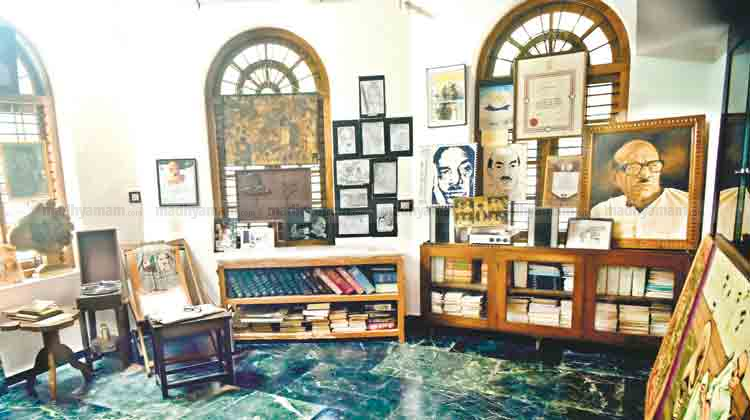
He made literature accessible to common people and proved that simplicity can carry profound meaning.
Famous Works
- Balyakalasakhi (Childhood Companion)
- Pathummayude Aadu (Pathumma’s Goat)
- Mathilukal (Walls)
- Ntuppuppakkoranendarnnu
- Shabdangal
Many of his works have been translated into s<a href="/article/why-india-s-middle-class-is-more-stressed-than-ever" title="Why India’s Middle Class Is More Stressed Than Ever" class="internal-link">ever</a>al languages and adapted into films.
Advertisement
Loading partner content...
Interesting and Lesser-Known Happenings from His Life
1. He Lived in Extreme Poverty
Basheer experienced severe poverty for many years. Instead of hiding it, he wrote openly about hunger, struggle, and dignity, turning hardship into timeless stories.
“I have no complaints against poverty. It taught me humanity.” — Basheer
2. He Was Once Admitted to a Mental Hospital
Due to his unconventional lifestyle and <a href="/article/how-to-develop-emotional-intelligence-your-roadmap-to-mastering-your-inner-world" title="How to Develop Emotional Intelligence: Your Roadmap to Mastering Your Inner World" class="internal-link">emotional</a> intensity, he was misunderstood and once admitted to a mental institution. Later, he wrote about this experience with empathy, helping society understand mental health compassionately.
3. A Love Story Through Prison Walls
His novel <strong>Mathilukal</strong> is based on a real incident where he fell in love with a woman prisoner without ever seeing her face — they spoke only through walls. This unique relationship became one of the most touching love stories in Indian literature.
4. Fame Never Changed His Simplicity
Even after receiving the <strong>Padma Shri</strong> and widespread recognition, Basheer lived a humble life in Beypore, welcoming visitors warmly and rejecting luxury.
Advertisement
Loading partner content...
5. His Home Became a Literary Pilgrimage
Readers, writers, and students regularly visited his home just to meet him, listen to his stories, or sit quietly in his presence.
Awards and Recognition
- Padma Shri – Government of India
- Kerala Sahitya Akademi Awards
- Numerous literary honors for his contribution to Malayalam literature
Why Vaikom Muhammad Basheer Still Matters
In a fast-moving world driven by competition and noise, Basheer’s works remind us to slow down and reconnect with our humanity. His stories teach us kindness, humor, compassion, and the beauty of simplicity.
Vaikom Muhammad Basheer was not just a writer — he was a voice for the voiceless, a philosopher of everyday life, and a storyteller who transformed suffering into wisdom and laughter.