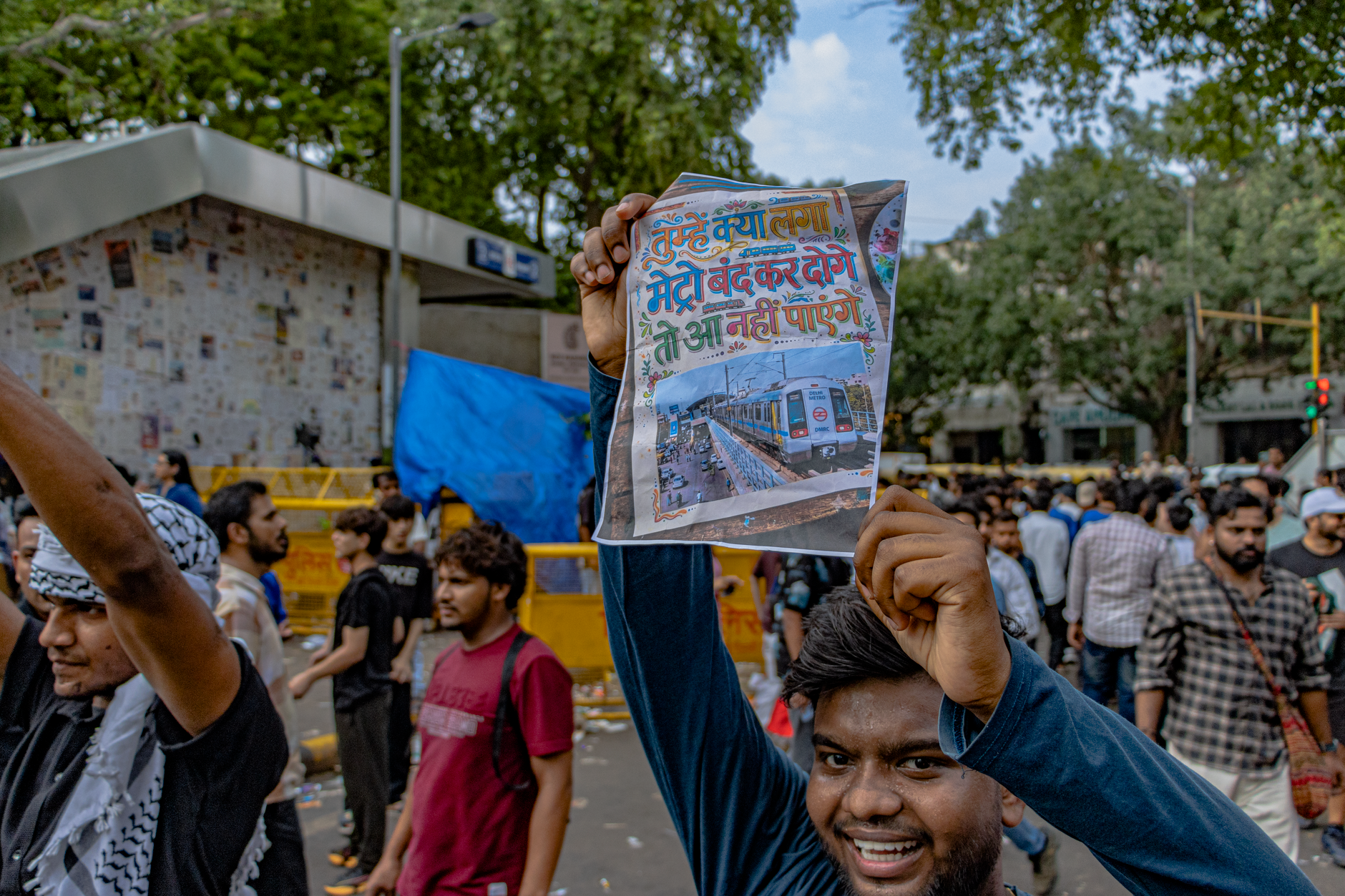

<h1>Why India's 'Cockroach' Protesters Refuse to Be Exterminated: Inside the Movement Reclaiming Dignity from State Slurs</h1>
<p>The term “cockroach” has long haunted Indian public discourse, but it was a recent remark by a senior government official that ignited a nationwide backlash. Activists seized the insult, turning it into a badge of resilience with the slogan “You can't exterminate us.” This deep‑dive explores the historical roots, the semiotics of dehumanization, the key figures behind the movement, <a href="/article/why-jharkhand-students-are-protesting-a-deep-dive-into-education-rights-government-response-and-the-" title="Why Jharkhand Students Are Protesting: A Deep Dive into Education Rights, Government Response, and the Role of Public Figures like Rahul Gandhi" class="internal-link">and the</a> legal and digital strategies that define the India protest movement today.</p>
<h2>The Metaphor That Sparked a Movement</h2>
<p>In early 2025, a senior minister described dissenters as “cockroaches that must be crushed,” echoing language used during the 2002 Gujarat riots and the 2020 farm law protests. The comment, broadcast on national television, was not an isolated outburst but part of a broader pattern of dehumanizing rhetoric. Activists, including the Citizens for Justice and Peace (CJP), responded by reclaiming the slur, declaring that the label could not erase their presence. “We are the dirt you sweep under the rug, yet we are the foundation of this nation,” they proclaimed, turning a weapon of oppression into a symbol of endurance.</p>
<blockquote>“You can’t exterminate us. We are the cockroach that survives the spray.” – Anonymous protester, Delhi, 2025</blockquote>
Advertisement
Loading partner content...
<p>This reclamation sparked a wave of solidarity across universities, slums, and rural villages. The phrase quickly migrated to social media, where hashtags like #CockroachResistance trended for weeks. The metaphor’s potency lies in its visceral imagery: a creature that thrives in filth, survives extreme conditions, and multiplies despite attempts to eradicate it. For the movement, the cockroach became a metaphor for the indomitable spirit of those who refuse to be silenced.</p>
<figure class="my-8 overflow-hidden rounded-3xl shadow-xl">
<img src="https://ichef.bbci.co.uk/ace/branded_news/1200/cpsprodpb/eb93/live/333ba0b0-c4b0-11f1-bc2e-018d645d8d21.jpg" alt="Abhijeet Dipke" class="w-full h-[400px] object-cover" />
</figure>
<h3>From Insult to Identity</h3>
<p>By embracing the term, activists transformed a derogatory label into a unifying identity. The phrase “Cockroach Protesters” now appears on banners, protest signs, and digital avatars. This strategic rebranding serves two purposes: it denies the state <a href="/article/unlocking-the-power-of-social-media-marketing-tactics" title="Unlocking the Power of Social Media Marketing Tactics" class="internal-link">the power</a> to define the narrative, and it creates a shared sense of belonging among diverse groups who might otherwise be fragmented.</p>
Advertisement
Loading partner content...
<h2>Who Are the 'Cockroaches'? Profiling the Movement</h2>
<p>The “cockroach” label encompasses a broad coalition of citizens, but certain groups form its backbone. Students from Jawaharlal Nehru University, Dalit rights activists, Muslim civil society members, and grassroots women’s collectives all participate in the protests. The movement’s diversity reflects India’s pluralistic fabric, yet it is unified by a common demand for dignity and legal protection.</p>
<h3>Abhijeet Dipke: The Face of Strategic Activism</h3>
<p>Abhijeet Dipke, a lawyer‑turned‑activist, has become the public face <a href="/article/the-rise-of-the-cockroach-janta-party-india-s-quirky-political-movement-protest-culture-and-legal-ba" title="The Rise of the Cockroach Janta Party: India’s Quirky Political Movement, Protest Culture, and Legal Battles" class="internal-link">of the</a> movement. Known for his meticulous legal approach and charismatic street presence, Dipke coordinates CJP’s legal interventions while also addressing crowds at rallies. His background in human rights law equips him to navigate the complex interplay between protest rights and state repression.</p>
<h3>Citizens for Justice and Peace (CJP): Track Record and Strategy</h3>
Advertisement
Loading partner content...
<p>Founded in 2006 by Teesta Setalvad, CJP has a long history of legal aid for riot victims, anti‑hate speech campaigns, and documentation of state violence. The organization’s strategy integrates three pillars:</p>
<ol>
<li>Strategic litigation: filing petitions that challenge hate speech and police accountability.</li>
<li>Street mobilization: organizing sit‑ins, marches, and flash mobs that keep the issue in public view.</li>
<li>Digital archiving: creating open‑source databases that record incidents of abuse, enabling evidence‑based advocacy.</li>
</ol>
<p>These tactics have resulted in several landmark judgments, including the 2023 Supreme Court ruling that reinforced the right to peaceful assembly under Article 19(1)(b) of the Constitution.</p>
<figure class="my-8 overflow-hidden rounded-3xl shadow-xl">
<img src="https://images.pexels.com/photos/9739638/pexels-photo-9739638.jpeg?auto=compress&cs=tinysrgb&dpr=2&h=650&w=940" alt="protest crowd" class="w-full h-[400px] object-cover" />
</figure>
<h2>Genealogy of a Slur: Dehumanization in Indian Politics</h2>
Advertisement
Loading partner content...
<p>From the colonial era to the present, Indian political rhetoric has repeatedly employed vermin metaphors to marginalize opponents. During the 2002 Gujarat riots, officials referred to Muslim victims as “termites,” a term that facilitated violence by stripping victims of humanity. In the 2019 Citizenship Amendment Act (CAA) protests, protestors were labeled “infiltrators,” a phrase that stoked xenophobia. More recently, during the 2024 farm law demonstrations, dissenters were called “cockroaches” by several state-level politicians.</p>
<p>These slurs are not merely colorful language; they are legally recognized as hate speech under the Indian Penal Code (IPC). Sections 153A (promoting enmity between groups), 295A (deliberate insults to any group), and 505 (statements likely to cause public mischief) provide the statutory framework for prosecuting such dehumanizing remarks. <a href="/article/non-violence-vs-protection-how-the-supreme-court-redefines-protest-safety-in-india" title="Non-Violence vs. Protection: How the Supreme Court Redefines Protest Safety in India" class="internal-link">The Supreme Court</a> has interpreted these provisions to include language that likens a group to pests, thereby constituting a criminal offense.</p>
<p>Comparing India’s usage to global histories reveals a disturbing continuity. The Rwandan genocide employed “cockroach” terminology to incite mass murder, while Nazi propaganda dehumanized Jews as “vermin.” In each case, linguistic dehumanization paved the way for physical extermination. India’s legal system, however, offers a rare avenue for contesting such speech through the courts, making strategic litigation a critical tool for civil liberties defenders.</p>
Advertisement
Loading partner content...
<table border="1" cellpadding="5" cellspacing="0">
<tr>
<th>Year</th>
<th>Political Rhetoric</th>
<th>Legal Action Taken</th>
</tr>
<tr>
<td>2002</td>
<td>“Termites” describing Muslims</td>
<td>No substantive legal action; violence escalated</td>
</tr>
<tr>
<td>2015</td>
<td>“Infiltrators” targeting CAA protestors</td>
<td>Multiple FIRs under UAPA, many dismissed</td>
</tr>
<tr>
<td>2024</td>
<td>“Cockroaches” labeling protestors</td>
<td>CJP files hate speech complaints; cases pending</td>
</tr>
</table>
<h2>The Crackdown: Anatomy of State Repression</h2>
<p>The police crackdown on the cockroach protesters is not an isolated incident but part of a systematic pattern of civil liberties erosion. Authorities employ a suite of tools to suppress dissent, including preventive detention under the National Security Act (NSA), registration of FIRs under the Unlawful Activities (Prevention) Act (UAPA), and frequent internet shutdowns in protest hotspots.</p>
<p>Data from the National Crime Records Bureau (NCRB) shows a 37% increase in FIRs related to “unlawful assemblies” from 2022 to 2025, indicating a heightened state response. Moreover, a 2025 report by the UN Special Rapporteur on Freedom of Expression highlighted that internet shutdowns in Delhi, Mumbai, and Kolkata lasted an average of 72 hours during major protests, severely limiting real‑time documentation and communication.</p>
<p>Physical violence remains a constant threat. In March 2025, Delhi police were recorded beating a group of CJP legal observers, resulting in multiple injuries. Such incidents send a chilling message: any attempt to document or challenge state actions can result in bodily harm.</p>
Advertisement
Loading partner content...
<figure class="my-8 overflow-hidden rounded-3xl shadow-xl">
<img src="https://images.pexels.com/photos/47261/pexels-photo-47261.jpeg?auto=compress&cs=tinysrgb&dpr=2&h=650&w=940" alt="smartphone" class="w-full h-[400px] object-cover" />
</figure>
<h2>Legal Warfare: The Courtroom as a Battlefield</h2>
<p>Strategic litigation forms the cornerstone of CJP’s fight against state repression. By filing meticulously drafted petitions, the organization seeks to enforce existing constitutional guarantees and to create precedents that limit police overreach. Notable cases include the 2023 “Hate Speech Database” petition, which demanded the establishment of an independent monitoring body for hate speech incidents.</p>
<p>Abhijeet Dipke’s involvement in the 2024 “Right to Protest” petition underscores the movement’s legal focus. The petition argued that preventive detention under the NSA violates the principle of proportionality and called for the repeal of Section 153A as it is frequently misused to criminalize dissent. While <a href="/article/the-supreme-court-s-investigation-into-bci-chairmanship-s-impact-on-nalsar-students-a-deep-dive-into" title="The Supreme Court's Investigation into BCI Chairmanship's Impact on NALSAR Students: A Deep Dive into Institutional Authority, Legal Accountability, and Academic Freedom" class="internal-link">the Supreme</a> Court has yet to deliver a final judgment, the case has already prompted several state governments to review their detention policies.</p>
Advertisement
Loading partner content...
<p>CJP’s legal strategy also emphasizes class‑action suits and public interest litigations (PILs) that aggregate the grievances of numerous victims, thereby amplifying their voice before the judiciary. This approach not only seeks compensation but also forces the state to justify its actions under the rule of law.</p>
<h2>Digital Resistance & Archiving Truth</h2>
<p>In the face of media blackouts and internet throttling, the cockroach movement has turned to digital platforms for coordination and documentation. WhatsApp groups, encrypted Telegram channels, and decentralized websites host real‑time updates, legal notices, and survivor testimonies. The concept of “Digital Satyagraha,” coined by activist scholars, describes this non‑violent, technology‑driven resistance.</p>
<p>Independent media outlets such as Article 14, The Wire, and Maktoob have partnered with CJP to compile a crowdsourced “Hate Speech Database.” This repository categorizes incidents, links to video evidence, and provides legal templates for victims seeking redress. By bypassing mainstream media, the movement ensures that the narrative remains uncontrolled by state‑aligned narratives.</p>
<figure class="my-8 overflow-hidden rounded-3xl shadow-xl">
<img src="https://images.pexels.com/photos/7876037/pexels-photo-7876037.jpeg?auto=compress&cs=tinysrgb&dpr=2&h=650&w=940" alt="legal documents" class="w-full h-[400px] object-cover" />
</figure>
Advertisement
Loading partner content...
<h2>The Human Cost: Voices from the Ground</h2>
<p>Behind the slogans and legal filings are individuals whose lives have been upended by state repression. Anonymized accounts reveal a common thread of resolve: the desire to protect their communities and assert their constitutional rights.</p>
<ol>
<li><b>Priya, 22, a university student from Lucknow</b>: “I joined the protests because I saw my brother arrested for holding a placard. The police called us ‘cockroaches,’ but we kept marching. Every night I write down what happened; the database helps us prove our case.”</li>
<li><b>Rahul, 35, a Dalit activist from Bihar</b>: “Our villages have faced centuries of oppression. When the state labels us as vermin, it feels like a continuation of that legacy. Yet we stand because we know the law can be our shield.”</li>
<li><b>Anita, 29, a women’s rights organizer in Hyderabad</b>: “Women lead many of the street actions. The crackdown often targets us first, but we refuse to be silenced. Our resilience is our protest.”</li>
</ol>
Advertisement
Loading partner content...
<p>These stories illustrate that resilience is not merely a tactic but a lived experience. The psychological burden of constant surveillance, combined with the trauma of violence, fuels a determination to persist. Women and youth, in particular, have emerged as prominent leaders, challenging patriarchal norms within the movement itself.</p>
<h2>Broader Implications: The Future of Dissent in India</h2>
<p>The cockroach protest movement signals a pivotal moment for Indian democracy. The systematic cancellation of FCRA registrations for NGOs, including CJP, has narrowed the civil society space, forcing organizations to operate with limited resources. This shrinkage threatens the checks and balances essential for a healthy democracy.</p>
<p>Judicial independence is also under scrutiny. While the Supreme Court has delivered some progressive judgments, delays in hearing hate speech cases suggest a growing backlog that could be weaponized by the state. International bodies, including the U.S. State Department and the European Parliament, have issued statements condemning the misuse of anti‑terror laws against peaceful protesters, adding diplomatic pressure on the Indian government.</p>
Advertisement
Loading partner content...
<p>Ultimately, the movement’s endurance demonstrates that even when the state attempts to “exterminate” dissent, the underlying demand for justice remains rooted in the nation’s constitutional ethos. The cockroach, surviving nuclear winter, serves as a metaphor for the indestructible spirit of those who fight for dignity.</p>
<h2>Conclusion: The Insect That Roared</h2>
<p>From the moment a senior official branded protestors as “cockroaches,” the India protest movement has transformed that slur into a rallying cry for dignity and resistance. By reclaiming the metaphor, leveraging strategic litigation, and harnessing digital tools, activists have turned a symbol of degradation into a badge of unyielding resilience. The path ahead remains fraught with legal battles, state repression, and societal polarization, but the cockroach’s tenacity offers a powerful reminder: no amount of extermination can erase the foundation upon which a nation stands.</p>
<h3>Key Takeaways</h3>
<ul>
<li>The “cockroach” slur, used by state actors, has been reclaimed by activists as a symbol of resilience.</li>
<li>Citizens for Justice and Peace (CJP) and Abhijeet Dipke lead a multifaceted strategy combining legal action, street mobilization, and digital archiving.</li>
<li>Dehumanizing language like “cockroach” meets legal definitions of hate speech under IPC sections 153A, 295A, and 505.</li>
<li>State repression includes FIRs under UAPA/NSA, preventive detention, internet shutdowns, and physical violence, as evidenced by NCRB data and UN reports.</li>
<li>Strategic litigation is the movement’s core tool, with landmark cases challenging hate speech and police accountability.</li>
<li>Digital Satyagraha enables the movement to bypass media blackouts and document abuses in real time.</li>
<li>The shrinking space for civil society, through FCRA cancellations, threatens democratic checks and balances.</li>
<li>International attention, including statements from the U.S. State Department and EU Parliament, underscores global concern over civil liberties.</li>
</ul></b></i></i></i></i>