
<h1>Why India's Exam Paper Leaks Keep Happening: <a href="/article/why-jharkhand-students-are-protesting-a-deep-dive-into-education-rights-government-response-and-the-" title="Why Jharkhand Students Are Protesting: A Deep Dive into Education Rights, Government Response, and the Role of Public Figures like Rahul Gandhi" class="internal-link">A Deep Dive into</a> the Systemic Rot, Student Protests, and the Fight for Meritocracy</h1>
<!-- Key Takeaways -->
<div style="background:#f9f9f9;padding:15px;margin:20px 0;border-left:5px solid #c00;">
<b>Key Takeaways</b>
<ul>
<li>Exam leaks <a href="/article/why-gen-z-is-redefining-work-marriage-and-success-in-india" title="Why Gen Z Is Redefining Work, Marriage, and Success in India" class="internal-link">in India</a> are <b>not random crimes</b> but a structural failure woven into printing, transport, coaching, and digital ecosystems.</li>
<li>From Vyapam to NEET‑UG 2024, a <b>repeating pattern</b> of leak → protest → half‑hearted probe → minimal convictions fuels the cycle.</li>
<li>High‑stakes single‑exam culture, coaching hubs like Kota, and weak cyber‑security create <b>perfect incentives</b> for both organized mafias and institutional collusion.</li>
<li>The Modi government’s fast‑track courts may speed trials but <b>do not address root causes</b> like lack of independent regulators and outdated paper‑based logistics.</li>
<li>Real reform demands <b>decentralized adaptive testing, blockchain‑secured papers, AI proctoring, and statutory autonomy</b> for exam bodies.</li>
</ul>
</div>
Advertisement
Loading partner content...
<p>The hum of calculators and the weight of decades of family sacrifice converge in a single, nerve‑wracking moment for every Indian aspirant. Years of gruelling coaching, sleepless nights in Kota, and the relentless pressure to ace one “gate‑exam” define a life’s trajectory. Yet, beneath the glossy promise of equality of opportunity enshrined <a href="/article/holistic-approaches-to-mental-wellness-in-the-digital-age" title="Holistic approaches to mental wellness in the digital age" class="internal-link">in the</a> Constitution, a shadow looms: <b>the systematic leakage of examination papers</b> that undermines merit, shatters trust, and fuels a generational crisis.</p>
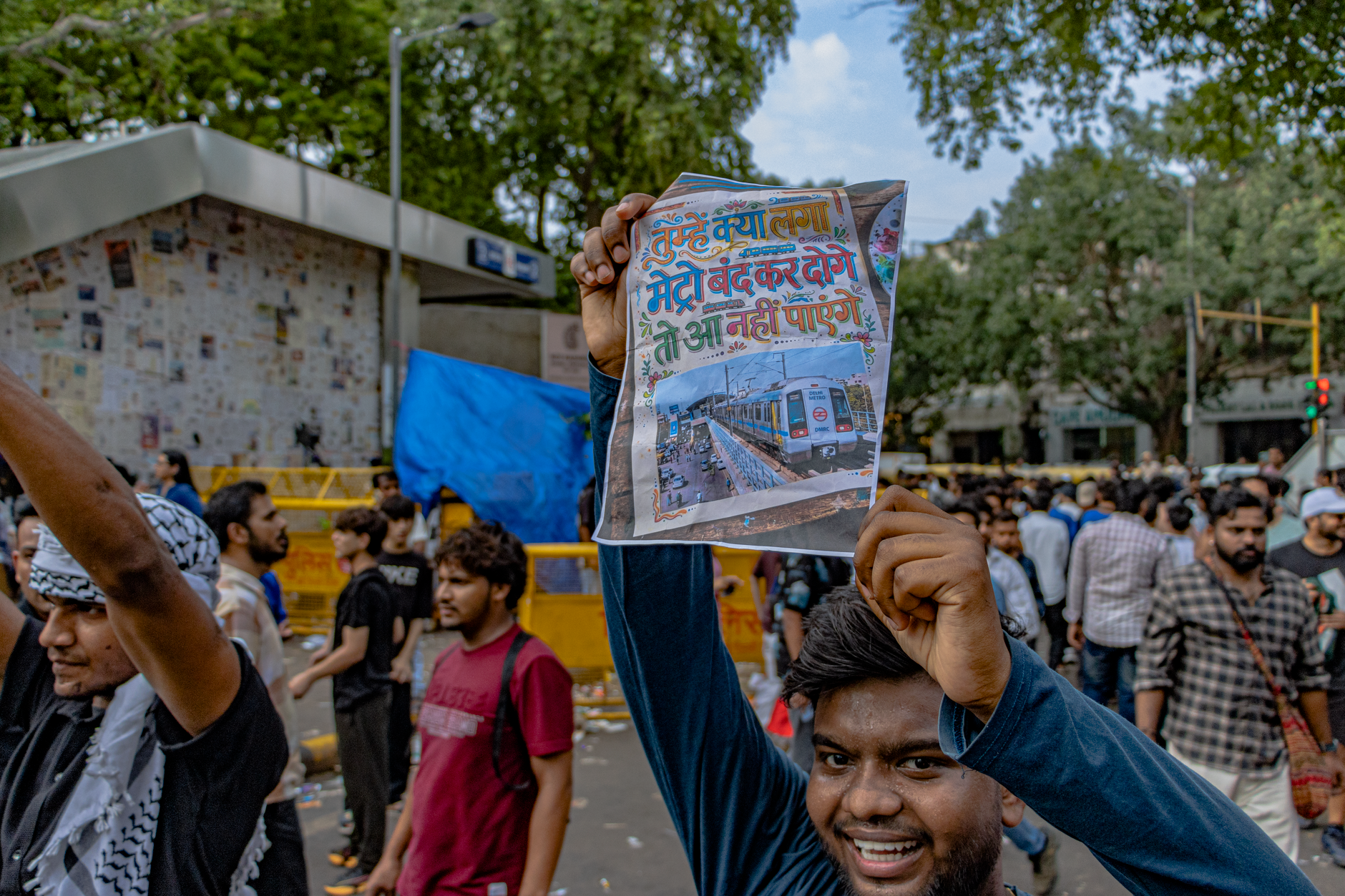
<p>In early September 2026, a Reuters headline announced Prime Minister Narendra Modi’s pledge to set up fast‑track courts and stricter enforcement of the Public Examinations Prevention of Unfair Means Act, 2024, while a junior education minister faced calls for resignation after massive student protests erupted across major cities. <b>This latest episode is merely the newest chapter in a decades‑long saga that has seen scandals from Madhya Pradesh’s Vyapam to the NEET‑UG 2024 debacle.</b> The protests are not about a single leaked paper; they are a collective outcry against a system that has allowed corruption to become routine, turning the holy grail of meritocracy into a commodity.</p>
<p><figure class="my-8 overflow-hidden rounded-3xl shadow-xl">
<img src="https://images.pexels.com/photos/37829628/pexels-photo-37829628.jpeg?auto=compress&cs=tinysrgb&dpr=2&h=650&w=940" alt="exam hall leak investigation" class="w-full h-[400px] object-cover" />
</figure></p>
Advertisement
Loading partner content...
<h2>Anatomy of a Leak: How the Mafia Operates</h2>
<p>The journey of an exam paper from conception to answer‑sheet is a chain of touchpoints, each a potential breach. The process typically unfolds as follows:</p>
<ol>
<li><b>Printing Press → Secure Packaging</b> – The National Testing Agency (NTA) or state boards contract private printers. Paper rolls are printed with question sets, then sealed in tamper‑evident containers.</li>
<li><b>Transport to Strong Rooms</b> – Vehicles escorted by police or private security carry the sealed packets to regional strong rooms where they are stored until the exam day.</li>
<li><b>Extraction Points</b> – Despite strong rooms, “extraction” often occurs via compromised insiders. Some strong rooms have “authorised personnel” who can access the containers under the guise of routine audits.</li>
<li><b>Coaching Centres & Solver Gangs</b> – Highly educated unemployed youth, dubbed “solvers,” operate in coaching hubs. They purchase leaked papers from insiders or directly from transport vehicles using Bluetooth devices, encrypted messaging apps, or even deep‑fake voice calls to impersonate officials.</li>
<li><b>Distribution to Aspirants</b> – The leaked papers are uploaded to cloud drives, shared via WhatsApp groups, or physically handed out at coaching institutes, creating a rapid cascade across thousands of candidates.</li>
</ol>
Advertisement
Loading partner content...
<p>The “solver gangs” are not loosely organized thugs; they are often <b>tech‑savvy graduates</b> who understand encryption, VPN networks, and the vulnerabilities of the exam’s digital ecosystem. Their operations are facilitated by a <b>dual ecosystem</b>: one of organized crime syndicates that traffic in stolen papers, and another of “institutional collusion,” where paper‑setters, transport staff, or strong‑room custodians act as insiders.</p>
<p>The sophistication of modern leaks includes the use of <b>deep‑fake videos</b> to impersonate exam officials, fake SMS alerts that direct students to malicious links, and even ransomware‑style threats to coerce cooperation. In 2024, a NEET‑UG leak was traced to a server farm in Hyderabad that used blockchain‑like transaction logs to anonymize the transfer of question PDFs, demonstrating how criminal networks adopt the very technologies meant to secure examinations.</p>
<p><figure class="my-8 overflow-hidden rounded-3xl shadow-xl">
<img src="https://images.unsplash.com/photo-1526898943670-92bfa9f94c12?crop=entropy&cs=tinysrgb&fit=max&fm=jpg&ixid=M3w4NjI1Nzh8MHwxfHNlYXJjaHwxfHx1bmRlcmdyb3VuZCUyMGxlYWslMjBuZXR3b3JrfGVufDB8MHx8fDE3ODQ3ODgyMzB8MA&ixlib=rb-4.1.0&q=80&w=1080" alt="underground leak network" class="w-full h-[400px] object-cover" />
</figure></p>
<h3>Historical Timeline: From Vyapam to NEET‑UG 2024</h3>
Advertisement
Loading partner content...
<table border="1" cellpadding="5" cellspacing="0" style="border-collapse:collapse;width:100%;">
<thead>
<tr>
<th>Year</th>
<th>Scandal</th>
<th>Exam(s) Affected</th>
<th>Key Outcome</th>
</tr>
</thead>
<tbody>
<tr>
<td>2009‑2013</td>
<td>Vyapam (Madhya Pradesh)</td>
<td>Various state recruitment & medical entrance exams</td>
<td>Over 2,000 arrests; 39 deaths; prolonged judicial delays</td>
</tr>
<tr>
<td>2015‑2018</td>
<td>SSC CGL leak</td>
<td>Staff Selection Commission Combined Graduate Level</td>
<td>Mass protests; SIT formed; low conviction rates</td>
</tr>
<tr>
<td>2018‑2020</td>
<td>NEET UG 2018 & 2019 leaks</td>
<td>Medical entrance exam</td>
<td>Re‑examination; public outcry; new security protocols</td>
</tr>
<tr>
<td>2022‑2023</td>
<td>UGC‑NET & BPSC leaks</td>
<td>National Eligibility Test, Bihar Police Service</td>
<td>Political pressure; interim suspensions</td>
</tr>
<tr>
<td>2024</td>
<td>NEET‑UG 2024 controversy</td>
<td>Medical entrance (NEET‑UG)</td>
<td>Fast‑track court announcement; minister’s resignation demand</td>
</tr>
</tbody>
</table>
<p>The pattern is stark: <b>Leak → Nationwide student protests → Government‑appointed SIT/CBI inquiry → A handful of arrests (often low‑level operatives) → Acquittals or stalled trials → New leak</b>. The Vyapam model—deeply entrenched bureaucratic collusion, fake medical certificates, and a network of “paper‑setters”—has become a template that states replicate, adapting the playbook to local contexts. The lack of meaningful deterrence creates a perverse incentive: the higher the stakes, the more lucrative the leak.</p>
<h2>The Structural Drivers: Why the System Fails</h2>
<h3>Supply‑Demand Mismatch</h3>
<p>India produces <b>over 1 crore (10 million) exam aspirants</b> annually, yet fewer than <b>1 lakh (100,000) seats</b> exist in premier institutions and government jobs. This massive imbalance inflates the value of a single paper. The <b>high monetary and social premium</b> attached to clearing these exams makes them irresistible targets for criminal enterprises. A single leaked paper can generate millions in coaching fees, illegal admissions, and black‑market sales.</p>
Advertisement
Loading partner content...
<h3>Centralization vs. Federalism</h3>
<p>The creation of the <b>National Testing Agency (NTA)</b> centralized many major examinations (JEE, NEET, UGC‑NET). While centralization promised uniformity, it also introduced <b>single points of failure</b>. A breach in the NTA’s primary data centre or printing facility can instantly affect millions across the country. Meanwhile, state-level bodies like the BPSC or state PSC still operate with <b>fragmented IT infrastructure</b>, making them vulnerable to insider threats.</p>
<h3>The Coaching Industrial Complex</h3>
<p>Kota, Jaipur, and other coaching hubs have morphed into <b>mafia‑like ecosystems</b>. Coaching institutes often employ “paper‑setters” as part‑time faculty, creating a symbiotic relationship where leaks become a revenue stream. The <b>“solve‑and‑sell” model</b> works like this: a solver purchases a paper from an insider for a lump sum, then sells it to coaching centers at a markup, which in turn offers “guaranteed success” courses to desperate students.</p>
<p><figure class="my-8 overflow-hidden rounded-3xl shadow-xl">
<img src="https://images.pexels.com/photos/15075280/pexels-photo-15075280.jpeg?auto=compress&cs=tinysrgb&dpr=2&h=650&w=940" alt="Kota coaching corridor" class="w-full h-[400px] object-cover" />
</figure></p>
Advertisement
Loading partner content...
<h3>Digital Vulnerability</h3>
<p>The shift to <b>Computer Based Testing (CBT)</b> was meant to enhance security, but many exam bodies still rely on <b>static question banks</b> that can be reverse‑engineered. Encryption protocols for digital question papers are often outdated, and <b>AI proctoring</b> remains rudimentary. Moreover, many aspirants still access leaked PDFs via <b>Bluetooth transfers</b> or <b>QR codes</b> printed on physical papers, bypassing digital safeguards entirely.</p>
<h3>Accountability Vacuum</h3>
<p>Currently, <b>no independent statutory regulator</b> oversees the NTA, SSC, or UPSC. These bodies report to the Ministry of Education or the Department of Personnel and Training, which are political appointees. Without parliamentary oversight, there is <b>no mechanism for public accountability</b>, and investigative agencies often face political pressure to stall or dilute inquiries.</p>
<h2>The Human Cost: Beyond Statistics</h2>
Advertisement
Loading partner content...
<p>The fallout of relentless leaks reaches deep into the psyche of Indian youth. In Kota alone, <b>suicide clusters</b> have been reported after high‑profile leaks, with many aspirants feeling that years of sacrifice have been rendered meaningless. The <b><a href="/article/thinking-of-doing-something-different-up-medical-student-dies-of-suicide-a-call-for-mental-health-re" title="“Thinking Of Doing Something Different”: UP Medical Student Dies Of Suicide – A Call for Mental Health Reform in India" class="internal-link">mental health</a> toll</b> includes anxiety, depression, and a pervasive sense of betrayal.</p>
<p>Financially, families mortgage land, sell livestock, or dip into savings to fund coaching and re‑examination fees. When a leak forces a retake, the cost multiplies, <b>eroding the demographic dividend</b> that policymakers celebrate. The social fabric frays as reservation debates intensify; when merit appears for sale, the legitimacy of affirmative action comes under scrutiny.</p>
<p><figure class="my-8 overflow-hidden rounded-3xl shadow-xl">
<img src="https://images.pexels.com/photos/32347985/pexels-photo-32347985.jpeg?auto=compress&cs=tinysrgb&dpr=2&h=650&w=940" alt="student protest" class="w-full h-[400px] object-cover" />
</figure></p>
Advertisement
Loading partner content...
<h2>The “Fast‑Track Court” Solution: Silver Bullet or Band-Aid?</h2>
<p>The Modi government’s 2024 announcement of <b>fast‑track courts</b> and an upgraded Public Examinations Prevention of Unfair Means Act, 2024, aims to deter leaks by ensuring swift justice. Proponents argue that <b>expedited trials</b> will create a credible deterrent.</p>
<blockquote>
*[Insert quote from Education Policy Analyst]*
“Fast‑track courts may cut the time from accusation to verdict, but they do not address the systemic vulnerabilities that allow leaks to happen in the first place. Without robust prevention, the courts will merely chase symptoms.”
</blockquote>
<p>Legal experts point out that <b>conviction rates in India hover around 20%</b> for white‑collar crimes. Fast‑track courts address *trial speed*, not *investigation quality* or *prevention*. Moreover, the <b>burden of proof</b> in leak cases is high; encrypted communications and anonymous networks make tracing culprits difficult.</p>
<p>Comparative models offer insights. China’s <b>Gaokao</b> employs a <b>multi‑layered security system</b> with biometric verification, quantum‑encrypted question banks, and severe penalties (including life imprisonment for organized leak rings). The United States’ <b>SAT/ACT</b> uses <b>adaptive, randomized question pools</b> and rigorous audit trails, making wholesale leaks practically impossible. India’s current approach, while politically popular, falls short of these standards.</p>
Advertisement
Loading partner content...
<h2>The Road Ahead: Systemic Reforms Needed</h2>
<h3>Decentralization & Adaptive Testing</h3>
<p>Instead of a <b>single high‑stakes exam</b>, India could adopt <b>multiple exam windows</b> with <b>candidate‑specific question sets</b> generated via adaptive algorithms. This would diminish the value of any single leak and spread risk across time and geography.</p>
<h3>Tech‑First Security</h3>
<ul>
<li><b>Blockchain for Paper Trail</b> – Immutable ledger recording every access, transfer, and seal break.</li>
<li><b>AI‑Driven Proctoring</b> – Real‑time anomaly detection for unusual network activity, eye‑movement, or device tampering.</li>
<li><b>Biometric Chain‑of‑Custody</b> – Fingerprint or iris scans required at each hand‑off from printer to strong room.</li>
</ul>
Advertisement
Loading partner content...
<h3>Institutional Autonomy</h3>
<p>Statutory independence for the NTA, SSC, UPSC, and state PSCs, <b>with parliamentary oversight committees</b>, would separate political interference from operational decisions. Transparent budgeting and public reporting would enhance accountability.</p>
<h3>De‑risking the “Single Exam” Model</h3>
<p>Introduce <b>continuous evaluation</b>—weightage for board exams, project work, and skill assessments. Expand <b>quality seats</b> in higher education and vocational streams to reduce the pressure on a single entrance exam.</p>
<h2>Conclusion: Restoring the Social Contract</h2>
Advertisement
Loading partner content...
<p>Exam leaks are not merely criminal acts; they are <b>symptoms of governance failure</b>. The protests sweeping India today are a demand for a state that honors the labor, hope, and honesty of its youth. Restoring meritocracy requires more than fast‑track courts; it demands a <b>holistic redesign</b> of how examinations are conducted, secured, and valued.</p>
<p>The fight for a fair system continues, and until the structural rot is addressed, every aspirant will live with the dread that a single compromised paper</b></p></i></i></i></i>