
<h1>7.0 Magnitude Earthquake Hits Tibet Region on October 22, Leaving Devastation in Its Wake</h1>
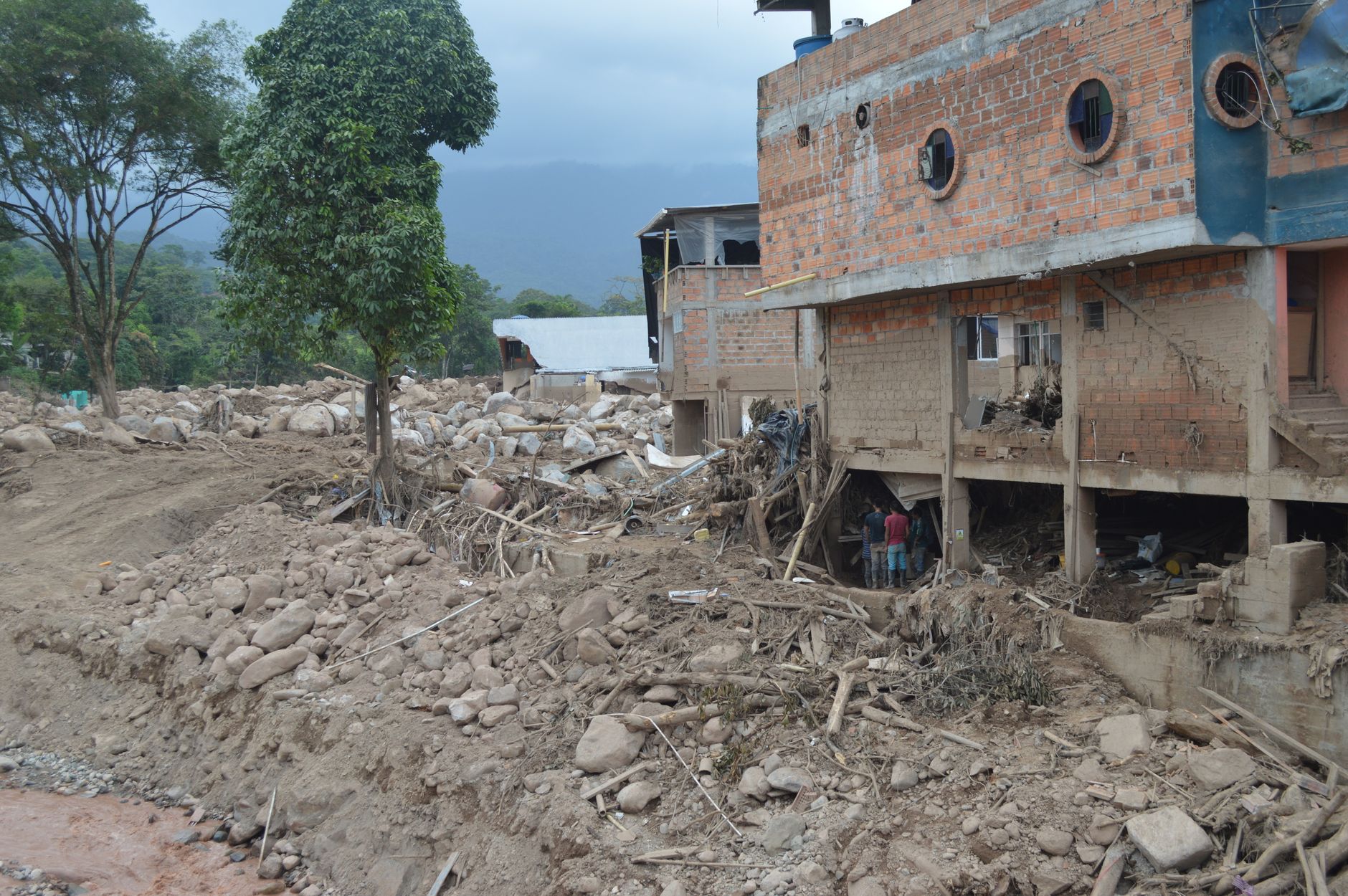
<p>The <b>7.0 magnitude earthquake that struck the Tibet region on October 22, 2026</b> has emerged as one of the most significant seismic events of the year, instantly transforming a quiet autumn day into a desperate fight for survival. The tremor, originating at a relatively shallow depth, sent shockwaves across the Himalayan plateau, toppling ancient monasteries, modern infrastructure, and humble homes alike. As the dust settles, the true scale of the tragedy is becoming heartbreakingly clear, with confirmed fatalities climbing steadily and thousands left injured or displaced. This event is not merely a geological occurrence; it is a profound human crisis that tests the resilience of remote communities and the coordination of international relief mechanisms.</p>
<figure class="my-8 overflow-hidden rounded-3xl shadow-xl">
<img src="https://images.pexels.com/photos/30295888/pexels-photo-30295888.jpeg?auto=compress&cs=tinysrgb&dpr=2&h=650&w=940" alt="earthquake epicenter map tibet" class="w-full h-[400px] object-cover" />
</figure>
Advertisement
Loading partner content...
<h2>The Geological Fury: Understanding the October 22 Event</h2>
<p>The earthquake struck at 09:47 AM local time, with its epicenter pinpointed near the sparsely populated but strategically significant Dingri County in the Shigatse prefecture. The <b>United States Geological Survey (USGS)</b> and the <b>China Earthquake Networks Center (CENC)</b> both confirmed the magnitude at 7.0 Mw, classifying it as a "Major" earthquake capable of widespread, heavy damage. The shallow depth of approximately 10 kilometers amplified the shaking intensity at the surface, a critical factor that explains the catastrophic structural failures observed in nearby villages.</p>
<h3>Tectonic Setting: The Collision Zone</h3>
<p>Tibet sits atop one of the most geologically volatile regions on the planet. The plateau is the direct result of the ongoing collision between the <b>Indian Plate</b> and the <b>Eurasian Plate</b>, a tectonic dance that has been underway for roughly 50 million years. This convergence creates immense compressional stress, which is periodically released through massive thrust faults. The October 22 event is attributed to rupture along the <b>Main Himalayan Thrust (MHT)</b> or a related splay fault, the same fault system responsible for the devastating 2015 Gorkha earthquake in neighboring Nepal.</p>
Advertisement
Loading partner content...
<blockquote>
"The Himalayan arc is essentially a loaded spring. Every year, the Indian plate pushes northward by about 4 to 5 centimeters, storing elastic strain in the crust. Events like the October 22 quake are the inevitable, violent release of that accumulated energy." — Dr. Arun Bapat, Seismologist (Retired), India Meteorological Department.
</blockquote>
<h3>Aftershock Sequence: The Lingering Threat</h3>
<p>In the weeks following the mainshock, the region has been rattled by a vigorous aftershock sequence. As of early November 2026, <b>over 450 aftershocks</b> of magnitude 3.0 or greater have been recorded, including three exceeding magnitude 5.0. These subsequent tremors pose a dual threat: they psychologically terrify survivors living in makeshift camps, and they mechanically weaken already compromised structures, leading to secondary collapses. The persistence of this sequence suggests a complex fault rupture process, keeping seismologists on high alert for potential triggered seismicity on adjacent fault segments.</p>
Advertisement
Loading partner content...
<h2>Human Toll: Stories from the Roof of the World</h2>
<p>Beyond the raw statistics lies a tapestry of individual tragedies and remarkable resilience. The hardest-hit areas are characterized by high-altitude settlements where traditional adobe and stone masonry construction—beautifully adapted <a href="/article/colombia-s-deadly-earthquake-a-comprehensive-guide-to-the-largest-quake-in-years-its-history-impact-" title="Colombia's Deadly Earthquake: A Comprehensive Guide to the Largest Quake in Years, Its History, Impact, and Preparedness" class="internal-link">to the</a> climate but highly vulnerable to lateral shaking—predominates. Entire villages have been reduced to rubble, severing lifelines for communities already living on the margins.</p>
<h3>Casualty Figures and Demographics</h3>
<p>Official figures released by the <b>Ministry of Emergency Management (MEM)</b> as of November 5, 2026, paint a grim picture. The numbers continue to be revised upward as search <a href="/article/building-digital-foundations-a-practical-guide-to-clean-architecture-system-design-for-indian-tech-t" title="Building Digital Foundations: A Practical Guide to Clean Architecture & System Design for Indian Tech Teams" class="internal-link">teams</a> reach isolated hamlets previously cut off by landslides.</p>
<table>
<thead>
<tr>
<th>Metric</th>
<th>Figure (as of Nov 5, 2026)</th>
<th>Notes</th>
</tr>
</thead>
<tbody>
<tr>
<td>Confirmed Fatalities</td>
<td>1,248</td>
<td>Expected to rise</td>
</tr>
<tr>
<td>Injured</td>
<td>3,572</td>
<td>Includes 412 critical</td>
</tr>
<tr>
<td>Displaced Persons</td>
<td>~45,000</td>
<td>Housed in 87 temporary camps</td>
</tr>
<tr>
<td>Structures Collapsed</td>
<td>14,200+</td>
<td>Residential & public</td>
</tr>
<tr>
<td>Structures Damaged</td>
<td>38,500+</td>
<td>Varying degrees</td>
</tr>
</tbody>
</table>
Advertisement
Loading partner content...
<p>The demographic profile of the victims is particularly poignant. A disproportionate number of casualties are <b>elderly residents and children</b> who were indoors during the late morning quake, while working-age adults were often in fields or pastures. This demographic skew will have long-term implications for the social fabric and economic recovery of the affected valleys.</p>
<h3>Cultural Heritage Losses</h3>
<p>The earthquake has inflicted irreversible damage on the region's profound cultural heritage. Several ancient monasteries, some dating back to the 11th and 12th centuries, have suffered partial or total collapse. The <b>Sakya Monastery</b>, a UNESCO World Heritage tentative site and a masterpiece of Tibetan architecture, reported significant cracking in its main assembly hall and the loss of priceless thangkas (scroll paintings) and manuscripts. These structures are not merely buildings; they are living repositories of <b>Society & Culture</b>, embodying centuries of Buddhist philosophy, art, and community identity.</p>
<p>Their loss represents a wound to the collective memory of the Tibetan people that no financial compensation can heal.</p>
<figure class="my-8 overflow-hidden rounded-3xl shadow-xl">
<img src="https://images.pexels.com/photos/7806159/pexels-photo-7806159.jpeg?auto=compress&cs=tinysrgb&dpr=2&h=650&w=940" alt="damaged tibetan monastery earthquake" class="w-full h-[400px] object-cover" />
</figure>
Advertisement
Loading partner content...
<h2>The Race Against Time: Relief and Rescue Operations</h2>
<p>The response to the disaster has been a massive, multi-layered operation hampered by the very geography that makes Tibet unique. High altitude, thin air, freezing nighttime temperatures, and landslide-blocked roads have created a logistical nightmare for rescuers.</p>
<h3>Government Mobilization: The "Golden 72 Hours" and Beyond</h3>
<p>The central government launched a <b>Level I Emergency Response</b>—the highest tier—within hours of the quake. Over <b>20,000 personnel</b> from the People's Liberation Army (PLA), People's Armed Police (PAP), fire and rescue services, and professional emergency teams were deployed. Specialized high-altitude rescue units, equipped with life detectors, thermal imaging drones, and heavy machinery airlifted by transport helicopters, formed the spearhead.</p>
<ul>
<li><b>Airbridge Established:</b> Y-20 and Y-9 transport aircraft ferried <a href="/article/thousands-of-security-personnel-deployed-as-delhi-braces-for-cockroach-protest" title="Thousands of security personnel deployed as Delhi braces for ‘cockroach’ protest" class="internal-link">thousands of</a> tons of supplies—tents, quilts, folding beds, heaters, and medical kits—to Lhasa and Shigatse airports for onward distribution.</li>
<li><b>Medical Surge:</b> Mobile field hospitals, including a 500-bed facility deployed by the PLA General Hospital, were operational within 48 hours. Telemedicine links connected local medics with specialists in Beijing and Shanghai.</li>
<li><b>Lifeline Restoration:</b> Engineering corps prioritized clearing the <b>China-Nepal Highway (Friendship Highway)</b> and the Sichuan-Tibet Highway, critical arteries for heavy relief convoys. <a href="/article/unlocking-the-power-of-social-media-marketing-tactics" title="Unlocking the Power of Social Media Marketing Tactics" class="internal-link">Power</a> and 5G communication were restored to county seats within 72 hours.</li>
</ul>
Advertisement
Loading partner content...
<h3>Community-Led Resilience: The First Responders</h3>
<p>Long before professional teams arrived, <b>local monks, herders, and villagers</b> were digging through rubble with bare hands and simple tools. In many remote hamlets, these community members remained the sole rescuers for days. Their intimate knowledge of local building layouts and family structures proved invaluable in locating void spaces where survivors might be trapped. This grassroots response highlights a critical truth: in high-mountain disasters, <b>community resilience is the first line of defense</b>.</p>
<h3>International Dimensions: Aid and Diplomacy</h3>
<p>Given the region's proximity to Nepal, India, and Bhutan, the quake was felt strongly across borders. <b>India</b> swiftly dispatched National Disaster Response Force (NDRF) teams and medical supplies via the Nathu La pass, marking a rare instance of operational humanitarian cooperation along the disputed border. <b>Nepal</b>, drawing on its own harrowing 2015 experience, offered search-and-rescue dog squads and structural engineers. The <b>UN Office for the Coordination of Humanitarian Affairs (OCHA)</b> activated its cluster system, facilitating coordination among international NGOs like the Red Cross Society of China, Médecins Sans Frontières, and Save the Children.</p>
Advertisement
Loading partner content...
<figure class="my-8 overflow-hidden rounded-3xl shadow-xl">
<img src="https://images.pexels.com/photos/15545136/pexels-photo-15545136.jpeg?auto=compress&cs=tinysrgb&dpr=2&h=650&w=940" alt="earthquake rescue operations high altitude" class="w-full h-[400px] object-cover" />
</figure>
<h2>Historical Echoes: Lessons Learned and Forgotten</h2>
<p>The October 22 earthquake is not an isolated anomaly but a recurrence in a long seismic history. Comparing it with past events reveals both progress and persistent vulnerabilities.</p>
<h3>Comparative Analysis: 2008 Wenchuan vs. 2026 Dingri</h3>
<table>
<thead>
<tr>
<th>Parameter</th>
<th>2008 Wenchuan (Mw 7.9)</th>
<th>2026 Dingri (Mw 7.0)</th>
</tr>
</thead>
<tbody>
<tr>
<td>Death Toll</td>
<td>~69,000</td>
<td>~1,250 (preliminary)</td>
</tr>
<tr>
<td>Population Density</td>
<td>High (Sichuan Basin fringe)</td>
<td>Low (High Plateau)</td>
</tr>
<tr>
<td>Building Stock</td>
<td>Mixed urban/rural, poor rural codes</td>
<td>Predominantly traditional rural</td>
</tr>
<tr>
<td>Response Time</td>
<td>Hours to days (initial chaos)</td>
<td>Hours (pre-positioned assets)</td>
</tr>
<tr>
<td>Early Warning</td>
<td>None</td>
<td>EEW alerts sent (seconds lead time)</td>
</tr>
</tbody>
</table>
Advertisement
Loading partner content...
<p>The significantly lower death toll in 2026, despite the high magnitude, is attributable to three factors: <b>lower population density</b> in the epicentral area, <b>improved emergency response capacity</b> built since 2008, and the deployment of an <b>Earthquake Early Warning (EEW) system</b> that provided crucial seconds of alert to Lhasa and Shigatse. However, the high collapse rate of traditional housing underscores that <b>structural vulnerability remains the Achilles' heel</b>.</p>
<h3>The 2015 Gorkha Shadow</h3>
<p>8) serves as the most relevant regional analogue. That event killed nearly 9,000 people and destroyed 600,000 structures. A key lesson from Gorkha was the <b>failure of "cement band" retrofitting</b> in traditional stone masonry—where a thin concrete ring beam was added without proper connection to walls. Post-2026 assessments in Dingri show identical failure modes in retrofitted homes, suggesting that <b>technical knowledge transfer to local masons remains inadequate</b>.</p>
<p>This is a critical policy gap that must be addressed in the reconstruction phase.</p>
<h2>The Long Road Ahead: Reconstruction and Resilience</h2>
<p>As the emergency phase transitions to recovery, the focus shifts to rebuilding not just houses, but lives and livelihoods. The challenge is to reconstruct in a way that honors cultural identity while engineering for the inevitable next quake.</p>
Advertisement
Loading partner content...
<h3>"Build Back Better": The Policy Imperative</h3>
<p>The government has announced a <b>"Three-Year Reconstruction Plan"</b> with a budget allocation exceeding ¥80 billion. The core philosophy is "Build Back Better" (BBB), incorporating seismic resilience into every new structure. Key technical mandates include:</p>
<ol>
<li><b>Mandatory Seismic Design:</b> All new rural housing must meet <b>GB 50011-2025</b> code for Intensity VIII/IX zones, utilizing confined masonry or light steel framing.</li>
<li><b>Subsidy Model:</b> Households receive a base grant of ¥50,000 plus technical guidance; additional incentives for adopting certified earthquake-resistant designs.</li>
<li><b>Relocation vs. In-Situ:</b> For villages on active landslide zones or fault traces, <b>planned relocation</b> to safer geotechnical sites is being offered, though cultural attachment to ancestral land makes this socially complex.</li>
<li><b>Heritage Conservation:</b> Damaged monasteries will be restored using <b>traditional craftsmanship augmented by hidden seismic reinforcement</b> (e.g., base isolation, fiber-reinforced polymer wrapping), overseen by the State Administration of Cultural Heritage.</li>
</ol>
Advertisement
Loading partner content...
<h3>Livelihood Restoration: Beyond Bricks and Mortar</h3>
<p>The economic base of the affected counties—<b>yak herding, barley farming, <a href="/article/the-twisha-sharma-death-case-unraveling-the-legal-social-and-cultural-implications-of-a-high-profile" title="The Twisha Sharma Death Case: Unraveling the Legal, Social, and Cultural Implications of a High‑Profile Homicide in India" class="internal-link">and cultural</a> tourism</b>—has been shattered. Winter fodder stores were buried under collapsed barns, and the upcoming tourist season (May–October 2027) faces mass cancellations. Recovery plans must include:</p>
<ul>
<li><b>Livestock Restocking Programs:</b> Subsidized veterinary care and breed improvement to rebuild herds.</li>
<li><b>Tourism Confidence Building:</b> Rapid safety certification of key monasteries and trekking routes, coupled with marketing campaigns emphasizing "Resilient Tibet."</li>
<li><b>Psychosocial Support:</b></b></ul></li></i></i></i>