<h1><a href="/article/beyond-the-candidate-swap-what-the-bjp-s-datia-defeat-reveals-about-indian-political-strategy" title="Beyond the Candidate Swap: What the BJP's Datia Defeat Reveals About Indian Political Strategy" class="internal-link">Beyond the</a> Headlines: Is India's Election Commission Losing Its Neutrality? <a href="/article/the-power-of-the-youth-a-deep-dive-into-the-history-and-impact-of-student-activism-in-india" title="The Power of the Youth: A Deep Dive into the History and Impact of Student Activism in India" class="internal-link">A Deep Dive into the</a> Gyanesh Kumar Controversy</h1>
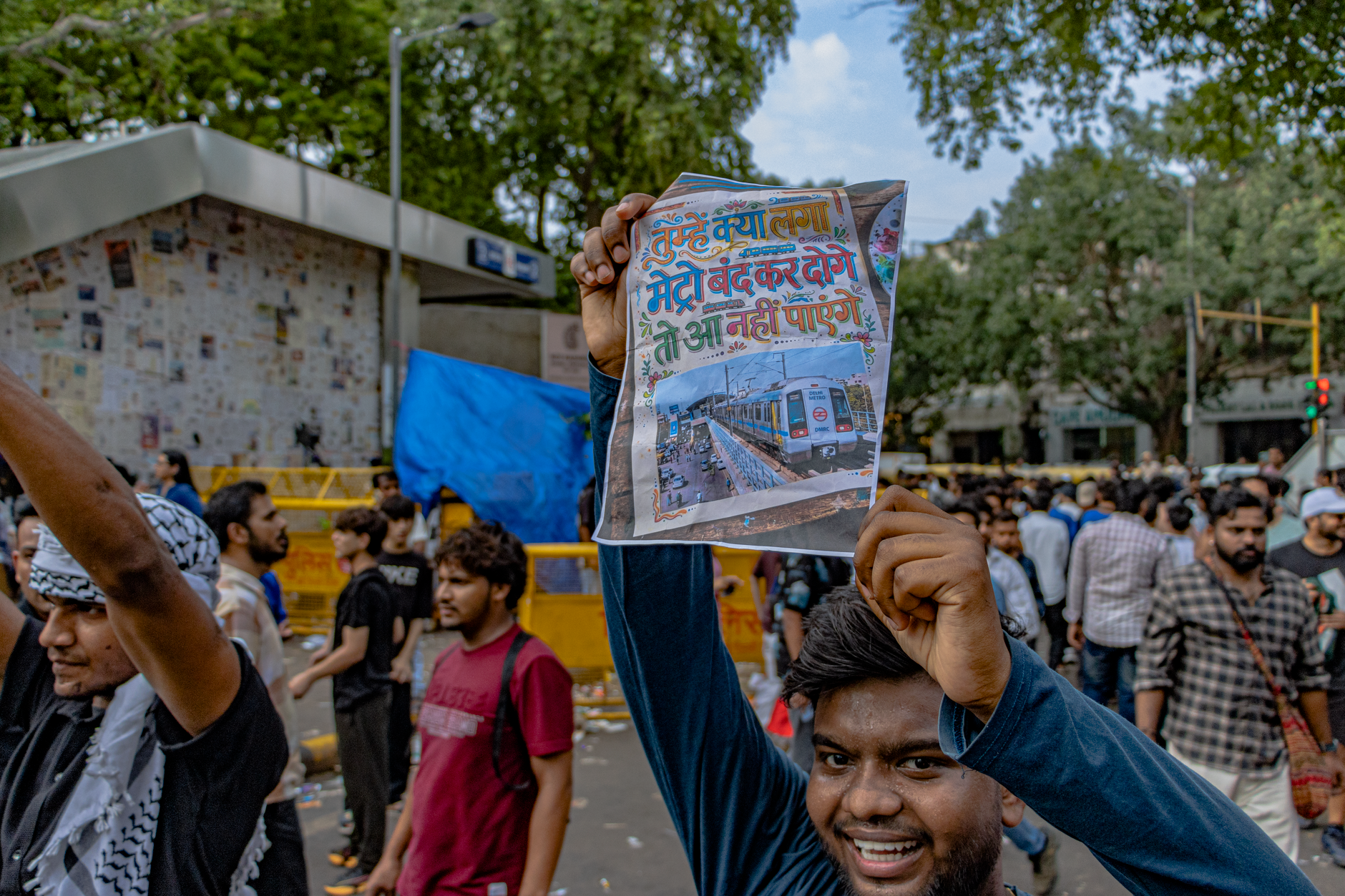
<p>The recent protest outside the Election Commission of India (ECI) headquarters is <b>not an isolated political stunt</b> but a flashing warning light on the dashboard of Indian democracy. <b>It signals a growing conviction</b> among opposition parties, civil‑society groups, and many voters that the referee of the world’s largest electoral exercise may have swapped its whistle for a partisan baton. <b>The central question</b> now echoing in courtrooms, newsrooms, and living rooms is whether the ECI is steadily losing the neutrality that once made it a global benchmark.</p>
<figure class="my-8 overflow-hidden rounded-3xl shadow-xl">
<img src="https://images.pexels.com/photos/37482057/pexels-photo-37482057.jpeg?auto=compress&cs=tinysrgb&dpr=2&h=650&w=940" alt="election commission building" class="w-full h-[400px] object-cover" />
</figure>
<h2>The Sacrosanct Status of the ECI</h2>
<h3>Founding Vision and Article 324</h3>
Advertisement
Loading partner content...
<p>The Constituent Assembly placed the Election Commission on a constitutional pedestal through <b>Article 324</b>, granting it superintendence, direction, and control of all elections to Parliament and State Legislatures. <b>The Founding Fathers envisaged</b> an institution insulated from executive pressure, capable of enforcing a level playing field even when the ruling party commanded overwhelming parliamentary strength. <b>This design</b> was a deliberate response to colonial‑era manipulation of electoral rolls and the desire to embed democratic legitimacy in the very architecture of the Republic.</p>
<h3>Historic Interventions</h3>
<p>History offers vivid proof of the Commission’s willingness to wield its powers boldly. <b>In 1977</b>, the ECI oversaw the first post‑Emergency elections, ensuring a peaceful transfer <a href="/article/unveiling-the-tides-of-power-annamalai-s-departure-and-the-bjp-s-strategic-shift" title="Unveiling the Tides of Power: Annamalai's Departure and the BJP's Strategic Shift" class="internal-link">of power</a> despite intense political turbulence. <b>In 1991</b>, it delayed polls in Punjab citing law‑and‑order breakdown, invoking Article 324 to prioritize voter safety over political calendars. <b>More recently</b>, the 2019 imposition of President’s Rule in Jammu & Kashmir after the abrogation of Article 370 was executed under the Commission’s watch, reinforcing its role as the ultimate arbiter of electoral integrity.</p>
<blockquote>
<p>"The Election Commission is the guardian of the democratic contract; any perception of bias erodes the contract itself." – <cite>Former <a href="/article/when-democracy-turns-against-its-own-the-unprecedented-protests-against-india-s-chief-election-commi" title="When Democracy Turns Against Its Own: The Unprecedented Protests Against India's Chief Election Commissioner and the Crisis of Electoral Integrity" class="internal-link">Chief Election Commissioner</a>, S.Y. Quraishi</cite></p>
</blockquote>
Advertisement
Loading partner content...
<h2>The Anatomy of the Controversy</h2>
<h3>Who Is Gyanesh Kumar?</h3>
<p>Gyanesh Kumar assumed office as Chief Election Commissioner (CEC) in early 2024 after a career in the Indian Administrative Service that included stints in the Ministry of Home Affairs and the Prime Minister’s Office. <b>His résumé</b> reads like a textbook of bureaucratic competence, yet critics point to his <b>close proximity to the ruling Bharatiya Janata Party (BJP) leadership</b> during pivotal policy rollouts. <b>This background</b> fuels the narrative that his appointment was a strategic placement rather than a merit‑based selection.</p>
<figure class="my-8 overflow-hidden rounded-3xl shadow-xl">
<img src="https://ichef.bbci.co.uk/ace/branded_news/1200/cpsprodpb/d2fb/live/20fd0ca0-bffa-11f1-a64c-550be9e3c66b.jpg" alt="Gyanesh Kumar" class="w-full h-[400px] object-cover" />
</figure>
<h3>Allegations of Partisan Past</h3>
Advertisement
Loading partner content...
<p>The opposition’s charge sheet centers on three pillars: <b>first</b>, Kumar’s involvement in drafting the controversial Citizenship Amendment Act implementation guidelines; <b>second</b>, his role in the 2022 delimitation exercise in Assam, which critics claim favored BJP‑strongholds; <b>third</b>, the absence of a transparent, multi‑party consultation before his elevation. <b>These points</b> collectively construct a perception that the CEC may sympathize with the incumbent’s electoral calculus.</p>
<h3>Collegium Demand and Legal Framework</h3>
<p>Article 324(2) states that the President appoints the CEC and Election Commissioners on the advice of the Council of Ministers. <b>Unlike the judiciary</b>, where a collegium of senior judges recommends appointments, the ECI’s selection remains an executive prerogative. <b>Opposition parties</b> now demand a <b>collegium‑style mechanism</b> comprising the Prime Minister, Leader of Opposition, and Chief Justice of India — a model that would institutionalize bipartisan consensus. <b>Legal scholars</b> argue that such a reform would require a constitutional amendment, but the political will to initiate it has been conspicuously absent.</p>
<table>
<thead>
<tr>
<th>Appointment Model</th>
<th>Current Process</th>
<th>Proposed Collegium</th>
</tr>
</thead>
<tbody>
<tr>
<td>Decision‑makers</td>
<td>Prime Minister & Cabinet</td>
<td>PM, LoP, CJI</td>
</tr>
<tr>
<td>Transparency</td>
<td>Low (closed‑door)</td>
<td>High (public minutes)</td>
</tr>
<tr>
<td>Tenure Security</td>
<td>Fixed 6‑year term, removable by Parliament</td>
<td>Same, but with bipartisan veto on removal</td>
</tr>
</tbody>
</table>
<h2>A Pattern of Erosion?</h2>
Advertisement
Loading partner content...
<h3>Timing of Elections</h3>
<p>Critics highlight a recurring pattern: state elections are frequently scheduled to coincide with favorable national narratives for the ruling party. <b>The 2022 Uttar Pradesh polls</b> were held weeks after a high‑profile welfare scheme launch, while the 2023 Karnataka elections followed a central government infrastructure push in the state. <b>Such synchronisation</b> raises eyebrows about whether the Commission is exercising independent judgment or aligning with the executive’s political calendar.</p>
<h3>Model Code of Conduct Enforcement</h3>
<p>The Model Code of Conduct (MCC) is the ECI’s primary tool to ensure a level playing field. <b>Yet enforcement</b> has appeared selective. <b>High‑profile violations</b> by ruling‑party leaders — ranging from hate‑speech rallies to misuse of government machinery — have often attracted only mild advisories, while opposition figures have faced swift show‑cause notices. <b>This asymmetry</b> fuels the perception that the MCC is a weapon wielded asymmetrically.</p>
<h3>Perceived Inaction</h3>
Advertisement
Loading partner content...
<p>Several high‑profile complaints — such as the alleged use of central agencies for electoral surveillance in West Bengal (2021) and the controversial handling of electoral bonds disclosure — have seen <b>delayed or muted responses</b> from the Commission. <b>Each instance</b> adds a brick to the wall of skepticism, suggesting a systemic drift rather than isolated lapses.</p>
<h2>The Ripple Effect: Why It Matters</h2>
<h3>Legitimacy of Outcomes</h3>
<p>When the referee is suspected of favoritism, <b>the final score loses credibility</b>. <b>Election results</b> that were once accepted as the unambiguous voice of the people become contested narratives, spawning protracted legal battles and street protests. <b>This erosion</b> of legitimacy can paralyze governance, as incoming governments spend precious political capital defending their mandate rather than delivering policy.</p>
<h3>Voter Apathy and Global Standing</h3>
Advertisement
Loading partner content...
<p>Perceived bias trickles down to the voter. <b>Surveys in 2025</b> indicated a 7‑percentage‑point dip in trust in the ECI compared with 2019, correlating with a measurable decline in turnout among first‑time voters. <b>Internationally</b>, democracy indices such as the V‑Dem Institute have downgraded India’s “electoral integrity” score, citing institutional capture concerns. <b>A tarnished reputation</b> undermines India’s moral authority when it champions democratic values on global platforms.</p>
<figure class="my-8 overflow-hidden rounded-3xl shadow-xl">
<img src="https://images.unsplash.com/photo-1540910419892-4a36d2c3266c?crop=entropy&cs=tinysrgb&fit=max&fm=jpg&ixid=M3w4NjI1Nzh8MHwxfHNlYXJjaHwxfHx2b3RpbmclMjBwcm9jZXNzfGVufDB8MHx8fDE3OTEyNzU4NTB8MA&ixlib=rb-4.1.0&q=80&w=1080" alt="voting process" class="w-full h-[400px] object-cover" />
</figure>
<h2>The Path Forward: Reclaiming Neutrality</h2>
Advertisement
Loading partner content...
<h3>Collegium‑Based Appointments</h3>
<p>A transparent, multi‑party collegium is the most cited reform. <b>Embedding the Leader of Opposition</b> and the Chief Justice in the selection panel would force consensus on candidates whose impartiality is beyond reasonable doubt. <b>Legislative backing</b> for such a body could be achieved through a constitutional amendment, but a statutory framework — similar to the National Judicial Appointments Commission (NJAC) experiment — could serve as an interim step.</p>
<h3>Fixed Tenures and Removal Safeguards</h3>
<p>Current law allows removal of a CEC only through a parliamentary impeachment process, which is politically cumbersome. <b>Introducing a fixed, non‑renewable term</b> of six years, coupled with a requirement for a two‑thirds majority in both Houses for removal, would insulate the office from executive pressure. <b>Such safeguards</b> mirror protections enjoyed by the Comptroller and Auditor General, reinforcing institutional independence.</p>
<h3>Transparency in Decision‑Making</h3>
Advertisement
Loading partner content...
<p>The ECI’s internal deliberations on MCC violations, election scheduling, and disciplinary actions remain largely opaque. <b>Publishing reasoned orders</b> — with dissenting notes where applicable — would allow public scrutiny and academic analysis. <b>Real‑time dashboards</b> tracking complaint disposal rates, notice issuance, and adjudication timelines could further democratize accountability.</p>
<blockquote>
<p>"Institutions do not defend themselves; they are defended by citizens who demand transparency." – <cite>Aruna Roy, Social Activist</cite></p>
</blockquote>
<p>The struggle to preserve the Election Commission’s neutrality is <b>not a partisan project</b> but a civic imperative. <b>Every reform</b> that narrows the space for political patronage in appointments, every procedural tweak that forces the Commission to explain its choices, strengthens the democratic contract that binds 1.4 billion citizens. <b>History will judge</b> this moment not by the decibel level of protests but by whether the institution emerges from the crucible with its credibility intact.</p>
<figure class="my-8 overflow-hidden rounded-3xl shadow-xl">
<img src="https://gizmodo.com/app/uploads/2026/09/US-Pacific-Command-1200x675.jpg" alt="Constitution of India" class="w-full h-[400px] object-cover" />
</figure></b></b></i></i></i></i>