
<h1>City of Mahakal: Navigating Heritage, Encroachment, and Communal Harmony in Ujjain's Evolving Landscape</h1>
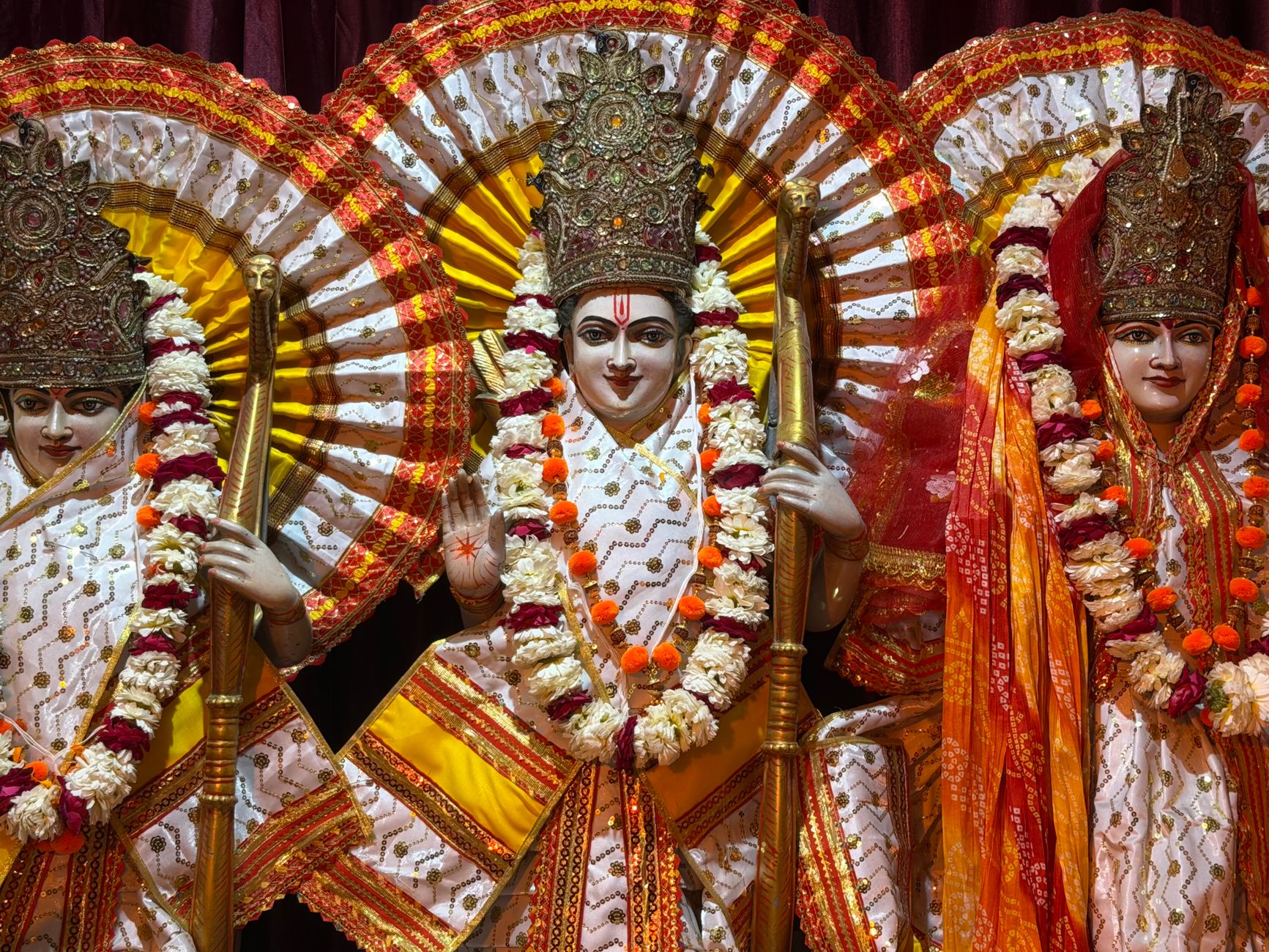
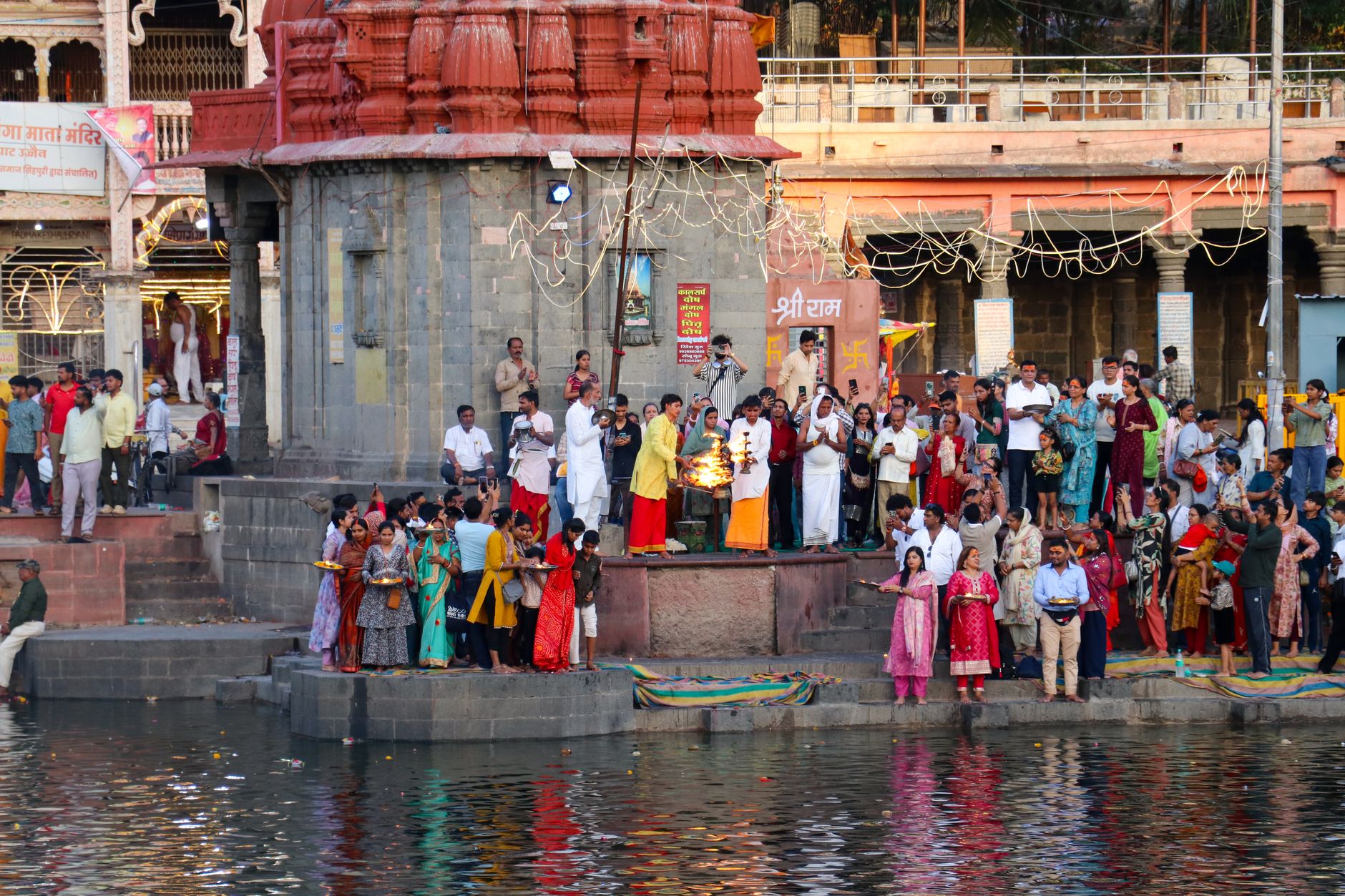
<p>The sound of the Bhasma Aarti at Mahakaleshwar Jyotirlinga reverberates across the Shipra River at dawn, drawing millions into the spiritual orbit of Ujjain. This ancient city, once known as Avantika, has worn many crowns — a seat of Hindu astronomy, a Buddhist pilgrimage hub, a Mughal administrative center, and a British cantonment. Today, in 2026, Ujjain stands at a crossroads where its timeless spiritual identity collides with the relentless pressures of modern urbanization. The Mahakal Lok corridor project, envisioned as a grand redevelopment of the temple precinct, has brought both promise and pain — promising a world-class pilgrimage experience while displacing centuries-old neighborhoods and igniting debates about religious liberty, urban justice, and communal peace.</p>
<figure class="my-8 overflow-hidden rounded-3xl shadow-xl">
<img src="https://images.pexels.com/photos/30754611/pexels-photo-30754611.jpeg?auto=compress&cs=tinysrgb&dpr=2&h=650&w=940" alt="Mahakaleshwar Jyotirlinga" class="w-full h-[400px] object-cover" />
</figure>
<p>This article does not recount a single clash or demolition. Instead, it offers a deep, systemic examination of Ujjain's socio-cultural fabric — a fabric woven from Hindu, Muslim, Jain, and Buddhist threads — and explores how heritage cities across India can navigate the thorny intersection of religious preservation, urban renewal, and constitutional morality.</p>
Advertisement
Loading partner content...
<h2>Layers of History: Ujjain's Syncretic Past</h2>
<p>Ujjain's story begins long before the Mahakal temple rose to its current iconic stature. As Avantika, it served as the capital of the Avanti kingdom and later emerged as one of the seven sacred cities (Sapta Puri) in Hindu cosmology. The city's latitude made it the prime meridian for Hindu astronomers — the <b>Goladhyaya</b> and <b>Surya Siddhanta</b> texts were composed here, and the famous astronomer Brahmagupta worked in Ujjain's observatory in the 7th century.</p>
<p>But Ujjain's spiritual geography is not exclusively Hindu. The city embraced Buddhism during Ashoka's reign, with stupas and viharas dotting the landscape. Islamic influence arrived with the Delhi Sultanate and deepened under the Mughals, bringing dargahs, masjids, and a syncretic culture that blended Sufi mysticism with local traditions. Historical records indicate that temples and dargahs often stood in close proximity — not as symbols of conflict, but as markers of a shared sacred geography where multiple faiths coexisted for centuries.</p>
<p>This layered past matters because it shapes Ujjain's present. The city's religious diversity is not an anomaly to be managed but its defining characteristic. Any urban plan that ignores this pluralism risks not just legal battles but the erosion of Ujjain's soul.</p>
Advertisement
Loading partner content...
<h2>The Legal Framework: Religious Structures, Encroachment, and the Law</h2>
<p>Understanding Ujjain's urban tensions requires grasping the complex legal architecture governing religious structures on public land. India's legal framework is a patchwork of colonial-era statutes, Supreme Court judgments, and state-level amendments — often contradictory, always contentious.</p>
<h3>Key Legal Mechanisms</h3>
<ul>
<li><b>The Waqf Act, 1995</b>: Governs Islamic charitable endowments. It provides for the registration, protection, and management of waqf properties. However, it has been criticized for creating "untouchable" properties that cannot be surveyed, relocated, or even maintained by the state without community consent.</li>
<li><b>The Religious Institutions (Prevention of Misuse) Act, 1988</b>: Targets the commercialization of religious sites but does not directly address encroachment on public land.</li>
<li><b>Supreme Court Guidelines (2009/2021)</b>: The Court has ruled that unauthorized religious constructions on public land — whether temples or mosques — cannot be automatically regularized. However, it has also emphasized that mere antiquity does not grant legal title to public land.</li>
<li><b>Municipal Corporation Powers</b>: Under state municipal laws, corporations can issue demolition notices for encroachments. But in practice, religious sentiment often triggers political intervention, stay orders, and protracted legal battles.</li>
</ul>
Advertisement
Loading partner content...
<p>The fundamental tension is this: <b>the law treats all religious structures equally on paper, but political and social realities make enforcement deeply uneven.</b> A temple encroachment and a mosque encroachment on the same road may receive vastly different <a href="/article/how-iran-israel-war-impacts-indian-economy-and-businesses-india-s-strategic-response" title="How Iran-Israel War Impacts Indian Economy and Businesses: India's Strategic Response" class="internal-link">response</a>s from the administration, depending on local power dynamics, electoral calculus, and communal temperature.</p>
<h2>The Mahakal Lok Effect: Urban Renewal vs. Displacement</h2>
<p>The Mahakal Lok corridor, part of Ujjain's broader Smart City mission, represents India's evolving ambition to create "spiritual tourism" infrastructure. Road widening, heritage façade restoration, pedestrian plazas, and underground wiring — these are standard urban renewal tools. But in a temple town where every inch of land carries religious significance, the tools become weapons.</p>
<p>The corridor project has triggered several specific challenges:</p>
<ol>
<li><b>Road Widening and Frontage Loss</b>: Shops and homes along the approach roads to Mahakaleshwar have been acquired or demolished. Many owners belong to minority communities who had operated <a href="/article/top-10-businesses-ai-cant-take-from-you" title="Top 10 Businesses AI Can’t Take From You" class="internal-link">businesses</a> there for generations.</li>
<li><b>Heritage Conservation vs. Modernization</b>: The tension between preserving centuries-old havelis and replacing them with "heritage-compliant" commercial structures raises questions about who defines heritage — the state or the community?</li>
<li><b>Displacement of Informal Settlements</b>: Encroachment drives often target the most vulnerable — pavement dwellers, small vendors, and informal workers — who lack legal representation and political leverage.</li>
<li><b>Traffic and Pilgrim Flow</b>: The corridor aims to manage massive pilgrim footfall, but the resulting traffic diversion has disrupted neighborhood access, affecting daily life beyond the tourist zones.</li>
</ol>
Advertisement
Loading partner content...
<p>The "beautification" narrative often masks a deeper economic reality: <b>those who lose their frontage are rarely those who gain from the corridor's glamour.</b></p>
<h2>Anatomy of a Flashpoint: Why Demolitions Trigger Unrest</h2>
<p>When an encroachment drive targets a religious structure — whether a makeshift temple or a mosque — the response is rarely proportionate to the legal violation. Why? Sociologists point to several intersecting factors:</p>
<ul>
<li><b>Identity Politics</b>: Religious structures are not just buildings; they are markers of community identity. Demolishing one is perceived as an attack on the community itself.</li>
<li><b>Vote Bank Narratives</b>: Political parties exploit communal flashpoints for electoral gain, often amplifying rumors and inflaming sentiments before facts emerge.</li>
<li><b>Social Media Amplification</b>: In 2026, a single video clip can ignite city-wide unrest within hours. Rumors of "forced demolitions" or "religious persecution" spread faster than official clarifications.</li>
<li><b>Trust Deficit</b>: Minority communities often perceive the administration as biased — enforcing laws against them while overlooking violations by majority-group structures.</li>
</ul>
Advertisement
Loading partner content...
<p>The result is a self-reinforcing cycle: demolition triggers protest, protest triggers political intervention, political intervention triggers counter-protest, and the administration loses its neutrality. <b>Breaking this cycle requires not just better law enforcement but fundamentally different approaches to community engagement.</b></p>
<h2>Models of Resolution: Case Studies from India</h2>
<p>Ujjain is not alone in facing these challenges. Several Indian heritage cities have attempted similar urban-religious balancing acts, with varying degrees of success.</p>
<table border="1" cellpadding="8" cellspacing="0" style="width:100%; border-collapse:collapse;">
<tr style="background-color:#f0f0f0;">
<th>City/Project</th><th>Approach</th><th>Outcome</th>
</tr>
<tr>
<td>Varanasi - Kashi Vishwanath Corridor</td>
<td>Large-scale acquisition, relocation of residents, grand redevelopment</td>
<td>Improved pilgrim experience but significant displacement controversies; mixed community reception</td>
</tr>
<tr>
<td>Ayodhya - <a href="/article/navigating-legalities-and-cultural-tensions-the-ram-temple-donation-case-unfolds" title="Navigating Legalities and Cultural Tensions: The Ram Temple Donation Case Unfolds" class="internal-link">Ram Temple</a> Complex</td>
<td>Supreme Court-mediated resolution, trust-based management</td>
<td>Legal closure achieved, but ongoing social polarization and security concerns</td>
</tr>
<tr>
<td>Mathura - Krishna Janmabhoomi</td>
<td>Multiple structures, competing claims, partial demolition drives</td>
<td>Persistent legal disputes; communal tensions remain acute</td>
</tr>
<tr>
<td>Ajmer Sharif Dargah</td>
<td>Multi-faith committee, state-supported preservation, community-led management</td>
<td>Relatively peaceful coexistence; model of inter-faith governance</td>
</tr>
</table>
<p>The common thread in successful cases is <b>transparent negotiation, fair rehabilitation, and multi-faith representation in decision-making</b>. Cities that imposed top-down solutions without community consultation faced prolonged unrest, regardless of the legal validity of their actions.</p>
Advertisement
Loading partner content...
<h2>Voices from the Ground: The Human Element</h2>
<p>Behind every legal notice and demolition order are human lives. In Ujjain's temple periphery neighborhoods, the human element is starkly visible:</p>
<ul>
<li><b>The Priest</b>: Managing surging pilgrim crowds while worrying about whether his own neighborhood will be next for "beautification."</li>
<li><b>The Shopkeeper</b>: Who lost his shop frontage to road widening and now operates from a temporary shed, watching tourist footfall pass by without stopping.</li>
<li><b>The Imam</b>: Navigating community fears about a nearby encroachment notice, balancing legal caution with pastoral duty.</li>
<li><b>The Municipal Commissioner</b>: Enforcing court orders while receiving conflicting political signals and facing protest threats.</li>
</ul>
<p>All of them share one economic reality: <b>Ujjain's economy runs on pilgrimage.</b> The priest, the shopkeeper, the Imam, and the commissioner all depend — directly or indirectly — on the smooth flow of pilgrims. Disruption anywhere in this chain hurts everyone. This shared dependence is not just an economic fact; it is the foundation on which communal harmony in Ujjain must be rebuilt.</p>
Advertisement
Loading partner content...
<h2>The Path Forward: Governance, Trust, and Inclusive Heritage</h2>
<p>So what should Ujjain — and India's other heritage cities — do differently? The following actionable policy suggestions emerge from a synthesis of legal scholarship, urban planning best practices, and on-ground realities:</p>
<ol>
<li><b>Transparent GIS Mapping</b>: Create a publicly accessible digital map of all religious structures — registered and unregistered — with clear classification of public land vs. private land. Transparency reduces rumors and builds trust.</li>
<li><b>Independent Heritage Committees</b>: Establish multi-faith committees with representation from Hindu, Muslim, Jain, Buddhist, and Christian communities to advise on heritage conservation decisions. No single community should unilaterally define "heritage."</li>
<li><b>Fair Rehabilitation Before Demolition</b>: The Supreme Court has consistently emphasized that rehabilitation must precede demolition. In practice, this means providing alternative accommodation, business relocation support, and compensation <i>before</i> any structure is dismantled.</li>
<li><b>Community Policing Models</b>: Train police in communal sensitivity and establish neighborhood-level dialogue forums where residents can voice concerns before they escalate into conflicts.</li>
<li><b>Smart City for Social Infrastructure</b>: Leverage the Smart City mission not just for physical infrastructure (roads, lighting) but for social infrastructure — community centers, inter-faith dialogue spaces, digital literacy programs, and legal aid clinics.</li>
<li><b>Anti-Rumor Protocols</b>: Establish rapid-response teams to counter communal rumors on social media with verified facts within the critical first hour of a viral claim.</li>
</ol>
Advertisement
Loading partner content...
<p>The goal is not to prevent urban development but to ensure it is <b>inclusive, legally sound, and communally sensitive</b>. A Smart Spiritual City is not one without conflict — it is one that manages conflict with constitutional morality and compassion.</p>
<h2>Conclusion: Preserving the Soul of Avantika</h2>
<p>Ujjain's true heritage is not just the stone of the Mahakal temple or the architecture of its havelis. It is the city's extraordinary ability to absorb diverse streams — Hindu, Buddhist, Islamic, Jain — and transform them into a single, flowing cultural river. This absorptive capacity is what made Avantika great, and it is what can make modern Ujjain great again.</p>
<p>The Mahakal Lok corridor is not inherently good or bad. It is a tool. Like any tool, its value depends on how it is wielded. If it displaces communities without rehabilitation, it erodes heritage.</p>
<p>If it involves communities in planning, provides fair compensation, and preserves the syncretic spirit of the city, it can become a model for heritage urbanism across India.</p>
Advertisement
Loading partner content...
<p>The test of Ujjain in 2026 and beyond is not whether it can build a grand corridor, but whether it can manage the friction of progress with justice, transparency, and an unwavering commitment to the constitutional promise of equal respect for all faiths. <b>The soul of Avantika depends on it.</b></p>
<blockquote>"The greatness of a city is measured not by the grandeur of its monuments, but by the dignity it preserves for the people who live among them."</blockquote>
<h2>Frequently Asked Questions</h2>
<h3>What is the Mahakal Lok corridor project in Ujjain?</h3>
<p>The Mahakal Lok corridor is an urban redevelopment initiative aimed at improving pilgrim infrastructure around the Mahakaleshwar Jyotirlinga. It includes road widening, heritage restoration, pedestrian plazas, and underground utilities. The project is part of the Smart City mission but has sparked debates about displacement and communal sensitivity.</p>
<h3>What are the legal provisions for demolishing religious structures on public land <a href="/article/social-norms-and-behavioral-change-how-culture-shapes-our-daily-choices-in-india" title="Social Norms and Behavioral Change: How Culture Shapes Our Daily Choices in India" class="internal-link">in India</a>?</h3>
<p>Under Indian law, unauthorized religious constructions on public land can be demolished under municipal laws and Supreme Court guidelines. The Waqf Act, 1995 provides specific protections for waqf properties. However, the Supreme Court has clarified that antiquity alone does not grant legal title to public land, and all structures — regardless of religious affiliation — are subject to the same legal process.</p>
Advertisement
Loading partner content...
<h3>How does Ujjain's religious history influence its current urban challenges?</h3>
<p>Ujjain's history as a syncretic city — with Hindu, Buddhist, Islamic, and Jain influences — means its urban space is religiously diverse. Any development project that does not account for this diversity risks alienating communities and triggering communal tensions. Understanding this plural history is essential for inclusive urban planning.</p>
<h3>What lessons can other heritage cities learn from Ujjain?</h3>
<p>Heritage cities like Varanasi, Ayodhya, Mathura, and Ajmer have faced similar challenges. <a href="/article/innovation-in-business-why-it-s-the-key-to-thriving-in-a-competitive-world" title="Innovation in Business: Why It’s the Key to Thriving in a Competitive World" class="internal-link">The key</a> lessons are: transparent GIS mapping of religious structures, multi-faith representation in heritage committees</b></p></i>