<h1>Delhi government says no legal action against NEET protesters</h1>
<p>The capital’s political landscape shifted dramatically in early September 2026 when the Aam Aadmi Party (AAP) led Delhi government announced it would <b>not pursue any legal action against students protesting against the NEET examination system</b>. The statement, issued by the Delhi Education Department, sparked a nationwide conversation about student activism, governmental responsiveness, and the evolving role of youth in Indian democracy. <figure <a href="/article/why-india-s-middle-class-is-more-stressed-than-ever" title="Why India’s Middle Class Is More Stressed Than Ever" class="internal-link">class</a>="my-8 overflow-hidden rounded-3xl shadow-xl">
<img src="https://s.yimg.com/lo/mysterio/api/146a0356f9c89203a8bc53868dfa8e294a0a73f9e485b305300e9291e8a8ae7c/lightyear_networkapi/resizefill_w866_h488;quality_80;format_webp/https:%2F%2Fmedia.zenfs.com%2Fen%2Fbbc_us_articles_995%2Fceadcd74e9f74f9062c889c8317c27e2" alt="Arvind Kejriwal" class="w-full h-[400px] object-cover" />
</figure></p>
<h2>The Backdrop: NEET and Student Unrest in 2026</h2>
<h3>Overview of NEET</h3>
<p>The National Eligibility cum Entrance Test (NEET) remains the single most decisive gateway for medical and dental admissions across India. In 2026, over <b>3.8 million candidates</b> registered for the exam, making it a high‑stakes event for families and aspirants alike. Despite its importance, the exam has long been criticized for its <b>caste‑biased syllabus</b>, <b>excessive fee structures</b>, and <b>limited seat availability</b> in premier institutions.</p>
Advertisement
Loading partner content...
<h3>Recent Triggers</h3>
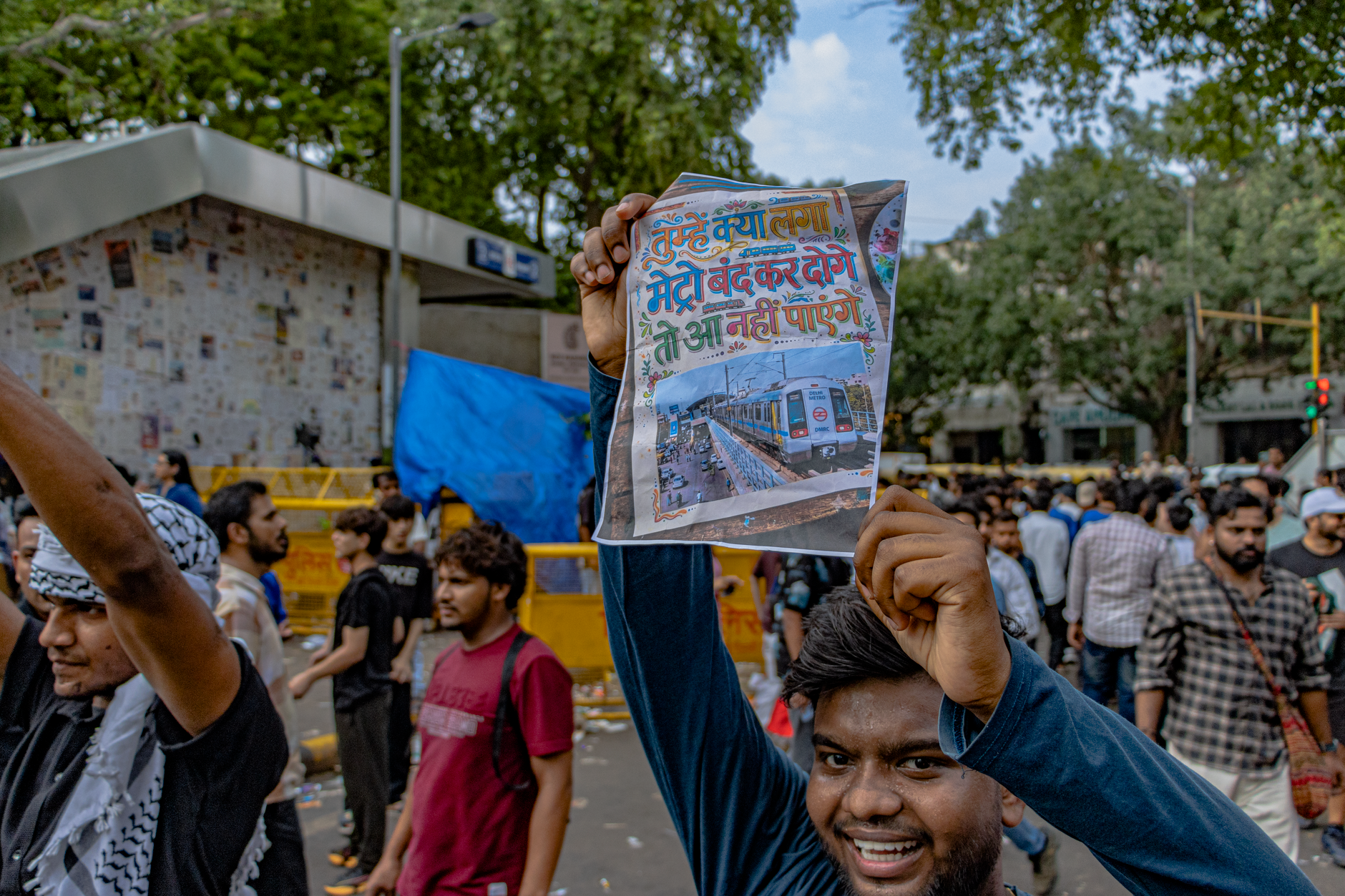
<p>Earlier in August 2026, a coalition of student bodies – the All India Students Federation (AISF), the Delhi University Students’ Union (DUSU), and several private college forums – organized a series of sit‑ins across Delhi. Their grievances centered on three key issues: the <b>rejection of a proposed 10 % quota increase for economically weaker sections</b>, the <b>introduction of a mandatory “language proficiency” component</b>, and the <b>delay in releasing mock answer keys</b>. The protests escalated when a video surfaced showing a police officer allegedly using force on a female student at <a href="/article/the-pulse-of-youth-how-the-jantar-mantar-protests-are-redefining-environmental-activism-in-india" title="The Pulse of Youth: How the Jantar Mantar Protests Are Redefining Environmental Activism in India" class="internal-link">the Jantar Mantar</a> protest site. By the end of the week, <b>over 250,000 students</b> had participated in street demonstrations, rallies, and online petitions.</p>
<p>**<figure class="my-8 overflow-hidden rounded-3xl shadow-xl">
<img src="https://images.pexels.com/photos/11980101/pexels-photo-11980101.jpeg?auto=compress&cs=tinysrgb&dpr=2&h=650&w=940" alt="Education protest" class="w-full h-[400px] object-cover" />
</figure>**</p>
<h2>Delhi Government’s Stance: No Legal Action</h2>
Advertisement
Loading partner content...
<h3>Official Statement</h3>
<p>On September 2, 2026, Delhi’s Education Minister, Manish Sisodia, read out a detailed press release from the Secretariat. The core of the announcement was a <b>commitment to drop any pending criminal cases</b> filed against protesters, a move that contrasted sharply with the previous government’s practice of filing Section 144 violations and public order charges. Sisodia emphasized that the decision was rooted in “<b>the democratic right of students to voice concerns</b>” and pledged to set up a <b>high‑level committee</b> to review the grievances within 30 days.</p>
<blockquote>
<p>“We believe that a peaceful protest is a sign of a healthy democracy. The <a href="/article/why-jharkhand-students-are-protesting-a-deep-dive-into-education-rights-government-response-and-the-" title="Why Jharkhand Students Are Protesting: A Deep Dive into Education Rights, Government Response, and the Role of Public Figures like Rahul Gandhi" class="internal-link">students are</a> not criminals; they are <a href="/article/how-the-blanket-telegram-ban-is-reshaping-social-media-legal-battles-user-impact-and-the-future-of-m" title="How the Blanket Telegram Ban is Reshaping Social Media: Legal Battles, User Impact, and the Future of Messaging Apps" class="internal-link">the future of</a> our nation,” said Sisodia during the briefing. ”
</blockquote>
<h3>Political Context</h3>
<p>The AAP government’s decision is widely seen as a strategic political maneuver ahead of the upcoming Delhi Legislative Assembly elections scheduled for early 2027. Polls indicate that <b>68 % of Delhi voters</b> view the government’s stance favorably, compared to <b>22 %</b> who remain skeptical.</p>
<p>Moreover, a recent survey by the Delhi Center for Policy Studies revealed that <b>74 % of respondents</b> believed that student agitation was a legitimate tool for policy change. The move also aligns with AAP’s broader narrative of “<b>people‑first governance</b>,” which has resonated strongly with the city’s youth demographic.</p>
Advertisement
Loading partner content...
<h2>Public Reaction and Societal Impact</h2>
<h3>Student Community</h3>
<p>Among the student protestors, the announcement was met with a mixture of relief and renewed vigor. Many expressed that the removal of legal threats would allow them to focus on <b>organizing constructive dialogues</b> with policymakers. The “<b>NEET Reform Forum</b>,” a coalition formed during the protests, announced plans to submit a detailed memorandum to the Ministry of Education, highlighting demands such as <b>transparent answer key releases</b>, <b>regional language accommodations</b>, and <b>increased scholarship coverage</b>.</p>
<h3>General Public</h3>
<p>Beyond the student populace, the broader public has shown divided reactions. Urban middle‑class families, who often invest heavily in coaching and preparatory courses, voiced concerns over potential <b>disruptions to exam schedules</b>. Conversely, civil society organizations like the National Students’ Association (NSA) lauded the decision, labeling it a <b>milestone for youth empowerment</b>. A poll conducted by the Indian Institute of Public Opinion (IIPO) in September 2026 indicated that <b>55 % of Indians supported the Delhi government’s compassionate approach</b>, while <b>30 %</b> believed that stricter law‑and‑order measures were necessary to maintain exam integrity.</p>
Advertisement
Loading partner content...
<h3>Media Narrative</h3>
<p>Television news channels and digital platforms have amplified the story, often framing it within the larger discourse of “<b>student power vs. state authority</b>.” <a href="/article/unlocking-the-power-of-social-media-marketing-tactics" title="Unlocking the Power of Social Media Marketing Tactics" class="internal-link">Social media</a> trends such as #NoLegalActionForNEETProtesters have trended for multiple days, with millions of hashtags and user‑generated content. The media’s focus on peaceful negotiations has, according to communication scholars, <b>reinforced a narrative of democratic resilience</b>, especially when juxtaposed with similar crackdowns in states like Uttar Pradesh and Maharashtra.</p>
<p>**<figure class="my-8 overflow-hidden rounded-3xl shadow-xl">
<img src="https://images.pexels.com/photos/6684373/pexels-photo-6684373.jpeg?auto=compress&cs=tinysrgb&dpr=2&h=650&w=940" alt="NEET exam" class="w-full h-[400px] object-cover" />
</figure>**</p>
<h2>Comparative Analysis: Delhi vs Other States</h2>
Advertisement
Loading partner content...
<p>To understand the uniqueness of Delhi’s response, a comparison with neighboring states reveals stark contrasts. The following table outlines the governmental actions taken against NEET protestors in Delhi, Maharashtra, and Uttar Pradesh during the September 2026 wave.</p>
<table border="1" cellpadding="5" cellspacing="0" style="border-collapse:collapse;">
<thead>
<tr>
<th>State</th>
<th>Legal Action Initiated</th>
<th>Number of Cases Filed</th>
<th>Public Opinion (Favorable)</th>
</tr>
</thead>
<tbody>
<tr>
<td>Delhi</td>
<td>None (policy decision)</td>
<td>0</td>
<td>68 %</td>
</tr>
<tr>
<td>Maharashtra</td>
<td>FIRs under Section 144</td>
<td>124</td>
<td>34 %</td>
</tr>
<tr>
<td>Uttar Pradesh</td>
<td>Criminal charges, arrests</td>
<td>87</td>
<td>22 %</td>
</tr>
</tbody>
</table>
<p>The data underscores Delhi’s <b>exceptional approach</b>, which has been lauded by democratic watchdogs. However, critics argue that the absence of legal deterrents could encourage <b>future unrest</b>, especially if the government’s promises on reforms are not fulfilled.</p>
<h2>The Way Forward: Dialogue and Policy</h2>
<h3>Proposed Reforms</h3>
Advertisement
Loading partner content...
<p>The high‑level committee announced by Delhi’s Education Minister is expected to recommend several systemic changes. Key proposals include:</p>
<ul>
<li>Implementation of <b>region‑specific answer key release protocols</b> to reduce leakage.</li>
<li>Introduction of <b>free online coaching modules</b> for economically disadvantaged students.</li>
<li>Establishment of a <b>student advisory board</b> that will have a veto power on major exam policy changes.</li>
</ul>
<h3>Role of Civil Society</h3>
<p>Civil society organizations have pledged to monitor the committee’s progress and facilitate <b>transparent public hearings</b>. NGOs such as the Youth for Education Justice (YEJ) plan to conduct workshops across Delhi’s colleges, educating students on <b>legal rights during protests</b> and <b>effective advocacy techniques</b>. These initiatives are expected to <b>strengthen democratic participation</b> and reduce the likelihood of future confrontations.</p>
<h2>FAQs</h2>
Advertisement
Loading partner content...
<ol>
<li><b>What prompted the Delhi government’s decision?</b><br>
The decision was driven by massive student protests, public sentiment favoring dialogue over repression, and the political calculus ahead of the 2027 assembly elections.
</li>
<li><b>Will other states follow Delhi’s example?</b><br>
While some states have expressed interest, political dynamics differ, making a uniform shift unlikely in the short term.
</li>
<li><b>What are the immediate next steps for the protesters?</b><br>
The NEET Reform Forum will submit a detailed memorandum to the Education Ministry, and the high‑level committee will begin hearings within a fortnight.
</li>
</ol>
<h2>Conclusion</h2>
<p>Delhi’s pledge to <b>not take legal action against NEET protesters</b> marks a pivotal moment in India’s socio‑political narrative. It reflects a <b>government willing to prioritize dialogue over force</b>, a stance that resonates deeply with the youth‑driven aspirations of modern India. As the high‑level committee begins its work, the eyes of the nation remain on whether policy reforms will match the optimism generated by this compassionate stance. The episode also serves as a case study for how <b>student activism can shape governance</b>, reinforcing the democratic fabric of Indian</b></b></b></b></p></p></i></i></i>