
Dr. A. P. J. Abdul Kalam: The Visionary Who Ignited a Nation
<strong>Dr. Avul Pakir Jainulabdeen Abdul Kalam</strong> was not just a scientist or a president — he was a symbol of hope, discipline, and boundless possibility. Known as the <em>“Missile Man of India”</em> and later as the <em>“People’s President”</em>, Kalam’s life story continues to inspire millions across generations.
From Rameswaram to the Nation’s Heart
Born on <strong>October 15, 1931</strong>, in the coastal town of <strong>Rameswaram, Tamil Nadu</strong>, Kalam grew up in a humble household. His father was a boat owner and imam, and young Kalam contributed to the family income by selling newspapers. These early experiences instilled in him values of discipline, honesty, and hard work.
Despite financial challenges, Kalam excelled academically. His curiosity about flight and <a href="/article/india-s-private-space-race-how-the-first-private-orbital-rocket-is-transforming-the-nation-s-aerospa" title="India's Private Space Race: How the First Private Orbital Rocket Is Transforming the Nation's Aerospace Industry" class="internal-link">space</a> led him to study physics and later aerospace engineering — setting the stage for a remarkable scientific career.
Architect of India’s Missile and Space Programs
Kalam joined India’s premier research organizations — <strong>ISRO</strong> and <strong>DRDO</strong> — where he played a pivotal role in strengthening the nation’s defense and space capabilities.

- He led the development of the SLV-III, which successfully deployed India’s first satellite into orbit.
- He spearheaded the Integrated Guided Missile Development Programme (IGMDP), resulting in missiles such as Agni and Prithvi.
- He was instrumental in India’s Pokhran-II nuclear tests in 1998.
These achievements earned him the title <strong>“Missile Man of India”</strong> and established him as one of the most respected scientists in the country.
Advertisement
Loading partner content...
The People’s President
In 2002, Dr. Kalam was elected as the <strong>11th President of India</strong>. Unlike many political leaders, he approached the role with humility and accessibility. He often met students, teachers, and young professionals — believing that the nation’s future lay in their hands.
During his presidency, Kalam remained deeply connected to the public, answering emails from children, visiting schools, and speaking passionately about innovation, ethics, and national development. His presidency transformed the image of the office into one of warmth, integrity, and inspiration.
A Teacher Until His Last Breath
Even after leaving office, Kalam dedicated his life to education and mentorship. He traveled across the country delivering lectures, guiding students, and advocating for scientific thinking and moral <a href="/article/ratan-tata-success-story-leadership-vision-and-ethical-business-excellence" title="Ratan Tata Success Story: Leadership, Vision, and Ethical Business Excellence" class="internal-link">leadership</a>.
On <strong>July 27, 2015</strong>, Dr. Kalam passed away while delivering a lecture at IIM Shillong — a moment that symbolized his lifelong commitment to teaching. He quite literally <em>left the <a href="/article/how-to-develop-emotional-intelligence-your-roadmap-to-mastering-your-inner-world" title="How to Develop Emotional Intelligence: Your Roadmap to Mastering Your Inner World" class="internal-link">world</a> while inspiring it</em>.
Advertisement
Loading partner content...
Books That Shaped Minds
Dr. Kalam authored several influential books that continue to guide readers:
- Wings of Fire — His autobiography, detailing his journey from humble beginnings to national leadership.
- Ignited Minds — A call to awaken the creative and intellectual potential of India’s youth.
- India 2020 — A visionary roadmap for transforming India into a developed nation.
His writings blend science, spirituality, and patriotism — offering not just information, but purpose.
Values That Defined Him
What made Dr. Kalam truly exceptional was not only his intelligence, but his character. He lived by principles that resonate across cultures:
- Humility: Despite global recognition, he lived simply and remained approachable.
- Integrity: He upheld ethical leadership at every stage of his life.
- Service: He believed knowledge must serve society.
- Optimism: He consistently encouraged youth to dream big and work hard.
Why Dr. Kalam Still Matters Today
In a world facing rapid technological change, ethical challenges, and social uncertainty, Dr. Kalam’s life offers a powerful <a href="/article/how-india-s-5-point-maritime-trade-blueprint-is-redefining-global-shipping-a-complete-guide" title="How India’s 5‑Point Maritime Trade Blueprint Is Redefining Global Shipping – A Complete Guide" class="internal-link">blueprint</a> — combining scientific excellence with moral responsibility.
He reminded us that <strong>great nations are built not just on power, but on values</strong>, and that every child, regardless of background, carries the potential to transform the world.
Advertisement
Loading partner content...
Final Thoughts
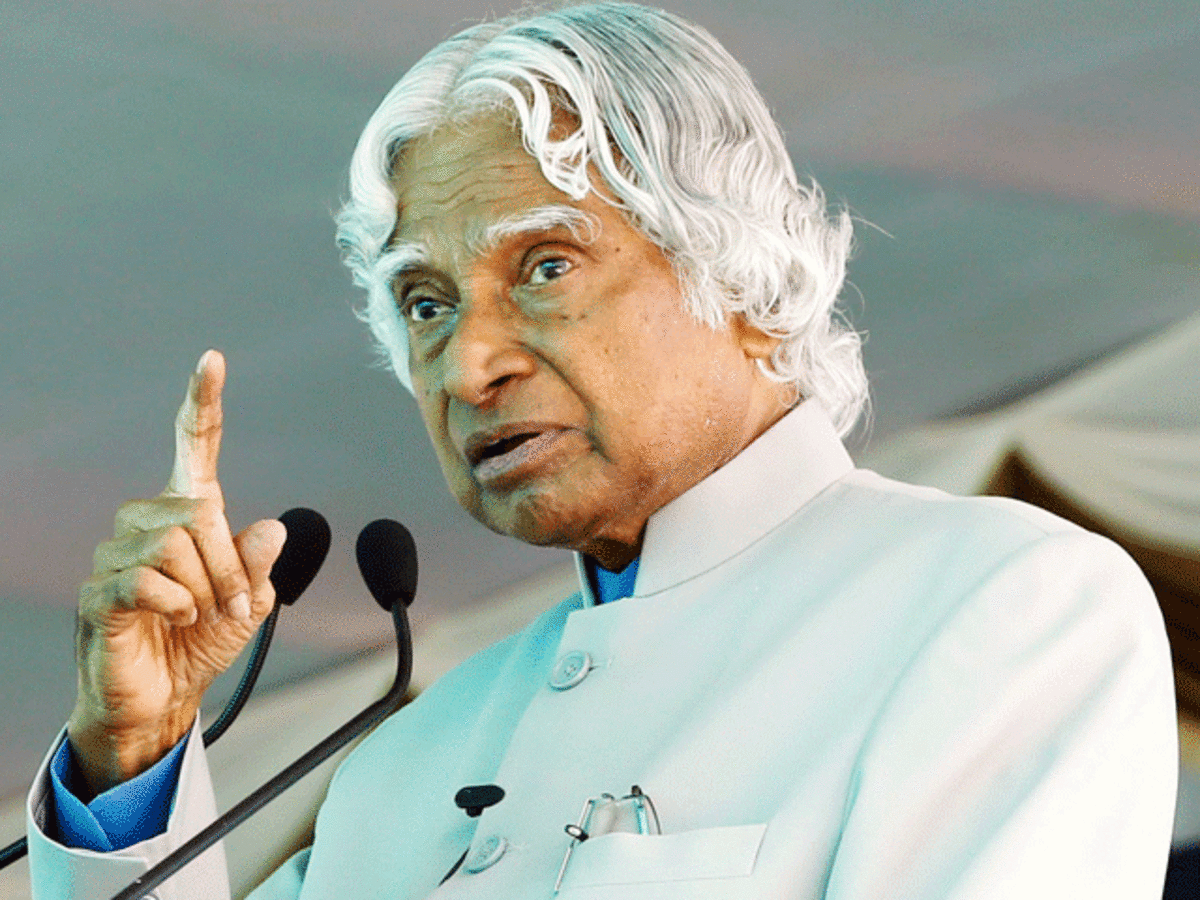
Dr. A. P. J. Abdul Kalam was more than a leader — he was a guiding light. His legacy lives on in laboratories, classrooms, and the dreams of young minds across the nation.
<strong>As he once said:</strong> <em>“Dream, dream, dream. Dreams transform into thoughts and thoughts result in action.”</em>
And through his life, he proved exactly that.