
<h1>Evergreen Guide: Understanding the Iran‑Pakistan MoU – History, Provisions, Geopolitical Impact & Future Outlook</h1>
<p>The recent Memorandum of Understanding (MoU) signed between Iran and Pakistan, highlighted by Iranian Foreign Minister <b>Abbas Araghchi</b>, has sparked renewed interest in West Asian diplomacy. While headlines focus on the immediate ceremony, the agreement carries deeper implications for <a href="/article/how-india-s-5-point-maritime-trade-blueprint-is-redefining-global-shipping-a-complete-guide" title="How India’s 5‑Point Maritime Trade Blueprint Is Redefining Global Shipping – A Complete Guide" class="internal-link">trade</a>, security, and regional cooperation that could shape the subcontinent for years to come. This guide unpacks the MoU’s origins, its concrete provisions, <a href="/article/the-strategic-shift-how-trump-s-envoy-is-redefining-u-s-iran-diplomacy-and-what-it-means-for-global-" title="The Strategic Shift: How Trump’s Envoy Is Redefining U.S.-Iran Diplomacy and What It Means for Global Markets" class="internal-link">and what it means for</a> policymakers, <a href="/article/how-iran-israel-war-impacts-indian-economy-and-businesses-india-s-strategic-response" title="How Iran-Israel War Impacts Indian Economy and Businesses: India's Strategic Response" class="internal-link">businesses</a>, and everyday citizens.</p>
<figure class="my-8 overflow-hidden rounded-3xl shadow-xl">
<img src="https://images.pexels.com/photos/16579334/pexels-photo-16579334.jpeg?auto=compress&cs=tinysrgb&dpr=2&h=650&w=940" alt="Abbas Araghchi" class="w-full h-[400px] object-cover" />
</figure>
<h2>1. Why This MoU Matters Now</h2>
<p>Iran and Pakistan share a 900‑kilometre border that has long been a conduit for both legitimate trade and illicit activity. In recent years, sanctions on Iran and Pakistan’s own economic pressures have pushed both governments to seek alternative pathways for growth. The MoU arrives at a moment when <b>West Asia diplomacy</b> is being reshaped by shifting alliances, renewed US‑Iran talks, and China’s Belt and Road Initiative expanding into South Asia.</p>
<p>Understanding the agreement helps stakeholders anticipate changes in energy flows, cross‑border investment, and security arrangements. It also offers a case study of how neighboring states can leverage historical ties to overcome contemporary challenges.</p>
Advertisement
Loading partner content...
<h2>2. Historical Background of Iran‑Pakistan Diplomatic Ties</h2>
<p>Diplomatic relations between Tehran and Islamabad date back to 1947, shortly after Pakistan’s independence. Early cooperation centered on cultural exchanges and mutual support during regional conflicts. Over the decades, the relationship has ebbed and flowed, influenced by internal politics, external pressures, and differing alignments with global powers.</p>
<ul>
<li><b>1950s‑1960s:</b> Early treaties on trade and water sharing; establishment of joint commissions.</li>
<li><b>1979 Iranian Revolution:</b> Shift in Iran’s foreign policy; Pakistan maintained a cautious stance.</li>
<li><b>1990s:</b> Cooperation on counter‑narcotics and border security intensified due to rising heroin trafficking.</li>
<li><b>2000s‑2010s:</b> Periodic high‑level visits; discussions on gas pipelines (notably the stalled Iran‑Pakistan‑India pipeline).</li>
<li><b>2020s:</b> Renewed focus on economic diplomacy amid US sanctions on Iran and Pakistan’s IMF‑driven reform agenda.</li>
</ul>
<p>This layered history provides the foundation for the current MoU, which seeks to institutionalize cooperation that has often been ad‑hoc.</p>
<figure class="my-8 overflow-hidden rounded-3xl shadow-xl">
<img src="https://images.pexels.com/photos/29890322/pexels-photo-29890322.jpeg?auto=compress&cs=tinysrgb&dpr=2&h=650&w=940" alt="Iran Pakistan border landscape" class="w-full h-[400px] object-cover" />
</figure>
<h2>3. Detailed Breakdown of the MoU’s Key Provisions and Objectives</h2>
<p>The MoU, signed in early 2024, covers four main pillars: trade and investment, energy cooperation, security and border management, and cultural‑educational exchange. Each pillar contains specific, measurable actions designed to move beyond vague promises.</p>
<ol>
<li><b>Trade and Investment:</b>
<ul>
<li>Target to increase bilateral trade from USD 2.5 billion (2023) to USD 5 billion by 2028.</li>
<li>Establishment of a joint Iran‑Pakistan Trade Facilitation Committee to streamline customs procedures.</li>
<li>Incentives for Pakistani firms to invest in Iran’s special economic zones, particularly in petrochemicals and textiles.</li>
</ul>
</li>
<li><b>Energy Cooperation:</b>
<ul>
<li>Feasibility study for a revised gas pipeline route that avoids politically sensitive territories.</li>
<li>Joint ventures in renewable energy, aiming for 500 MW of solar power projects in Balochistan.</li>
<li>Technical exchange on refining capabilities to upgrade Pakistan’s domestic oil processing.</li>
</ul>
</li>
<li><b>Security and Border Management:</b>
<ul>
<li>Creation of a bilateral Border Security Working Group meeting quarterly.</li>
<li>Shared intelligence platforms to counter smuggling, terrorism, and human trafficking.</li>
<li>Joint patrol initiatives in the Makran region, supplemented by drone surveillance.</li>
</ul>
</li>
<li><b>Cultural‑Educational Exchange:</b>
<ul>
<li>Annual scholarship program for 100 Pakistani students to study in Iranian universities.</li>
<li>Co‑production of documentary series highlighting shared Sufi heritage.</li>
<li>Facilitation of tourism visas for religious pilgrimages to sites such as Mashhad and Karachi’s Sufi shrines.</li>
</ul>
</li>
</ol>
<p>These provisions are accompanied by a monitoring framework that includes biannual review meetings and a public dashboard tracking progress against the stated targets.</p>
Advertisement
Loading partner content...
<h2>4. Geopolitical Significance in West Asia and Ripple Effects on Regional Stability</h2>
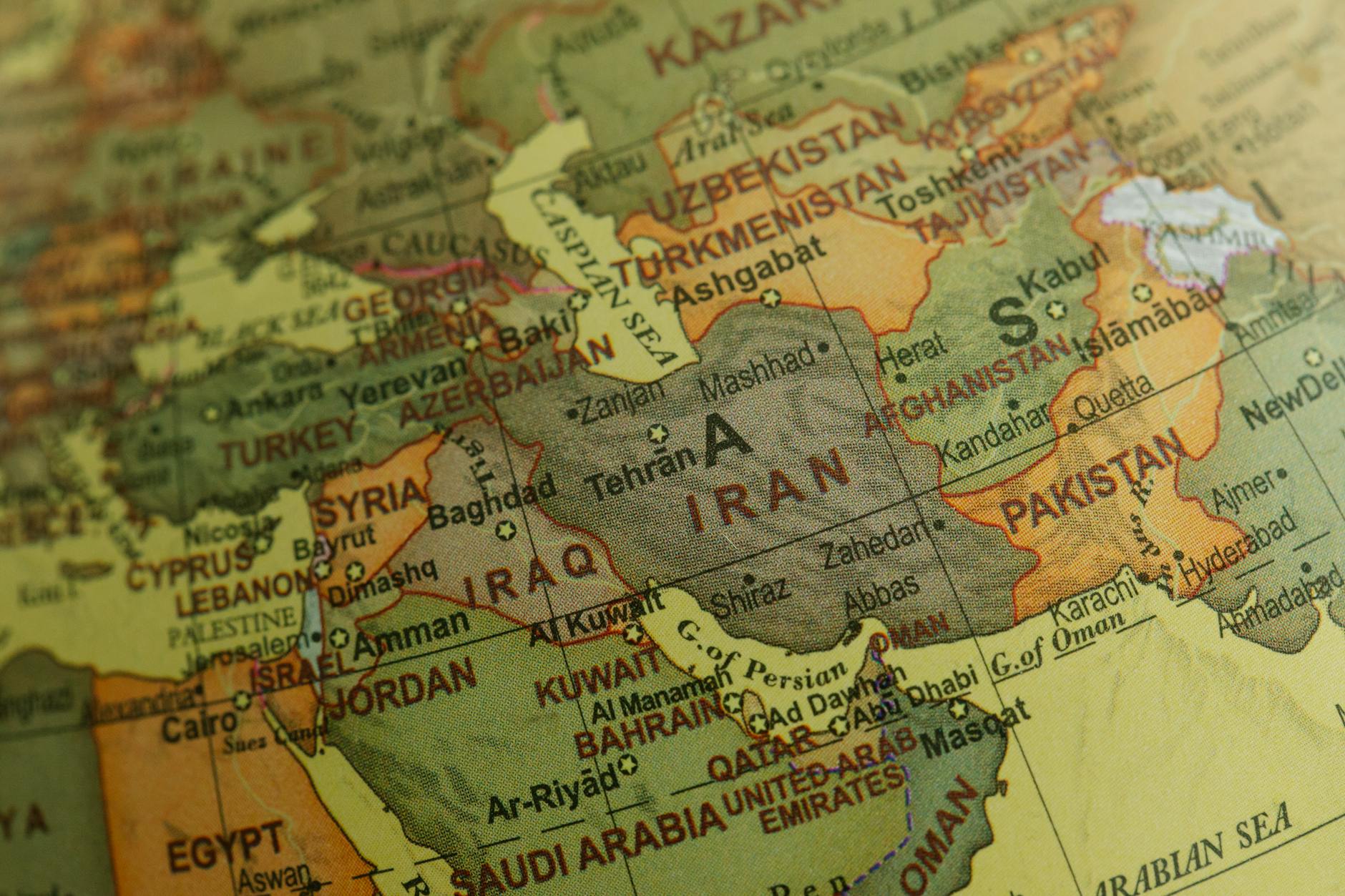
<p>The MoU does not exist in a vacuum. Its implications reverberate across West Asia, influencing the calculations of major players such as Saudi Arabia, the United Arab Emirates, and China.</p>
<blockquote>
<p>“When two neighboring states institutionalize cooperation, they create a stabilizing anchor that can absorb external shocks—whether those are sanctions, price volatility, or security threats.” — <b>Dr. Farah Karim</b>, Middle East Institute, 2024.</p>
</blockquote>
<p>From a strategic standpoint, stronger Iran‑Pakistan ties can:</p>
<ul>
<li>Provide Iran with an alternative outlet for its hydrocarbons, reducing overreliance on <a href="/article/how-the-reopening-of-the-strait-of-hormuz-could-reshape-global-oil-markets-a-complete-guide" title="How the Reopening of the Strait of Hormuz Could Reshape Global Oil Markets: A Complete Guide" class="internal-link">the Strait of Hormuz</a>.</li>
<li>Offer Pakistan a diversified energy mix, lessening its vulnerability to price spikes in the global LNG market.</li>
<li>Create a corridor that could eventually link the Gulf of Oman with the Arabian Sea, enhancing trade routes for landlocked Central Asian states.</li>
<li>Serve as a confidence‑building measure that may ease <a href="/article/navigating-geopolitical-tensions-a-strategic-response-to-israeli-criticism" title="Navigating Geopolitical Tensions: A Strategic Response to Israeli Criticism" class="internal-link">tensions a</a>long the volatile Afghanistan‑Pakistan border, given Iran’s influence over certain Afghan factions.</li>
</ul>
<p>Conversely, the agreement may raise concerns in Riyadh and Abu Dhabi, who view any deepening of Iran‑Pakistan collaboration as a potential counterweight to their own regional initiatives. The MoU thus becomes a piece in the larger puzzle of West Asian power dynamics.</p>
<figure class="my-8 overflow-hidden rounded-3xl shadow-xl">
<img src="https://images.pexels.com/photos/9494904/pexels-photo-9494904.jpeg?auto=compress&cs=tinysrgb&dpr=2&h=650&w=940" alt="West Asia map" class="w-full h-[400px] object-cover" />
</figure>
<h2>5. Expert Analysis and Predictions About Future Cooperation</h2>
<p>Analysts from various think‑tanks have weighed in on the likely trajectory of Iran‑Pakistan relations following the MoU. While optimism prevails, most caution that implementation will hinge on internal political stability and external diplomatic pressures.</p>
<ul>
<li><b>Short‑term (1‑2 years):</b> Expect early wins in customs simplification and the launch of the scholarship program. Pilot solar projects in Balochistan may break ground by late 2025.</li>
<li><b>Medium‑term (3‑5 years):</b> If the gas pipeline feasibility study yields positive results, a revised pipeline could be negotiated, potentially delivering up to 10 billion cubic metres of gas annually to Pakistan.</li>
<li><b>Long‑term (6‑10 years):</b> A matured partnership could see joint ventures in petrochemical complexes, positioning both countries as regional hubs for downstream processing. Cultural ties may translate into increased tourism, contributing to GDP growth.</li>
</ul>
<p>Predictions also highlight potential synergies with China’s Belt and Road Initiative. A trilateral framework involving Iran, Pakistan, and China could accelerate infrastructure development, though it would require careful navigation of sanctions‑related legal complexities.</p>
Advertisement
Loading partner content...
<h2>6. Potential Challenges and Criticisms</h2>
<p>No diplomatic instrument is without obstacles. Critics of the MoU point to several risk factors that could undermine its effectiveness.</p>
<ol>
<li><b>Sanctions Exposure:</b> Secondary US sanctions on entities dealing with Iran could deter Pakistani businesses from pursuing joint ventures, despite governmental assurances.</li>
<li><b>Domestic Political Volatility:</b> Both countries experience periodic shifts in leadership that may alter foreign‑policy priorities. A change in Islamabad’s administration, for instance, could re‑evaluate the gas pipeline agenda.</li>
<li><b>Security Concerns:</b> The porous border remains a conduit for smuggling and militant activity. Without robust on‑the‑ground enforcement, cooperative mechanisms may remain symbolic.</li>
<li><b>Economic Mismatch:</b> Iran’s economy is heavily sanctions‑burdened, while Pakistan grapples with inflation and fiscal deficits. Aligning investment timelines may prove difficult.</li>
<li><b>Transparency Issues:</b> Past agreements have suffered from limited public scrutiny. Stakeholders call for clearer reporting mechanisms to ensure accountability.</li>
</ol>
<p>Addressing these challenges will require sustained diplomatic engagement, robust legal frameworks, and possibly third‑party guarantees from multilateral institutions.</p>
<h2>7. Comparative Perspective with Similar Regional Agreements</h2>
<p>To gauge the MoU’s novelty and potential, it is useful to compare it with other recent bilateral arrangements in the region.</p>
<table>
<thead>
<tr>
<th>Agreement</th>
<th>Parties</th>
<th>Primary Focus</th>
<th>Key Mechanism</th>
<th>Status (2024)</th>
</tr>
</thead>
<tbody>
<tr>
<td>Iran‑Pakistan MoU (2024)</td>
<td>Iran, Pakistan</td>
<td>Trade, energy, security, culture</td>
<td>Joint committees + public dashboard</td>
<td>Signed; early implementation phase</td>
</tr>
<td>Iran‑China Comprehensive Strategic Partnership (2021)</td>
<td>Iran, China</td>
<td>Infrastructure, oil, technology</td>
<td>25‑year roadmap; investment pledges</td>
<td>Ongoing; some projects delayed by sanctions</td>
</tr>
<tr>
<td>Pakistan‑Saudi Vision 2030 Alignment (2022)</td>
<td>Pakistan, Saudi Arabia</td>
<td>Investment, labor, defense</td>
<td>High‑level council; fund creation</td>
<td>Active; several MOUs signed</td>
</tr>
<tr>
<td>GCC‑Iran Dialogue (2023)</td>
<td>GCC states, Iran</td>
<td>Maritime security, fisheries</td>
<td>Joint naval exercises</td>
<td>Pilot phase; limited scope</td>
</tr>
</tbody>
</table>
<p>The table shows that while many regional pacts focus on a single domain (e.g., energy or defense), the Iran‑Pakistan MoU adopts a holistic, multi‑sector approach. Its success may hinge on how well it balances these diverse objectives without spreading resources too thin.</p>
<h2>8. Practical Takeaways for Policymakers, Businesses, and Citizens</h2>
<p>Different stakeholders can derive actionable insights from the MoU’s framework.</p>
<h3>For Policymakers</h3>
<ul>
<li>Leverage the joint committees as platforms for continuous dialogue, reducing the risk of misunderstandings.</li>
<li>Design contingency plans that account for potential sanctions‑related disruptions, such as alternative financing routes.</li>
<li>Invest in border‑infrastructure upgrades (e.g., biometric checkpoints) to translate security cooperation into tangible outcomes.</li>
</ul>
<h3>For Businesses</h3>
<ul>
<li>Explore opportunities in Iran’s special economic zones, particularly for textile and pharmaceutical manufacturing.</li>
<li>Monitor the progress of the gas pipeline feasibility study; early engagement could secure preferential supply contracts.</li>
<li>Consider partnerships in renewable energy; Pakistan’s solar incentives combined with Iranian technical know‑how could yield profitable ventures.</li>
</ul>
<h3>For Citizens</h3>
<ul>
<li>Anticipate potential improvements in cross‑border trade that could lower prices for imported goods such as fruits, nuts, and carpets.</li>
<li>Watch for expanded visa‑on‑arrival or eased pilgrimage procedures, which may make religious travel more accessible.</li>
<li>Stay informed about local security initiatives; community‑level awareness can enhance the effectiveness of joint patrol programs.</li>
</ul>
Advertisement
Loading partner content...
<h2>9. Conclusion with Forward‑Looking Insights</h2>
<p>The Iran‑Pakistan MoU represents more than a ceremonial document; it is a structured attempt to transform historical affinity into durable cooperation. By addressing trade, energy, security, and culture in a single framework, the agreement offers a versatile toolkit for navigating the</b></p></i></i></i>