<h1>‘Gyanesh uncle abhi resign mat karo’: CJP’s ‘<a href="/article/the-pulse-of-youth-how-the-jantar-mantar-protests-are-redefining-environmental-activism-in-india" title="The Pulse of Youth: How the Jantar Mantar Protests Are Redefining Environmental Activism in India" class="internal-link">Jantar Mantar</a> 2.0’ threat sparks ‘Protest Season 2’ frenzy online</h1>
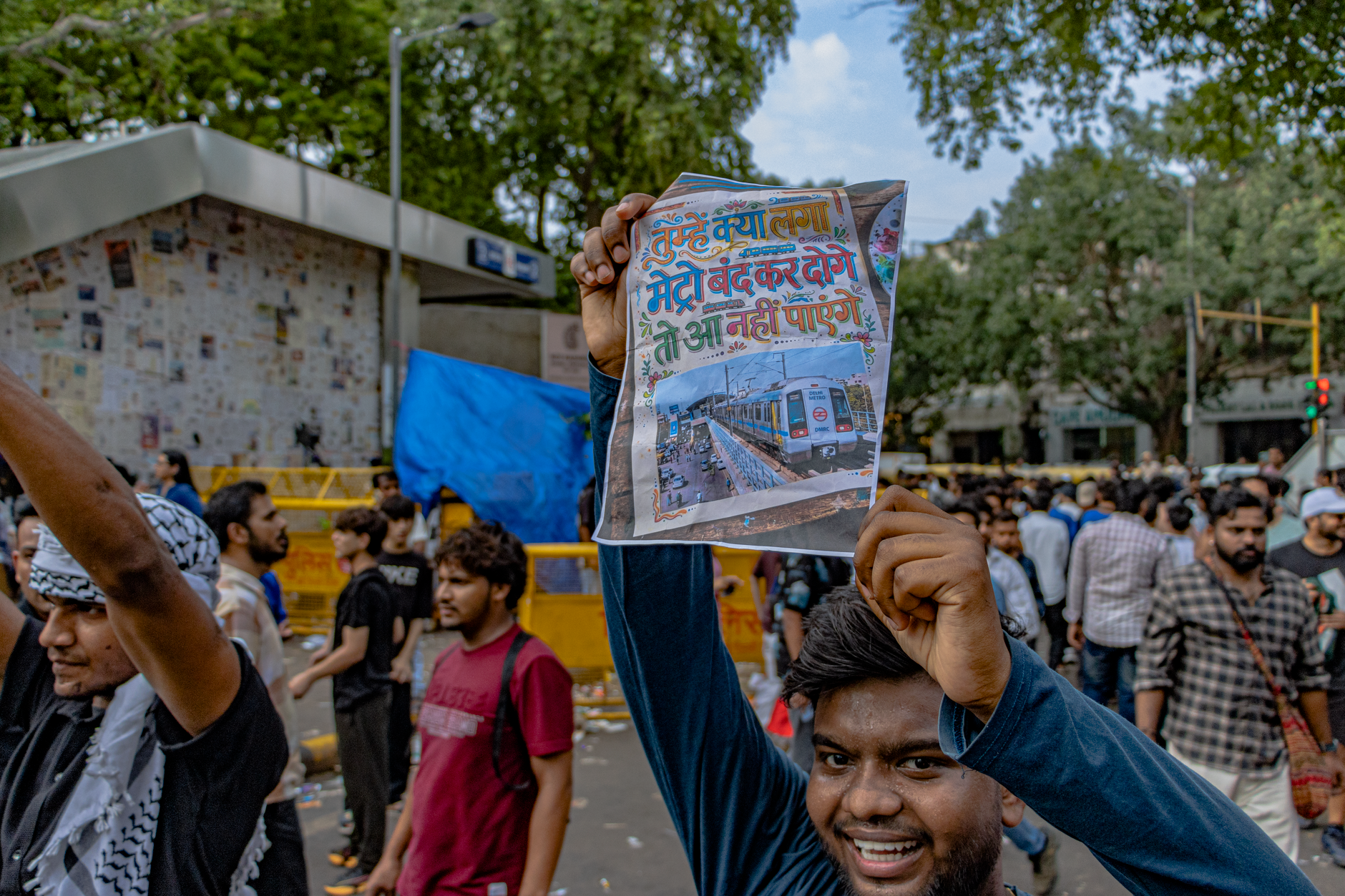
<p>The summer of 2026 witnessed a familiar yet freshly electrifying sight at the dusty lawns of Jantar Mantar: a sea of placards, chanting voices, and a viral phrase that blinked across timelines faster than a trending reel. “Gyanesh uncle abhi resign mat karo” became more than a meme; it became a rallying cry, a shorthand for a nation’s restlessness, and the opening gun for what commentators quickly dubbed “Protest Season 2.” <a href="/article/creating-engaging-social-media-content-the-art-of-capturing-attention-in-a-digital-age" title="Creating Engaging Social Media Content: The Art of Capturing Attention in a Digital Age" class="internal-link">In a digital age</a> where attention spans flicker like monsoon lightning, the speed at which a single phrase can morph into a mass movement signals a profound shift in civic engagement. This article unpacks the anatomy of that shift, tracing how history, hashtags, and human hope converge on the same iconic steps.</p>
<h2>Historical Context: Jantar Mantar’s Legacy as a Dissent Platform</h2>
<p>Long before trending topics dominated national conversation, Jantar Mantar stood as Delhi’s answer to Speakers’ Corner. During the colonial era, the site hosted gatherings that challenged imperial policies, though often under the watchful eye of British administrators. Post-independence, it became the stage for farmers demanding land reforms, activists pressing for emergency-era civil liberties, and citizens demanding accountability from elected governments. Each wave stitched a thread into the larger tapestry of India’s protest culture, embedding Jantar Mantar into the public imagination as a space where the powerful are held to account.</p>
<p>The physical presence of protesters, the scent of incense mixed with street food, and the echo of slogans chanted into microphones created a sensory ritual that online feeds could only mimic, never replace. Yet, the <a href="/article/digital-detox-what-happens-when-you-quit-your-phone-for-7-days" title="Digital Detox: What Happens When You Quit Your Phone for 7 Days" class="internal-link">digital</a> revolution of the past decade has added a new layer: the live stream, the trending hashtag, the instant share. The result is a hybrid space where the physical and virtual protest overlap, each amplifying the other’s reach and resonance.</p>
<h3>From Colonial Rallies to Modern Movements</h3>
<ul>
<li>1940s: Quit India Movement gatherings utilized open grounds across Delhi, with Jantar Mantar emerging as a convenient, central venue.</li>
<li>1970s: Student unions and trade unions frequented the site to demand wage revisions and educational reforms.</li>
<li>1990s: Environmental activists pitched tents to protest dam constructions, drawing media attention through televised coverage.</li>
<li>2010s: Anti-corruption movements, led by figures demanding systemic transparency, turned the site into a 24/7 news spectacle.</li>
<li>2020s: The farm laws protests of 2020–2021, though largely at Delhi’s borders, set the stage for Jantar Mantar’s reimagining as a digital-physical hybrid.</li>
</ul>
<p>Each era left an imprint, shaping the expectations of who could speak, what grievances were legitimate, and how long a protest could sustain itself before public attention waned.</p>
<h2>The Anatomy of a “Protest Season”</h2>
<p>What exactly constitutes a “Protest Season”? It is not merely a series of demonstrations; it is a cyclical phenomenon driven by a convergence of grievance, timing, and media dynamics. A season typically germinates from a catalyst—a policy announcement, a judicial verdict, or a viral statement—that ignites public frustration. This spark is then fanned by organizers who understand the rhythm of both offline mobilization and online amplification.</p>
<p>Sustainment relies on a rotating cast of speakers, evolving demands, and the perpetual novelty of fresh content for social media feeds. Amplification occurs when mainstream media picks up the most shareable moments, and when algorithms prioritize engagement over nuance, pushing the protest into the trending column. The 2026 “Protest Season 2” followed this blueprint precisely: a provocative statement from the Centre for Public Justice (CJP), a call to converge at Jantar Mantar, and a deluge of memes, reels, and live updates that kept the movement in the public eye for weeks rather than days.</p>
<h3>Key Phases of a Protest Season</h3>
<ol>
<li><b>Ignition:</b> A defining moment—a video, a speech, a tweet—that crystallizes abstract anger into a concrete demand.</li>
<li><b>Organization:</b> Grassroots coordinators, often aided by digital tools, set up logistics, social media handles, and volunteer rosters.</li>
<li><b>Amplification:</b> Hashtags trend, journalists file stories, and the protest leaks into entertainment shows and water-cooler conversations.</li>
<li><b>Sustainment:</b> Daily protests, alternating speakers, and related cultural events (poetry slams, street theater) keep the energy alive.</li>
<li><b>Evolution:</b> Demands may shift, broaden, or fragment, reflecting the diverse motivations of the participating crowd.</li>
</ol>
<p>Understanding these phases helps explain why some protests fizzle while others, like the current Jantar Mantar iteration, achieve a sustained presence that feels almost seasonal.</p>
<h2>Role of Social Media: Hashtags, Memes, and Viral Statements</h2>
<p>If Jantar Mantar provides the physical stage, social media supplies the megaphone. <a href="/article/why-the-whistle-is-trending-across-tamil-nadu-in-2026" title="Why the “Whistle” Is Trending Across Tamil Nadu in 2026" class="internal-link">In 2026</a>, the landscape is dominated by short-form video, AI-curated feeds, and real-time text updates that travel faster than any printed pamphlet. The phrase “Gyanesh uncle abhi resign mat karo” exemplifies how a colloquial, almost personal plea can be distilled into a meme format, translated into regional languages, and reshared by users who may never set foot at the venue. Hashtags such as #JantarMantar2 and #ProtestSeason2 acted as digital town squares, where opinions were forged, challenged, and sometimes polarized.</p>
<p>Memes served a dual purpose: they disarmed serious topics with humor, making them shareable, while also encoding demands in a format that was instantly recognizable. Moreover, the immediacy of live streams meant that events at Jantar Mantar were not confined to those physically present; they were experienced, commented upon, and reacted to by millions within minutes. This real-time feedback loop creates a sense of participation for the distant viewer, blurring the line between observer and activist.</p>
<blockquote>“The streets are speaking, and the internet is listening. That’s the new democracy.” — Verified user, social commentary thread</blockquote>
<h3>Mechanics of Digital Mobilization</h3>
<ul>
<li><b>Hashtag Hijacking:</b> Organizers purchase or trend specific tags to control the narrative, countering opposing viewpoints in real time.</li>
<li><b>Influencer Amplification:</b> Creators with millions of followers post “day in the life” videos from the protest, humanizing the movement for their audience.</li>
<li><b>Algorithmic Boost:</b> Engagement metrics determine visibility; provocative content often receives priority, accelerating reach but also deepening polarization.</li>
<li><b>Regional Language Loops:</b> Translating slogans and memes into Tamil, Bengali, Telugu, and Malayalam expands the protest’s footprint beyond English-speaking urban centers.</li>
</ul>
<p>Each mechanic plays a role in transforming a localized gathering into a nationwide conversation.</p>
<h2>Key Figures and Factions: Profiles and Strategies</h2>
<p>0 movement is no exception. At the forefront is the Centre for Public Justice, whose <a href="/article/effective-leadership-strategies-for-modern-workplaces-in-india" title="Effective Leadership Strategies for Modern Workplaces in India" class="internal-link">leadership</a> issued the now-famous “resign” threat, framing it as a last resort against what they describe as governmental overreach. Alongside CJP figures, a constellation of veteran activists, newly minted student leaders, and regional party representatives each bring distinct strategies. Some focus on legal challenges, filing petitions and Public Interest Litigations that complement the street presence.</p>
<p>Others employ direct action, such as sit-ins, flash mobs, and art installations that turn the lawn into an open-air gallery. Student wings of major parties leverage the momentum to recruit members, while independent organizers emphasize intersectional demands, ensuring that caste, gender, and environmental concerns are not sidelined. This factional diversity is both a strength and a challenge: it fuels broad appeal but can dilute messaging if not carefully choreographed. Media narratives often simplify the landscape into good-versus-evil binaries, yet on the ground, the reality is a mosaic of motivations, each valid, each pushing the collective agenda forward in different directions.</p>
<h3>Strategic Playbook of Prominent Voices</h3>
<table>
<thead>
<tr>
<th>Figure/Faction</th>
<th>Primary Strategy</th>
<th>Digital Touchpoint</th>
</tr>
</thead>
<tbody>
<tr>
<td><b>CJP Leadership</b></b></td>
<td>Formal resignations threats, petition drives</td>
<td>Official website updates, Twitter threads</td>
</tr>
<tr>
<td><b>Student Organizers</b></td>
<td>Flash mobs, campus-wide teach-ins</td>
<td>Instagram Reels, Snapchat geo-filters</td>
</tr>
<tr>
<td><b>Regional Party Representatives</b></td>
<td>Parliamentary disruption, legislative proposals</td>
<td>Facebook live sessions, WhatsApp group coordination</td>
</tr>
<tr>
<td><b>Independent Artists</b></td>
<td>Street theater, mural projects</td>
<td>YouTube documentaries, TikTok challenges</td>
</tr>
</tbody>
</table>
<p>This table illustrates how different actors leverage both physical and digital tools, creating a multi-pronged approach that maximizes impact.</p>
<h2>Cultural Impact: Protest in Bollywood, Literature, and Everyday Conversations</h2>
<p>The ripple effects of a</p>
‘Gyanesh uncle abhi resign mat karo’: CJP’s ‘Jantar Mantar 2.0’ threat sparks ‘Protest Season 2’ frenzy online
The summer of 2026 witnessed a familiar yet freshly electrifying sight at the dusty lawns of Jantar Mantar: a sea of placards, chanting voices, and a viral phra...

Loading partner content...
Loading partner content...
Related Articles
The Pulse of Youth: How the Jantar Mantar Protests Are Redefining Environmental Activism in India
17 Jul 2026

Creating Engaging Social Media Content: The Art of Capturing Attention in a Digital Age
6 Feb 2026

Effective Leadership Strategies for Modern Workplaces in India
23 May 2026

Digital Detox: What Happens When You Quit Your Phone for 7 Days
25 Jan 2026