<h1>How Israel Votes: A <a href="/article/the-complete-guide-to-jharkhand-student-protests-origins-demands-government-response-and-future-outl" title="The Complete Guide to Jharkhand Student Protests: Origins, Demands, Government Response, and Future Outlook" class="internal-link">Complete Guide to</a> the Knesset Election System, History, and Coalition Chaos</h1>
<p>At the time of writing, the anticipation of the next Knesset election cycle is once again gripping the global political community. This follows a period where the nation found itself in a near-permanent state of campaigning, with five elections held in just four years—a phenomenon that has left observers worldwide grappling with a fundamental question: <b>how does a nation of just nine million people produce such a dizzying array of political outcomes?</b></p>
<p>The answer lies not in the personalities or the specific events of any single year, but in the enduring <a href="/article/understanding-microservices-architecture-a-modern-approach-to-scalable-software-development" title="Understanding Microservices Architecture: A Modern Approach to Scalable Software Development" class="internal-link">architecture</a> of Israeli democracy itself. The system is a fascinating, complex machine—a blend of proportional representation, high-stakes coalition-building, and deep societal divisions that have shaped the country since its founding in 1948. Understanding this system is crucial for anyone seeking to grasp the dynamics of the Middle East's only liberal democracy.</p>
<p>This guide will take you on a journey through the intricacies of <b>Israel's electoral system</b>, exploring its historical roots, its unique quirks, and the societal forces that drive its outcomes. Whether you are a political science student, a policy wonk, or simply a curious global citizen, this article will provide you with the tools to understand one of the world's most intriguing democratic experiments.</p>
<figure class="my-8 overflow-hidden rounded-3xl shadow-xl">
<img src="https://images.tagesschau.de/image/f044cdb3-68fc-4ead-b1f3-edf8215a3899/AAABoVSbZqI/AAABnSSvrFg/16x9-big/wahlplakat-tel-aviv-102.jpg?width=1280" alt="Knesset" class="w-full h-[400px] object-cover" />
</figure>
Advertisement
Loading partner content...
<h2>The Mechanics: Proportional Representation & The Threshold</h2>
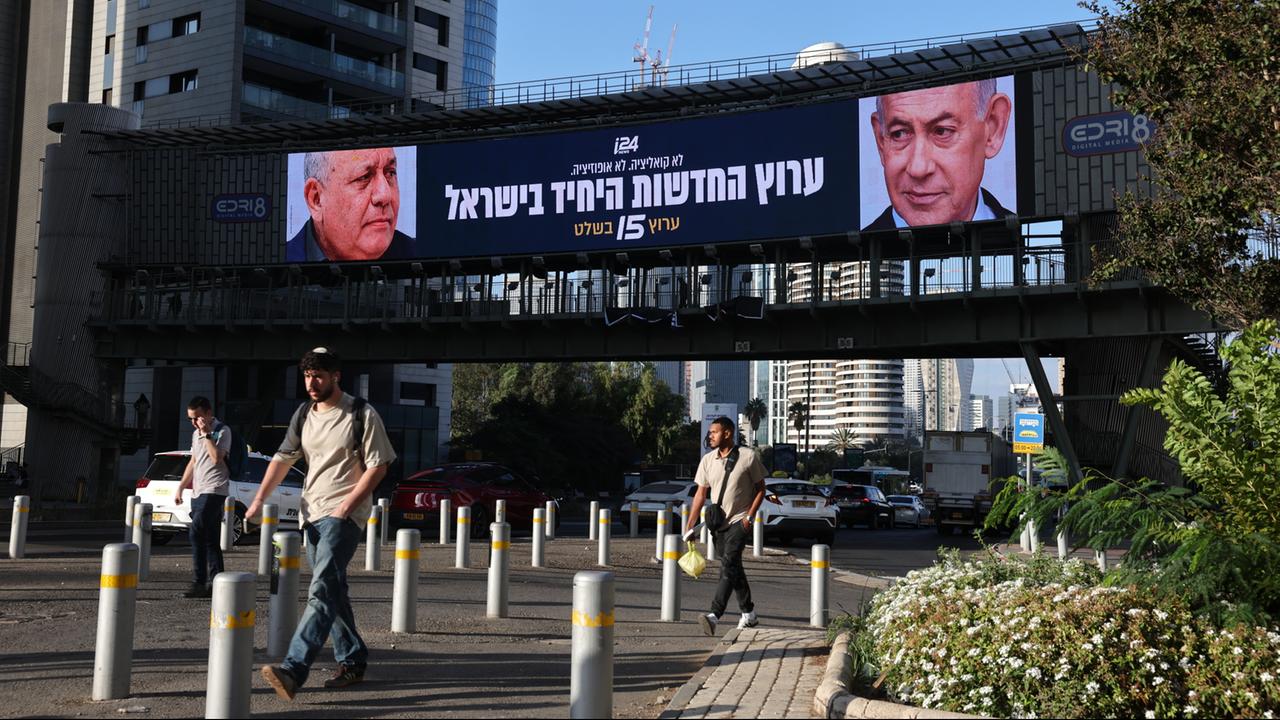
<p>Israel's electoral system is a textbook example of nationwide proportional representation (PR). Unlike many democracies that use a first-past-the-post system with single-member districts, Israel treats the entire country as one giant, open ballot box. This means that every vote cast carries equal weight, regardless of where it is cast—be it in Tel Aviv, the Negev, or the Galilee.</p>
<p>The core principle is elegantly simple yet profoundly impactful: <b>the "national pie" of 120 Knesset seats is allocated based on the percentage of votes each party receives.</b> If a party wins 10% of the national vote, it is entitled to 12 seats. This system ensures a remarkable degree of representation for diverse viewpoints, but it also invites a level of political fragmentation that is rare in other democracies.</p>
<h3>The 3.25% Electoral Threshold</h3>
<p>To prevent the Knesset from becoming an unwieldy assembly of dozens of tiny factions, Israel employs an electoral threshold of 3.25%. This means that a party must secure at least 3.25% of the total vote—roughly 100,000 votes—to gain any seats at all. This threshold was raised from 1.5% in 2014, a move designed to reduce the number of small parties and stabilize coalition governments.</p>
Advertisement
Loading partner content...
<p>However, the threshold remains a critical factor in shaping the political landscape. It acts as a gatekeeper, determining which parties are viable contenders and which are relegated to the sidelines. This creates a strategic dynamic where smaller parties must either merge or risk being shut out entirely, adding another layer of complexity to the already intricate process of coalition formation.</p>
<h3>The Bader-Ofer Method</h3>
<p>Once the votes are counted, the allocation of seats is determined by the Bader-Ofer method, a mathematical formula developed by scholars Aviezer Bader and Aaron Ofer in the 1970s. This method is used to distribute surplus votes—those that exceed the number needed for a party to win an additional seat—to allied parties through pre-election agreements known as "surplus vote agreements" (hesderim).</p>
<p>This mechanism is a unique feature of the Israeli system. It allows parties to form strategic alliances before the election, ensuring that their combined votes are not wasted. For example, if Party A and Party B form a surplus vote agreement, any surplus votes that Party A receives beyond what it needs for its last seat will be transferred to Party B, and vice versa. This can be a decisive factor in tight races and is a key element of the pre-election strategy for many parties.</p>
Advertisement
Loading partner content...
<figure class="my-8 overflow-hidden rounded-3xl shadow-xl">
<img src="https://images.pexels.com/photos/15993793/pexels-photo-15993793.jpeg?auto=compress&cs=tinysrgb&dpr=2&h=650&w=940" alt="voting ballots" class="w-full h-[400px] object-cover" />
</figure>
<h2>From Ballot to Government: The Coalition Calculus</h2>
<p>Winning the most votes in an election does not automatically make a party the governing party. In Israel's parliamentary system, the President serves as a neutral arbiter who must first determine which party leader has the best chance of forming a government. This is a critical step, as it sets the stage for the next phase of the process: coalition negotiations.</p>
<p>The President's role is largely ceremonial, but the decision can have profound implications. After consulting with party leaders and assessing the political landscape, the President will typically grant the mandate to the leader of the largest party or the one who presents the most viable path to a majority. This is followed by a 28-day period—extendable by 14 days if necessary—during which the designated leader must attempt to forge a coalition government.</p>
Advertisement
Loading partner content...
<h3>The "Block" Math</h3>
<p>The coalition-building process is often described in terms of "blocks." The primary divide in Israeli politics is between the "Right Bloc" and the "Center-Left Bloc," with a third "Arab Bloc" that can act as a kingmaker. The Right Bloc, traditionally led by parties like Likud and Religious Zionism, tends to favor a more hawkish stance on security and a stronger role for religion in public life. The Center-Left Bloc, led by parties like Yesh Atid and the Labor Party, generally advocates for a more dovish approach and a secular state.</p>
<p>The "Block" math is a crucial consideration for any aspiring coalition leader. A party must not only secure a majority of 61 seats in the 120-seat Knesset but also navigate the complex web of ideological and pragmatic alliances that define Israeli politics. This often requires making difficult compromises, particularly with small sectoral parties that hold disproportionate power due to their ability to tip the balance of power.</p>
<h3>The Role of the "Kingmakers"</h3>
<p>Small parties, despite their limited electoral base, often play a pivotal role in government formation. These "kingmakers" can command significant influence by holding the balance of power in a closely divided Knesset. For instance, a party with just 5 or 6 seats can become the linchpin of a coalition, able to extract concessions and policy commitments in exchange for its support.</p>
Advertisement
Loading partner content...
<p>This dynamic is particularly evident in the case of religious parties like Shas and United Torah Judaism (UTJ), which represent the interests of the Haredi (ultra-Orthodox) community. Their support is often essential for any government that seeks to maintain a stable majority, and they have historically used this leverage to secure significant budget allocations and policy concessions. Similarly, the Arab parties, while often critical of government policies, have at times played a crucial role in blocking or enabling certain coalitions.</p>
<figure class="my-8 overflow-hidden rounded-3xl shadow-xl">
<img src="https://ichef.bbci.co.uk/ace/branded_news/1200/cpsprodpb/80cb/live/9b494cf0-c25f-11f1-babe-4199b0e7ccea.jpg" alt="Benjamin Netanyahu" class="w-full h-[400px] object-cover" />
</figure>
<h2>Historical Evolution: From Mapai Dominance to Fragmentation</h2>
<p>The history of Israeli elections is a story of profound transformation, marked by periods of dominant-party rule, dramatic upsets, and experimental reforms. The early decades of the state were characterized by the overwhelming dominance of the Labor Party (<a href="/article/the-save-america-act-explained-history-provisions-and-its-role-in-the-voter-id-debate" title="The SAVE America Act Explained: History, Provisions, and Its Role in the Voter ID Debate" class="internal-link">and its</a> predecessor, Mapai), which governed almost continuously from 1948 to 1977. This period was defined by a strong, centralized state that prioritized nation-building and social welfare.</p>
Advertisement
Loading partner content...
<p>The watershed moment came in 1977 with the "Mahapach" (upheaval), when Menachem Begin's Likud party defeated the Labor government in a stunning upset. This marked the end of Labor's hegemony and the beginning of a new era of competitive politics. The Mahapach was not just a change of government; it represented a fundamental shift in the national narrative, as the right-wing, Revisionist tradition finally gained ascendancy over the socialist-Zionist ideology that had dominated the state's formative years.</p>
<h3>The Direct PM Election Experiment</h3>
<p>In an effort to provide greater stability and accountability, Israel experimented with direct presidential-style elections for the Prime Minister from 1996 to 2001. This reform was intended to clarify the mandate and reduce the influence of small parties. However, it had the opposite effect, creating a disconnect between the popular vote for Prime Minister and the composition of the Knesset.</p>
<p>The experiment was short-lived. In 2001, the direct election system was abolished, and Israel returned to its original parliamentary model. The lessons learned from this period have had a lasting impact on the political discourse, with many arguing that the system's inherent instability is a feature, not a bug, of Israeli democracy. The experience reinforced the idea that no single party can govern alone, and that the system's strength lies in its ability to accommodate diverse viewpoints through the coalition process.</p>
Advertisement
Loading partner content...
<h3>The Current Era of Hyper-Fragmentation</h3>
<p>The contemporary political landscape is characterized by a high degree of fragmentation, with a proliferation of parties that reflect the country's deep societal divisions. This trend has been exacerbated by the rise of ideological and sectoral parties that cater to specific constituencies, making it increasingly difficult to form stable, long-term coalitions. The result has been a cycle of frequent elections and short-lived governments, a phenomenon that has become a defining feature of Israeli politics in recent years.</p>
<p>This hyper-fragmentation is not merely a political phenomenon; it reflects the broader challenges facing Israeli society. The tensions between secular and religious Jews, the status of Arab citizens, and the ongoing debate over the role of religion in public life all find expression in the electoral arena. These cleavages have made it difficult to build broad-based coalitions, leading to a political system that is highly responsive to the demands of specific interest groups but often struggles to achieve long-term policy coherence.</p>
<figure class="my-8 overflow-hidden rounded-3xl shadow-xl">
<img src="https://images.pexels.com/photos/9739638/pexels-photo-9739638.jpeg?auto=compress&cs=tinysrgb&dpr=2&h=650&w=940" alt="protest crowd" class="w-full h-[400px] object-cover" />
</figure>
Advertisement
Loading partner content...
<h2>The Societal Cleavages Driving the Vote</h2>
<p>At the heart of Israel's electoral system lies a complex web of societal cleavages that have shaped the nation's political development. As President Reuven Rivlin famously noted, Israeli society can be understood through the lens of four "tribes": the secular, the religious (Haredi), the national-religious, and the Arab citizens. These tribes are not monolithic, and their internal diversity is reflected in the multiplicity of political parties that vie for their support.</p>
<p>The first and perhaps most enduring divide is between the secular and religious populations. This cleavage has given rise to distinct party ecosystems. The secular camp is represented by parties like Yesh Atid and the Labor Party, which advocate for a strict separation of religion and state. In contrast, the religious camp is split between the Haredi parties (Shas, UTJ) and the national-religious parties (Religious Zionism), each with their own vision of how Judaism should influence public policy.</p>
<h3>Jewish vs. Arab Citizens</h3>
<p>The Jewish-Arab divide is another fundamental axis of Israeli politics. Arab citizens of Israel, who make up roughly 20% of the population, have their own political representation through parties like Hadash-Ta'al and the United Arab List (Ra'am). These parties often find themselves in a delicate position, advocating for the rights of their constituents while navigating the complexities of a political system that is dominated by Jewish-majority parties.</p>
Advertisement
Loading partner content...
<p>The Arab parties have historically been excluded from governing coalitions, a dynamic that has fueled ongoing debates about representation and inclusion. However, their influence has grown in recent years, particularly in the context of coalition negotiations where their support can be decisive. The 2021 government of Naftali Bennett, for instance, was formed with the implicit support of the Arab parties, marking a significant departure from the traditional pattern of exclusion.</p>
<h3>Ashkenazi vs. Mizrahi</h3>
<p>The ethnic divide between Ashkenazi (European) and Mizrahi (Middle Eastern and North African) Jews is another important factor in Israeli politics. This cleavage has historically influenced party preferences, with Mizrahi Jews tending to support right-wing parties like Likud, which they perceive as more aligned with their cultural values and socio-economic interests. The Labor Party, traditionally associated with the Ashkenazi establishment, has struggled to maintain its appeal among Mizrahi voters.</p>
<p>This dynamic has been a source of tension within the Israeli political system, as it reflects broader questions about identity, belonging, and the distribution of power. The rise of parties like Shas, which explicitly represent the interests of the Mizrahi community, has further entrenched this divide, making it a central theme in the ongoing evolution of Israeli democracy.</p>
<figure class="my-8 overflow-hidden rounded-3xl shadow-xl">
<img src="https://media.newyorker.com/photos/6ac58a66baafb2d4e62f25db/16:9/w_1280,c_limit/Remnick-GettyImages-2298095123.jpg" alt="Israeli ballot box" class="w-full h-[400px] object-cover" />
</figure>
Advertisement
Loading partner content...
<h2>Unique Quirks & "Only in Israel" Features</h2>
<p>Israel's electoral system is replete with unique features that are often described as "only in Israel." These quirks, while sometimes seen as eccentric, are deeply rooted in the country's history and cultural context. They add a layer of unpredictability and color to the already complex process of Israeli elections.</p>
<h3>The Holiday Atmosphere</h3>
<p>Election Day in Israel is a national holiday, a day when the entire country comes to a standstill. Schools are closed, businesses shut their doors, and citizens flock to polling stations in a festive atmosphere. This tradition reflects the deep civic engagement of the Israeli people, who view voting as a fundamental expression of their democratic identity. The holiday atmosphere is a stark contrast to the often-tense political climate that precedes the election, creating a unique sense of community and participation.</p>
<p>This tradition is more than just a cultural curiosity; it is a testament to the importance of democracy in Israeli society. The fact that the entire country pauses for a day to participate in the democratic process underscores the value that Israelis place on their right to vote and to have their voices heard.</p>
Advertisement
Loading partner content...
<h3>Exit Polls and the Culture of Speculation</h3>
<p>Israel has a vibrant culture of exit polling, with multiple organizations conducting surveys as voters leave polling stations. These exit polls are closely watched and often become a topic of intense speculation and debate. The results can have a significant impact on the stock market and the value of the shekel, as investors and analysts try to gauge the likely outcome of the election.</p>
<p>The exit poll culture is a reflection of the high stakes involved in Israeli elections. With the government often hanging in the balance, the immediate reaction to the exit polls can set the tone for the long process of coalition negotiations that follow. This creates a unique dynamic where the election night experience is not just about the results, but about the anticipation of what those results will mean <a href="/article/why-gen-z-iq-may-be-declining-and-what-it-means-for-the-future" title="Why Gen-Z’s IQ May Be Declining — And What It Means for the Future" class="internal-link">for the future</a> of the country.</p>
<figure class="my-8 overflow-hidden rounded-3xl shadow-xl">
<img src="https://images.pexels.com/photos/3866816/pexels-photo-3866816.jpeg?auto=compress&cs=tinysrgb&dpr=2&h=650&w=940" alt="newspaper headlines" class="w-full h-[400px] object-cover" />
</figure>
Advertisement
Loading partner content...
<h2>What's Next? Structural Reform Debates</h2>
<p>The question of electoral reform is a perennial topic of debate in Israel. Over the years, numerous proposals have been put forward to address the challenges of political instability and fragmentation. These include raising the electoral threshold, introducing regional districts, and implementing term limits for the Prime Minister. However, despite the best efforts of reformers, these proposals have largely failed to gain traction.</p>
<p>The resistance to reform is rooted in the structure of the political system itself. Small parties, which benefit from the current system, have little incentive to support changes that would reduce their influence. Meanwhile, the major parties are often reluctant to cede power or alter a system that has served their interests. This creates a paradox: the very features that make the system unstable are also the features that protect the interests of its key players.</p>
<h3>Why Reforms Fail</h3>
Advertisement
Loading partner content...
<p>The failure of electoral reform efforts is a testament to the complexity of the Israeli political system. Any significant change would require a broad consensus that is difficult to achieve in a deeply divided society. Moreover, the reforms would need to be implemented through the very system they seek to change, creating a chicken-and-egg problem that has proven insurmountable.</p>
<p>Despite these challenges, the debate over reform continues. Advocates argue that the current system is unsustainable and that urgent action is needed to restore stability and public trust. Critics counter that the system's flexibility and responsiveness are its greatest strengths, and that attempts to "fix" it may do more harm than good. This ongoing tension reflects the broader challenge of balancing democratic representation with effective governance in a diverse and divided society.</p>
<figure class="my-8 overflow-hidden rounded-3xl shadow-xl">
<img src="https://images.pexels.com/photos/7328/building-architecture-historical-tower.jpg?auto=compress&cs=tinysrgb&dpr=2&h=650&w=940" alt="parliament building" class="w-full h-[400px] object-cover" />
</figure>
Advertisement
Loading partner content...
<h2>Conclusion: The Resilience of Chaos</h2>
<p>The Israeli electoral system is a remarkable example of how democratic institutions can evolve to reflect the complex realities of a diverse society. Despite its frequent instability and the challenges it poses for effective governance, the system has proven to be remarkably resilient. It has accommodated a wide range of political viewpoints, provided a voice for minority communities, and maintained the fundamental legitimacy of the democratic process.</p>
<p>The anticipation of the 20</p></i></i></i></i></i></i></i>