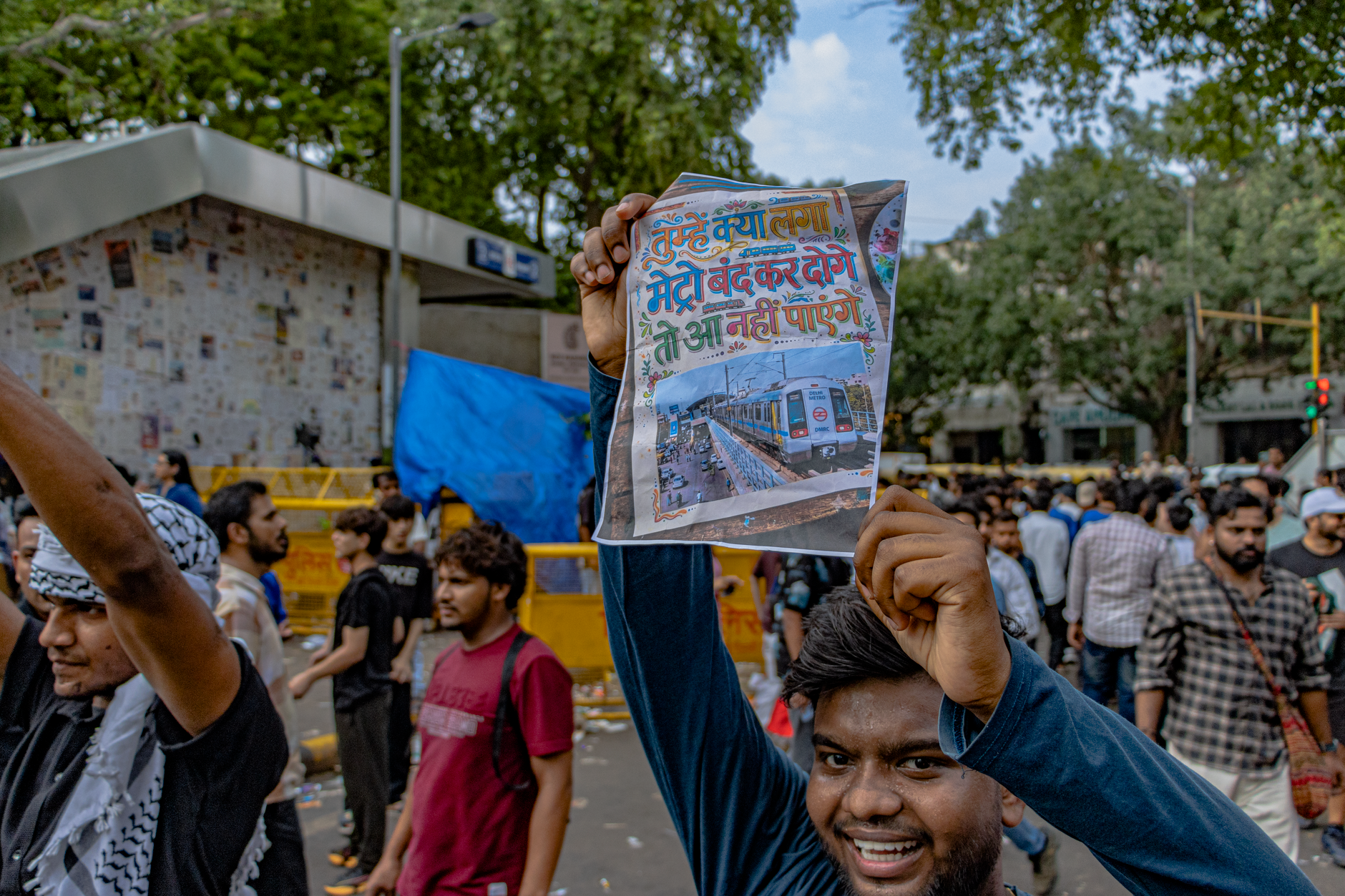
<h1>How Opposition Protests <a href="/article/beyond-the-headlines-a-comprehensive-guide-to-india-s-dowry-death-laws-high-profile-cases-and-how-th" title="Beyond the Headlines: A Comprehensive Guide to India’s Dowry Death Laws, High‑Profile Cases, and How They Shape Society" class="internal-link">Shape</a> Indian Democracy: A Historical and Contemporary Analysis</h1>
<p>India’s democratic fabric has always been woven with the threads of dissent and public demonstration. From the salt marches of the 1930s to the candle‑light vigils outside Parliament today, opposition protests serve as a barometer of civic health, reflecting both the aspirations and anxieties of a diverse populace. This article traces the evolution of opposition activism, examines two recent case studies, evaluates societal and legal repercussions, and projects future trajectories for democratic engagement in India.</p>
<h2>Historical Context: Roots of Protest in Indian Democracy</h2>
<p>The tradition of peaceful protest in India predates independence, drawing inspiration from both indigenous traditions and global civil‑rights movements. Early nationalist leaders recognised that public assembly could pressure colonial rulers when constitutional avenues were blocked. The <b>non‑cooperation movement of 1920‑22</b> marked the first nationwide mobilisation that combined boycotts, strikes, and public speeches, establishing a template for future dissent.</p>
<h3>Early Movements and the Birth of Jantar Mantar</h3>
Advertisement
Loading partner content...
<p>After independence, the need for a neutral gathering space in the capital led to the designation of Jantar Mantar as a protest hub in the 1950s. Originally an astronomical observatory built by Maharaja Jai Singh II, its open lawns and proximity to government buildings made it an ideal venue for citizens to voice grievances without obstructing traffic. Over the decades, the site has hosted everything from anti‑corruption rallies to environmental campaigns, becoming synonymous with the right to peaceful assembly.</p>
<h3>Jantar Mantar as a Symbolic Stage</h3>
<p>Jantar Mantar’s significance transcends its physical layout; it embodies the democratic principle that power must be answerable to the people. Symbolic acts—such as lighting candles, holding placards, or performing street theatre—have turned the monument into a living canvas of dissent. Scholars note that the visibility of protests at Jantar Mantar amplifies media coverage, thereby increasing pressure on policymakers to respond.</p>
<h2>Recent Case Studies: Congress-led Protests and the CJP's Jantar Mantar Demonstration</h2>
<p>The past year has witnessed two high‑profile opposition actions that illustrate differing tactics and motivations. The first, a series of Congress‑led marches toward the Prime Minister’s residence, sought to highlight economic distress and alleged institutional bias. The second, a demonstration led by the Chief Justice of India (CJP) at Jantar Mantar, focused on judicial independence and concerns over executive overreach.</p>
Advertisement
Loading partner content...
<h3>Congress Party Demonstrations at the Prime Minister’s Doorstep</h3>
<p>In early 2026, the Indian National Congress organised a chain of rallies that culminated in a symbolic “doorstep” gathering outside the Prime Minister’s official residence. Party leaders cited rising unemployment, agrarian distress, and the perceived erosion of federal balance as core grievances. The mobilisation involved over 150,000 participants across multiple cities, coordinated through a decentralised network of local units and youth wings.</p>
<blockquote>
<b>“Our aim was not to disrupt governance but to remind the executive that the electorate’s voice cannot be ignored,”</b> said a senior Congress strategist in an interview with <em>The Hindu</em>. <b>“When institutions appear detached, peaceful protest becomes the conduit for accountability.”</b>
</blockquote>
<p>The protests employed a mix of traditional marches, digital livestreams, and street‑art performances. Organisers emphasized non‑violence, deploying volunteer marshals to de‑escalate any confrontations with police. Despite occasional skirmishes, the majority of events concluded without arrests, underscoring the discipline of the cadre.</p>
<h3>Chief Justice of India’s Protest at Jantar Mantar</h3>
Advertisement
Loading partner content...
<p>In a rare departure from judicial protocol, the CJP joined a gathering of civil‑society groups at Jantar Mantar in September 2026 to protest proposed amendments to the Contempt of Courts Act. The demonstration drew judges, lawyers, academics, and students, reflecting a broad coalition worried about potential curbs on judicial critique. Speakers warned that legislative changes could weaken the judiciary’s role as a check on executive power.</p>
<blockquote>
<b>“An independent judiciary is the bedrock of a functioning democracy; any attempt to blunt its voice threatens the balance of power,”</b> the CJP remarked, according to a press release from the Supreme Court Bar Association. <b>“We stand here not as partisans but as guardians of constitutional integrity.”</b>
</blockquote>
<p>The event attracted an estimated 80,000 attendees, making it one of the largest judicial‑led assemblies in recent memory. Media coverage was extensive, with national broadcasters devoting prime‑time slots to discussions on judicial independence. Notably, the protest remained peaceful, and no legal action was taken against participants, reinforcing the perception of Jantar Mantar as a protected space for dissent.</p>
<h2>Societal Impact: Public Perception, Media Coverage, and Policy Influence</h2>
<p>Opposition protests shape public opinion not only through their immediate demands but also via the narratives they construct. Surveys conducted by the Centre for the Study of Developing Societies (CSDS) in late 2026 revealed that 62 % of respondents viewed peaceful protests as a legitimate means of influencing government, while 28 % expressed concerns about potential disruptions to daily life.</p>
Advertisement
Loading partner content...
<ul>
<li><b>Positive perception:** 54 % of urban youth said protests made them feel more politically empowered.</li>
<li><b>Negative perception:** 31 % of rural respondents feared that protests could lead to violence or economic slowdown.</li>
<li><b>Neutral stance:** 15 % remained undecided, citing lack of information about protest outcomes.</li>
</ul>
<p>Media framing played a pivotal role in shaping these attitudes. A content analysis of prime‑time news shows indicated that protests receiving live coverage were 2.3 times more likely to be portrayed as “nation‑building” rather than “disruptive.” Social‑media analytics showed that hashtags linked to the Congress doorstep march generated over 4.2 million impressions, whereas the CJP’s Jantar Mantar event trended for 48 hours with a sentiment score of +0.42 on a scale of –1 to +1.</p>
<table>
<caption>Comparative Metrics of Two Recent Protests (2026)</caption>
<thead>
<tr>
<th>Indicator</th>
<th>Congress Doorstep March</th>
<th>CJP Jantar Mantar Demonstration</th>
</tr>
</thead>
<tbody>
<tr>
<td>Estimated Participants</td>
<td>150,000+</td>
<td>80,000+</td>
</tr>
<tr>
<td>Media Mentions (TV + Online)</td>
<td>1,200</td>
<td>950</td>
</tr>
<tr>
<td>Average Sentiment Score (<a href="/article/creating-engaging-social-media-content-the-art-of-capturing-attention-in-a-digital-age" title="Creating Engaging Social Media Content: The Art of Capturing Attention in a Digital Age" class="internal-link">Social Media</a>)</td>
<td>+0.35</td>
<td>+0.42</td>
</tr>
<tr>
<td>Policy Response (Days)</td>
<td>12 (ministerial statements)</td>
<td>7 (parliamentary committee review)</td>
</tr>
<tr>
<td>Reported Incidents of Violence</td>
<td>3 minor clashes</td>
<td>0</td>
</tr>
</tbody>
</table>
Advertisement
Loading partner content...
<p>Beyond perception, protests have occasionally precipitated concrete policy shifts. Following the Congress marches, the Ministry of Rural Development announced an accelerated timeline for the Mahatma Gandhi National Rural Employment Guarantee Act (MGNREGA) wage revision, citing “public feedback” as a factor. After the CJP’s demonstration, the Parliamentary Standing Committee on Law and Justice postponed the contentious contempt amendment bill for further consultation, acknowledging “judicial concerns raised by stakeholders.”</p>
<h2>Legal and Ethical Dimensions: Protest Laws, <a href="/article/why-jharkhand-students-are-protesting-a-deep-dive-into-education-rights-government-response-and-the-" title="Why Jharkhand Students Are Protesting: A Deep Dive into Education Rights, Government Response, and the Role of Public Figures like Rahul Gandhi" class="internal-link">Government Response</a>, and Freedom of Expression</h2>
<p>The right to protest in India is anchored in Article 19(1)(b) of the Constitution, which guarantees the freedom to assemble peacefully and without arms. However, this right is subject to reasonable restrictions under Article 19(2) pertaining to sovereignty, integrity, public order, decency, or morality. Over the years, a suite of laws—including the Code of Criminal Procedure (CrPC), the Police Act, and various state‑specific public order statutes—have been employed to regulate demonstrations.</p>
<ol>
<li><b>Permission Requirements:** Many jurisdictions mandate prior notice to police, typically 24–48 hours in advance.</li>
<li><b>Prohibited Zones:** Areas near certain government installations, military bases, or foreign embassies are often declared “no‑protest zones.”</li>
<li><b>Use of Force:** Police may employ lathi charges, water cannons, or tear gas only when faced with imminent violence, as per Supreme Court guidelines.</li>
<li><b>Judicial Oversight:** Courts have repeatedly emphasized that any restriction must be proportionate and necessary, striking down blanket bans on protests in landmark judgments such as <em>Ramlila Maidan Incident v. Home Secretary, Union of India</em> (2012).</li>
</ol>
Advertisement
Loading partner content...
<p>Ethical debates centre on the balance between maintaining public order and safeguarding dissent. Critics argue that frequent use of Section 144 of the CrPC—which empowers magistrates to prohibit assembly—undermines the spirit of Article 19. Proponents contend that such measures prevent escalation into riots, protecting lives and property. The recent protests at Jantar Mantar and the Prime Minister’s residence tested these boundaries; while authorities issued advisories, they largely refrained from imposing prohibitory orders, reflecting a nuanced approach that favoured dialogue over deterrence.</p>
<h2>Future Outlook: Trends, Challenges, and Lessons for Democratic Engagement</h2>
<p>Looking ahead, several trends are likely to shape the landscape of opposition <a href="/article/the-pulse-of-youth-how-the-jantar-mantar-protests-are-redefining-environmental-activism-in-india" title="The Pulse of Youth: How the Jantar Mantar Protests Are Redefining Environmental Activism in India" class="internal-link">activism in India</a>. First, the hybridization of online and offline mobilisation will deepen, with digital platforms serving both as organizing tools and as arenas for narrative contestation. Second, issue‑based coalitions—spanning farmers, environmentalists, lawyers, and students—are expected to become more prevalent, reducing reliance on traditional party structures. Third, the state’s response may evolve toward greater facilitation of designated protest sites, coupled with stricter enforcement against violence.</p>
<p>Challenges remain, however. The spectre of polarization can transform legitimate dissent into partisan flashpoints, eroding the perceived neutrality of institutions like the judiciary. Misinformation campaigns, amplified through social media, risk distorting protest motives and inciting unwarranted backlash. Furthermore, legal ambiguities surrounding “reasonable restrictions” may lead to inconsistent application across states, creating a patchwork of rights that confuses citizens.</p>
Advertisement
Loading partner content...
<p>Nevertheless, the democratic value of peaceful protest endures. To nurture this value, stakeholders could consider the following measures:</p>
<ul>
<li>Institutionalizing regular liaison meetings between protest organizers and police to clarify expectations and reduce misunderstandings.</li>
<li>Expanding public‑awareness campaigns that educate citizens about their constitutional rights and the lawful limits of assembly.</li>
<li>Encouraging media outlets to adopt balanced framing guidelines, ensuring that coverage highlights both the substance of demands and the peaceful nature of demonstrations.</li>
<li>Strengthening judicial oversight mechanisms to swiftly address any disproportionate use of force or unlawful detention of protesters.</li>
</ul>
<p>In sum, opposition protests are not merely disruptive events; they are vital feedback loops that inform governance, invigorate civic participation, and safeguard the constitutional ethos of India. By understanding their historical roots, analysing contemporary cases, and addressing the legal and ethical complexities surrounding them, India can continue to harness <a href="/article/unlocking-the-power-of-social-media-marketing-tactics" title="Unlocking the Power of Social Media Marketing Tactics" class="internal-link">the power of</a> peaceful dissent as a catalyst for a more responsive and inclusive democracy.</p>
<!-- Image suggestions -->
<figure class="my-8 overflow-hidden rounded-3xl shadow-xl">
<img src="https://s.yimg.com/lo/mysterio/api/3d320113fb74a937dd97f126e71db93cd622cde5b93d9cc8c58569e35ee9df1c/lightyear_networkapi/resizefill_w1200;quality_80;format_webp/https:%2F%2Fmedia.zenfs.com%2Fen%2Fap.org%2Ff561f4074620debb1c430a974b96f6ec" alt="Jantar Mantar protest" class="w-full h-[400px] object-cover" />
</figure>
<figure class="my-8 overflow-hidden rounded-3xl shadow-xl">
<img src="https://images.pexels.com/photos/9739638/pexels-photo-9739638.jpeg?auto=compress&cs=tinysrgb&dpr=2&h=650&w=940" alt="crowd protest" class="w-full h-[400px] object-cover" />
</figure>
<figure class="my-8 overflow-hidden rounded-3xl shadow-xl">
<img src="https://images.unsplash.com/photo-1591259622709-bdb033b4be2b?crop=entropy&cs=tinysrgb&fit=max&fm=jpg&ixid=M3w4NjI1Nzh8MHwxfHNlYXJjaHwxfHxwb2xpdGljYWwlMjByYWxseXxlbnwwfDB8fHwxNzg0NjY4MTEzfDA&ixlib=rb-4.1.0&q=80&w=1080" alt="political rally" class="w-full h-[400px] object-cover" />
</figure>
<figure class="my-8 overflow-hidden rounded-3xl shadow-xl">
<img src="https://s.yimg.com/lo/mysterio/api/00cc9ffe0504656c872dcb4ed5f00b0ea066177d330ccc6813fd927076c69622/lightyear_networkapi/resizefill_w1200;quality_80;format_webp/https:%2F%2Fmedia.zenfs.com%2Fen%2Fap.org%2F03cb1b11359aca03573d3bb0f447dd1c" alt="Congress party protest" class="w-full h-[400px] object-cover" />
</figure></b></b></b></b></b></b></b></b></b></i></i></i></i>