<h1>India's Private Space Revolution: The Rise of Skyroot's Vikram-1 Rocket</h1>
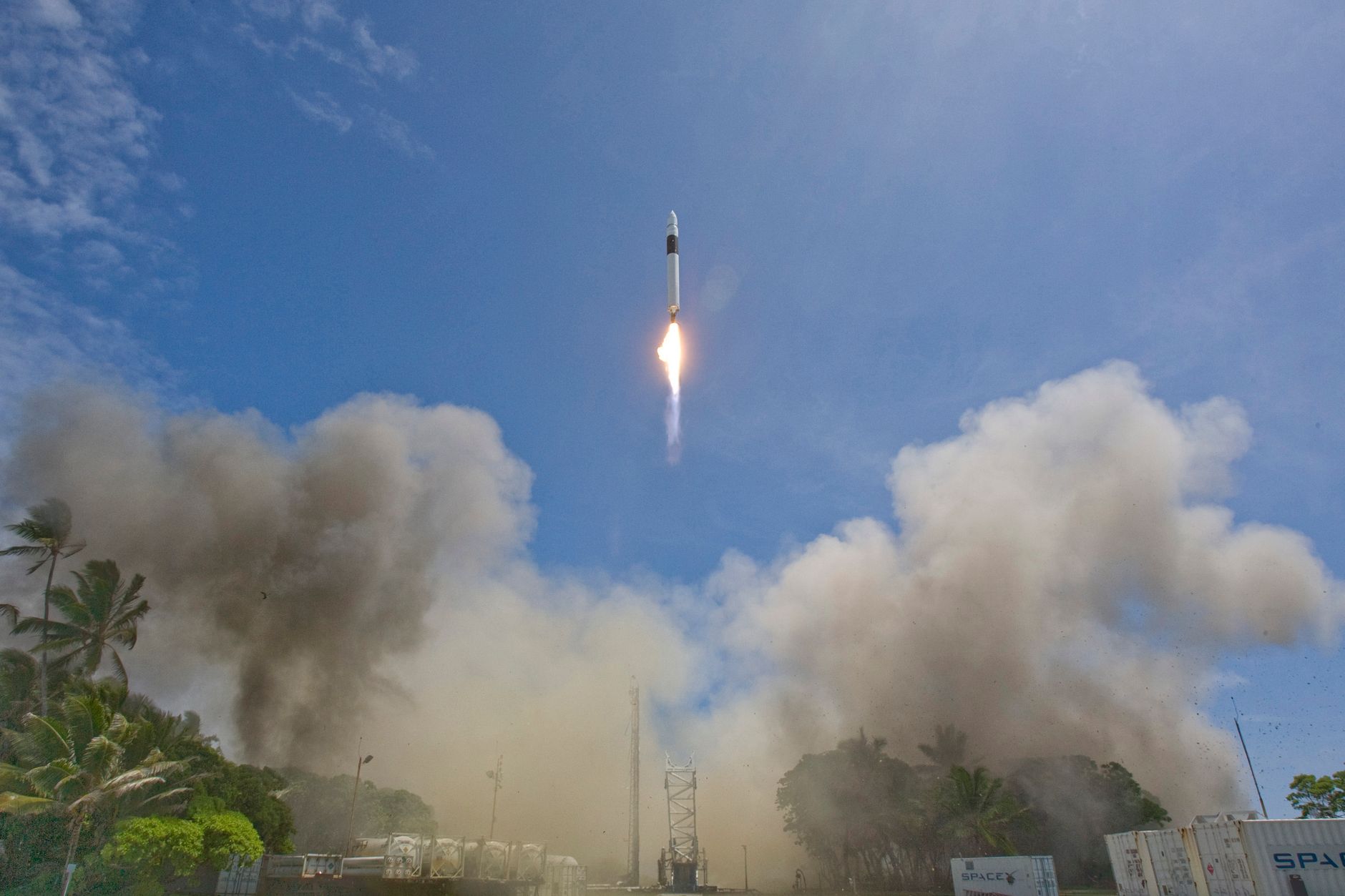
<p>India’s space journey has just entered a bold new chapter with the successful debut of the <b>Vikram-1</b> orbital rocket.</p>
<p>This launch marks the <b>first time</b> a privately built Indian rocket reaches orbit, signaling a shift from a government‑dominated program to a vibrant private ecosystem.</p>
<p>This milestone demonstrates that India can now <b>independently access space</b>, a capability once reserved for a handful of nations.</p>
<figure class="my-8 overflow-hidden rounded-3xl shadow-xl">
<img src="https://images.pexels.com/photos/7327336/pexels-photo-7327336.jpeg?auto=compress&cs=tinysrgb&dpr=2&h=650&w=940" alt="rocket launch" class="w-full h-[400px] object-cover" />
</figure>
<h2>Introduction to the Vikram-1 launch and its historical importance in India's space program</h2>
<p>The Vikram-1 lifted off from the Satish Dhawan Space Centre on a crisp March morning, drawing global attention.</p>
<p>This launch marks the <b>first time</b> an Indian‑made rocket placed a payload into a stable orbit without ISRO’s direct control.</p>
<p>This milestone demonstrates that India can now <b>independently access space</b>, a capability once reserved for a handful of nations.</p>
<h2>Origins of Skyroot Aerospace: Founding story, vision, and <a href="/article/innovation-in-business-why-it-s-the-key-to-thriving-in-a-competitive-world" title="Innovation in Business: Why It’s the Key to Thriving in a Competitive World" class="internal-link">key</a> milestones in developing the Vikram-1</h2>
<h3>Founding story</h3>
<p>Skyroot Aerospace was founded in 2021 by a group of visionary engineers who previously worked at ISRO and the Indian Institute of Science.</p>
<p>They envisioned a nimble, cost‑effective launch provider that could serve the growing demand for small satellite services.</p>
<p>The company’s name, “Skyroot,” reflects its ambition to anchor India’s space ambitions firmly on Earth while reaching for the stars.</p>
Advertisement
Loading partner content...
<h3>Key milestones</h3>
<ul>
<li>2022 – Secured seed funding of $10 million from Indian venture capital firms.</li>
<li>2023 – Completed the first static fire test of the Vikram-1’s first stage.</li>
<li>2024 – Achieved a successful sub‑orbital flight, validating aerodynamic design.</li>
<li>2025 – Received the first launch licence from the Indian National Space Activities Authority (INSAA).</li>
<li>2026 – Delivered the maiden orbital launch of Vikram-1, carrying a commercial Earth‑observation satellite.</li>
</ul>
<blockquote>“Our goal is to make space access affordable and routine <a href="/article/influencer-collaboration-outreach-templates-a-2026-guide-for-indian-brands" title="Influencer Collaboration Outreach Templates: A 2026 Guide for Indian Brands" class="internal-link">for Indian</a> innovators.”</blockquote>
<figure class="my-8 overflow-hidden rounded-3xl shadow-xl">
<img src="https://iahmed.me/post/drone-physics/static/icon.png" alt="P. S. R." class="w-full h-[400px] object-cover" />
</figure>
<h2>Technical Breakdown: Design features, propulsion systems, payload capacity, and how it differs from ISRO's rockets</h2>
<h3>Design features</h3>
<p>Vikram-1 stands 12 metres tall and weighs approximately 10 tonnes at liftoff, making it compact yet powerful.</p>
<p>Its modular structure allows rapid integration of different payload types, a flexibility not seen in many traditional Indian rockets.</p>
<p>The aerodynamic nose cone is crafted from carbon‑fiber composites, reducing mass while withstanding intense aerodynamic forces.</p>
<h3>Propulsion systems</h3>
<p>It uses a single‑stage solid‑propellant engine, the S-30, which generates a thrust of 150 kN.</p>
<p>The engine’s specific impulse of 260 seconds provides a balanced mix of efficiency and reliability for short‑duration missions.</p>
<p><b>Unlike ISRO’s multi‑stage rockets, Vikram-1’s single‑stage design simplifies operations and reduces manufacturing complexity.</b></p>
Advertisement
Loading partner content...
<h3>Payload capacity</h3>
<p>Vikram-1 can deliver up to 400 kilograms to a 500 km sun‑synchronous orbit, catering to the growing market of small‑sat constellations.</p>
<p>This capacity surpasses the typical payload of ISRO’s Polar Satellite Launch Vehicle (PSLV) for similar orbital regimes.</p>
<h3>Differences from ISRO rockets</h3>
<p>Vikram-1 operates as a single‑stage vehicle, whereas ISRO’s PSLV and GSLV are multi‑stage, requiring complex stage separations.</p>
<p><b>The launch cost of Vikram-1 is estimated at $3 million, roughly half the cost of a PSLV launch, making it attractive for commercial customers.</b></p>
<p>Additionally, Skyroot’s agile manufacturing process shortens the build time from years to months, a stark contrast to ISRO’s longer development cycles.</p>
<figure class="my-8 overflow-hidden rounded-3xl shadow-xl">
<img src="https://images.pexels.com/photos/36782610/pexels-photo-36782610.jpeg?auto=compress&cs=tinysrgb&dpr=2&h=650&w=940" alt="rocket diagram" class="w-full h-[400px] object-cover" />
</figure>
<h2>The Private Space Economy in India: Challenges faced by private companies, regulatory landscape, and competition with traditional government agencies like ISRO</h2>
<h3>Challenges faced by private companies</h3>
<ul>
<li>Limited access to launch pads and ground infrastructure.</li>
<li>High upfront R&D costs for propulsion and avionics.</li>
<li>Regulatory uncertainty surrounding private launch licences.</li>
<li>Talent acquisition in a niche, high‑skill market.</li>
</ul>
Advertisement
Loading partner content...
<h3>Regulatory landscape</h3>
<p>The Indian National Space Activities Authority (INSAA) introduced a dedicated private launch licensing framework in 2024, providing clearer guidelines for safety and environmental compliance.</p>
<p><b>However, the process still requires extensive documentation and periodic audits, which can delay timelines for new entrants.</b></p>
<h3>Competition with ISRO</h3>
<p>While ISRO focuses on heavy‑lift and deep‑space missions, Skyroot targets the small‑satellite market, creating a complementary rather than adversarial relationship.</p>
<p>Both entities benefit from shared launch infrastructure, and collaboration on technology transfer is already underway.</p>
<h2>Global Context: How Vikram-1 fits into the international <a href="/article/india-s-private-space-race-how-the-first-private-orbital-rocket-is-transforming-the-nation-s-aerospa" title="India's Private Space Race: How the First Private Orbital Rocket Is Transforming the Nation's Aerospace Industry" class="internal-link">private space race</a> (compare with Rocket Lab, SpaceX, etc.)</h2>
<h3>Comparison with Rocket Lab</h3>
<p>Rocket Lab’s Electron rocket, launched in 2020, has a payload capacity of 300 kg to a 500 km orbit, slightly less than Vikram-1’s 400 kg.</p>
<p><b>Both companies emphasize rapid launch cadence, but Rocket Lab operates from New Zealand, while Skyroot uses India’s domestic launch facilities, reducing logistical costs.</b></p>
<h3>Comparison with SpaceX</h3>
<p>SpaceX’s Falcon 9 dominates the global market with a payload capacity exceeding 22 tonnes, far surpassing Vikram-1’s scale.</p>
<p><b>Nevertheless, SpaceX’s focus on reusable rockets contrasts with Vikram-1’s single‑use design, positioning Skyroot as a cost‑effective option for small‑scale missions.</b></p>
<figure class="my-8 overflow-hidden rounded-3xl shadow-xl">
<img src="https://images.pexels.com/photos/13733389/pexels-photo-13733389.jpeg?auto=compress&cs=tinysrgb&dpr=2&h=650&w=940" alt="Rocket Lab" class="w-full h-[400px] object-cover" />
</figure>
Advertisement
Loading partner content...
<h2>Implications for India's Future in Space: Potential applications (satellite launches, scientific missions), economic impact, and goals for scaling operations</h2>
<h3>Potential applications</h3>
<ul>
<li>Commercial Earth‑observation constellations for agriculture and infrastructure monitoring.</li>
<li>Small‑satellite missions for scientific research in space weather and astronomy.</li>
<li>Technology demonstration platforms for Indian startups developing in‑orbit services.</li>
<li>National security payloads for surveillance and communication.</li>
</ul>
<h3>Economic impact</h3>
<p>Analysts project that a thriving private launch sector could add $2 billion to India’s GDP by 2030 through job creation and ancillary industries.</p>
<p><b>The reduced launch cost also enables Indian universities and research institutes to afford orbital experiments, fostering innovation.</b></p>
<h3>Goals for scaling operations</h3>
<p>Skyroot aims to increase its launch frequency to one per month by 2027, leveraging a newly built launch pad in Sriharikota.</p>
<p><b>The company plans to develop a two‑stage vehicle, Vikram‑2, capable of delivering 1 tonne to low‑Earth orbit, expanding its market reach.</b></p>
<h2>Future Outlook: Skyroot's roadmap, upcoming missions, and long-term vision for India's private space sector</h2>
<h3>Skyroot's roadmap</h3>
<p>In 2026, Skyroot will commence a <a href="/article/self-help-series-a-journey-into-inner-transformation" title="Self-Help Series: A Journey Into Inner Transformation" class="internal-link">series</a> of commercial launches for Indian and international small‑sat customers, targeting a revenue of $15 million.</p>
<p>The company intends to establish a dedicated manufacturing hub near Bengaluru, employing over 200 engineers and technicians.</p>
Advertisement
Loading partner content...
<h3>Upcoming missions</h3>
<ol>
<li>April 2026 – Launch of the “Asha” Earth‑observation satellite for a Indian agritech startup.</li>
<li>July 2026 – Deployment of a technology demonstrator for on‑orbit servicing.</li>
<li>2027 – First flight of Vikram‑2, marking Skyroot’s entry into medium‑payload launch services.</li>
</ol>
<h3>Long-term vision</h3>
<p>Skyroot envisions a self‑sustaining Indian space ecosystem where private firms, academia, and the government collaborate to expand orbital capabilities.</p>
<p><b><a href="/article/dhirubhai-ambani-the-ultimate-indian-entrepreneur-story" title="Dhirubhai Ambani – The ultimate Indian entrepreneur story" class="internal-link">The ultimate</a> goal is to make India a regional hub for low‑Earth‑orbit launches, serving the growing demand across Asia and beyond.</b></p>
<h2>Conclusion: The launch as a turning point for innovation and self-reliance in space technology</h2>
<p>The successful Vikram-1 launch is more than a technical achievement; it is a <b>symbol of India’s growing industrial prowess and entrepreneurial spirit</b>.</p>
<p>By embracing private enterprise, India can accelerate its space ambitions, create high‑skill jobs, and reduce dependence on foreign launch services.</p>
<p>As the private space economy matures, the lessons learned from Skyroot will inspire a new generation of innovators to reach for the stars.</p></b></i></i></i></i>