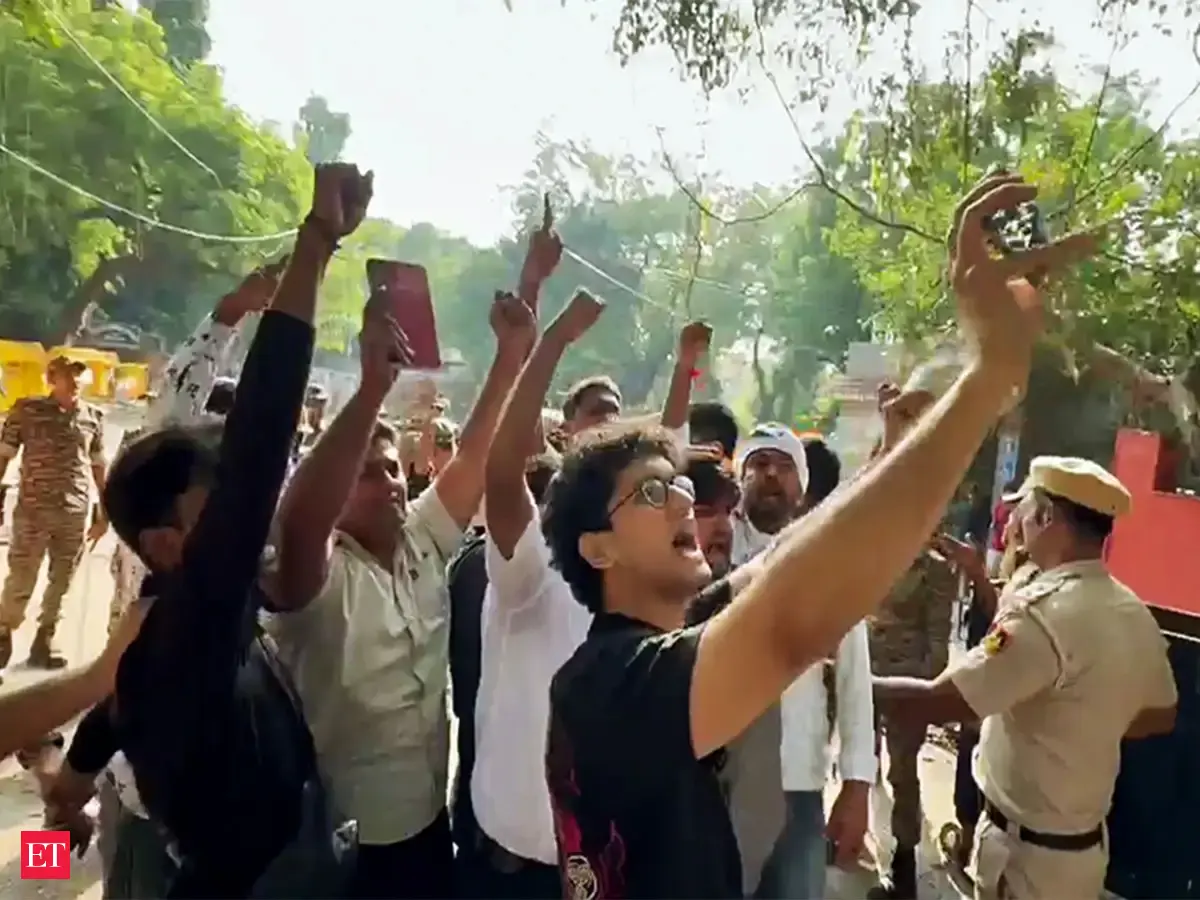
<h1>Inside the Fracture: <a href="/article/the-pulse-of-youth-how-the-jantar-mantar-protests-are-redefining-environmental-activism-in-india" title="The Pulse of Youth: How the Jantar Mantar Protests Are Redefining Environmental Activism in India" class="internal-link">How the</a> CJP Tiranga Protest Exposes the New Battleground of Indian Social Movements</h1>
<p>The CJP Tiranga protest, which erupted in the heart of Delhi earlier this year, has quickly become a defining flashpoint for contemporary Indian activism. At its core, the movement seeks to reclaim the symbolism of the Tiranga—India’s national flag—as a unifying emblem for social justice. Yet, as the weeks have unfolded, the protest has splintered into competing factions, raising profound questions about legitimacy, visibility, and the very fabric of collective action in a rapidly polarising society.</p>
<h2>1. Origins and Context: Birth of the CJP Tiranga Movement</h2>
<p>The CJP Tiranga movement traces its roots to a coalition of lawyers, students, and community organisers who convened under the banner of the Citizens’ Justice Project (CJP) in early 2024. Their stated aim was to “re‑centre the Tiranga as a living symbol of constitutional values, not a political prop.”</p>
<h3>Ideological Foundations</h3>
Advertisement
Loading partner content...
<ul>
<li>Constitutional patriotism – emphasizing the Preamble, fundamental rights, and secular ethos.</li>
<li>Grassroots mobilisation – leveraging local neighbourhood committees and campus chapters.</li>
<li>Inter‑faith solidarity – inviting participation from Hindu, Muslim, Christian, and Sikh groups.</li>
</ul>
<p>The movement’s early rallies were modest, focusing on flag‑hoisting ceremonies in public parks and dialogues on civic duties. By March 2025, the CJP had claimed a membership base of over 12,000 individuals across ten states, according to its internal survey.</p>
<h2>2. Escalating Tensions: The Flag‑Waving Controversy</h2>
<p>The fracture began in late April when the CJP’s central committee announced a new protocol: only members who had completed a “CJP Citizenship Certification” could wave the flag during public demonstrations. The decision was framed as a quality‑control measure to prevent “misuse of the national symbol.”</p>
<blockquote>
<p>“When a flag becomes a credential, it ceases to be a symbol of the people,” said <b>Advocate Meera Nair</b>, a constitutional law expert who later withdrew from the CJP’s advisory board. “This is the first step toward the weaponisation of patriotism.”</p>
</blockquote>
Advertisement
Loading partner content...
<p>The announcement sparked immediate backlash. Youth chapters in Delhi, Bengaluru, and Hyderabad staged sit‑ins, accusing the leadership of elitism and exclusion. <a href="/article/mastering-social-media-strategy-in-india-a-comprehensive-guide" title="Mastering Social Media Strategy in India: A Comprehensive Guide" class="internal-link">Social media</a> feeds erupted with hashtags like #FlagForAll and #CJPExpose, mobilising thousands of unaffiliated protesters.</p>
<h3>Internal Factions Emerge</h3>
<table border="1" cellpadding="5" cellspacing="0">
<thead>
<tr>
<th>Faction</th>
<th>Core Demand</th>
<th>Leadership</th>
<th>Estimated Membership (2025)</th>
</tr>
</thead>
<tbody>
<tr>
<td>Core CJP</td>
<td>Certified flag‑waving only</td>
<td>Rajesh Sharma (National Convenor)</td>
<td>4,800</td>
</tr>
<tr>
<td>Open Flag Alliance (OFA)</td>
<td>Unrestricted flag access</td>
<td>Deepika Rao (Student Activist)</td>
<td>3,200</td>
</tr>
<tr>
<td>Regional Solidarity Networks (RSN)</td>
<td>Local autonomy, no central certification</td>
<td>Abdul Khan (Delhi Chapter Head)</td>
<td>2,500</td>
</tr>
<tr>
<td>Youth Unaffiliated (YU)</td>
<td>Digital mobilisation, street protests</td>
<td>Varun Mehta (Online Organizer)</td>
<td>1,500</td>
</tr>
</tbody>
</table>
<p>The table above illustrates the fragmentation. While the Core CJP still commands the largest single bloc, the combined strength of the rival groups now outweighs it, creating a volatile equilibrium.</p>
<h2>3. Delhi Police’s Response Strategy: Limited Flag‑Waving, Public Stay‑Away</h2>
Advertisement
Loading partner content...
<p>Delhi Police’s handling of the protest reflects a calibrated approach aimed at balancing constitutional rights with public order concerns. In a press briefing on May 2, 2025, Joint Commissioner Anil Verma outlined a three‑pronged policy:</p>
<ol>
<li>Permit flag‑waving only for CJP‑certified participants within a designated “Freedom Zone” near India Gate.</li>
<li>Designate buffer zones where the general public could not enter without prior permission.</li>
<li>Deploy rapid‑response squads to monitor any unauthorised flag displays.</li>
</ol>
<p>“Our priority is to protect the flag’s sanctity while allowing peaceful expression,” Verma stated. “We cannot risk the symbol being hijacked for partisan agendas.”</p>
<blockquote>
<p>“The police’s selective permission creates a hierarchy of citizenship,” observed <b>Professor Arvind Joshi</b>, a sociologist at Jawaharlal Nehru University. “It signals that only those who meet bureaucratic criteria can claim the nation’s symbols.”</p>
</blockquote>
<p>The policy sparked both praise and criticism. While some legal scholars argued that it was a reasonable time‑place‑manner restriction under Article 19(2), others warned of a slippery slope toward state‑sanctioned exclusivity.</p>
Advertisement
Loading partner content...
<h2>4. Broader Societal Implications: Visibility, Legitimacy, and Unity</h2>
<p>The CJP Tiranga controversy mirrors larger trends <a href="/article/twisha-sharma-dowry-death-case-legal-battle-societal-impact-amp-reforms-in-india" title="Twisha Sharma Dowry Death Case: Legal Battle, Societal Impact & Reforms in India" class="internal-link">in India</a>n social movements. As the country’s civic landscape becomes increasingly issue‑specific, the question of who gets to represent collective aspirations grows more contentious.</p>
<h3>Politics of Visibility</h3>
<p>Visibility has become a currency in modern activism. The CJP’s certification system attempts to curate who can be seen waving the flag, yet the internet amplifies dissenting images, turning the flag into a viral battleground.</p>
<h3>Legitimacy and the Law</h3>
Advertisement
Loading partner content...
<p>Legal experts point to <a href="/article/the-supreme-court-s-investigation-into-bci-chairmanship-s-impact-on-nalsar-students-a-deep-dive-into" title="The Supreme Court's Investigation into BCI Chairmanship's Impact on NALSAR Students: A Deep Dive into Institutional Authority, Legal Accountability, and Academic Freedom" class="internal-link">the Supreme</a> Court’s 2018 judgment in *Suresh Kumar v. Union of India*, which held that “the national flag is a symbol of the people, not of any particular group.” This precedent challenges the CJP’s exclusivity model.</p>
<blockquote>
<p>“When the state begins to delegate symbolic authority, it undermines the democratic principle of equal citizenship,” said <b>Advocate Faisal Khan</b>, who represented several OFA protesters in Delhi courts. “The flag belongs to every Indian, not just a privileged few.”</p>
</blockquote>
<h3>Challenges of Ideological Cohesion</h3>
<p>The movement’s split reflects deeper cleavages: urban versus rural, youth versus established leadership, secular versus religious framing. Maintaining unity amid such diversity is a classic dilemma for any mass movement.</p>
<h2>5. Future Outlook: Scenarios, Lessons, and Democratic Implications</h2>
Advertisement
Loading partner content...
<p>Several plausible trajectories lie ahead for the CJP Tiranga protest.</p>
<ul>
<li><b>Reconciliation Path</b> – The Core CJP could relax certification, integrating other factions under a broader charter, thereby restoring a unified front.</li>
<li><b>Fragmentation Escalation</b> – Continued rivalry may lead to parallel flag‑waving events, diluting the protest’s impact but increasing public awareness of internal dissent.</li>
<li><b>State Co‑optation</b> – Delhi Police might formalise a partnership with the CJP, institutionalising the “Freedom Zone” concept and turning the protest into a regulated civic ritual.</li>
</ul>
<p>Regardless of the path, the episode offers critical lessons for protest strategists. First, <b>symbolic exclusivity can backfire</b>, generating more opposition than cohesion. Second, <b>transparent decision‑making</b> and inclusive governance are essential to preserve legitimacy. Finally, <b>state‑civil society dialogue</b> must move beyond containment to genuine engagement.</p>
<p>The CJP Tiranga protest is more than a dispute over a flag; it is a microcosm of India’s evolving democratic discourse. As the nation approaches the 2029 general elections, movements that can balance ideological purity with inclusive practice will likely shape <a href="/article/how-the-blanket-telegram-ban-is-reshaping-social-media-legal-battles-user-impact-and-the-future-of-m" title="How the Blanket Telegram Ban is Reshaping Social Media: Legal Battles, User Impact, and the Future of Messaging Apps" class="internal-link">the future of</a> Indian polity.</p>
Advertisement
Loading partner content...
<p>In the meantime, citizens, activists, and policymakers are watching closely, aware that the battle for the soul of India is fought not only in parliament but also on the streets where a flag can both unite and divide.</p>
<figure class="my-8 overflow-hidden rounded-3xl shadow-xl">
<img src="https://images.pexels.com/photos/38727115/pexels-photo-38727115.png?auto=compress&cs=tinysrgb&dpr=2&h=650&w=940" alt="CJP Tiranga protest Delhi" class="w-full h-[400px] object-cover" />
</figure>
<figure class="my-8 overflow-hidden rounded-3xl shadow-xl">
<img src="https://images.pexels.com/photos/28680123/pexels-photo-28680123.jpeg?auto=compress&cs=tinysrgb&dpr=2&h=650&w=940" alt="Delhi Police barricades" class="w-full h-[400px] object-cover" />
</figure>
<figure class="my-8 overflow-hidden rounded-3xl shadow-xl">
<img src="https://static.toiimg.com/thumb/msid-134360347,width-1280,height-720,resizemode-6,overlay-toi_sw,pt-32,y_pad-600/photo.jpg" alt="Harsh Mander" class="w-full h-[400px] object-cover" />
</figure>
Advertisement
Loading partner content...
<figure class="my-8 overflow-hidden rounded-3xl shadow-xl">
<img src="https://images.pexels.com/photos/7051770/pexels-photo-7051770.jpeg?auto=compress&cs=tinysrgb&dpr=2&h=650&w=940" alt="youth protest flag" class="w-full h-[400px] object-cover" />
</figure></b></b></b></i></i></i></i>


