Microplastics: The Invisible Threat Polluting Our Oceans, Food, and Bodies
In today's <a href="/article/innovation-in-business-why-it-s-the-key-to-thriving-in-a-competitive-world" title="Innovation in Business: Why It’s the Key to Thriving in a Competitive World" class="internal-link">world</a>, plastic pollution has evolved into a silent crisis, with microplastics emerging as one of the most pervasive environmental challenges. These tiny plastic particles, often invisible to the naked eye, are infiltrating ecosystems, wildlife, and even <a href="/article/social-norms-and-behavioral-change-how-culture-shapes-our-daily-choices-in-india" title="Social Norms and Behavioral Change: How Culture Shapes Our Daily Choices in India" class="internal-link">our daily</a> lives. Drawing from key insights in environmental infographics, this article explores what microplastics are, their sources, global impacts, and practical steps to combat them. Whether you're concerned about ocean health, food safety, or personal well-being, understanding microplastics is crucial for driving change.

What Are Microplastics?
Microplastics are plastic particles less than 5 millimeters (or about 1/5 of an inch) in size. They come in various shapes, types, and origins, making them a widespread form of pollution. Unlike larger plastic waste, microplastics don't decompose—they only break down into smaller pieces over time.
There are two main categories:
- Primary Microplastics: These are intentionally manufactured small plastics, such as microbeads found in cosmetics, personal care products like toothpaste and exfoliants, or industrial pellets (nurdles) used in manufacturing. For instance, the U.S. Congress passed the Microbead-Free Waters Act in 2015, banning microbeads in rinse-off cosmetics starting in July 2017.
- Secondary Microplastics: These form from the breakdown of larger plastic items due to environmental factors like sunlight (UV light), waves, wind, and physical abrasion. Common examples include fragments from plastic bottles, bags, or fishing gear, and microfibers shed from synthetic clothing (like polyester and nylon) during washing.
Other sources include tire friction (accounting for 28.3% of generated microplastics), paint, and fabric debris. Microplastics can be as small as a grain of sand or even microscopic, persisting in the environment indefinitely.
Advertisement
Loading partner content...
Sources of Microplastics: Where Do They Come From?
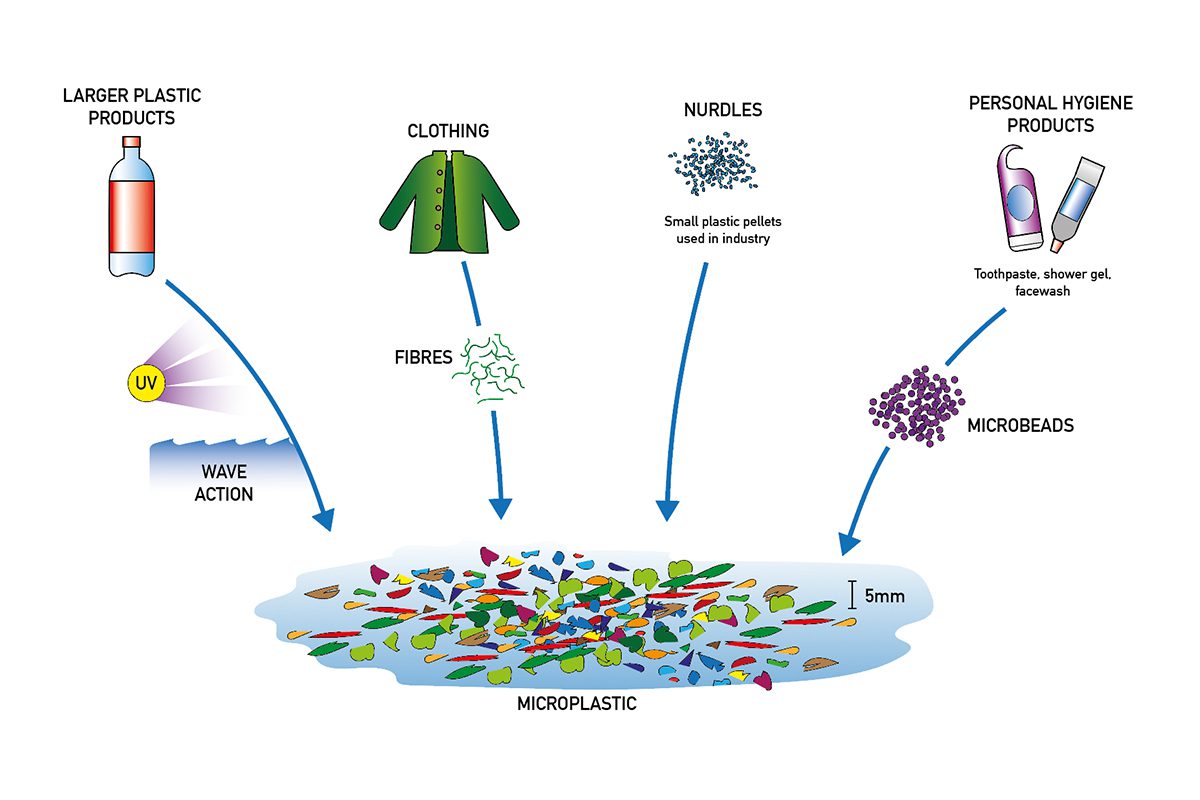
Microplastics originate from both land-based and ocean activities, entering ecosystems through various pathways. Primary sources include:
- Cosmetics and personal care products containing microbeads.
- Industrial processes releasing pellets or abrasives.
- Synthetic fabrics shedding fibers during laundry—up to 700,000 microfibers can be released per wash cycle.
Secondary sources dominate, arising from the degradation of larger plastics:
- Plastic bottles, bags, and packaging that fragment over time.
- Vehicle tires wearing down on roads, releasing particles into stormwater.
- Other debris like fishing nets, straws, and industrial waste.
Human activities exacerbate the issue. For example, wastewater from treatment plants, stormwater runoff from urban areas, and agricultural practices contribute to microplastic spread. In the Great Lakes region, plastic debris makes up about 80% of litter on shorelines, with nearly 24 million pounds entering the lakes annually. Globally, sources like fossil fuels, industry, and sewage systems funnel plastics into rivers, oceans, and even the atmosphere.
Global Distribution and Shocking Statistics
Microplastics are everywhere—from remote ocean depths to urban air. Studies highlight their ubiquity:
- An estimated 192 billion pieces of plastic enter Australia's oceans each year, doubling every 11 years.
- Over 9 million tonnes of plastic enter the world's oceans annually, with projections reaching 29 million tonnes by 2040.
- In the U.S., a National Park Service study sampled 37 beaches across national parks, seashores, and recreation areas, finding microplastics at all sites. Concentrations varied, with the highest in the Great Lakes and Pacific Islands. Microbeads were found at 6 beaches, fragments at 15, and microfibers (making up 97% of debris) at all 37.
- Worldwide, 280 million tons of plastic enter oceans every year, affecting biodiversity: 52% of sea turtles, 100% of coral reefs, 90% of seabirds, and all marine ecosystems.
Atmospheric transport carries microplastics inland, contaminating soil, rivers, and air. In the Great Lakes, more than half of waste released yearly contains plastic, breaking down into fragments smaller than 5mm—yet no less hazardous.
Advertisement
Loading partner content...
Environmental Impacts: A Big Problem for Wildlife and Ecosystems
Microplastics pose severe threats to marine and terrestrial life. They accumulate in oceans, rivers, and soil, disrupting habitats and food chains.
- Ingestion and Entanglement: Over 1,900 marine species ingest plastics, mistaking them for food. Fish contain microplastics in 25% of cases, while blue whales consume up to 10 million pieces per day. Seabirds, turtles, and fish suffer digestive blockages, reduced nutrition, and death.
- Toxic Effects: Microplastics attract and carry harmful chemicals like industrial pollutants, acting like sponges. When ingested, they release toxins, affecting animal health and entering the food chain.
- Biodiversity Loss: 600+ marine species are impacted through ingestion or entanglement. Coral reefs face 100% exposure, and entire ecosystems suffer from altered physical structures and reduced oxygen levels.
- Ocean and Land Pollution: An estimated 2.9 million tonnes of microplastics enter aquatic environments yearly. In national parks, average microplastic loads range from 213-221.3 per kg of sand, equivalent to the weight of a bag of flour per kilogram.
Tire friction alone generates significant pollution, while breakdown from larger items like bottles perpetuates the cycle—plastic doesn't decompose; it just gets smaller.
Human Health Risks: Eating, Drinking, and Breathing Microplastics
Humans are not immune. Microplastics enter our bodies through air, food, and water, with alarming consumption rates.
<strong>Daily Intake:</strong> Adults ingest up to 121,000 microplastic particles per year through air, food, and beverages. Annually, individuals consume between 78,000 and 211,000 particles.
<strong>In Consumables (Average particles per gram/liter/m³):</strong>
Advertisement
Loading partner content...
- Bottled water: 94.37
- Beer: 32.27
- Air: 9.80
- Tap water: 4.24
- Seafood: 1.48
- Sugar: 0.44
- Salt: 0.11
- Honey: 0.10
Recent research confirms microplastics in human brain tissue, raising concerns about long-term effects like inflammation, toxicity, and bioaccumulation. Marine animals pass microplastics up the food chain, leading to human exposure via seafood.
Solutions and Mitigation: How to Reduce Microplastics
Tackling microplastics requires individual, community, and policy actions. Here are practical steps from environmental experts:
- Personal Habits: Opt for reusable bags, bottles, and containers. Use natural-fiber clothing (e.g., cotton, wool) over synthetics. Install laundry filters to catch microfibers.
- Product Choices: Avoid single-use plastics and products with microbeads. Check labels for polyethylene or polypropylene.
- Community Efforts: Participate in clean-ups for beaches and waterways. Support bans on microbeads and single-use plastics.
- Advocacy and Education: Advocate for legislation like container deposit schemes and plastic bag bans. Educate others on microplastic health impacts.
- Broader Strategies: Reduce overall plastic use, improve waste management, and join campaigns like the Clean Oceans Movement or Boomerang Alliance to stop marine plastic pollution.
Simple changes, like refusing single-use items and recycling properly, can significantly cut microplastic generation. Governments and industries must phase out non-<a href="/article/mastering-saas-marketing-essential-strategies-for-indian-businesses" title="Mastering SaaS Marketing: Essential Strategies for Indian Businesses" class="internal-link">essential</a> plastics and invest in alternatives.
Conclusion: Act Now to Combat Microplastic Pollution
Microplastics represent a growing environmental concern, from polluting national park beaches to infiltrating our diets. With billions of pieces entering oceans yearly and impacts rippling through ecosystems and human health, urgent action is needed. By understanding sources like synthetic fabrics and tire wear, and adopting <a href="/article/the-rise-of-lifestyle-diseases-in-young-adults-causes-and-solutions" title="The Rise of Lifestyle Diseases in Young Adults — Causes and Solutions" class="internal-link">solutions</a> such as reusable products, we can mitigate this tiny yet massive problem. Start today—reduce, reuse, and advocate for a plastic-free future.
For more on microplastics and environmental conservation, explore resources from organizations like NOAA, the National Park Service, and Sea Grant. Together, we can turn the tide on plastic pollution.