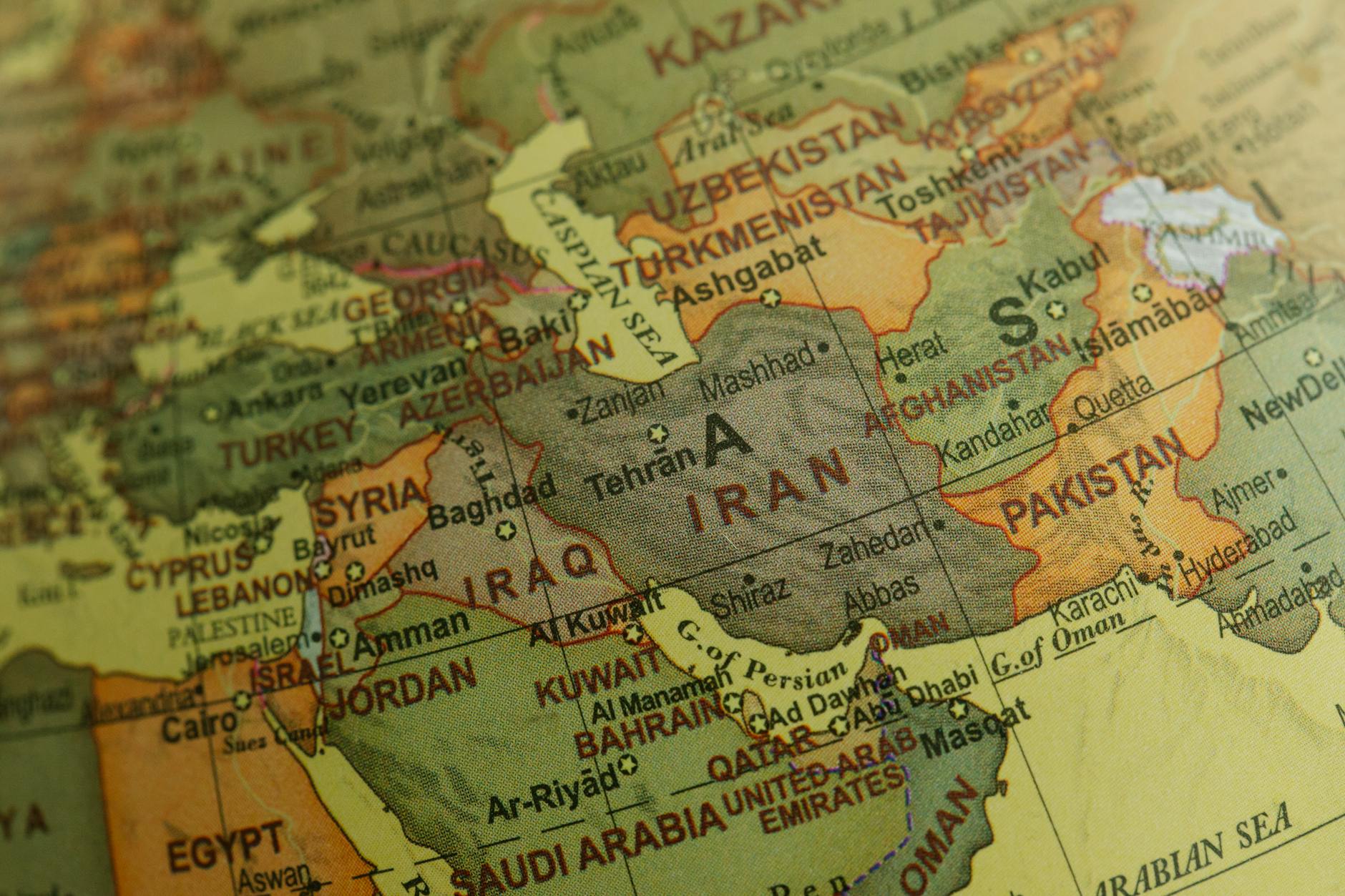

<h1>Sanctions, Oil & The Strait of Hormuz: How the Iran Nuclear Deal Reshapes <a href="/article/how-india-s-5-point-maritime-trade-blueprint-is-redefining-global-shipping-a-complete-guide" title="How India’s 5‑Point Maritime Trade Blueprint Is Redefining Global Shipping – A Complete Guide" class="internal-link">Global</a> Markets</h1>
<p>Imagine a world where the pulse of global economic activity is dictated not by the rhythms of politics, but by the fragile balance of nuclear diplomacy and energy dependencies. This is the essence of the current geopolitical tapestry woven around the Iran Nuclear Deal, the Strait of Hormuz, and the intricate web of sanctions that shape the fate of oil prices, corporate profitability, and international trade. For investors, policymakers, and business leaders across the Middle East, Europe, and beyond, understanding this interplay is no longer optional—it is a necessity. The convergence of nuclear policy, energy markets, and geopolitical stability creates a scenario where every decision carries profound consequences.</p>
<p>This is not merely a matter of diplomacy; it is a calculus of risk, reward, and consequence that demands meticulous attention. The stakes are high, the implications vast, and the outcomes far-reaching. In this context, the narrative unfolds as a tapestry of interconnected challenges and opportunities that will test the resilience of global systems and redefine the landscape of economic strategy. The following exploration delves into the multifaceted dynamics at play, offering insights tailored for those navigating the complexities of modern finance, policy, and geopolitics.</p>
The Anatomy of the Deal: Sanctions Relief vs. Nuclear Constraints (Business Perspective)
Advertisement
Loading partner content...
The Iran Nuclear Deal, formally known as the Joint Comprehensive Plan of Action (JCPOA), emerged as a landmark agreement in 2015, aiming to curb Iran’s nuclear program in exchange for extensive sanctions relief. Yet, from a business standpoint, this deal presents a paradox: while it offers temporary relief from crippling restrictions, it also exposes the delicate balance between compliance and competitiveness. For investors, the relief manifests in the form of access to global markets, reduced production costs, and enhanced trade opportunities, yet it simultaneously introduces vulnerabilities. The lifting of sanctions that had previously constrained Iran’s ability to participate fully in international commerce creates a ripple effect that ripples through supply chains, financial systems, and corporate strategies. This duality necessitates a nuanced approach, where companies must weigh the immediate benefits against long-term risks. The business community faces a crossroads, one where <a href="/article/how-iran-israel-war-impacts-indian-economy-and-businesses-india-s-strategic-response" title="How Iran-Israel War Impacts Indian Economy and Businesses: India's Strategic Response" class="internal-link">strategic</a> decisions must account for both the potential for increased market access and the looming threat of retaliation. The challenge lies in navigating this terrain without compromising stability or exposing stakeholders to unforeseen consequences. Here, the interplay between policy and practice demands a level of foresight that transcends traditional financial analysis, requiring a reevaluation of existing priorities and risk assessments. In this context, understanding the nuances of the deal’s structure and its implications for different sectors becomes paramount. The professionals involved must adapt their strategies accordingly, ensuring that their decisions align with both the immediate goals and the broader implications of their actions. The complexity inherent to this scenario underscores the need for a holistic perspective that integrates economic, regulatory, and geopolitical considerations into every decision-making process.
The 'Trump Era' Shock: Maximum Pressure Campaign & Market Fallout (2018-2021)
The 2018 withdrawal from the JCPOA marked a pivotal moment in global geopolitics, triggering immediate and far-reaching consequences that reverberated across multiple domains. For businesses operating within the Middle East and beyond, the withdrawal unleashed a cascade of market volatility, reshaping investment landscapes and altering strategic priorities. The abrupt termination of U.S.-led sanctions regimes that had previously shielded Iranian enterprises from international scrutiny exposed vulnerabilities that were long since exposed. Companies reliant on access to global markets faced sudden disruptions, while those with upstream exposure to Iranian oil and energy projects witnessed a sharp decline in revenues and profitability. The withdrawal also intensified competition among regional players, as firms sought to capitalize on the shifting dynamics, often through strategic partnerships or diversification efforts. The market responded swiftly, with Brent Crude prices plunging as speculation over supply availability surged. Meanwhile, the energy sector experienced turbulence, with traditional suppliers grappling with reduced demand and financial instability. The period also saw an acceleration in the adoption of alternative energy sources and the reevaluation of supply chain dependencies, forcing firms to recalibrate their strategies. This era underscored the fragility of economic equilibrium in the wake of political upheaval, highlighting the critical importance of agility and adaptability in business operations. The lessons drawn from this period continue to influence corporate behavior, serving as a cautionary tale about the volatility inherent in geopolitical shifts and the imperative to maintain flexibility in a rapidly changing environment.
Advertisement
Loading partner content...
The Ripple Effect: Sectoral Deep Dives
<strong>Energy Markets</strong>
The repercussions of the Trump Era’s withdrawal permeated the energy sector, where the Strait of Hormuz became a focal point of heightened tension. With sanctions lifted and new alliances forged, OPEC+ found itself navigating a precarious balance between maintaining production stability and responding to shifting market demands. The Strait of Hormuz, a critical chokepoint for global oil trade, witnessed increased volatility as heightened competition for control over shipping lanes intensified. Companies involved in maritime logistics faced rising costs due to heightened security measures and the need to diversify routes, thereby impacting global supply chain operations. Simultaneously, <a href="/article/the-strategic-shift-how-trump-s-envoy-is-redefining-u-s-iran-diplomacy-and-what-it-means-for-global-" title="The Strategic Shift: How Trump’s Envoy Is Redefining U.S.-Iran Diplomacy and What It Means for Global Markets" class="internal-link">the strategic</a> petroleum reserves held by major nations were scrutinized, prompting debates over their utilization during periods of crisis. The energy sector’s response was marked by both opportunities and challenges: while some firms capitalized on lower oil prices to invest in infrastructure, others faced headwinds from fluctuating demand and geopolitical uncertainties. The interplay between energy production, consumption, and geopolitical stability created a complex web of dependencies that required meticulous management. This sector, once a linchpin of global economic stability, became a battleground where short-term gains were weighed against long-term sustainability concerns, further complicating strategic decision-making for businesses.
<strong>Shipping & Logistics</strong>
The Strait of Hormuz’s role as a gateway to the Persian Gulf intensified its significance amid the geopolitical upheavals. With heightened tensions between regional actors and shifting alliances, the risk premiums associated with shipping through this narrow passage surged. Insurance costs soared as the likelihood of disruptions became more apparent, forcing freight operators to reassess their risk mitigation strategies. The emergence of alternative routes, though costly and logistically challenging, began to gain traction, albeit at a premium. Tanker seizures and delays due to enforcement actions or political unrest further disrupted global trade flows, compelling companies to explore contingency plans and contingency financing options. The logistics industry also witnessed a surge in demand for real-time monitoring technologies to track vessel movements and assess potential bottlenecks. This period highlighted the critical need for resilience in supply chain management, as businesses sought to anticipate disruptions and adjust operations accordingly. The logistics sector, historically a backbone of global commerce, found itself at the crossroads of uncertainty, compelled to innovate and adapt in response to the evolving geopolitical landscape.
Advertisement
Loading partner content...
<strong>Banking & Finance</strong>
The withdrawal catalyzed significant transformations within the banking sector, particularly in regions heavily dependent on Iranian assets. Traditional correspondent banking relationships were disrupted, necessitating a shift toward localized financial infrastructure to mitigate risks associated with international transactions. The rise in demand for cash management solutions and alternative payment systems gained traction, particularly in emerging markets where access to global financial systems remains constrained. Additionally, the sector witnessed a surge in compliance costs as institutions adjusted to stricter regulatory frameworks aimed at mitigating the risks associated with non-compliance with sanctions-related reporting requirements. Cryptocurrency and decentralized finance (DeFi) platforms began to emerge as potential alternatives, offering decentralized solutions that could circumvent some of the traditional barriers imposed by geopolitical constraints. However, this shift also introduced new complexities, requiring banks to navigate a landscape where technological innovation intersected with heightened regulatory scrutiny. The banking industry thus found itself in a period of transformation, balancing the need for stability with the imperative to embrace new financial paradigms while maintaining adherence to evolving international standards. This adaptation underscored the sector’s resilience but also exposed it to the challenges posed by rapid technological and regulatory evolution.
<strong>Regional Economies</strong>
Beyond the immediate impacts on oil and energy sectors, the ripple effects extended to regional economies, particularly those bordering the Strait of Hormuz and reliant on trade dependent on Middle Eastern imports. Iraq, a key player in regional energy exports, faced significant challenges as its reliance on Iranian oil supply was exacerbated by sanctions relief. While some sectors adapted by increasing domestic production efforts, others experienced economic strain due to reduced revenue streams. The United Arab Emirates, positioned as a regional hub, capitalized on its strategic location to establish new trade partnerships, leveraging its geopolitical leverage to diversify economic contributions. Conversely, European countries encountered increased compliance costs as they navigated the complexities of implementing sanctions regulations within their trade frameworks. These regional dynamics illustrated the interconnectedness of global economies, where localized disruptions can have far-reaching consequences. The ability to anticipate and respond to such shifts required a level of coordination and cooperation that tested the capacity of various stakeholders, ultimately shaping the trajectory of regional economic policies and development strategies.
<strong>The 'Shadow Economy' & Sanctions Evasion Innovation</strong>
Advertisement
Loading partner content...
Iran’s adaptive strategies have become a defining feature of the contemporary geopolitical landscape, with the development of sophisticated methods to circumvent sanctions and maintain economic stability. One of the most notable developments has been the evolution of the "Ghost Fleet," a network of vessels operated under falsified identities or utilizing intermediaries to bypass regulatory oversight. These vessels, often equipped with advanced technologies to evade detection, have become a lifeline for Iran’s ability to sustain its economic activities while minimizing exposure to international sanctions. Additionally, the proliferation of ship-to-ship transfers and barter trade has emerged as a critical component of Iran’s financial resilience, allowing for the exchange of goods without direct reliance on traditional banking systems. The rise of crypto mining and blockchain-based transactions further illustrates Iran’s innovative response to economic pressures, leveraging digital currencies to obviate traditional financial restrictions. These adaptations have not only reinforced Iran’s self-sufficiency but also created new avenues for illicit economic activities that challenge existing regulatory frameworks. The proliferation of these methods underscores a broader trend where state-driven economic policies intersect with global financial systems in increasingly complex ways, necessitating adaptive measures to mitigate associated risks. Such innovations, while effective in the short term, raise critical questions about the sustainability of these strategies in the long term, particularly as international pressure continues to mount.
<strong>Current State of Play: Negotiations, Compliance & The 'Snapback' Trigger</strong>
<strong>Energy Markets</strong>
The ongoing negotiations surrounding the Iran Nuclear Deal remain a focal point of international diplomacy, with the potential for renewed engagement offering a glimmer of hope amidst current uncertainties. While no formal agreements have been re-established, the dialogue continues to shape market perceptions and economic conditions. The recent discussions have yet to yield concrete outcomes, leaving many stakeholders in a state of cautious anticipation. For businesses, this period presents both challenges and opportunities. On one hand, the uncertainty surrounding potential resumption of sanctions relief creates a volatile environment where strategic planning must remain flexible. On the other hand, the possibility of renewed cooperation allows for the reallocation of resources toward long-term investments and the exploration of new partnerships. Companies must remain vigilant, maintaining robust contingency plans while monitoring developments closely. The energy sector, in particular, faces the dual burden of adapting to shifting regulatory landscapes and navigating the uncertainties inherent in a geopolitical landscape that remains fluid. This period serves as a test of resilience, demanding a balance between immediate actions and strategic foresight to mitigate risks effectively.
Advertisement
Loading partner content...
<strong>Shipping & Logistics</strong>
The logistics sector continues to grapple with the implications of heightened <a href="/article/navigating-geopolitical-tensions-a-strategic-response-to-israeli-criticism" title="Navigating Geopolitical Tensions: A Strategic Response to Israeli Criticism" class="internal-link">geopolitical tensions</a>, particularly in the context <a href="/article/how-the-reopening-of-the-strait-of-hormuz-could-reshape-global-oil-markets-a-complete-guide" title="How the Reopening of the Strait of Hormuz Could Reshape Global Oil Markets: A Complete Guide" class="internal-link">of the Strait of Hormuz</a>. As the region remains a critical transit corridor, the