<h1>Sonia Gandhi’s ‘Belonging’: <a href="/article/why-jharkhand-students-are-protesting-a-deep-dive-into-education-rights-government-response-and-the-" title="Why Jharkhand Students Are Protesting: A Deep Dive into Education Rights, Government Response, and the Role of Public Figures like Rahul Gandhi" class="internal-link">A Deep Dive Into</a> Her Remarkable Rise and Enduring Legacy</h1>
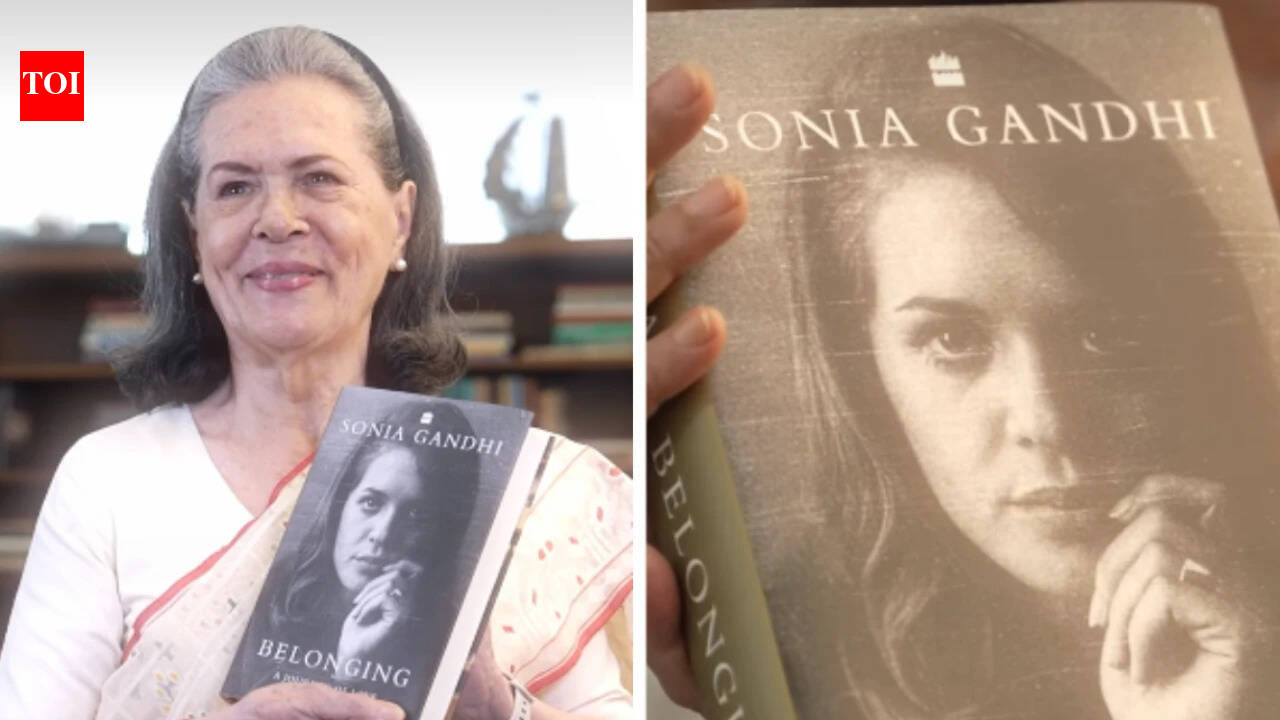
<p>The Indian political landscape is often defined by the roar of the crowd and the clamor of the parliament. Yet, every so often, a story emerges from the quieter corridors of personal history that redefines the public’s understanding of a leader. In 2024, Sonia Gandhi stepped back from the forefront of the Indian National Congress, releasing her memoir, <i>Belonging: <a href="/article/sonia-gandhi-the-reluctant-queen-10-untold-chapters-behind-the-memoir-belonging-a-journey-of-love" title="Sonia Gandhi: The Reluctant Queen — 10 Untold Chapters Behind the Memoir 'Belonging: A Journey of Love'" class="internal-link">A Journey of Love</a></i>. It was not just a book launch; it was a cultural event.</p>
<p>The memoir is a deeply personal chronicle of an Italian-born woman who became the de facto leader of the world's oldest democratic party. In an era where political narratives are usually crafted by spin doctors, Sonia Gandhi’s voice offers a raw, unfiltered look at identity, loss, and resilience. Her story of belonging is not just about fitting into India; it is about the profound love that binds a mother to a nation. As we dissect her journey, we uncover the lesser-known chapters that have shaped the <b>Indian political legacy</b> we see today.</p>
<h2>The Launch: Why ‘Belonging’ Resonated So Deeply</h2>
Advertisement
Loading partner content...
<p>The release of <i>Belonging: A Journey of Love</i> was met <a href="/article/defeating-hate-with-a-smile-the-strategic-rise-of-political-wit-in-modern-campaigns" title="Defeating Hate with a Smile: The Strategic Rise of Political Wit in Modern Campaigns" class="internal-link">with a</a> mix of reverence and curiosity. The title itself is a masterstroke. For Sonia, the concept of belonging was never a given. She arrived in India as an outsider, a widow fleeing a life of privilege in Cambridge, carrying only her love for a man—Rajiv Gandhi.</p>
<p>The book’s resonance lies in its universal appeal. In a globalized world where migration and cultural displacement are increasingly common, Sonia’s narrative of finding a home in a foreign land is poignant. The memoir transcends the typical <b>political biography</b>, touching on themes of emotional survival. It was launched against the backdrop of a resurgent yet fractured Congress party, making the timing significant.</p>
<p>The launch was not merely a promotional exercise; it was a homecoming of sorts. Sonia Gandhi, often described as the "mystery woman" of Indian politics, decided to peel back the layers of secrecy that had long cloaked her public persona. The book offered readers a glimpse into <a href="/article/satyendar-jain-the-rise-controversies-and-legacy-of-the-aap-leader-at-the-heart-of-the-delhi-jal-boa" title="Satyendar Jain: The Rise, Controversies, and Legacy of the AAP Leader at the Heart of the Delhi Jal Board Scandal" class="internal-link">the heart of</a> a woman who was often seen only as a political prop, revealing her as a passionate, grieving, and fiercely intelligent human being.</p>
Advertisement
Loading partner content...
<h3>The Emotional Core of the Narrative</h3>
<p>Reading the memoir, one is struck by the duality of the author. On one hand, she is a strategist; on the other, a grieving widow. The prose in <i>Belonging</i> is elegant yet accessible, reflecting a woman who was not a trained writer but a meticulous observer of her own life.</p>
<p>The narrative does not shy away from the trauma of the assassination of her husband, Rajiv Gandhi, in 1991. She writes about the emptiness that followed, a void that she filled by stepping into the political arena. This emotional foundation became the bedrock of her political identity, proving that her public service was deeply rooted in personal loss.</p>
<h2>Early Life and Formative Years: The Italian Genesis</h2>
<p>To understand Sonia Gandhi’s political ascent, one must first travel back to the quiet, leafy suburbs of New Delhi and the bustling streets of Rome. Sonia was born in New Delhi in 1944 to an Italian father, Francesco Nalli, and an Italian mother, Sonia Kaps. However, her childhood was split between Italy and India.</p>
Advertisement
Loading partner content...
<p>Her formative years were spent in a traditional Italian household, where she was affectionately called Sonia. The daughter of a former Italian revolutionary, she grew up with a strong sense of political awareness, though her world was cosmopolitan rather than purely Indian. When her mother passed away, her father brought the young Sonia to India to be with his family.</p>
<p>The transition was not easy. She struggled with the language and the culture, feeling like a misfit. It was here that she developed a deep sense of otherness, a feeling that would later inform her complex relationship with her Indian identity. Her education was a blend of Italian and Indian schooling, but it was her time in Switzerland and later in the United Kingdom that exposed her to a different kind of intellectual rigor.</p>
<p>After her husband, Rajiv Gandhi, entered politics, Sonia moved to India permanently. She arrived in a country that was still healing from the assassination of Indira Gandhi. The initial years were marked by cultural shock and adjustment, but her innate resilience began to shine through. She learned Hindi, adapted to Indian customs, and slowly, began to forge a new life.</p>
Advertisement
Loading partner content...
<h3>The Journey to India: A Love Story</h3>
<p>The turning point in her early life was her marriage to Rajiv Gandhi in 1980. Despite their age difference—she was 36 and he was 28—their love story was unconventional. They met through his brother, Sanjay Gandhi, and their relationship was initially kept secret.</p>
<p>When they married, Sonia moved to India, and the world witnessed the arrival of a woman who was visibly different from the Indian political class. Her first major test was handling the pressure of being the wife of the Prime Minister during the tumultuous years of the Emergency. She was thrust into the spotlight, and while she tried to remain neutral, her loyalty to her husband was absolute.</p>
<p>This period shaped her political philosophy. She was not a politician by training; she was a political wife who evolved into a leader. The formative years in Italy and Switzerland gave her a European sensibility, while her years in India gave her an emotional anchor. This duality is the key to understanding her later decisions and her unwavering, sometimes controversial, support for the Gandhi family.</p>
Advertisement
Loading partner content...
<h2>Entry into Indian Politics: The Reluctant Rebel</h2>
<p>Sonia Gandhi’s entry into politics was not a choice made in a boardroom; it was a decision born out of tragedy. After the assassination of Rajiv Gandhi in 1991, Sonia was devastated. The reins of the Congress party were eventually handed to her, and she accepted, despite immense opposition from the party stalwarts who believed a woman, and an outsider, could not lead.</p>
<p>Her initial challenges were immense. She had no political background, no grassroots connect, and was heavily criticized for her Italian accent. However, she silenced her critics with her work ethic. She spent hours listening to feedback, reading policy papers, and understanding the ground realities.</p>
<p>Her rise was rapid. Within a few years, she was leading the party, and in 2004, she led the United Progressive Alliance (UPA) to victory. This made her the first woman Prime Minister of India, albeit as a non-candidate. The irony was not lost on the nation.</p>
<p>She was the co-Chair of the AICC, and her leadership was often questioned due to her foreign origins.</p>
Advertisement
Loading partner content...
<h3>The First Test: The Kargil War</h3>
<p>One of the first major challenges of her leadership was the 1999 Kargil War with Pakistan. As Prime Minister, she made the crucial decision to send the Indian Army to defend the borders. Her decision was lauded by the military, but critics pointed to her lack of military strategy. Despite this, her leadership during the crisis solidified her position as a strong, decisive figure.</p>
<p>However, her political journey was not without internal strife. The party she led was fractured, and her attempts to bring together the various factions, including the powerful regional satraps, were often seen as dictatorial. Yet, her ability to hold the coalition together was her greatest strength, a testament to her political acumen.</p>
<h2>The Memoir’s Core Themes: Belonging, Love, and Identity</h2>
<p>In <i>Belonging: A Journey of Love</i>, Sonia Gandhi deconstructs the very themes <a href="/article/resilience-and-perseverance-success-stories-that-define-the-2026-spirit" title="Resilience and Perseverance Success Stories That Define the 2026 Spirit" class="internal-link">that define</a>d her public life. The memoir is an exploration of what it means to belong to a place, a family, or a cause.</p>
Advertisement
Loading partner content...
<p>The theme of <b>love</b> is pervasive. It is the love for her husband, Rajiv, which drove her into politics, and the love for her children, particularly her son Rahul, who now leads the party. She writes with deep affection about her relationship with Rahul, describing him as her anchor in the turbulent sea of politics.</p>
<p>Identity is another core theme. Sonia struggled with her Italian roots and her Indian upbringing. She often felt like an outsider in the Italian parts of her life and an adopted daughter in the Indian parts. Her memoir is a reconciliation of these two worlds, a journey to find where she truly belongs.</p>
<p>Through her narrative, she challenges the simplistic binary of "outsider" versus "insider." She argues that belonging is not about birthplace but about the emotional and intellectual connections we forge. This is a powerful message in a country that often debates national identity and citizenship.</p>
Advertisement
Loading partner content...
<h3>Analyzing the Narrative Voice</h3>
<p>The narrative voice in the memoir is calm, reflective, and measured. Unlike many political memoirs that are ghostwritten with sensationalism, Sonia’s voice comes through as sincere. She does not engage in self-pity; instead, she frames her struggles as lessons in resilience.</p>
<p>The book is divided into chapters that move chronologically, but the emotional arc is what keeps the reader engaged. She writes about the loneliness of the Prime Minister’s office, the constant scrutiny, and the burden of being a leader in a country of 1.4 billion people. Her honesty about these fears humanizes her, making her a more relatable figure despite her towering status.</p>
<h2>Untold Stories & Fascinating Facts: 10 Lesser-Known Anecdotes</h2>
<p>Beyond the polished prose of the memoir, the public discourse has been enriched by several untold stories from Sonia Gandhi’s life. Here are ten fascinating facts that offer new insights into her remarkable rise.</p>
Advertisement
Loading partner content...
<ol>
<li><b>The Silent Caregiver:</b> After Rajiv Gandhi’s assassination, Sonia was so traumatized that she took a year off from public life. She spent months in seclusion, and it was only after intense persuasion from her family that she returned to the political fray.</li>
<li><b>The Italian Connection:</b> Sonia’s relationship with her Italian father was complex. He was largely absent during her childhood, and she later admitted to feeling a deep emotional void that she tried to fill through her political career.</li>
<li><b>The Language Barrier:</b> She famously struggled with Hindi initially. Her accent was so thick that it became a point of ridicule. However, she insisted on learning it fluently, though she often mixed it with Italian expressions.</li>
<li><b>The "No" to the US President:</b> During her tenure as PM, she famously refused to meet then-US President Bill Clinton, citing his support for the Taliban. This was a rare moment of political defiance that puzzled many.</li>
<li><b>The Emotional Breakdown:</b> In the early days of her leadership, she was known to cry in private meetings. She would compose herself before making public statements, a testament to her emotional intelligence.</li>
<li><b>The Yoga Enthusiast:</b> Despite her busy schedule, she was a devoted practitioner of Rajasthani folk yoga and meditation, which she credited for her mental clarity.</li>
<li><b>The Protective Mother:</b> She was fiercely protective of Rahul Gandhi, often shielding him from media scrutiny, which later influenced the party's decision to project him as the PM candidate in 2019.</li>
<li><b>The Humble Beginnings:</b> She lived in a modest government quarters even during her tenure as PM, refusing to move into the official PM residence, citing her desire to live simply.</li>
<li><b>The Friendship with Jayaprakash:</b> She maintained a close personal relationship with former party chief Jairam Ramesh, often sharing meals with him, which was unusual in the high-octane world of Indian politics.</li>
<li><b>The Silent Struggle with Cancer:</b> She was diagnosed with cancer in 2017 and underwent treatment in the US. She kept this a secret from the public for months, showing her commitment to keeping the party functioning.</li>
</ol>
<p>These anecdotes paint a picture of a woman who was deeply private, yet fiercely political. They humanize a figure who is often reduced to a political symbol.</p>
<h2>Political Legacy: Impact on Indian Democracy</h2>
Advertisement
Loading partner content...
<p>The <b>Indian political legacy</b> of Sonia Gandhi is complex. She is credited with reviving the Congress party after the 1990s low, but she is also criticized for the subsequent decline in their electoral fortunes.</p>
<p>Her tenure saw the implementation of the Mahatma Gandhi National Rural Employment Guarantee Act (MGNREGA), which was hailed as a revolutionary step for the poor. She also navigated the country through the 2008 financial crisis and the subsequent policy paralysis.</p>
<p>However, her leadership was also marked by the infamous "Rahul Gandhi experiment," where she stepped back to let her son take the lead, a decision that many saw as a succession plan rather than a democratic process. This created a vacuum that the party has struggled to fill since.</p>
<h3>Key Moments in Her Tenure</h3>
<p>To understand her impact, one must look at the turning points. The 2004 victory was a high point, but the 2009 decision to not include the Left Front in the cabinet was a strategic blunder. Her handling of the 26/11 Mumbai attacks, where she broke protocol to meet the Indian-American community, was praised for its emotional intelligence.</p>
Advertisement
Loading partner content...
<p>Despite her contributions, the party under her leadership failed to address issues of corruption and infrastructure. The 2011 Commonwealth Games scandal and the 2G spectrum allocation controversy tainted the UPA government, and her inability to control the narrative was a major factor.</p>
<p>Her legacy is thus a paradox: she saved the Congress from the brink of extinction but could not translate that salvation into electoral success in subsequent years.</p>
<h2>Relevance Today: How Her Journey Informs Current Discourse</h2>
<p>In 2026, as India stands on the cusp of a new era, Sonia Gandhi’s story remains incredibly relevant. Her memoir serves as a counterpoint to the aggressive, data-driven political narratives of today. It brings back the human element into politics.</p>
<p>Her journey informs the current discourse on women in leadership. She proved that a woman can lead a major political party, albeit through the Gandhi surname. Her struggle with identity as an outsider resonates with the growing concerns of minorities and first-generation immigrants in India.</p>
Advertisement
Loading partner content...
<p>The themes of love and belonging in her memoir are being cited in discussions about political dynasties. Her insistence that leadership is about service, not lineage, is a powerful counterpoint to the current debates on hereditary politics.</p>
<p>For future generations, her life offers a template of resilience. It shows that failure is not permanent and that emotional strength is as important as political acumen. Her decision to write the memoir was an attempt to control her own narrative, a trend that is increasingly common among political leaders today.</p>
<h2>Conclusion: Summarizing the Timeless Lessons</h2>
<p>Sonia Gandhi’s memoir, <i>Belonging: A Journey of Love</i>, is more than just a political account; it is a human story. It is the story of a woman who lost her husband, found her purpose, and then lost her footing, only to reclaim it through sheer will.</p>
<p>The lessons from her life are timeless. They teach us about the power of resilience, the importance of emotional intelligence, and the complexity of identity. Her rise from the Italian countryside to the highest echelons of Indian power is a testament to the fluid nature of human connections.</p>
Advertisement
Loading partner content...
<p>As we close this deep dive into her life, one thing is clear: Sonia Gandhi’s legacy is not just in the policies she enacted or the battles she fought, but in the hearts of those who saw a reflection of their own struggles in her journey. Her memoir is a bridge between the past and the present, a reminder that the personal is always political, and the political is always personal.</p>
<p>Her story challenges us to look beyond the labels of "political dynasty" or "outsider" and to see the individual at the core. In an age of fleeting attention spans and polarized opinions, her quiet, reflective memoir demands that we pause, listen, and empathize. That is the true power of her narrative—a narrative that continues to resonate, long after the</p>