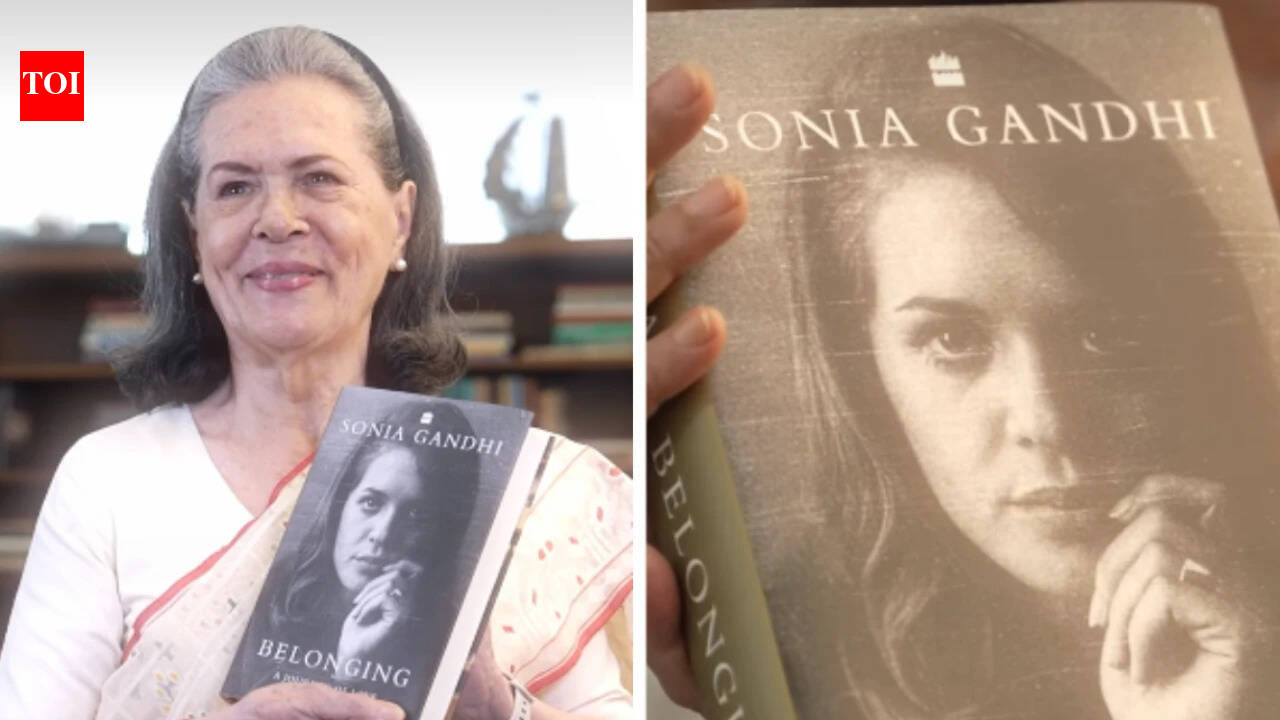

<h1>Sonia Gandhi: The Reluctant Queen — 10 Untold Chapters Behind the Memoir 'Belonging: A Journey of Love'</h1>
<p>The paradox of Sonia Gandhi’s life reads like a novel: an Italian-born art student who never imagined a political destiny, yet became the <b>guardian of India’s oldest dynasty</b> without ever occupying the prime minister’s chair. Her memoir, <i>Belonging: A Journey of Love</i>, arrives not as a conventional autobiography but as a curated meditation on identity, duty, and the quiet power of refusal. The title itself frames the central tension — <b>belonging is both a destination and a performance</b>. This article dissects the woman behind the myth, using the book as a narrative anchor to explore <a href="/article/from-fragile-five-to-global-growth-engine-the-untold-story-of-india-s-structural-economic-metamorpho" title="From ‘Fragile Five’ to Global Growth Engine: The Untold Story of India’s Structural Economic Metamorphosis (2013–2025)" class="internal-link">the untold</a> chapters that shaped modern India.</p>
<figure class="my-8 overflow-hidden rounded-3xl shadow-xl">
<img src="https://static.toiimg.com/thumb/msid-135127401,width-1280,height-720,resizemode-6,overlay-toi_sw,pt-32,y_pad-600/photo.jpg" alt="Sonia Gandhi" class="w-full h-[400px] object-cover" />
</figure>
<h2>Origins — From Lusiana to 10 Janpath</h2>
<h3>A Childhood in Orbassano</h3>
Advertisement
Loading partner content...
<p>Sonia Maino was born in 1946 in Lusiana, a hamlet near Vicenza, where olive groves and Catholic rituals defined daily rhythm. Her father, Stefano, ran a modest construction business; her mother, Paola, taught her the value of discipline. <b>She studied art restoration in Cambridge</b>, a discipline that taught her to see layers beneath the surface — a skill that later translated into political strategy. The memoir recalls her first encounter with India through Rajiv Gandhi, a fellow student whose laughter bridged continents.</p>
<h3>The Cultural Shock of the Nehru‑Gandhi Household</h3>
<p>Moving to 10 Janpath in 1968 meant swapping Tuscan vineyards for the marble corridors of power. <b>She describes the household as “a museum of expectations”</b>, where every gesture was scrutinized by a nation hungry for symbols. Her initial reluctance was palpable; she longed <a href="/article/the-nalsar-controversy-explained-how-india-s-premier-law-university-became-ground-zero-for-a-legal-e" title="The NALSAR Controversy Explained: How India's Premier Law University Became Ground Zero for a Legal Education Revolution" class="internal-link">for a</a>n ordinary life, painting in a quiet studio rather than attending state banquets. The memoir reveals she once confessed to a close friend, <b>“I did not marry a prime minister; I married a pilot who loved flying.”</b></p>
<h2>The Crucible — Tragedy as Destiny</h2>
Advertisement
Loading partner content...
<h3>Indira’s Assassination: The First Fracture</h3>
<p>When Indira Gandhi fell in 1984, Sonia was thrust into a vortex of grief and public duty. <b>She wore white saris for months, a silent protest against the violence that claimed her mother‑in‑law.</b> The memoir hints at private nights spent reading Tagore, seeking solace in poetry while the nation burned. Her silence became a language — <b>a refusal to be co‑opted into the spectacle of mourning.</b></p>
<h3>Rajiv’s Death: Forging Steel</h3>
<p>The 1991 bombing in Sriperumbudur shattered the last illusion of a private existence. <b>She emerged from the wreckage with a resolve that surprised even seasoned Congress veterans.</b> The book recounts a moment in the hospital corridor where she whispered to aides, <b>“If I do not act, the party will fracture.”</b> That decision marked the birth of her political persona — a reluctant queen who chose the crown of responsibility over the comfort of anonymity.</p>
Advertisement
Loading partner content...
<blockquote>
“Grief is not a weakness; it is the furnace that tempers leadership.” — Sonia Gandhi, <i>Belonging</i>
</blockquote>
<h2>The ‘Super Prime Minister’ Era (2004‑2014)</h2>
<h3>The 2004 Refusal — A Defining Brand Moment</h3>
<p>After the UPA’s surprise victory, the nation expected Sonia to ascend 7 Raisina Hill. <b>She declined, citing “the voice of conscience” and the need to protect the office from the ‘foreign origin’ debate.</b> The move was a masterstroke: it neutralized the BJP’s sharpest attack and positioned her as the moral compass of the coalition. The memoir frames it as a love letter to Rajiv’s memory — <b>“He would have wanted me to serve, not to rule.”</b></p>
<h3>NAC and the Architecture of Soft Power</h3>
Advertisement
Loading partner content...
<p>The National Advisory Council became her laboratory. <b>She chaired a body of economists, activists, and bureaucrats that drafted landmark legislation.</b> The table below contrasts three flagship acts that bear her imprint.</p>
<table>
<thead>
<tr><th>Legislation</th><th>Year</th><th>Core Objective</th><th>Sonia’s Role</th></tr>
</thead>
<tbody>
<tr><td>Right to Information Act</td><td>2005</td><td>Transparency in governance</td><td>Championed public consultations</td></tr>
<tr><td>MGNREGA</td><td>2005</td><td>Guaranteed rural employment</td><td>Pushed for legal guarantee</td></tr>
<tr><td>National Food Security Act</td><td>2013</td><td>Subsidized grains for two‑thirds of Indians</td><td>Negotiated coalition consensus</td></tr>
</tbody>
</table>
<p>Critics labeled her the “remote control” prime minister. <b>The memoir reframes the term: “Remote control is not manipulation; it is stewardship from a distance.”</b> She argues that the NAC allowed expertise to flourish without the friction of electoral cycles.</p>
<h2>The Art of Political Survival</h2>
<h3>Coalition Management — Balancing Old Guard and Young Turks</h3>
Advertisement
Loading partner content...
<p>UPA’s longevity rested on Sonia’s ability to mediate between veterans like Pranab Mukherjee and rising stars such as Jyotiraditya Scindia. <b>She instituted a “listening tour” — weekly closed‑door meetings where grievances were aired before they became headlines.</b> The memoir reveals she kept a handwritten ledger of each ally’s core demand, a habit borrowed from her art‑restoration days.</p>
<h3>Health Battles as Political Capital</h3>
<p>In 2011 she underwent surgery in the United States for an undisclosed ailment. <b>The opposition tried to paint her absence as weakness; she turned it into a narrative of resilience.</b> Upon return, she addressed a rally in Delhi, voice steady, <b>“My body may falter, but my commitment does not.”</b> The episode humanized a figure often portrayed as aloof.</p>
<h2>The Memoir as Legacy Control</h2>
<h3>Why Now? The Timing of ‘Belonging’</h3>
Advertisement
Loading partner content...
<p>Published in 2025, the book arrives as the Congress party navigates a generational transition. <b>Sonia uses the memoir to script the final act of her public story, pre‑empting unauthorized biographies.</b> She selects anecdotes that reinforce the “reluctant queen” motif while sidestepping <a href="/article/major-controversies-during-donald-trump-presidency" title="Major Controversies During Donald Trump’s Presidency" class="internal-link">controversies</a> like Bofors and the National Herald case. The literary style leans toward lyrical memoir rather than policy treatise — <b>more love letter to Rajiv than political manifesto.</b></p>
<h3>Comparative Lens — Obama, Clinton, Manmohan</h3>
<p>Unlike Barack Obama’s <i>A Promised Land</i>, which dissects decision‑making, or Hillary Clinton’s <i>Hard Choices</i>, which defends record, <i>Belonging</i> reads closer to Manmohan Singh’s <i>Changing India</i> — reflective, restrained, and deliberately opaque on contentious deals. <b>The absence of a chapter on the 2008 Mumbai attacks speaks volumes about selective memory.</b></p>
<h2>The ‘Foreign Origin’ Debate — Resolved or Retired?</h2>
<h3>1999 Sushma Swaraj Protest</h3>
Advertisement
Loading partner content...
<p>When Sushma Swaraj threatened to shave her head if Sonia became PM, the image of a foreign‑born leader became a cultural flashpoint. <b>The memoir addresses it in a single paragraph, calling the episode “a moment when nationalism wore a mask of misogyny.”</b> She notes that her Italian citizenship was renounced in 1983, a fact often omitted in polemics.</p>
<h3>2004 Citizenship Controversy</h3>
<p><a href="/article/non-violence-vs-protection-how-the-supreme-court-redefines-protest-safety-in-india" title="Non-Violence vs. Protection: How the Supreme Court Redefines Protest Safety in India" class="internal-link">The Supreme Court</a>’s dismissal of the petition challenging her eligibility was a legal victory, but the political scar lingered. <b>In the book she writes, “Belonging is not a passport stamp; it is the daily act of serving a people who adopted me.”</b> The framing transforms a legal technicality into a moral argument for immigrant assimilation.</p>
<h2>Matriarch of the Opposition (2014‑Present)</h2>
<h3>Interim Presidency and the Wilderness Years</h3>
Advertisement
Loading partner content...
<p>After the 2014 rout, Sonia returned as interim Congress president, a role she described as “holding the fort while the next generation learns to march.” <b>She orchestrated the 2019 election campaign, emphasizing alliances over ideology.</b> The memoir reveals she personally vetted every seat‑sharing negotiation, a testament to her micromanagement instinct.</p>
<h3>Bharat Jodo Yatra — The Swan Song</h3>
<p>Rahul Gandhi’s 2022‑23 foot march across India was, in Sonia’s words, “the physical manifestation of a party rediscovering its spine.” <b>She walked the final stretch in Delhi, a symbolic passing of the torch.</b> The transition to Mallikarjun Kharge as full‑time president was negotiated over months of quiet dinners at 10 Janpath, balancing Rahul’s idealism with Priyanka’s organizational flair.</p>
<h2>10 Fascinating ‘Unknown’ Facts</h2>
<ul>
<li><b>Fluent in French and German</b> — she translated European art catalogues for Indian museums in the 1970s.</li>
<li><b>Restored a 16th‑century Madonna</b> in the Vatican before marriage; the piece now hangs in the National Gallery of Modern Art, New Delhi.</li>
<li><b>Gifted Narendra Modi a first‑edition copy of Tagore’s ‘Gitanjali’</b> during a 2015 courtesy call.</li>
<li><b>Learned basic Python coding</b> in 2018 to understand data analytics used in election strategy.</li>
<li><b>A rose variety named ‘Sonia Gandhi’</b> was bred by the Indian Council of Agricultural Research in 2009.</li>
<li><b>Prefers handwritten notes over email</b>; aides say her marginalia often shape policy drafts.</li>
<li><b>Avid birdwatcher</b> — she maintains a field journal of migratory species visiting the Yamuna floodplains.</li>
<li><b>Declined the Padma Vibhushan in 2010</b>, stating “honours belong to the people who implement the work.”</li>
<li><b>Her favorite novel is ‘The Leopard’ by Giuseppe Tomasi di Lampedusa</b>, a tale of aristocratic decline she reads annually.</li>
<li><b>She once mediated a dispute between two chief ministers</b> over water sharing by inviting them for a home‑cooked Italian dinner.</li>
</ul>
Advertisement
Loading partner content...
<h2>Conclusion — The Architecture of Belonging</h2>
<p>Sonia Gandhi’s legacy cannot be measured in years spent at 7 Raisina Hill. <b>She redefined political loyalty as a quiet, persistent act of stewardship.</b> The memoir, <i>Belonging: A Journey of Love</i>, is less a chronicle of power than a meditation on the architecture of belonging — how a foreign daughter‑in‑law built a home in <a href="/article/satyendar-jain-the-rise-controversies-and-legacy-of-the-aap-leader-at-the-heart-of-the-delhi-jal-boa" title="Satyendar Jain: The Rise, Controversies, and Legacy of the AAP Leader at the Heart of the Delhi Jal Board Scandal" class="internal-link">the heart of</a> a tumultuous democracy. <b>Did she ever truly belong, or did she make India belong to her?</b> The answer lives in the legislation that feeds millions, the coalitions that survived storms, and the quiet dignity with which she walked away from the throne she never sought.</p>
<figure class="my-8 overflow-hidden rounded-3xl shadow-xl">
<img src="https://images.pexels.com/photos/8846950/pexels-photo-8846950.jpeg?auto=compress&cs=tinysrgb&dpr=2&h=650&w=940" alt="political leadership" class="w-full h-[400px] object-cover" />
</figure>
Advertisement
Loading partner content...
<figure class="my-8 overflow-hidden rounded-3xl shadow-xl">
<img src="https://img2.huffingtonpost.es/files/og_thumbnail/uploads/2026/10/10/agentes-de-policia-detienen-a-un-manifestante-durante-una-protesta-el-10-de-octubre-de-2026-en-nueva-delhi-india.jpeg" alt="10 Janpath" class="w-full h-[400px] object-cover" />
</figure>
<figure class="my-8 overflow-hidden rounded-3xl shadow-xl">
<img src="https://images.pexels.com/photos/39087861/pexels-photo-39087861.jpeg?auto=compress&cs=tinysrgb&dpr=2&h=650&w=940" alt="Bharat Jodo Yatra" class="w-full h-[400px] object-cover" />
</figure></b></i></i></i></i>