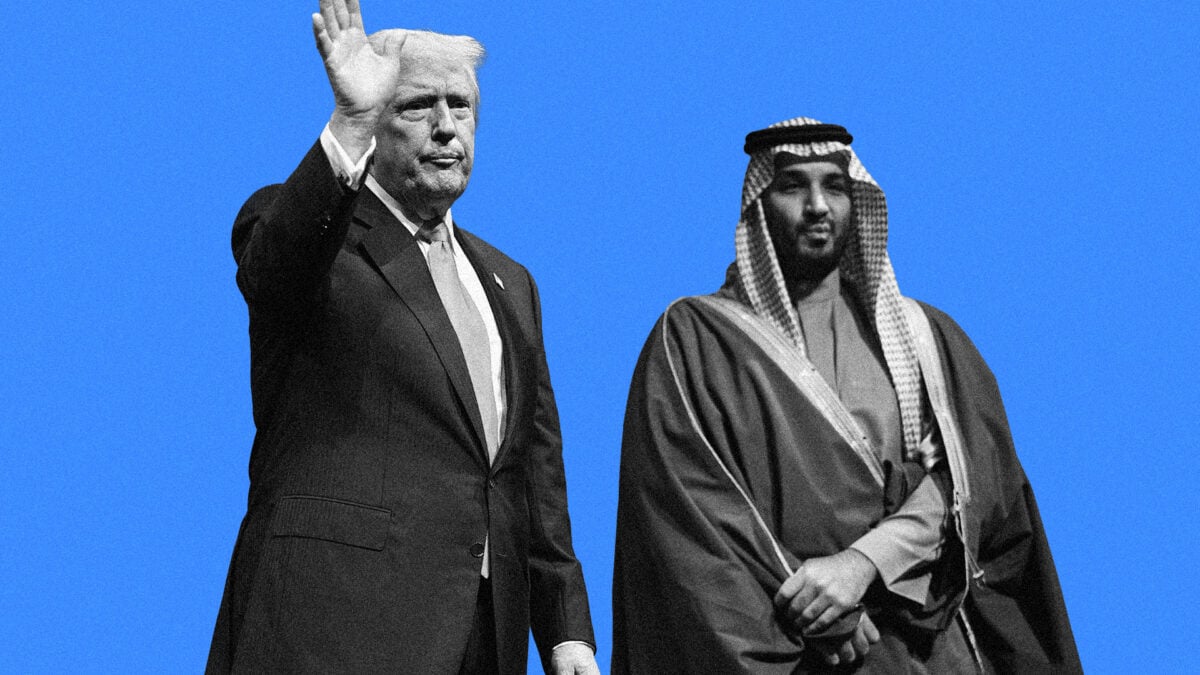
<h1>The Abraham Accords Blueprint: How Saudi Arabia’s Nuclear Deal Could Be Unlocked</h1>
<p>In 2026, the Middle East stands at a crossroads, with the Abraham Accords and Saudi Arabia’s nuclear ambitions intertwining in a way that could redefine regional diplomacy. The Abraham Accords, signed in 2020, normalized relations between Israel and several Gulf states, but their true potential remains unfulfilled. Meanwhile, Saudi Arabia’s pursuit of a nuclear program has raised global alarms, yet it also offers a unique opportunity to reshape the Abraham Accords’ framework. Former President Donald Trump’s 2017 remarks linking the two issues hinted at a possible synergy, but the path forward is fraught with geopolitical complexities.</p>
<p>This article explores how Saudi Arabia’s nuclear deal could unlock the full promise of the Abraham Accords, examining historical context, <a href="/article/how-iran-israel-war-impacts-indian-economy-and-businesses-india-s-strategic-response" title="How Iran-Israel War Impacts Indian Economy and Businesses: India's Strategic Response" class="internal-link">strategic</a> motivations, and the stakes <a href="/article/the-strategic-shift-how-trump-s-envoy-is-redefining-u-s-iran-diplomacy-and-what-it-means-for-global-" title="The Strategic Shift: How Trump’s Envoy Is Redefining U.S.-Iran Diplomacy and What It Means for Global Markets" class="internal-link">for global</a> security.</p>
<h2>Origins of the Abraham Accords: A Framework for <a href="/article/beyondthe-headlines-deconstructing-the-architecture-of-trump-s-west-asia-peace-deals-and-their-cultu" title="Beyondthe Headlines: Deconstructing the Architecture of Trump's West Asia Peace Deals and Their Cultural Aftershocks" class="internal-link">Peace</a></h2>
<p>The Abraham Accords were not just a diplomatic breakthrough but a strategic gamble. S. under Trump, the accords aimed to break the cycle of conflict in the Middle East by fostering alliances between Arab states and Israel. The first deal, between Israel and the United Arab Emirates (UAE), was followed by agreements with Bahrain, Morocco, and Sudan.</p>
<p>These accords relied on shared interests in security, economic growth, and countering Iran’s influence.</p>
Advertisement
Loading partner content...
<h3>Key Players in the Abraham Accords</h3>
<ul>
<li><b>Israel:</b> Sought regional stability and economic partnerships to counterbalance Iran.</li>
<li><b>UAE:</b> A pivotal player, leveraging its economic clout to secure diplomatic recognition.</li>
<li><b>U.S.:</b> Provided diplomatic and military backing, framing the accords as a counter to Iran.</li>
<li><b>Saudi Arabia:</b> Initially excluded, but its potential involvement could alter the accords’ trajectory.</li>
</ul>
<p>The accords’ success hinged on trust, but mistrust between Arab states and Israel remained. Saudi Arabia’s exclusion from the initial agreements highlighted its unique position. Unlike the UAE or Bahrain, Saudi Arabia’s relationship with Israel was historically strained, rooted in religious and political differences. However, the country’s growing economic ties with Israel and its desire to diversify its economy have shifted this dynamic.</p>
<h2>Saudi Arabia’s Nuclear Ambitions: A Double-Edged Sword</h2>
Advertisement
Loading partner content...
<p>Saudi Arabia’s pursuit of nuclear technology has been both a source of national pride and international concern. While the country has not officially confirmed its nuclear program, leaks and reports suggest it is exploring civilian <a href="/article/australia-india-uranium-deal-how-pm-modi-s-new-trade-pact-is-reshaping-global-nuclear-energy" title="Australia‑India Uranium Deal: How PM Modi’s New Trade Pact is Reshaping Global Nuclear Energy" class="internal-link">nuclear energy</a>, possibly with U.S. or Russian assistance. In 2026, Saudi Arabia’s Crown Prince Mohammed bin Salman (MBS) has publicly stated that a nuclear deal could enhance the country’s global standing and regional influence.</p>
<h3>Why Saudi Wants a Nuclear Deal</h3>
<ol>
<li><b>Security Assurance:</b> A nuclear arsenal could deter Iran and other regional threats.</li>
<li><b>Economic Leverage:</b> Nuclear <a href="/article/india-s-60-b-russian-oil-pivot-how-us-tariff-threats-are-reshaping-global-energy-politics-and-what-i" title="India’s $60 B Russian Oil Pivot: How US Tariff Threats Are Reshaping Global Energy Politics and What It Means for India’s Energy Future" class="internal-link">energy</a> could reduce reliance on oil, aligning with Vision 2030.</li>
<li><b>Diplomatic Prestige:</b> A nuclear deal might position Saudi Arabia as a leader in non-proliferation efforts.</li>
</ol>
<p>However, the risks are significant. A nuclear program could provoke Iran, strain U.S.-Saudi relations, and complicate non-proliferation efforts. The International Atomic Energy Agency (IAEA) has repeatedly called for transparency, but Saudi Arabia’s opaque approach has fueled skepticism.</p>
Advertisement
Loading partner content...
<h2>Trump’s Role: A Bridge or a Casualty?</h2>
<p>Former President Trump’s 2017 comments linking Saudi Arabia’s nuclear program to the Abraham Accords were both provocative and strategic. He argued that a nuclear deal could incentivize Saudi Arabia to normalize relations with Israel, thereby strengthening the accords. Trump’s administration also pressured Saudi Arabia to engage with Israel, framing it as a mutual benefit.</p>
<p>However, Trump’s approach was controversial. Critics argued that tying nuclear proliferation to peace was a dangerous gamble. In 2026, the legacy of Trump’s policies remains a point of contention. While some in Washington advocate for revisiting his strategies, others warn against repeating past mistakes.</p>
<h3>Key Statements by Trump on Saudi-Nuclear Link</h3>
<blockquote>
“If Saudi Arabia gets a nuclear deal, it will normalize with Israel. That’s a win-win for the region.”
— Donald Trump, 2017
</blockquote>
Advertisement
Loading partner content...
<p>This statement, though informal, underscored a potential lever for diplomacy. However, Saudi Arabia’s leaders have since distanced themselves from such rhetoric, emphasizing their commitment to non-proliferation.</p>
<h2>Strategic Motivations Behind Saudi’s Nuclear Pursuit</h2>
<p>Saudi Arabia’s nuclear ambitions are driven by a complex mix of security, economic, and geopolitical factors. At its core, the country seeks to balance its relationship with Iran while maintaining U.S. support. A nuclear program could serve as a deterrent against Iran’s growing influence in the region, particularly in Yemen and Lebanon.</p>
<h3>Key Drivers of Saudi’s Nuclear Interests</h3>
<ul>
<li><b>Countering Iran:</b> A nuclear arsenal could neutralize Iran’s threat without risking direct conflict.</li>
<li><b>Energy Security:</b> Nuclear energy could reduce oil dependence, aligning with Saudi Arabia’s economic diversification goals.</li>
<li><b>Regional Leadership:</b> A nuclear deal might position Saudi Arabia as a mediator in Middle East conflicts.</li>
</ul>
Advertisement
Loading partner content...
<p>Yet, these motivations come with risks. A nuclear program could alienate Arab states that oppose proliferation, including Egypt and Jordan. It could also trigger a regional arms race, undermining the Abraham Accords’ goal of fostering cooperation.</p>
<h2>Implications for Regional Security and Non-Proliferation</h2>
<p>The intersection of Saudi Arabia’s nuclear program and the Abraham Accords has profound implications. On one hand, a nuclear deal could incentivize Saudi Arabia to engage with Israel, potentially expanding the accords to include more Gulf states. On the other hand, it could destabilize the region if Iran or other adversaries perceive Saudi’s move as a threat.</p>
<h3>Potential Outcomes of a Saudi-Nuclear Deal</h3>
<table border="1">
<tr>
<th>Scenario</th>
<th>Impact on Abraham Accords</th>
<th>Regional Security Risk</th>
</tr>
<tr>
<td>Successful Deal with Israel</td>
<td>Expansion of Abraham Accords to Saudi Arabia</td>
<td>Low, if managed transparently</td>
</tr>
<tr>
<td>Secret Deal with Iran</td>
<td>Collapse of Abraham Accords</td>
<td>High, due to regional tensions</td>
</tr>
<tr>
<td>No Deal, Continued Secrecy</td>
<td>Status quo for Abraham Accords</td>
<td>Moderate, due to IAEA concerns</td>
</tr>
</table>
<p>Non-proliferation advocates warn that Saudi Arabia’s nuclear program could set a dangerous precedent. If other Gulf states follow suit, the IAEA’s authority could be undermined, leading to a fragmented global non-proliferation regime.</p>
Advertisement
Loading partner content...
<h2>The Future Trajectory: US-Saudi Relations and Middle East Peace</h2>
<p>As 2026 approaches, the future of US-Saudi relations hinges on how the nuclear deal and Abraham Accords are managed. The Biden administration has taken a cautious stance, prioritizing non-proliferation over rapid normalization. However, Saudi Arabia’s leverage in the region—particularly its economic and military clout—makes it a critical player.</p>
<h3>Key Factors Shaping the Future</h3>
<ol>
<li><b>U.S. Policy Shifts:</b> Will the U.S. prioritize security over non-proliferation in its dealings with Saudi Arabia?</li>
<li><b>Regional Dynamics:</b> How will Iran respond to Saudi’s nuclear ambitions?</li>
<li><b>Public Opinion:</b> Will Arab citizens support normalization with Israel if tied to a nuclear deal?</li>
</ol>
Advertisement
Loading partner content...
<p>If Saudi Arabia successfully navigates these challenges, it could become a cornerstone of Middle East peace. However, a misstep could fracture the Abraham Accords and reignite regional conflicts. The role of the U.S. will be pivotal, as its support is essential for both Saudi Arabia’s nuclear ambitions and the accords’ sustainability.</p>
<h2>Forward-Looking Analysis: Reshaping the Diplomatic Landscape</h2>
<p>The potential linkage between Saudi Arabia’s nuclear deal and the Abraham Accords offers a unique opportunity to redefine Middle East diplomacy. By framing nuclear cooperation as a tool for peace, Saudi Arabia could bridge divides that have persisted for decades. However, this requires careful negotiation, transparency, and a commitment to shared values.</p>
<h3>Actionable Insights for Stakeholders</h3>
<ul>
<li><b>For the U.S.:</b> Re-engage with Saudi Arabia through a balanced approach that addresses both security and non-proliferation concerns.</li>
<li><b>For Israel:</b> Expand the Abraham Accords to include Saudi Arabia, but ensure the process is inclusive and transparent.</li>
<li><b>For Regional Actors:</b> Advocate for a multilateral framework to manage nuclear proliferation risks.</li>
</ul>
Advertisement
Loading partner content...
<p>In 2026, the Middle East is at a pivotal moment. The interplay between Saudi Arabia’s nuclear program and the Abraham Accords could either usher in a new era of cooperation or deepen existing fractures. The outcome will depend on the willingness of all parties to prioritize long-term stability over short-term gains.</p>
<h2>Conclusion: A New Chapter for the Middle East</h2>
<p>The Abraham Accords and Saudi Arabia’s nuclear deal are not just separate issues—they are interconnected threads in the region’s complex tapestry. If managed wisely, this synergy could unlock unprecedented opportunities for peace, security, and economic growth. However, the path forward is fraught with risks. As the world watches, the question remains: Will Saudi Arabia’s nuclear ambitions become a bridge to unity or a wall of division?</p>
<figure class="my-8 overflow-hidden rounded-3xl shadow-xl">
<img src="https://gizmodo.com/app/uploads/2026/07/trump-and-MBS-1200x675.jpg" alt="King Salman" class="w-full h-[400px] object-cover" />
</figure>
<figure class="my-8 overflow-hidden rounded-3xl shadow-xl">
<img src="https://images.pexels.com/photos/16705829/pexels-photo-16705829.jpeg?auto=compress&cs=tinysrgb&dpr=2&h=650&w=940" alt="nuclear deal" class="w-full h-[400px] object-cover" />
</figure>
<figure class="my-8 overflow-hidden rounded-3xl shadow-xl">
<img src="https://i.abcnewsfe.com/a/3989c42e-d651-45c9-938e-042dd2166551/trump-speaks-white-house_1784718056686_hpMain_16x9.jpg?w=1600" alt="Saudi nuclear program" class="w-full h-[400px] object-cover" />
</figure>
<figure class="my-8 overflow-hidden rounded-3xl shadow-xl">
<img src="https://images.unsplash.com/photo-1774779685524-cc735ae11a9e?crop=entropy&cs=tinysrgb&fit=max&fm=jpg&ixid=M3w4NjI1Nzh8MHwxfHNlYXJjaHwxfHxNaWRkbGUlMjBFYXN0JTIwZGlwbG9tYWN5fGVufDB8MHx8fDE3ODQ4MzQxNjR8MA&ixlib=rb-4.1.0&q=80&w=1080" alt="Middle East diplomacy" class="w-full h-[400px] object-cover" />
</figure></b></i></i></i></i>