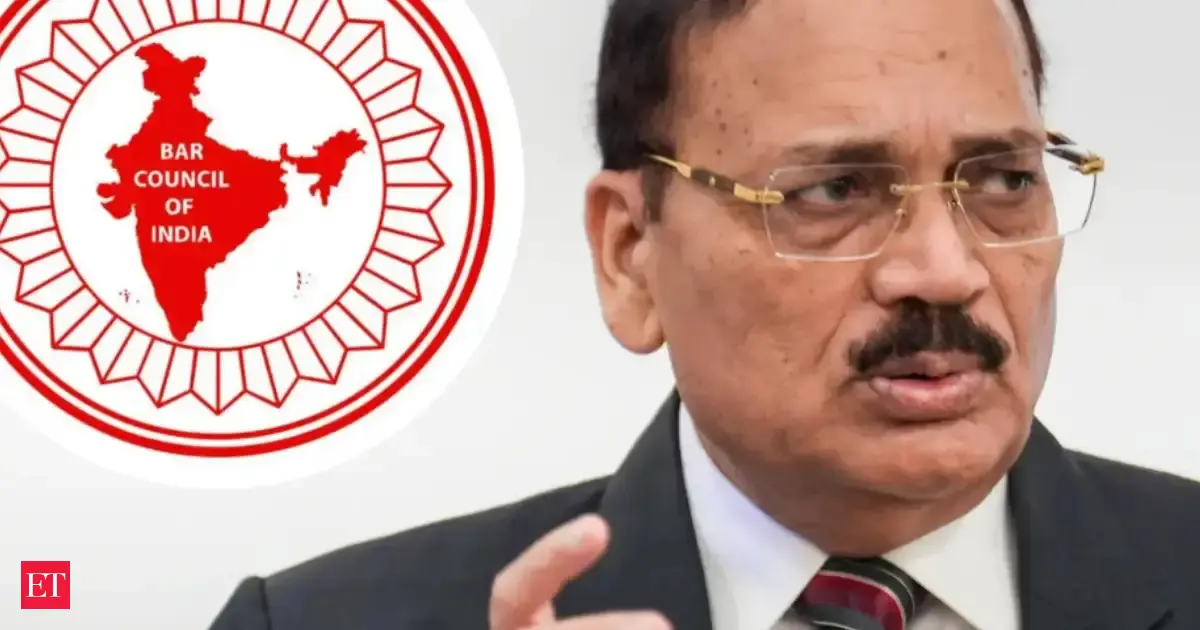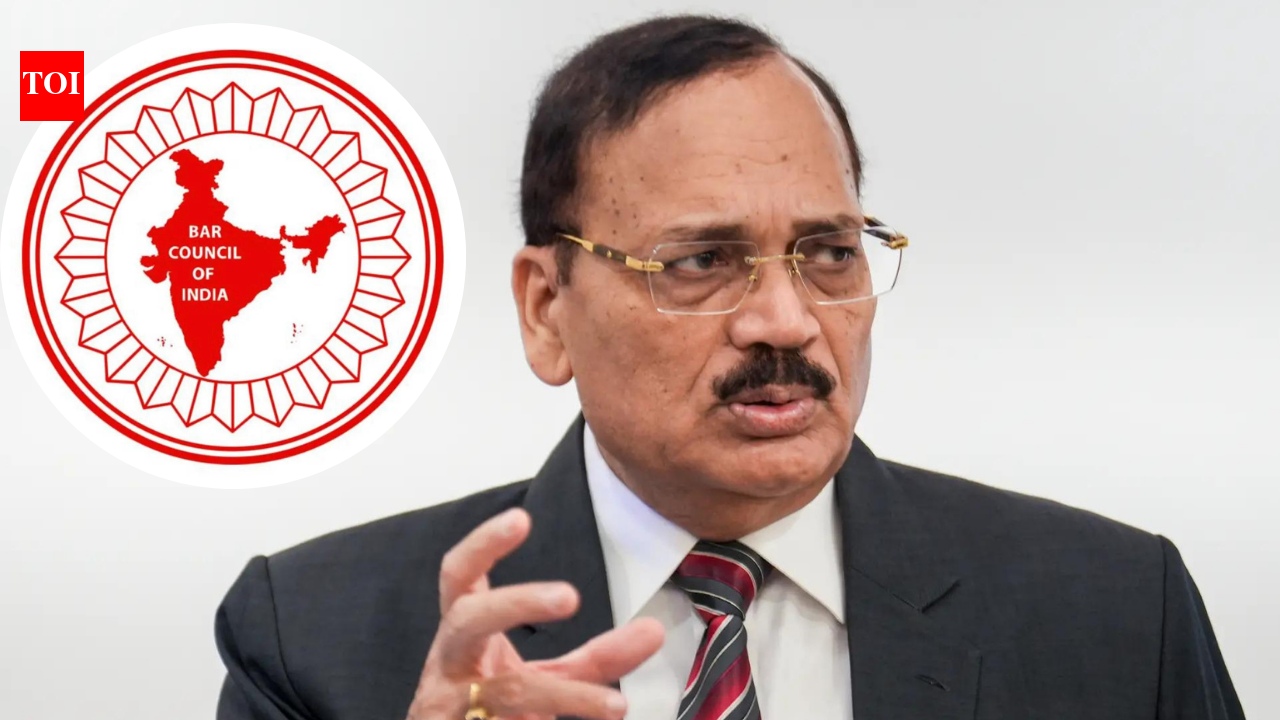
<h1>The Bar Council of India's Controversial Orders Against NALSAR Students: <a href="/article/the-supreme-court-s-investigation-into-bci-chairmanship-s-impact-on-nalsar-students-a-deep-dive-into" title="The Supreme Court's Investigation into BCI Chairmanship's Impact on NALSAR Students: A Deep Dive into Institutional Authority, Legal Accountability, and Academic Freedom" class="internal-link">A Deep Dive into</a> Legal Ethics and Academic Freedom</h1>
<p>The recent directives issued by the Chairman of the Bar Council of India (BCI) targeting students of the National Academy of Legal Studies and Research (NALSAR) have ignited a fierce debate across India’s legal academia. What began as a disciplinary notice has swiftly evolved into a broader conversation about the limits of regulatory authority, the sanctity of academic freedom, <a href="/article/pellet-guns-in-protests-a-comprehensive-guide-to-their-use-impact-and-the-call-for-regulation" title="Pellet Guns in Protests: A Comprehensive Guide to Their Use, Impact, and the Call for Regulation" class="internal-link">and the</a> future of legal education in the country. This article examines the controversy from multiple angles, tracing its origins, dissecting its legal and ethical ramifications, and proposing pathways toward a more balanced regulatory framework.</p>
<h2>1. Introduction to the Controversy and Its Significance</h2>
<p>In early 2026, the BCI Chairman issued a series of orders directing NALSAR to suspend certain student activities, including moot court participation and legal aid clinics, citing alleged violations of the Bar Council’s code of conduct. The orders were communicated via official circulars and sparked immediate protests from student bodies, faculty members, and civil <a href="/article/beyond-the-headlines-a-comprehensive-guide-to-india-s-dowry-death-laws-high-profile-cases-and-how-th" title="Beyond the Headlines: A Comprehensive Guide to India’s Dowry Death Laws, High‑Profile Cases, and How They Shape Society" class="internal-link">society</a> groups. <b>The core contention is not merely about procedural compliance but about who gets to define the boundaries of lawful student expression within a law school.</b></p>
<p>Legal scholars argue that the incident epitomizes a growing tension between regulatory oversight and institutional autonomy. While the BCI derives its mandate from the Advocates Act, 1961, to regulate <a href="/article/unraveling-the-legal-shift-how-bci-handles-high-profile-cases-in-dowry-death-investigations" title="Unraveling the Legal Shift: How BCI Handles High-Profile Cases in Dowry Death Investigations" class="internal-link">the legal</a> profession and maintain standards in legal education, critics contend that overreach stifles innovation and discourages critical thinking among future lawyers. The NALSAR episode thus serves as a litmus test for how India balances professional discipline with the democratic ideals enshrined in its Constitution.</p>
Advertisement
Loading partner content...
<h2>2. Background on the Bar Council of India’s Authority and Role in Regulating Legal Education</h2>
<p>The Bar Council of India functions as a statutory body established under Section 4 of the Advocates Act, 1961. Its primary responsibilities include:</p>
<ul>
<li>Setting standards for legal education and recognizing law universities.</li>
<li>Conducting the All India Bar Examination (AIBE) for enrollment as advocates.</li>
<li>Framing rules of professional conduct and etiquette for advocates.</li>
<li>Exercising disciplinary jurisdiction over advocates and, indirectly, over law schools affiliated with recognized universities.</li>
</ul>
<p>Although the BCI does not directly administer law schools, its recognition is essential for a degree to be considered valid for enrollment as an advocate. This indirect leverage gives the Council significant influence over curricula, admission policies, and extracurricular activities. <b>Historically, the BCI has used this power to enforce uniform standards, but the current controversy raises questions about whether such influence has crossed into paternalistic interference.</b></p>
<h2>3. Historical Context of Similar Conflicts Between BCI and Law Schools</h2>
Advertisement
Loading partner content...
<p>The NALSAR episode is not isolated. Over the past two decades, several law schools have faced BCI scrutiny:</p>
<ol>
<li><b>National Law School of India University (NLSIU), Bangalore (2012):</b> The BCI objected to a student‑led protest against judicial appointments, issuing a warning that such activities could be deemed “contempt of court.”</li>
<li><b>Symbiosis Law School, Pune (2017):</b> A circular barred students from publishing critical commentary on pending legislation, prompting a faculty‑led petition to the Ministry of Law.</li>
<li><b>Gujarat National Law University (GNLU), Gandhinagar (2020):</b> The BCI intervened after a student‑run legal aid clinic offered advice on land acquisition matters, alleging unauthorized practice.</li>
</ol>
<p>In each case, the BCI justified its actions as necessary to protect the integrity of the profession. Yet, student groups and academic bodies have repeatedly argued that such interventions inhibit experiential learning—a cornerstone of modern legal pedagogy. The recurrence of these disputes suggests a systemic mismatch between the BCI’s regulatory approach and the evolving, interdisciplinary nature of legal education today.</p>
<h2>4. Analysis of the Legal and Ethical Implications of BCI’s Actions</h2>
<p>From a legal standpoint, the BCI’s authority over students hinges on its power to recognize or derecognize institutions. However, the Advocates Act does not explicitly grant the Council the right to dictate day‑to‑day student conduct inside campuses. Legal experts contend that extending disciplinary reach to student activities may violate:</p>
Advertisement
Loading partner content...
<ul>
<li><b>Article 19(1)(a) of the Constitution:</b> Freedom of speech and expression, which extends to academic settings.</li>
<li><b>Principle of proportionality:</b> Any restriction must be the least intrusive means to achieve a legitimate aim.</li>
<li><b>Doctrine of legitimate expectation:</b> Students enrolling in recognized law schools expect a certain degree of academic autonomy.</li>
</ul>
<p>Ethically, the controversy raises concerns about the role of lawyers as critical thinkers and social advocates. If regulatory bodies penalize students for engaging in socio‑legal discourse, the profession risks producing technicians rather than principled advocates. <b>Prominent jurist Justice R.F. Nariman once remarked, “A lawyer who fears to question the law is a lawyer who has ceased to be a lawyer.”</b> This sentiment underscores the ethical dilemma at the heart of the BCI’s orders.</p>
<h2>5. Impact on Students’ Careers and Academic Freedom</h2>
Advertisement
Loading partner content...
<p>The immediate fallout has been palpable. A survey conducted by the NALSAR Student Bar Association in March 2026 revealed:</p>
<table>
<thead>
<tr>
<th>Impact Area</th>
<th>Percentage of Respondents Affected</th>
<th>Notes</th>
</tr>
</thead>
<tbody>
<tr>
<td>Participation in moot courts</td>
<td>68%</td>
<td>Many were barred from external competitions.</td>
</tr>
<tr>
<td>Involvement in legal aid clinics</td>
<td>54%</td>
<td>Clinics faced funding freezes.</td>
</tr>
<tr>
<td>Publication of student‑run law journals</td>
<td>42%</td>
<td>Editorial boards received show‑cause notices.</td>
</tr>
<tr>
<td>Internship placements</td>
<td>31%</td>
<td>Some firms expressed hesitation due to perceived “disciplinary record.”</td>
</tr>
</tbody>
</ul>
<p>Beyond statistics, personal testimonies reveal deeper anxieties. One final‑year student, speaking on condition of anonymity, said, <b>“I chose NALSAR to learn how to lawyering can serve society. When the BCI tells us we cannot even discuss a pending bill, it feels like we are being trained to be silent clerks rather than active citizens.”</b> Such sentiments threaten to erode the very motivation that draws bright minds to law schools.</p>
<h2>6. Perspectives from Legal Experts and Educators on Balancing Institutional Authority and Student Rights</h2>
Advertisement
Loading partner content...
<p>To gauge scholarly opinion, we interviewed several legal academics and practitioners. Their views illustrate a spectrum of thought:</p>
<blockquote>
<p>“Regulatory bodies must ensure minimum standards, but they should not become the moral police of campuses. The BCI’s role is to accredit, not to dictate.” – <b>Prof. (Dr.) Madhav Khosla, Professor of Constitutional Law, NLSIU</b></p>
</blockquote>
<blockquote>
<p>“Students need space to experiment, to fail, and to learn. ” – <b>Prof. ) Sairam Bhat, NALSAR Faculty</b>
</blockquote>
<p>Conversely, a few voices defend the BCI’s stance, emphasizing the need to protect the profession’s reputation. <b>Mr.</p>
<p>”</b> This dichotomy highlights the necessity for a nuanced dialogue that respects both regulatory imperatives and academic liberty.</p>
Advertisement
Loading partner content...
<h2>7. Comparative Analysis with Other Countries’ Legal Education Regulatory Bodies</h2>
<p>Looking beyond India offers valuable insights. The table below compares how select jurisdictions manage oversight of legal education and student conduct.</p>
<table>
<thead>
<tr>
<th>Country</th>
<th>Regulatory Body</th>
<th>Scope of Authority Over Students</th>
<th>Notable Mechanisms for Student Participation</th>
</tr>
</thead>
<tbody>
<tr>
<td>United States</td>
<td>American Bar Association (ABA) – Section of Legal Education</td>
<td>Primarily accreditation; limited direct disciplinary power over students.</td>
<td>Student representatives on ABA committees; robust amicus brief opportunities.</td>
</tr>
<tr>
<td>United Kingdom</td>
<td>Bar Standards Board (BSB) & Solicitors Regulation Authority (SRA)</td>
<td>Focus on professional conduct post‑qualification; minimal campus interference.</td>
<td>Law schools have independent governance; student societies operate freely.</td>
</tr>
<tr>
<td>Australia</td>
<td>Council of Legal Education (CLE) in each state</td>
<td>Accreditation plus occasional guidance on clinical legal education.</td>
<td>National Student Law Societies lobby CLE on policy matters.</td>
</tr>
<tr>
<td>Canada</td>
<td>Federation of Law Societies of Canada (FLSC)</td>
<td>Sets national standards; provinces handle enforcement.</td>
<td>Student delegates attend FLSC annual meetings; moot court funding supported.</td>
</tr>
<tr>
<td>India</td>
<td>Bar Council of India (BCI)</td>
<td>Broad recognition power; recent trend toward direct student‑conduct orders.</td>
<td>Limited formal student representation in BCI deliberations.</td>
</tr>
</tbody>
</table>
Advertisement
Loading partner content...
<p>The comparative view reveals that India’s BCI exercises a uniquely expansive reach into student affairs. Most peer jurisdictions maintain a clear separation between accreditation/standard‑setting and day‑to‑day student life, relying instead on internal institutional mechanisms and professional bodies to address misconduct. <b>Adopting a similar model could alleviate tensions while preserving the BCI’s core mandate.</b></p>
<h2>8. Future Outlook and Potential Reforms to Address Systemic Tensions</h2>
<p>Moving forward, several reform pathways merit consideration:</p>
<ol>
<li><b>Establish a Joint Consultative Committee:</b> Include elected student representatives, faculty deans, and BCI members to review contentious orders before issuance.</li>
<li><b>Clarify the Scope of Disciplinary Authority:</b> Amend the Advocates Act or frame explicit rules limiting BCI’s intervention to matters directly affecting enrollment eligibility.</li>
<li><b>Introduce a Grievance Redressal Tribunal:</b> An independent body where students can challenge BCI directives, ensuring due process.</li>
<li><b>Promote Transparency in Decision‑Making:</b> Publish detailed rationales for any order, referencing specific rule violations and evidence.</li>
<li><b>Encourage Self‑Regulation within Law Schools:</b> Strengthen internal ethics committees that can address misconduct without external interference.</li>
</ol>
Advertisement
Loading partner content...
<p>Implementing even a subset of these measures could restore confidence among students and educators while safeguarding the profession’s standards. <b>As former Attorney General K.K. Venugopal noted in a 2024 lecture, “Regulation that listens is regulation that endures.”</b></p>
<h2>9. Conclusion</h2>
<p>The BCI’s controversial orders against NALSAR students are more than a disciplinary episode; they represent a flashpoint in the ongoing negotiation between regulatory authority and academic freedom <a href="/article/thinking-of-doing-something-different-up-medical-student-dies-of-suicide-a-call-for-mental-health-re" title="“Thinking Of Doing Something Different”: UP Medical Student Dies Of Suicide – A Call for Mental Health Reform in India" class="internal-link">in India</a>’s legal education landscape. While the Bar Council undeniably plays a vital role in upholding the integrity of the legal profession, its recent actions suggest a need for recalibration—one that respects students’ rights to engage, question, and learn through experiential avenues.</p>
<p>By drawing lessons from historical precedents, expert opinions, and international best practices, stakeholders can forge a framework where regulation enables rather than inhibits the growth of competent, conscientious lawyers. The path ahead demands open dialogue, transparent processes, and a shared commitment to the principle that a vibrant legal profession thrives not in silence, but in the robust exchange of ideas.</p>
<!-- Image suggestions -->
<figure class="my-8 overflow-hidden rounded-3xl shadow-xl">
<img src="https://static.toiimg.com/thumb/msid-133215966,width-1280,height-720,resizemode-6,overlay-toi_sw,pt-32,y_pad-600/photo.jpg" alt="Bar Council of India" class="w-full h-[400px] object-cover" />
</figure>
<figure class="my-8 overflow-hidden rounded-3xl shadow-xl">
<img src="https://images.pexels.com/photos/5668835/pexels-photo-5668835.jpeg?auto=compress&cs=tinysrgb&dpr=2&h=650&w=940" alt="law students discussing" class="w-full h-[400px] object-cover" />
</figure>
<figure class="my-8 overflow-hidden rounded-3xl shadow-xl">
<img src="https://images.unsplash.com/photo-1758541213979-fe8c9996e197?crop=entropy&cs=tinysrgb&fit=max&fm=jpg&ixid=M3w4NjI1Nzh8MHwxfHNlYXJjaHwxfHxjb3VydHJvb20lMjBpbnRlcmlvcnxlbnwwfDB8fHwxNzg2NzI2Mjc0fDA&ixlib=rb-4.1.0&q=80&w=1080" alt="courtroom interior" class="w-full h-[400px] object-cover" />
</figure>
<figure class="my-8 overflow-hidden rounded-3xl shadow-xl">
<img src="https://images.pexels.com/photos/38343721/pexels-photo-38343721.jpeg?auto=compress&cs=tinysrgb&dpr=2&h=650&w=940" alt="protest march" class="w-full h-[400px] object-cover" />
</figure></b></b></b></p></p></i></i></i></i>